When you purchase through links on our site, we may earn a commission at no extra cost to you. Learn more.
You brought home a tiny, furry best friend. But now that tiny best friend is screaming from a wire box in your living room like the world is ending and you’ve betrayed them.
Table of Contents
If your puppy thinks the crate is jail, you’re not alone. The good news? You can absolutely make them love their crate. Yes, it’s possible.
Here’s how to crate train your puppy without tears — yours or theirs.
First, Let’s Talk About The Crying
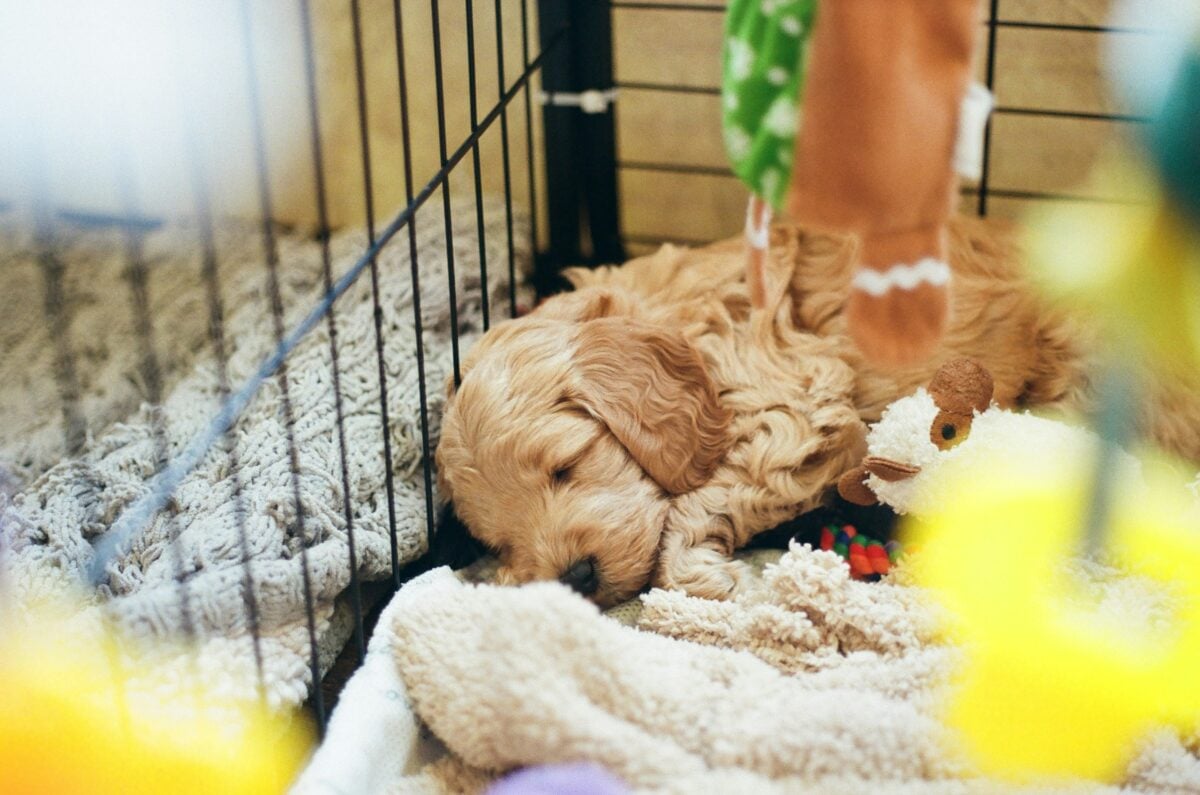
If your puppy cries the second the crate door closes, it doesn’t mean they’re stubborn. It means they’re confused.
Most puppies aren’t upset about the crate itself. They’re upset about sudden separation, unfamiliar surroundings, and the fact that the fun just stopped.
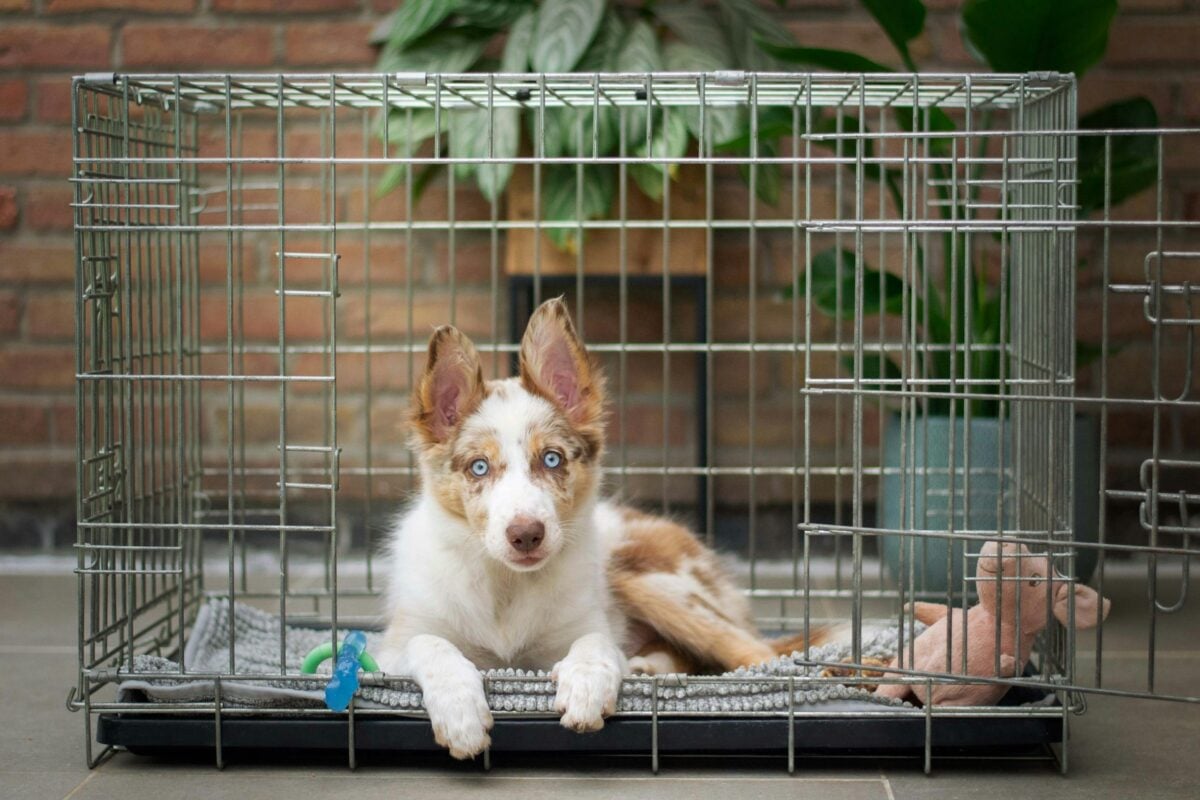
To them, it feels abrupt. Not safe.
And here’s the important part: how you respond in those first few days shapes everything that comes next.
What That Cry Actually Means
Not all puppy crate crying is the same.
- Some crying means: “I need to go potty.”
- Some crying means: “I don’t like this.”
- And some crying means: “I’m panicking.”
Those are three very different situations, and they require three very different responses. If you treat them all the same, crate training gets messy fast.
The Biggest Mistake Most New Owners Make
They move too fast:
- Closing the door before the puppy feels safe.
- Leaving the room before the puppy understands the space.
- Using the crate only when it’s time for you to leave.
From your puppy’s perspective, that crate becomes the place where good things end. We’re going to flip that.
What Crate Training Is Really Teaching Your Puppy
When crate training goes wrong, it feels like confinement. When crate training goes right, it teaches confidence.
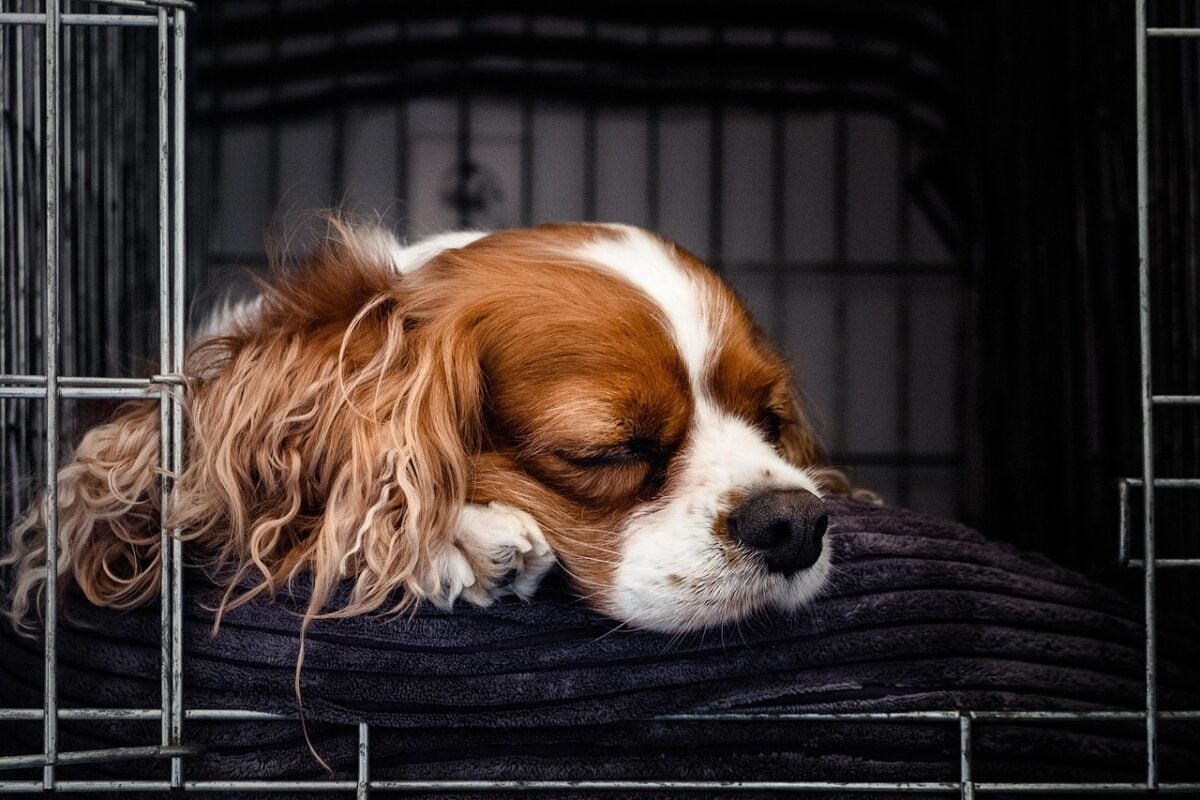
The crate isn’t about control. It’s about helping your puppy learn that being alone for short periods is safe.
Your puppy wasn’t born knowing how to self-soothe. They don’t automatically understand that you leaving the room doesn’t mean you’re gone forever. Crate training, done gently and gradually, teaches three important things.
1. Calmness
Instead of pacing, barking, or panicking, your puppy learns to settle. At first that might mean lying down quietly for 30 seconds.
Eventually, it means falling asleep even when the house is busy. That isn’t confinement, it’s emotional regulation.
2. Predictability
Dogs thrive on patterns and routine. When the crate is introduced the same calm way each time, it becomes familiar instead of frightening.
If the crate only appears when you’re rushing out the door, it feels negative. If it shows up during naps, after play, and during positive moments, it starts to feel normal.
3. Independence
This is the part many new owners overlook. A puppy who never learns to be alone struggles later.
A puppy who slowly learns that alone time is temporary and peaceful grows into a dog who can handle vet visits, boarding, grooming, travel, and you going to work.
Crate training is not about isolation. It’s about resilience.
The First 7 Days: A Step-By-Step Crate Training Plan
Forget “put them in and hope they adjust.” We’re building comfort one layer at a time.
Each step should feel boringly easy before you move to the next. If your puppy cries, you went too fast — not because you failed, but because you skipped a foundation layer.
Note: If you use a clicker, you can substitute the click for a calm verbal “yes.” The tool doesn’t matter nearly as much as your timing.
Step 1: Getting Them To Walk In (No Forcing)
Do not place your puppy in the crate. Lure them in.
- Toss a treat just inside the entrance and let them choose to step in.
- The moment their paws cross the threshold, mark with “yes” and reward again.
- Then let them walk right back out. We are not closing the door yet.
Repeat this in short sessions throughout the day. The crate should feel like a treat dispenser, not a trap.
Reward Timing Rule: Mark the second they enter, not after they exit.
Step 2: Teaching Them To Stay
Now we build duration.
- When they walk in, wait one second before marking and rewarding. Then try two seconds, then three.
- If they step out before you mark, simply reset and try again. We are rewarding staying, not just entering.
Keep sessions short and end before they get frustrated.
Step 3: Moving While They Stay
Once they can stay inside calmly for 5 to 10 seconds, add subtle movement.
- Shift your weight while sitting. Stand up. Any small movements that are near the crate work.
- If your puppy remains in the crate during your movement, immediately reward.
- Your movement should last only a few seconds at first.
You’re teaching them that your body changing position does not mean something bad is happening.
Step 4: Walking Away
Now, it’s time to move away from the crate.
- Take two or three steps away from the crate.
- Pause briefly, then return and reward if they stay settled. Calm behavior brings you back.
- If they stand up or try to follow, try again with a shorter distance.
Step 5: Closing The Door
Only move to this step when they are staying calmly while you move around.
- Ask them to enter. Reward.
- Gently close the door for one second. Open it immediately and reward again.
- Repeat several times before extending the time the door stays closed.
The door closing should feel ordinary, not dramatic.
Step 6: Locking The Door
Now close and latch the crate.
- Stand right beside it and wait 3 to 5 seconds.
- If they stay calm, mark and reward through the crate bars.
Open the door before they ask to get out. We want the door opening to feel predictable, not earned through protest.
Step 7: Leaving The Room
This is where most new owners rush.
- Close and latch the door, then step out of sight for 3 seconds.
- Return calmly, mark, and reward.
- Gradually increase the time out of sight. Five seconds. Ten seconds. Twenty seconds.
If whining starts, wait for a brief pause before re-entering. Never reward active crying.
You are teaching your puppy one powerful lesson: you always come back, and calm behavior brings you back faster.
Here’s What This Looks Like In Real Time
Reading steps is helpful. Seeing the pace makes it click.
Notice how nothing feels rushed in this demo. The dog is never forced inside, the door closes briefly and calmly, and the rewards happen immediately when the dog makes the right choice.
This is what slow progress looks like. It’s quiet, uneventful, and a little boring, which is exactly what we want.
7 Ways To Make The Crate Feel Safe Faster
he steps build the foundation. These small habits make it stick.
Think of this as emotional layering. The more positive associations your puppy builds inside the crate, the faster it stops feeling like “jail” and starts feeling like theirs.
1. Feed Every Meal Inside The Crate
Place the bowl inside the crate and let your puppy walk in to eat. At first, leave the door open so there’s no pressure.
Over time, you can gently close the door while they eat and open it when they’re finished. Meals turn the crate into a predictable, positive space.
2. Move Them Into The Crate When They Fall Asleep
This is one of the easiest shortcuts. If your puppy falls asleep on the floor, gently pick them up and place them inside the crate before they fully wake. Keep the door open.
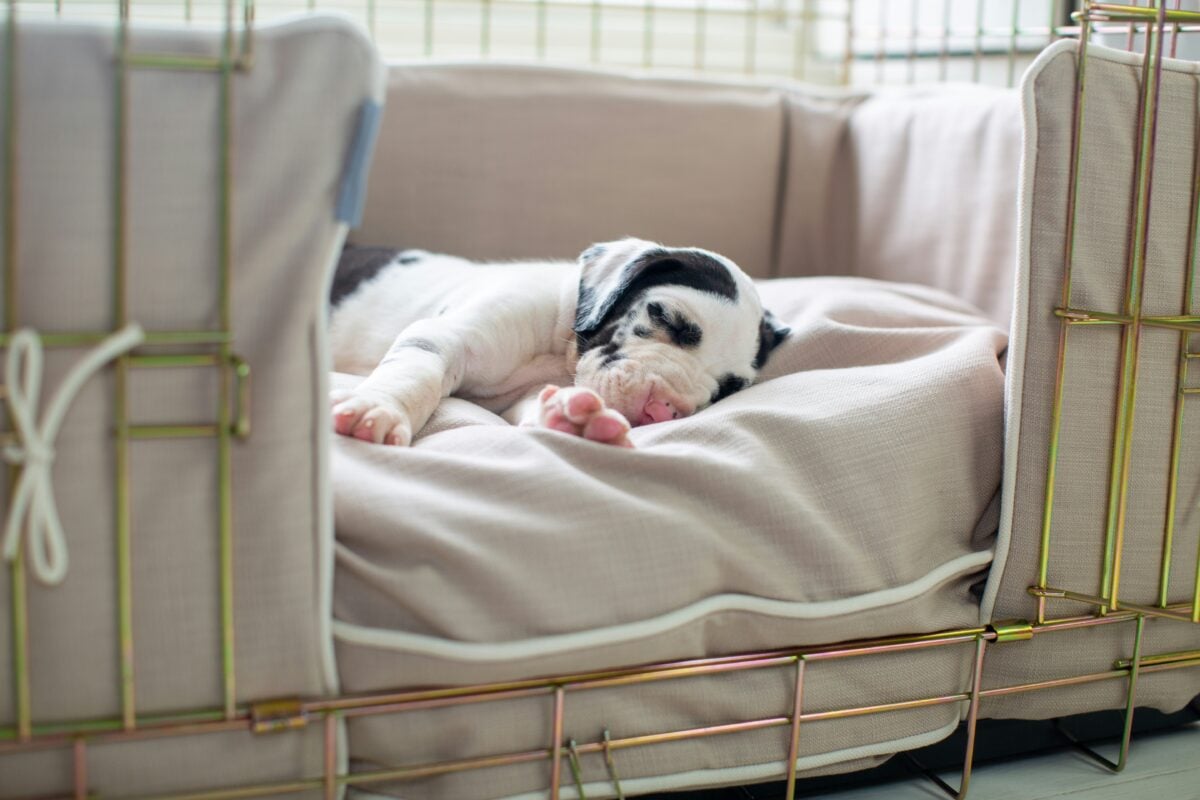
Waking up in the crate while already calm helps build a peaceful association. You’re teaching their nervous system that the crate equals rest.
3. Keep Sessions Short And Frequent
Long sessions too early create resistance. Short sessions throughout the day build familiarity without stress. Even 30 seconds of calm inside the crate counts.
Repetition matters more than duration.
4. Make The Crate The “Good Stuff” Zone
Give high-value chews, stuffed Kongs, or special toys only inside the crate. If you use a heartbeat toy like a Snuggle Puppy or Calmeroo, reserve it for crate time. Limiting access increases emotional value.

5. Try A Partial Crate Cover
Some puppies settle faster with fewer visual distractions. Draping a light blanket over part of the crate can make it feel more den-like and reduce stimulation, especially at night.
If your puppy seems more alert with the cover, remove it. Adjust based on their personality.
6. Keep The Crate Close At Night (At First)
The first few nights are harder because everything is new. Placing the crate near your bed helps your puppy feel secure while they adjust. Once they’re comfortable, you can gradually move it to your preferred location.
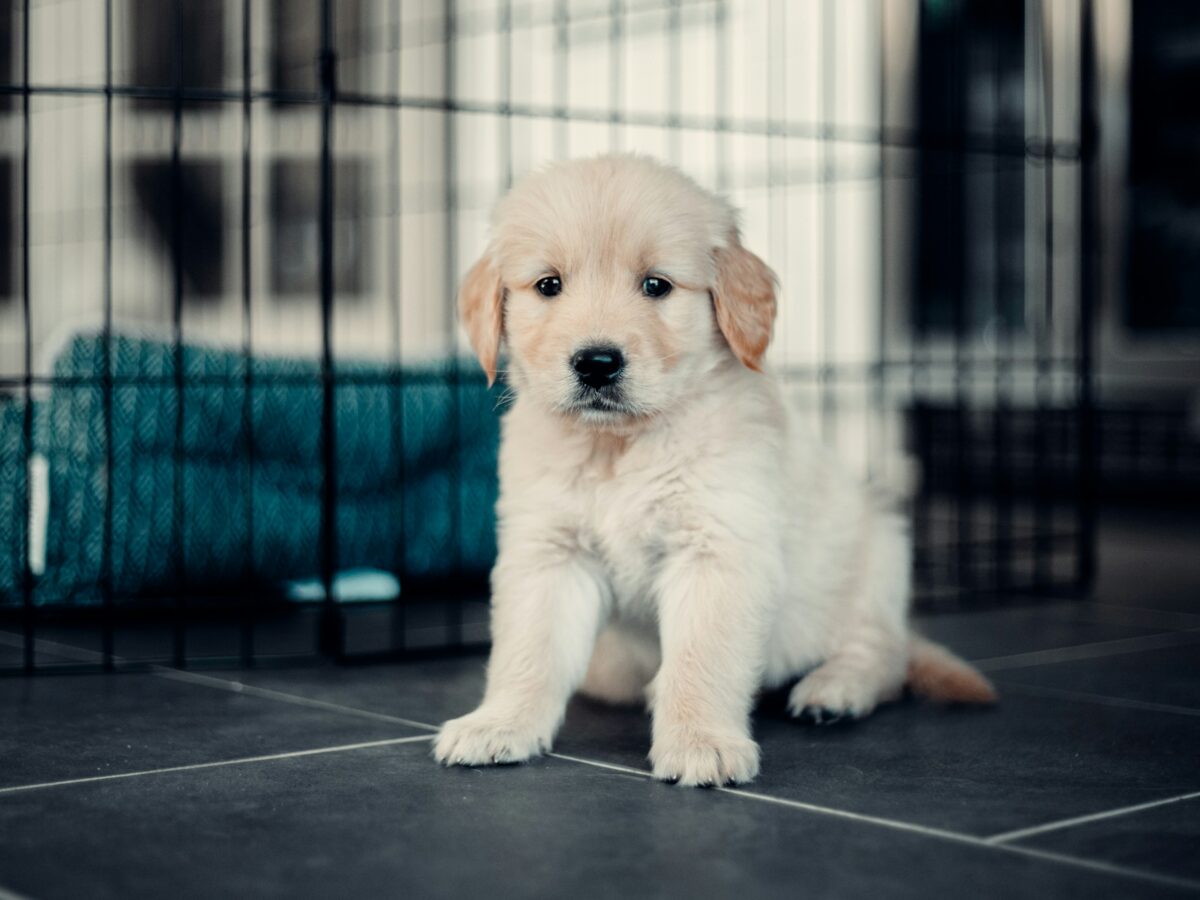
Proximity reduces panic without reinforcing dependence.
7. Stay Calm During Exits And Returns
Big emotional reactions create big emotional dogs.
When you leave, keep it low-key. When you return, wait for a calm moment before opening the door.
Excitement can accidentally teach your puppy that crate time is dramatic. Calm entrances and exits make it routine.
Quick Reminder: Never drag your puppy out of the crate. The crate should feel like their personal space — somewhere they can retreat without being bothered.
The Crate Setup That Changes Everything
You can follow every training step perfectly and still struggle if the setup is wrong. The right crate doesn’t just contain your puppy. It supports calm behavior.
Best Type Of Crate For Your Puppy’s Personality
Most puppies do well in either wire or plastic crates. The difference isn’t quality. It’s environment and temperament.
Wire Crates
Wire crates are the most versatile option. They allow airflow, visibility, and often include dividers so the crate can grow with your puppy. If you want something adaptable for home use, they’re usually the easiest place to start.
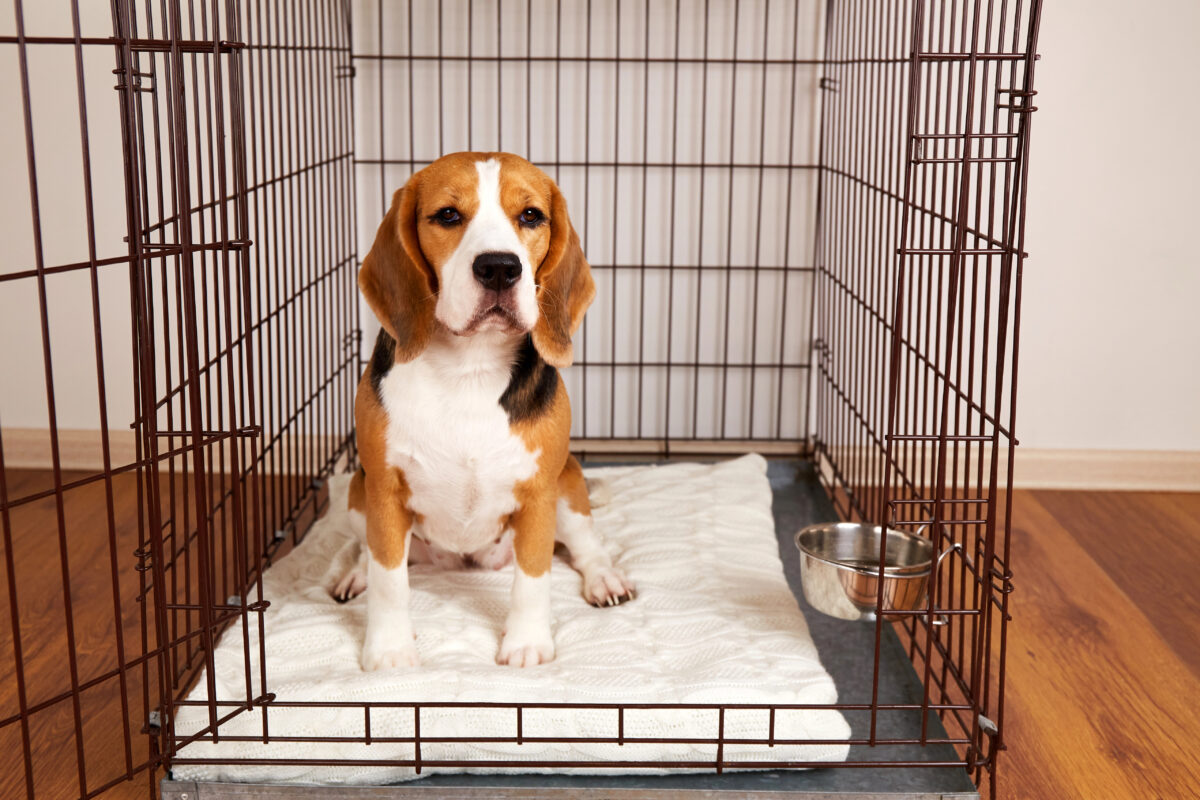
They also work well for puppies who settle better when they can see you.
If you’re unsure which to choose, our full breakdown of the best dog crates walks through size, durability, and safety considerations.
Plastic Crates
Plastic crates feel more enclosed. They’re often preferred for travel and are required for most airline transport. If your puppy startles easily or seems overstimulated by movement in the room, the extra enclosure can feel more den-like.
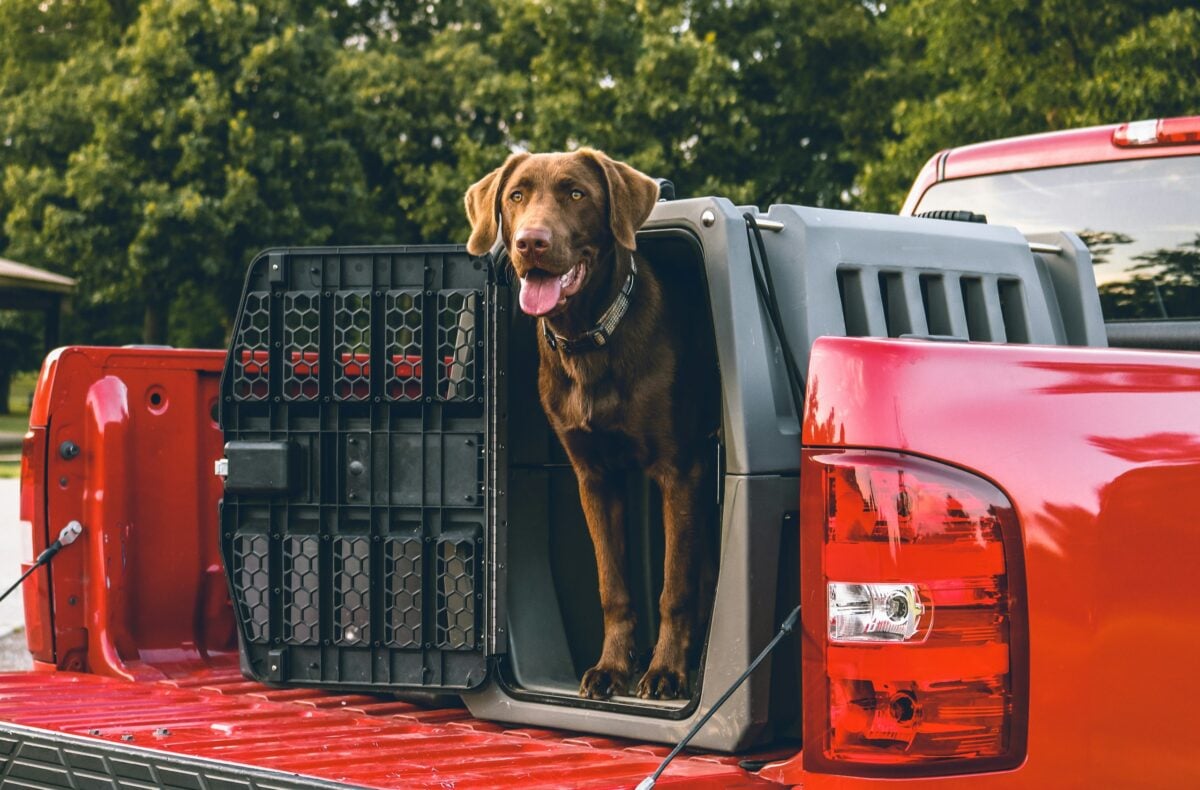
For car rides specifically, look into crates designed for vehicles rather than standard wire options. Dedicated dog crates for cars are built for impact safety, not just containment.
Wood & Furniture-Style Crates
You’ll also see wood or furniture-style crates designed to blend into your home decor. These can work well once your puppy is fully crate trained and calm. However, they’re typically heavier, less portable, and not ideal for early-stage training if your puppy chews or scratches.
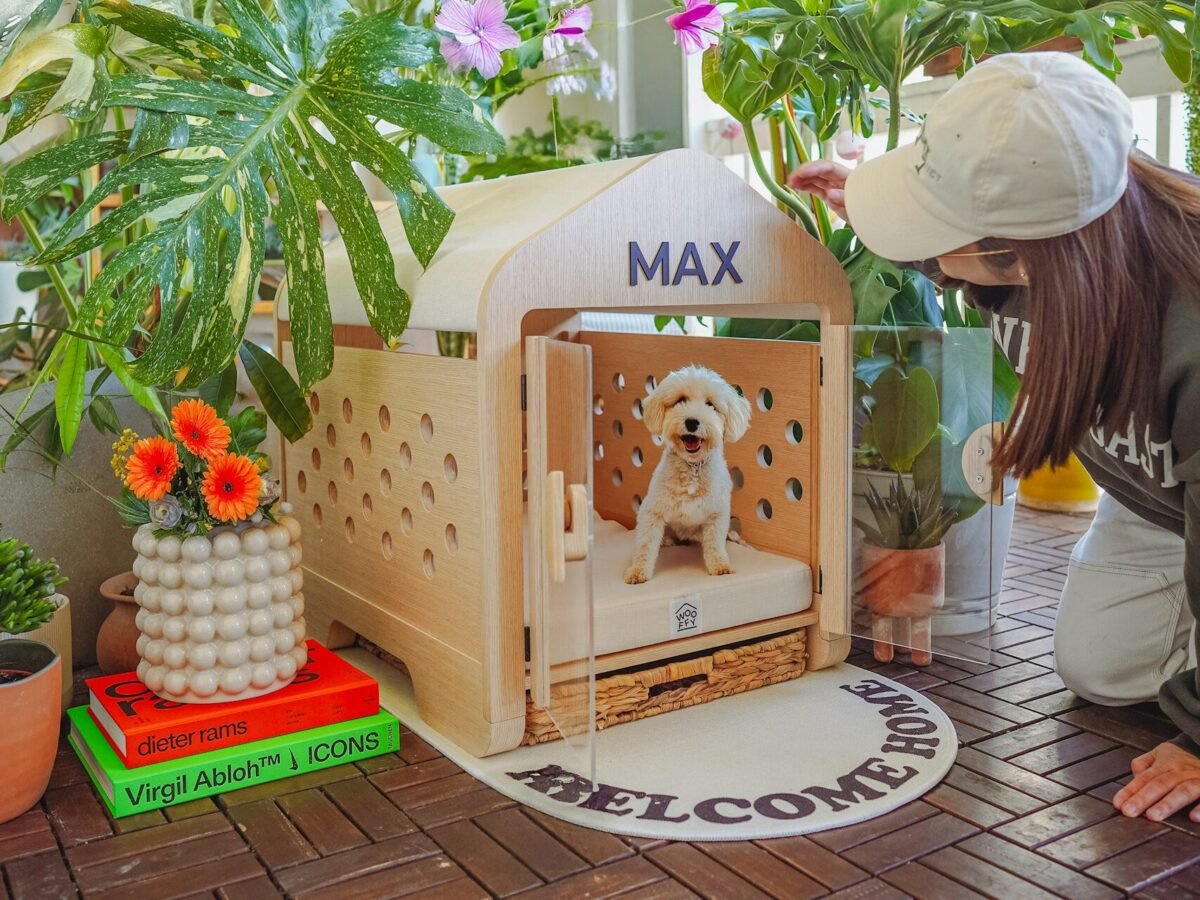
Think of these as long-term lifestyle upgrades, not beginner training tools.
Right Size (This Is More Important Than Most People Think)
A crate should be large enough for your puppy to:
- Stand up
- Turn around
- Lie down comfortably
That’s it.
If it’s too big, your puppy can eliminate on one side and sleep on the other, which slows house training. If the crate is too small, your pup can’t relax fully.
For pups that are still growing, choose a crate that fits their adult size and use a divider panel to adjust space as they grow. Extra-large breeds need giant breed crates built specifically for long-term comfort.
For strong or escape-prone puppies, heavy duty crates may be necessary, especially during adolescence.
Bed Or No Bed?
This depends on your puppy. Some settle best on a soft, padded crate bed. Others chew, shred, or overheat and do better with a simple towel or mat.
If your puppy has accidents, start with something washable and minimal. You can upgrade comfort later once they’re reliable.
If you’re looking for options, our guide to the best crate beds compares durability, washability, and chew resistance.
Cover Or No Cover?
Some puppies relax faster when the crate feels darker and more enclosed. A light blanket draped over part of the crate can reduce visual stimulation and make it feel more like a den. This is especially helpful in busy households or at night.
If your puppy seems more alert or paws at the cover, remove it. The goal is calm, not confinement.
Calming Toys That Actually Work
Not all toys help with crate adjustment.
For very young puppies, heartbeat toys can reduce nighttime anxiety. Products like the Snuggle Puppy or Calmeroo mimic warmth and a steady heartbeat, which can ease the transition from litter to crate.
The key is to reserve these for crate time only. That exclusivity increases their calming effect.
For daytime crating, long-lasting chews or stuffed enrichment toys can build positive associations. Just make sure anything left inside is safe and appropriate for unsupervised use.
One Final Setup Rule
The crate should live where your life happens. Placing it in a high-traffic area during the day helps your puppy feel included. At night, proximity to you reduces stress during the adjustment period.
You can always relocate it later once your puppy is fully comfortable.
How Long Is Too Long? (This Is Where Most Owners Mess Up)
Most crate training problems are not about the crate. They’re about duration.
Even a well-trained puppy will struggle if they’re asked to stay inside longer than their body or brain can handle. And most new owners accidentally expect too much, too soon.
Let’s simplify this.
The 2-Hour Rule For Young Puppies
How long can dogs hold their bladder? A young puppy can hold their bladder for about their age in months. A 2-month-old puppy can typically handle around 2-3 hours at most.
But here’s the important part. That number represents physical capacity, not ideal training time. Just because they can hold it doesn’t mean they should be crated that long during the day.
For young puppies under 12 weeks, aim for 1 to 2 hours during the day unless they’re sleeping.
Puppy Age vs Crate Time Guidelines
Use this as a flexible guide, not a hard rule.
- 8–10 weeks: 1 hour (sometimes less when awake)
- 10–12 weeks: 1–2 hours
- 3–4 months: 2–3 hours
- 5–6 months: 3–4 hours
- 6+ months: 4 hours during the day (varies by dog)
Overnight is different. Most puppies can last longer at night because they’re asleep and not stimulated.
A young puppy may still need middle-of-the-night potty breaks for the first few weeks. That’s normal.
Can You Crate Train If You Work Full-Time?
Yes. But not the way most people imagine.

A young puppy cannot stay crated for an entire 8-hour workday without breaks. That isn’t a training issue — it’s a biological one.
The goal during the first few months isn’t endurance. It’s stability.
What A Realistic Workday Looks Like
If you work outside the home, your setup might include:
- A midday dog walker
- A neighbor or family check-in
- A temporary puppy playpen for longer stretches
- Doggy daycare once your puppy is vaccinated
For very young puppies, a combination of crate time and safe confinement space is often more realistic than all-day crating. Think rotation, not restriction.
The Midday Break Matters More Than You Think
Puppies under 4 months usually need a bathroom break every 2 to 4 hours during the day. Skipping that break doesn’t “teach independence.” It often teaches anxiety or forces accidents.
Crate training works best when physical needs are consistently met.
What If You Work From Home?
Working from home doesn’t eliminate the need for crate training. In fact, it makes it more important.
If your puppy is never alone during the day, even for short stretches, they may struggle later with separation. Short, intentional crate sessions while you’re home help prevent that pattern.
A Simple Framework For Full-Time Workers
- Morning: Potty, play, short training session, crate with enrichment
- Midday: Break, potty, short walk or play, back in crate
- Afternoon: Repeat break if possible
- Evening: Active time, training, bonding
The crate should be part of a rhythm, not the entire day.
5 Common Crate Training Mistakes That Backfire
Most crate training struggles aren’t about stubborn puppies. They’re about small habits that accidentally teach the wrong lesson.
Here are the ones that cause the most problems.
- Using the crate as punishment. If the crate only appears when your puppy “messes up,” it becomes associated with stress.
- Letting whining work. If the door opens while your puppy is actively crying, even once, they learn that noise makes the door move.
- Leaving them too long, too early. Physical discomfort turns into emotional resistance. When duration exceeds development, progress stalls.
- Inconsistent cues. One day the crate means nap time. The next day it means you disappear for hours. Predictability builds confidence; inconsistency builds anxiety.
- Making exits and returns dramatic. The calmer you are, the calmer they become.
Reminder: Crate training doesn’t fail because puppies are difficult. It fails when the rhythm isn’t consistent.
Puppies With Separation Anxiety: Does Crate Training Help Or Hurt?
Most puppies who cry in the crate are not experiencing separation anxiety. They’re adjusting.
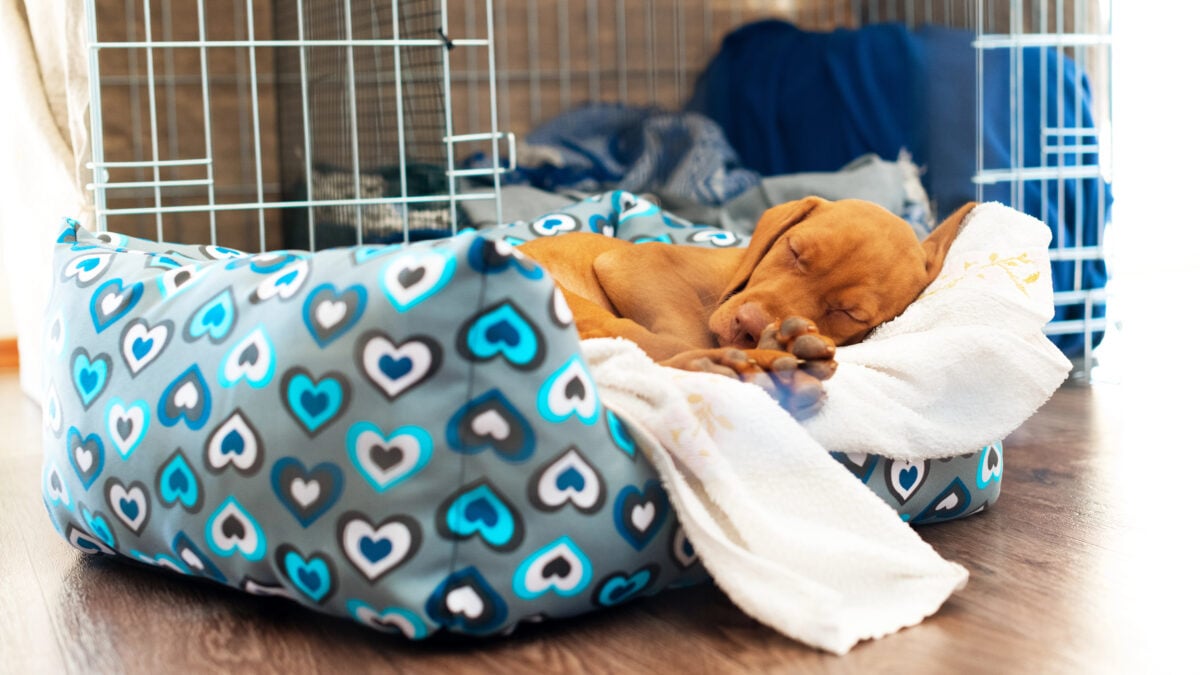
But true separation anxiety is different. And in those cases, the crate can either help — or make things worse — depending on the dog.
Normal Adjustment vs. Real Distress
Normal crate adjustment looks like:
- Brief whining that settles
- Restlessness that decreases over days
- Calm once routines are predictable
True distress looks different.
- Intense panic the moment you leave
- Attempting to chew or bend the crate
- Drooling excessively
- Urinating despite just going outside
- Injuring themselves trying to escape
If your puppy appears frantic rather than frustrated, that’s not something to “wait out.”
When The Crate Can Help
For some dogs, the crate provides structure and security. When introduced gradually and paired with positive reinforcement, it can become a predictable, calming environment.
Many anxious puppies actually settle once the crate feels consistent and safe.
When The Crate Might Make Things Worse
If your puppy is:
- Biting at the bars
- Hurting themselves
- Panicking intensely
- Unable to settle even after gradual training
A crate may not be the right tool at that moment. In these cases, a secure playpen, a gated small room, or working with a trainer may be a better starting point.
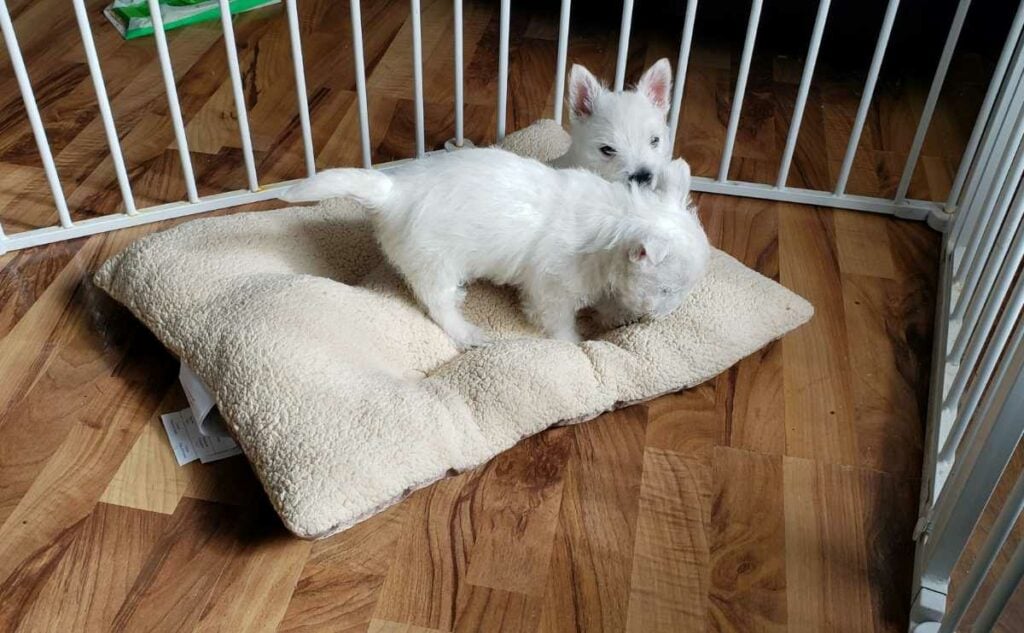
For a deeper look at reinforced crates and options specifically designed for anxious or escape-prone dogs, our guide to dog crates for separation anxiety walks through what to consider.
Frequently Asked Questions
If you’re still second-guessing yourself, that’s normal. Crate training feels bigger than it is when you’re in the middle of it. Here are the most common concerns new puppy owners have.
Don’t see your question? Respond in the comments, and we’ll get back to you!
How Long Does It Take For A Puppy To Get Used To A Crate?
Most puppies adjust within a few days to a week when training is gradual and consistent.
If your puppy is still crying intensely after two weeks, it’s usually a pacing issue. Go back a step, shorten duration, and rebuild positive associations.
Is It Okay To Let A Puppy Cry In The Crate?
Brief protest whining is normal. If your puppy has been pottied, exercised, and introduced gradually to the crate, it’s okay to wait for a pause in crying before opening the door. What you want to avoid is rewarding active whining.
If the crying sounds panicked or escalates, reassess duration and go back to earlier steps.
Should The Crate Be In My Bedroom At Night?
For the first few weeks, yes. Proximity reduces stress during adjustment. Once your puppy is sleeping through the night comfortably, you can gradually move the crate to its permanent location.
What If My Puppy Has An Accident In The Crate?
It usually means they were left too long. Adjust your schedule and shorten crate sessions. Clean the crate thoroughly so no scent remains, and rebuild confidence with shorter durations.
Will Crate Training Make My Puppy More Independent?
When done properly, yes. Crate training teaches calm separation in small, manageable doses. That skill carries into adulthood and reduces the likelihood of long-term separation issues.
Can I Stop Using The Crate Once My Puppy Is Trained?
Eventually, yes. Many dogs graduate to free roam once they’re fully house trained and emotionally stable. Others continue to use their crate as a preferred resting space for years.
The crate should feel like an option, not a life sentence.
Raising A Calm Puppy Goes Beyond The Crate
Crate training is one piece of the puzzle. A well-adjusted puppy also needs a safe home environment, proper social exposure, and clear structure from day one.
If you’re building your puppy’s foundation, these next steps matter just as much:
- Learn how to puppy-proof your home so you prevent accidents before they happen.
- Understand how to socialize your puppy safely during those critical early months.
- Use a complete puppy checklist to stay ahead of health, training, and daily routines.
Crate training isn’t about control. It’s about setting your puppy up to feel secure in your world. And when you build that security early, everything else gets easier.