When you purchase through links on our site, we may earn a commission at no extra cost to you. Learn more.
Let’s face it: Dogs smell. Even the cleanest, best-groomed pup can leave behind a lingering canine scent that settles into carpets, couches, bedding, and other favorite spots around the house.
Table of Contents
Dog smell in the house is one of the most common challenges for dog owners, but it doesn’t have to be permanent. Pet odors can build up in carpets, upholstery, bedding, floors, and other areas where your dog spends time.
Before you reach for an air freshener, though, it’s important to address the source of the odor. Cleaning the right surfaces, keeping your dog fresh and groomed, and maintaining a regular cleaning routine can help eliminate dog smells instead of simply masking them.
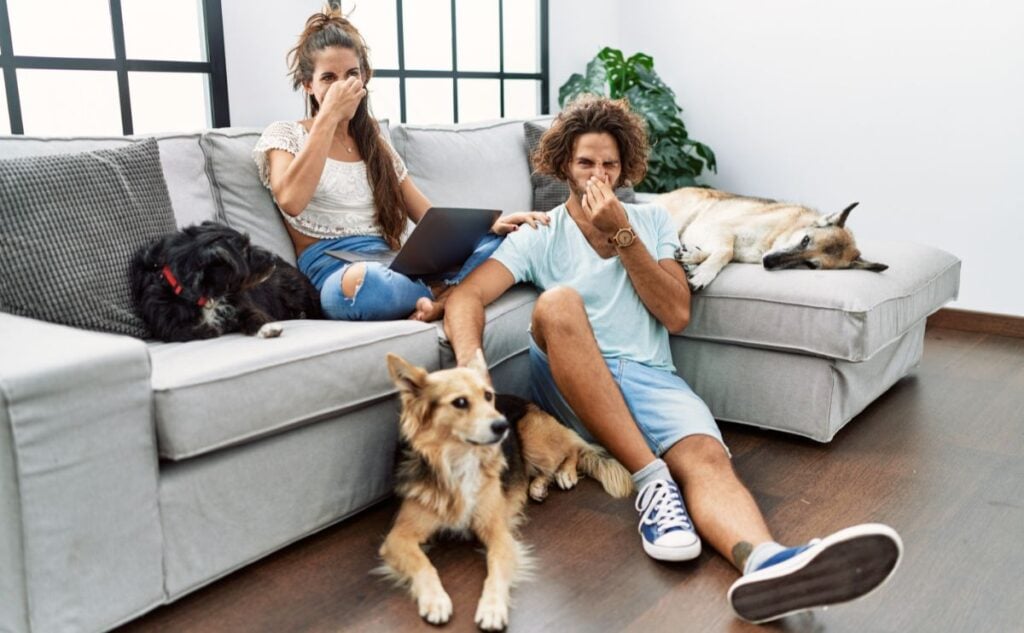
The best approach depends on where the odor is coming from and how long it has been there. Whether you need a quick fix for a mildly musty room or a full-on odor overhaul, these practical solutions can help you get rid of dog smell and keep your home smelling clean and fresh.
If Your House Smells Like Dog, Here’s What to Do:
If your home has a noticeable dog smell, don’t try to tackle everything at once. Start with these three steps:
- Wash your dog’s bedding. Launder beds, blankets, and anything else your dog regularly sleeps on. These items can hold onto odors and spread them back into the room.
- Vacuum and clean odor-trapping surfaces. Pay special attention to carpets, rugs, upholstery, and other soft surfaces where dog hair, dander, and oils can accumulate.
- Freshen your dog, too. A bath or grooming session can help eliminate odors at the source — just be careful not to over-bathe your dog, which can irritate their skin.
Once you’ve tackled these basics, move on to the deeper cleaning and odor-control strategies below. If the smell persists despite cleaning, it may be worth investigating whether an underlying skin, ear, dental, or other health issue is contributing to the odor.
Dog Smell Troubleshooter: Find The Source Fast
Not sure where that dog smell is coming from? Use this quick guide to narrow down the likely source before you start cleaning. Tackling the source first is usually much more effective than trying to mask the odor.
| If You Smell… | Likely Source | Start Here |
|---|---|---|
| General “doggy” odor | Bedding, fur, rugs, or upholstery | Wash bedding and vacuum thoroughly |
| Wet or musty smell | Damp coat, bedding, or fabrics | Dry your dog completely and wash damp fabrics |
| Urine or ammonia odor | Potty accident or old urine stain | Use an enzymatic pet cleaner |
| Fishy odor | Anal glands or another issue involving your dog | Check your dog and contact your vet if it persists |
| Yeasty or musty odor on your dog | Skin, ears, or paws | Schedule a veterinary evaluation if the smell is persistent |
| Bad breath | Teeth, gums, or another oral issue | Check your dog’s mouth and consider a dental exam |
| Smell strongest on the couch | Oils, dander, saliva, or fur in upholstery | Vacuum cushions and deep-clean the upholstery |
| Entire room smells | Multiple odor sources or poor ventilation | Clean the main odor sources and increase ventilation |
Still can’t find the source? Start with the places your dog spends the most time, including beds, blankets, rugs, couches, crates, and favorite sleeping spots. Then check your dog’s coat, ears, mouth, paws, and rear end for any unusually strong or new odors.
My House Stinks Like A Dog: Start With The Source
The easiest place to eliminate dog stench is to go straight to the odor offender. Yes, I’m talking about your dog. But before I go further in this article, I have to confess — I, like many dog owners, get used to the “unique” scents of my hound home. Seriously, it’s only when I go on vacation for a week and return home that I realize what all the stink is about with dog odors in a home. But if you’re a pup parent and care about your home’s odor, start at the source: your pup.
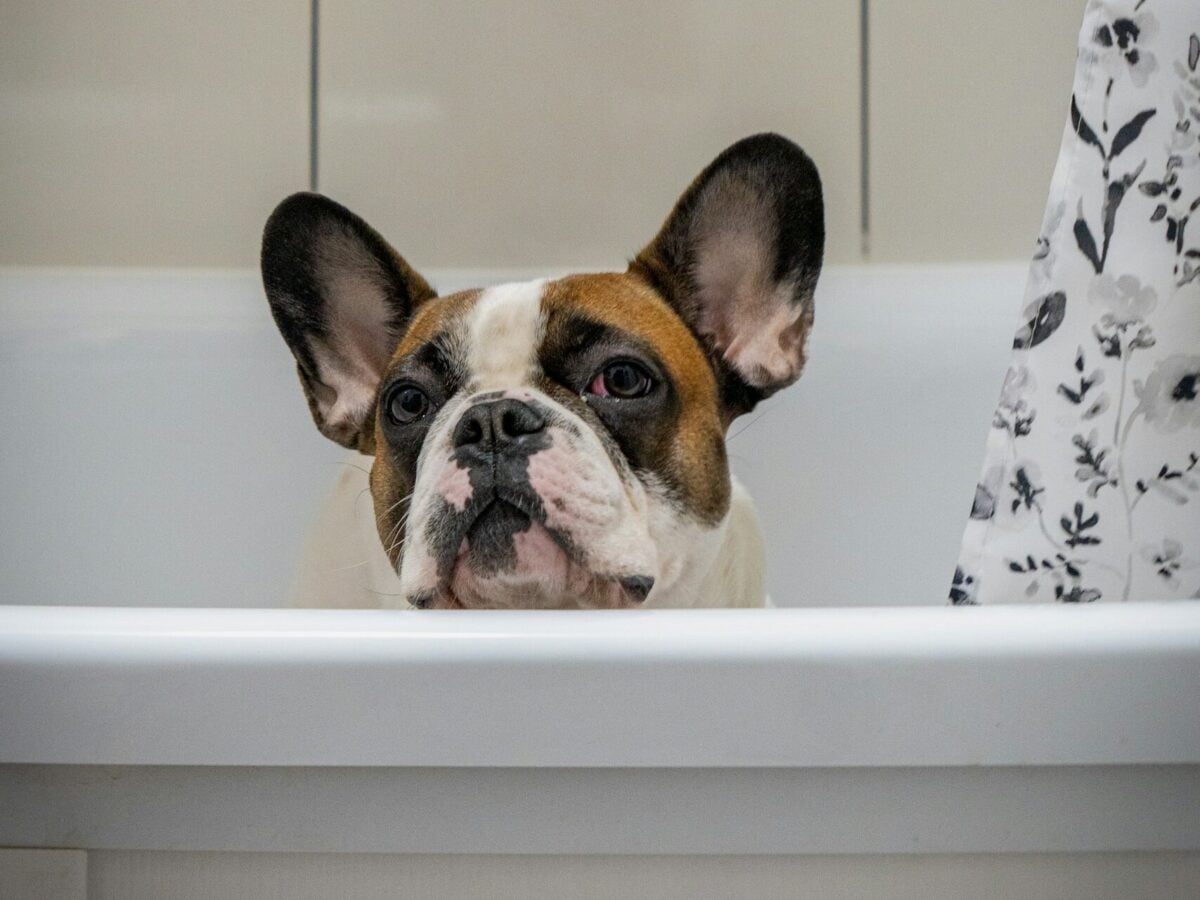
Here are some tips to help keep your pup from robbing your home of its fresh scent. With a regular hygiene routine, you (ideally) won’t have as many musky smells to remove from your house over time.
- Bathe your dog regularly, ideally every 1 to 3 months. The frequency depends on your furry friend’s coat type, hair length, activity level, and skin problems. Bathing too often robs your pup’s coat of natural oils and can lead to dry, irritated skin. Consider Arm & Hammer Odor Control Dog Shampoo or one of our top recommendations for the best dog oatmeal shampoos.
- Brush your dog 2 to 5 times a week to distribute natural oils, remove dander and dead fur, and minimize shedding. If your pup has a thick undercoat, you’ll need a deshedding brush, too.
- Use a mild dry shampoo for dogs in between baths to help cut down on odors. You can also sprinkle some baking soda or cornstarch on your pup’s fur to neutralize the stink.
- Don’t forget about teeth. Dogs need tooth brushing ideally every day. Otherwise, they’ll develop gum disease, which leads to very stinky breath and saliva.
- Wash your dog’s bedding, toys, bowls, collars, and leashes regularly.
Next Step: What’s Causing the Dog Smell?
Not all dog odors are the same, and the best solution depends on where the smell is coming from. Find your situation below and jump to the fix:
- Dog smell in your couch: Vacuum hair and dander, then deep-clean the upholstery to remove odor trapped in the fabric and cushions.
- Dog smell in your carpet: Vacuum thoroughly, including along the edges and under furniture, by choosing the best vacuums for homes with pets. Then use a pet-safe carpet cleaner to tackle odors deeper in the fibers.
- Dog smell in your car: Vacuum the seats, floor mats, and cargo area, and clean any fabric or upholstery your dog regularly touches. Don’t forget the hard-to-reach areas where hair collects. Consider using car seat covers for dogs for easier cleaning in the future.
- Wet dog smell: Dry your dog thoroughly after baths, swimming, or rainy walks. Wash damp towels and bedding promptly, too, since moisture can make that classic wet-dog odor worse.
- Urine smell: Use an enzymatic pet-odor cleaner designed to break down urine rather than simply masking the smell. This is especially important if the odor keeps returning to the same spot.
- Dog bed smell: Wash the removable cover and clean the bed itself according to the manufacturer’s instructions. If the odor has soaked into the filling and won’t come out, it may be time to replace it.
- The smell keeps coming back: Don’t just clean the room again. Look for the source, such as your dog’s skin or ears, bedding, carpets, furniture, or an area where accidents have occurred. Persistent or unusually strong odor from your dog may also warrant a conversation with your veterinarian.
Once you know where your dog has left their smell, it’s time to deep clean. We’ll get into more detail in the sections below with some of our favorite products and helpful tips and tricks.
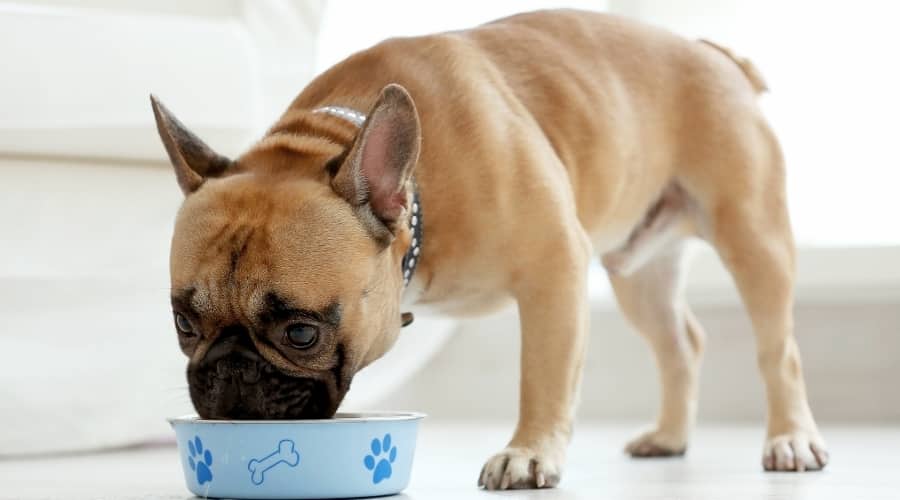
Don’t Forget: Feed Your Pup A High-Quality Diet
You may not equate your dog’s food with odor, but a healthy body can go a long way to help cut down the smelliness. How? An all-natural, high-quality dog food can help improve your pup’s skin and coat health, anal gland function, and reduce digestive issues that lead to gas and stinky poops. Read my reviews of the best fresh dog food to see my top picks. Many of these fresh meals contain human-grade, whole-food ingredients with lots of superfoods to keep your pup healthy.
How To Eliminate Dog Odor In Your Carpeting & Other Flooring
The best way to get rid of dog smell depends on your flooring. Carpet and rugs tend to hold onto the most odor because they trap pet hair, dander, body oils, and saliva.
Carpet & Rugs
Vacuum regularly. This is your first line of defense against dog odor. Vacuum thoroughly to remove hair, dander, and other odor-causing debris before it builds up. If you hate vacuuming as much as I do, a robot vacuum can help keep up with daily pet hair and dander. See our reviews of the best robot vacuums for pet hair and dander.
For stubborn odors, go beyond vacuuming. If you have a particularly smelly dog or your pup has accidents involving urine or vomit, you may need to deep-clean your carpets. The Bissell TurboClean PowerBrush Pet Carpet Cleaner is one option. It sprays a cleaning and deodorizing formula into the carpet and then extracts the dirty solution, helping tackle odors deeper in the fibers.
Hardwood & Tile
Vacuum or sweep first, then mop. Removing loose hair and debris before mopping helps prevent you from simply pushing the mess around. Remember to choose a pet-safe floor cleaner. Many pup parents like Aunt Fannie’s Ultra Concentrated Floor Cleaner Vinegar Wash, a vinegar-based concentrate available in lemon, lavender, and eucalyptus scents.
Quick tip: Pay extra attention to areas where your dog spends the most time, such as around their bed, food and water bowls, and favorite spots on the floor. These high-traffic areas can accumulate odor faster than the rest of your home.
Air Filters & Air Purifiers Are A Must
Keeping your house’s air as clean as possible is an easy way to help clear out the dog stink. When the weather cooperates, open windows to air out your home.
Also, change your HVAC air filters regularly. Experts generally recommend changing your air filters every one to two months if you have a pet. With multiple pets in your home, it’s best to change air filters at least every month.
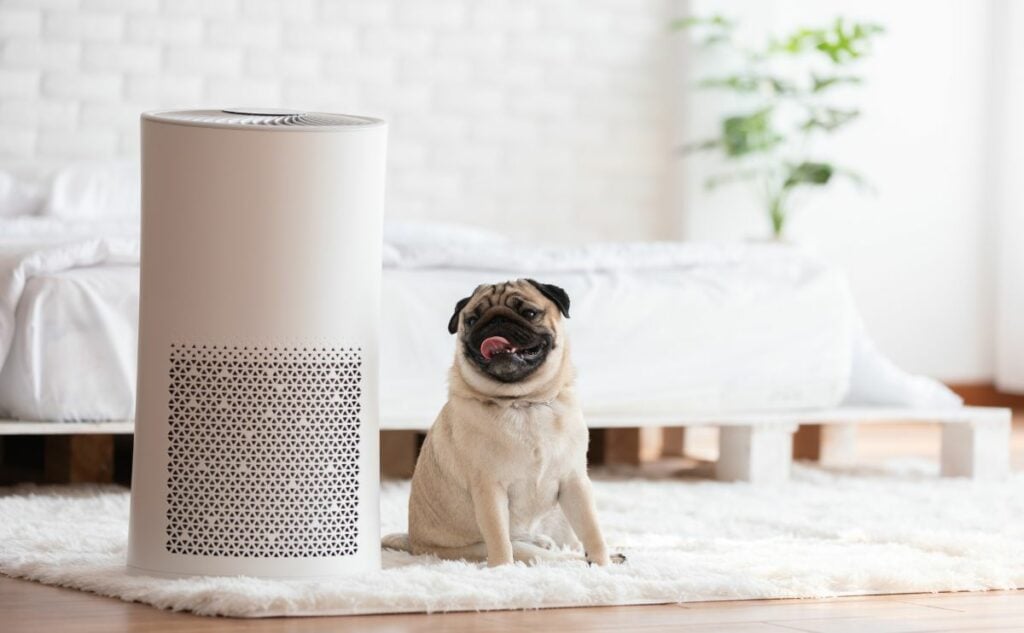
I have a dog, three indoor cats, and multiple allergy sufferers in my home, and one of the best things I’ve done is purchase air purifiers. A high-quality air purifier helps filter out dust, germs, allergens, pet dander, and odors.
For pet hair and airborne dander, look for a properly sized HEPA air purifier. If odor itself is your main concern, choose a unit that also contains a substantial activated-carbon filter, since HEPA filters primarily capture particles rather than odor-causing gases.
Our top pick is the GermGuardian 5-in-1 HEPA Air Purifier, which works for areas up to 743 square feet. For more options, see our reviews of the best air purifiers for pets.
Expert Tip: Place activated charcoal bags in every room your dog spends time in (just keep them out of reach of inquisitive pups). They’re effective at absorbing odors and can freshen your air for up to two years.
Pet-Safety Tip: Avoid ozone-generating air cleaners marketed for odor removal. EPA advises against using devices that intentionally generate ozone in occupied spaces.
How To Get Rid Of Dog Smell Out Of Couches
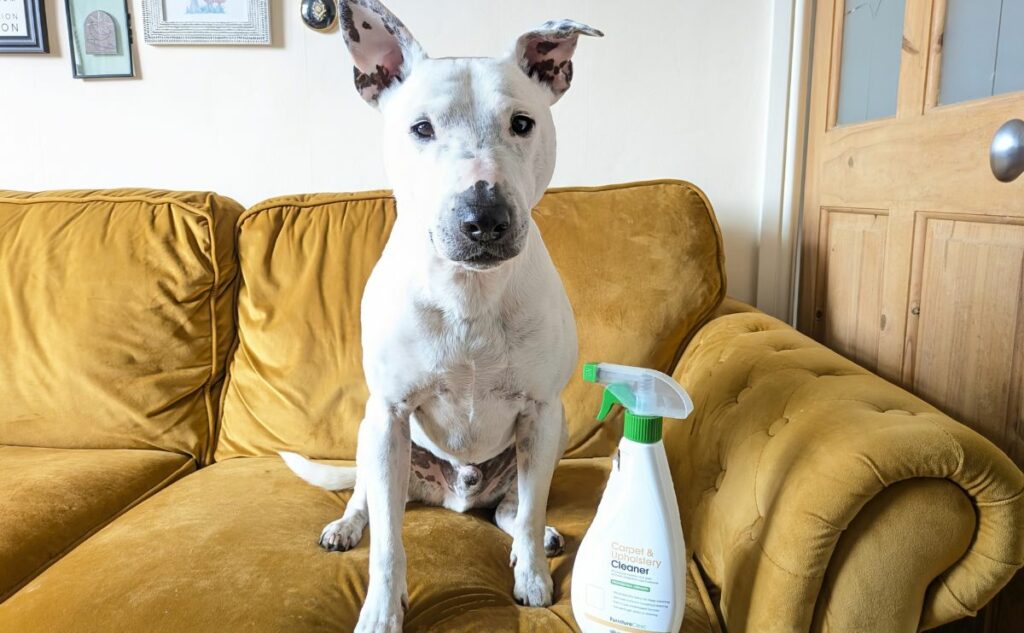
Like carpeting, upholstered furniture can easily trap pet odors. Couches, chairs, and other fabric-covered furniture collect hair, dander, and body oils over time.
Deep-Clean Upholstery
I regularly borrow my neighbor’s Bissell Little Green Portable machine, which is great for removing pet muck and odors from couches and upholstered chairs. You can also use it on carpeting, although I find a high-powered carpet cleaner works better for larger floor areas.
Freshen Between Cleanings
Use a pet-friendly upholstery spray to freshen your furniture between deep cleanings. I recommend the bestselling Angry Orange Pet Odor Eliminator, which is designed to neutralize odors rather than simply mask them. It has a fresh citrus scent and can be used on several surfaces, including furniture, tile, carpeting, hardwoods, concrete, and turf.
Dealing with both stains and odors? Rocco & Roxie Stain & Odor Eliminator is another popular choice among dog owners.
Consider a Couch Cover
If your dog spends a lot of time on the furniture, a machine-washable couch cover can make odor control much easier. There are plenty of affordable, attractive options that can save you from frequent upholstery cleanings. See our reviews of the best couch covers for dogs for our top recommendations.
Remove Potty Accidents ASAP
Clean up any potty accidents on your flooring as soon as possible to prevent urine odors. For fresh accidents, soak up the urine with paper towels. Once you’ve soaked it all up, rinse the area with cool water, then blot it dry with towels. After the area has dried, vacuum it. For older accidents or dried urine, see my article on how to get dog pee smell out of carpets, which includes more of my recommendations for fantastic dog odor and stain eliminators.
How To Get Rid Of Dog Scent In Your Car
Having dog-reek in your car can be even worse than in your home because it’s such an enclosed space. If you cart your dog around with you in the car, Meguiar’s Whole Car Air Re-Fresher Odor Eliminator is a fantastic dog odor eliminator. See what one guy did to rid his newly purchased used car of wet dog smell in the video below. He wasn’t even a pet owner!
Baking Soda Works Wonders
Seriously, this is one of the cheapest and most effective ways to deodorize your pup and your house. You can sprinkle baking soda on nearly anything to neutralize odors — your dog’s fur, carpets, bedding, you name it. You can even add a few small drops of a pet-safe essential oil for a fresher scent. Typically, it takes about 24 hours for baking soda to fully absorb odors.
What makes baking soda so effective? Also known as sodium bicarbonate, baking soda eliminates odors by neutralizing acidic and alkaline molecules that cause unpleasant smells. It works through a chemical reaction, where the baking soda interacts with odor-causing compounds to neutralize them rather than just masking the odors.
Need A Quick Pet Smell Remover?
When guests are on their way, you don’t have time for a deep clean. Focus on getting the strongest odors out of the air and off the surfaces your guests will notice most.
Guests Coming Over? Try This First
Start with ventilation. Open windows and doors if weather permits, and turn on ceiling or portable fans to get stale, smelly air moving. Then:
- Pick up and wash anything your dog has been sleeping on. Toss blankets, throws, and removable bedding into the wash.
- Quickly vacuum the main living areas. Focus on carpets, rugs, couches, and your dog’s favorite spots.
- Freshen upholstery and other odor-prone surfaces. A pet-safe deodorizing spray can help neutralize lingering smells.
- Add a pleasant scent if you like. Light a pet-safe scented candle or use an air-freshening spray to make the room smell fresher.
For a quick carpet, furniture, or bedding freshener, you can also make a simple spray by mixing ¼ witch hazel with ¾ water in a spray bottle. Add about five drops of lavender essential oil, shake well, and lightly mist appropriate washable or fabric-safe surfaces. Always check the material’s care instructions and test a small, inconspicuous area first.
For Weekly Dog-Odor Prevention
The best way to avoid last-minute panic cleaning is to stay ahead of the odor. Once a week, vacuum thoroughly, wash your dog’s bedding and blankets, clean favorite furniture spots, and check areas where hair and dander tend to accumulate. Regular grooming and bathing, when appropriate for your dog, can also help reduce the amount of odor that makes its way into your home.
Think of it this way: quick cleaning makes your home smell better today; consistent cleaning keeps it from smelling like dog in the first place.
Looking for more dog odor eliminators for your furry friend or your house? Read my colleague’s article on the best pet odor eliminators & neutralizers for almost any need.
When Is Dog Odor Abnormal?
Some doggy smell is completely normal. But a strong, sudden, unusual, or persistent odor coming from your dog can be a sign that something isn’t right. If regular bathing and grooming don’t improve the smell, don’t assume you simply need a stronger deodorizer. The odor may be coming from your dog’s skin, ears, mouth, or anal glands and could require veterinary attention.

Here are a few odors to watch for:
- Musty or yeasty skin odor: Skin infections, allergies, and other skin conditions can cause a strong smell. This is especially common in dogs with skin folds, where moisture and bacteria can accumulate.
- Foul-smelling ears: A strong odor coming from your dog’s ears can be a sign of a yeast or bacterial ear infection, particularly if you also notice redness, discharge, scratching, or head shaking.
- Fishy smell: A distinct fishy odor coming from your dog’s rear may point to anal gland problems. See our guide on why dogs smell like fish to learn more.
- Bad breath: Persistent, unusually foul breath can be more than normal “dog breath” and may indicate dental disease or another health issue.
Regular grooming and dog wipes can help keep your pup’s skin, ears, paws, and rear clean, but they shouldn’t be used to mask a persistent or unusual odor. If the smell is new, keeps returning, or comes with itching, redness, discharge, pain, excessive licking, or other changes in your dog’s behavior, schedule a visit with your veterinarian. Finding and treating the underlying cause is the best way to eliminate the odor for good.
Do you take offense when you hear someone say that all pup parents’ homes smell like a dog? Share your thoughts in our comments below!
Frequently Asked Questions About Dog Smell In Your Home
Still battling that unmistakable doggy odor? These quick answers can help you figure out where the smell is coming from, what actually neutralizes it, and how to keep your home smelling fresher.
Have a question we didn’t answer? Drop it in the comments below, and we’ll do our best to help!
Why Does My House Smell Like Dog Even After Cleaning?
Your house may still smell like dog after cleaning because odor-causing oils, dander, saliva, urine, and moisture can remain trapped in porous materials. Carpet padding, rugs, upholstered furniture, dog beds, blankets, curtains, and even your car can hold onto odors that routine surface cleaning misses.
If the smell keeps returning, try locating where it’s strongest rather than repeatedly cleaning the entire room. Don’t forget your dog’s favorite sleeping spots and washable items like bedding, blankets, collars, and soft toys.
What Neutralizes Dog Smell Naturally?
Baking soda can help absorb odors from many carpets, rugs, and upholstered surfaces, while fresh air and good ventilation can reduce odors lingering in a room. Regularly washing your dog’s bedding and vacuuming areas where your pup spends the most time can also make a noticeable difference.
Always check the manufacturer’s cleaning instructions before applying baking soda or any homemade cleaner to carpet, upholstery, or flooring. And be cautious with essential oils and other fragranced products around pets — “natural” doesn’t necessarily mean pet-safe.
How Do I Get Dog Smell Out Of A House Permanently?
The best way to keep dog smell from returning is to remove the source instead of masking the odor. Wash your dog’s bedding and blankets regularly, vacuum carpets and furniture, clean accidents promptly with an appropriate cleaner, and keep your dog clean and well-groomed.
For persistent odors, work room by room and pay particular attention to porous surfaces. Once you’ve eliminated existing odors, a simple weekly cleaning routine can help prevent them from building up again.
If your house starts smelling again soon after a thorough cleaning, check whether the odor is actually coming from your dog.
Does Baking Soda Really Remove Dog Odor?
Baking soda can help reduce some dog odors because it can absorb and neutralize certain odor-causing compounds. It’s especially convenient for deodorizing some carpets, rugs, and upholstered surfaces between deeper cleanings.
However, baking soda isn’t a solution for every odor. Urine that has soaked into carpet padding, for example, may require an enzymatic cleaner and deeper treatment. Always make sure baking soda is appropriate for the material you’re cleaning and vacuum it up thoroughly afterward.
Will An Air Purifier Remove Dog Smell?
An air purifier may help, but the type of filter matters. HEPA filters are designed primarily to capture airborne particles such as pet dander, while activated-carbon filters can help reduce some odors and gaseous pollutants.
If dog odor is your main concern, look for an appropriately sized air purifier that combines particle filtration with a substantial activated-carbon filter. Keep in mind that an air purifier shouldn’t replace cleaning: removing the odor source and improving ventilation should come first.
How Often Should I Wash My Dog’s Bedding?
A good starting point is to wash frequently used dog bedding and blankets about once a week, particularly if your dog sheds heavily, spends time outdoors, or has a noticeable odor. The CDC includes weekly cleaning as an example frequency for pet beds and blankets.
Follow the bedding manufacturer’s washing instructions, and don’t forget removable covers, crate mats, and blankets your dog regularly sleeps on. Washing these items routinely can prevent odor from building up and spreading back onto clean floors and furniture.
Why Does My Dog Suddenly Smell Bad?
A sudden or unusually strong odor can sometimes indicate that the smell is coming from your dog rather than your home. Potential sources include the ears, mouth, skin, coat, paws, or anal glands.
Pay attention to what the odor smells like and whether you notice other changes, such as itching, redness, discharge, excessive licking, scooting, skin irritation, or changes in behavior. If the smell is new, persistent, particularly foul, or accompanied by other symptoms, contact your veterinarian rather than simply trying to cover it with deodorizing products.
How Do I Know Where The Dog Smell Is Coming From?
Start with the places your dog spends the most time. Smell-check the dog bed, blankets, couch cushions, rugs, carpet, crate, and your dog’s favorite sleeping spots. Then check your dog, particularly the coat, ears, mouth, paws, and rear end.
If one room smells significantly stronger than the others, inspect porous surfaces and look for old potty accidents or damp materials. A handheld UV or black light may help locate some dried urine stains that aren’t obvious in normal lighting, although not every glowing spot is necessarily urine.
Once you identify whether the odor is coming from your dog, a specific surface, an accident, or the room itself, you’ll have a much better chance of eliminating it instead of temporarily covering it up.
More Tips For Tackling A Stinky Dog
A little doggy smell is normal, but you don’t have to let it take over your home. Regular cleaning, fresh bedding, and good grooming habits can go a long way toward keeping your space smelling fresh. And if an unusual odor keeps coming back, check with your veterinarian to rule out an underlying health issue.
Keeping your home smelling fresh is much easier when you stay on top of odors at the source. If your pup gets a little funky between baths, check out our guide to the best dry shampoos for dogs for waterless ways to freshen up. And if you’re dealing with a much bigger stink after an unfortunate wildlife encounter, learn what to do when your dog gets sprayed by a skunk. For everyday messes, our dog care and cleaning guides can help you stay ahead of the dirt, fur, and odors that come with sharing your home with a pup.
What’s Your Tried-And-True Trick For Getting Rid Of Dog Smell?
Every dog household has its own tricks for keeping those unmistakable pup odors under control. Have you found a cleaning hack, product, or routine that works wonders in your home? Share your tried-and-true dog smell secrets in the comments below. Your tip might be exactly what another dog parent needs!