When you purchase through links on our site, we may earn a commission. Here’s how it works.
Choosing between Iams and Pedigree often feels like a toss-up. Both brands are affordable, easy to find, and marketed as complete and balanced for everyday dogs.
Table of Contents
But once you look past the price tag, the differences start to matter. Ingredient choices, life-stage nutrition, and overall formulation quality aren’t identical — and those details can affect how well a food supports your dog over time.
In this comparison, we break down ingredient quality, nutrition, brand philosophy, and value, so you can see which brand makes more sense for your dog.
| Best For Puppies | Best For Adults | Best For Seniors |
|---|---|---|
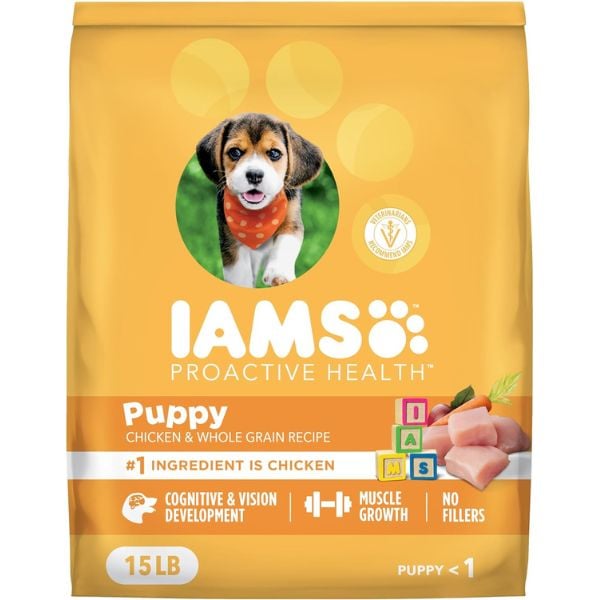 | 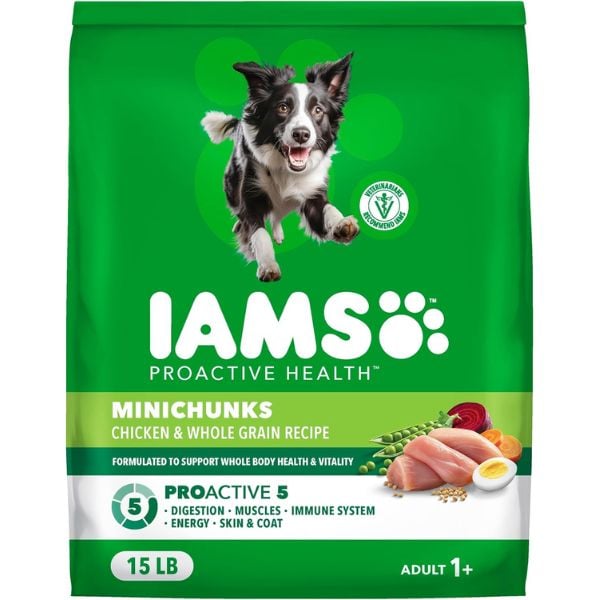 | 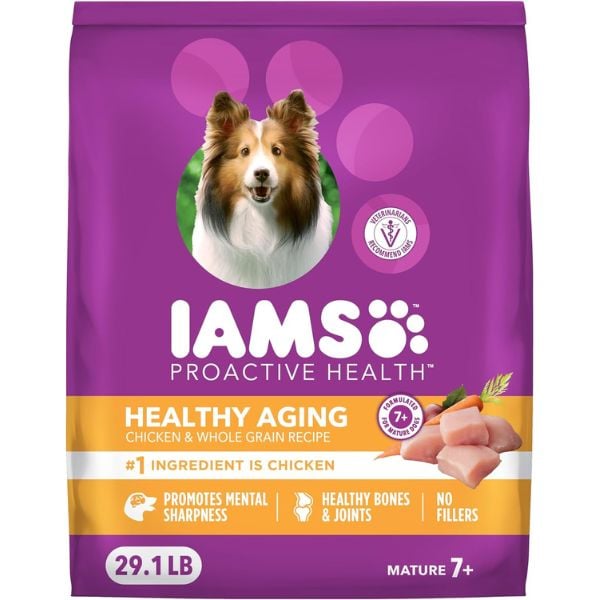 |
| Iams Puppy | Iams Minichunks | Iams Healthy Aging |
| View on Amazon | View on Amazon | View on Amazon |
| View on Chewy | View on Chewy | View on Chewy |
| Read Review | Read Review | Read Review |
Comparing Brand Histories
Understanding a dog food brand’s history helps explain why its formulas look the way they do today. Pedigree and Iams may share the same parent company, but they were built with very different goals — and that difference still shows up in their ingredient choices and nutrition strategies.

Iams
Iams was founded in the 1940s by animal nutritionist Paul Iams with a clear goal: create dog food backed by nutritional science, not just minimum standards. Over the years, the brand built its reputation around targeted nutrition and protein-forward recipes.
Today, Iams is known for:
- Clear life-stage formulas (puppy, adult, senior)
- Named animal proteins as primary ingredients
- Grain-inclusive recipes based on established nutrition research
- A focus on long-term health rather than food trends
Now owned by Mars, Incorporated, Iams is no longer marketed as a premium brand — but it still positions itself as a step above basic budget dog food, especially when it comes to nutritional balance.
Pedigree
Pedigree dates back to the 1930s and has always focused on one thing: affordability. The brand was designed to make commercial dog food accessible to as many households as possible. That mission hasn’t changed.
Pedigree’s approach centers on:
- Budget-friendly pricing
- Wide availability in grocery and big-box stores
- Grain-forward recipes
- Strong emphasis on taste and palatability
Also owned by Mars, Incorporated, Pedigree meets AAFCO standards for complete and balanced nutrition (as does Iams). However, its formulas tend to rely more heavily on grains and by-products to keep costs low, with fewer distinctions between life-stage recipes.
Recall History & Safety
When the quality or safety of a product doesn’t meet expectations, a pet food company may issue a voluntary withdrawal, or the U.S. Food & Drug Administration (FDA) may require a recall.
Recalls can sound alarming, but they don’t automatically mean a dog food brand is unsafe. They’re best used to understand how often issues occur — and how a company responds when something goes wrong.
Below are the most notable, publicly documented recalls for each brand. Note: Both brands’ recalls have been voluntary.
Iams
Iams has had a handful of notable recalls/withdrawals over the years. The most commonly cited in public reporting include:
- March 2007 (industry-wide): Iams was among many brands pulled during the broader melamine contamination crisis tied to contaminated ingredients used across the pet food industry.
- July/August 2010: Select Iams Veterinary (and some Eukanuba) dry pet food products were voluntarily recalled due to potential Salmonella contamination linked to a specific manufacturing window.
- August 2013: P&G voluntarily recalled specific lots of Iams (and Eukanuba) dry pet foods again for potential Salmonella contamination (precautionary; limited lots).
Pedigree
Pedigree’s recall history is also limited, with most events involving foreign material risk rather than nutrient imbalances.
- June 30, 2012: Voluntary recall of select Pedigree Healthy Weight canned dog food varieties due to a potential choking risk (reports at the time described small pieces of blue plastic).
- August 26, 2014: Voluntary recall of a small number of Pedigree Adult Complete Nutrition dry dog food bags due to the possible presence of metal fragments (limited distribution and specific bag codes).
- May 17, 2024: Mars Petcare US voluntarily recalled 315 bags of Pedigree Adult Complete Nutrition Grilled Steak & Vegetable Flavor (44 lb) due to the potential presence of loose metal pieces in the bag (sold at select Walmart stores; specific lot code).
What’s Really In The Bowl? Ingredients Compared
Ingredients are where Iams and Pedigree start to look meaningfully different, even though both brands are widely available and designed for everyday feeding. The biggest gap isn’t “good vs bad.” It’s about formulation priorities.
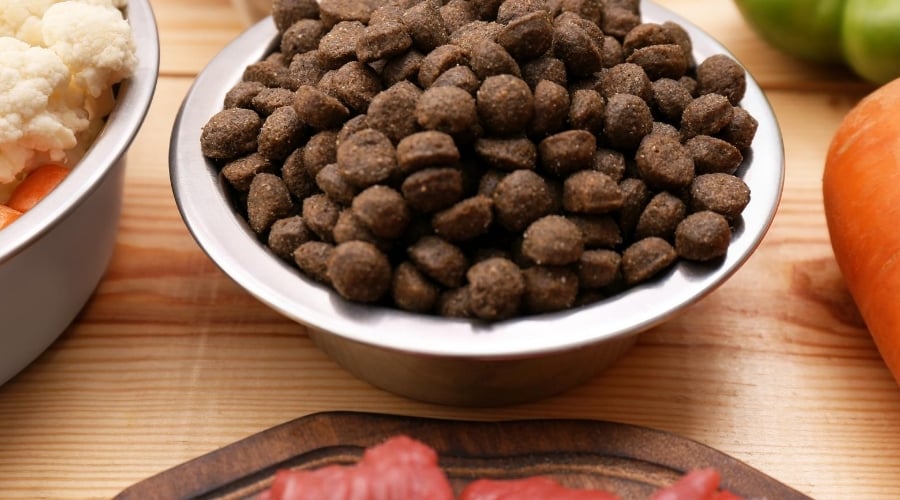
Iams: More Nutrition-Driven, Still Traditional Kibble
Iams positions many of its formulas around real meat as the first ingredient and “whole-body health” benefits. But it’s important to understand what that looks like in practice: Iams is still a classic grain-inclusive kibble, and it commonly uses a mix of animal and plant ingredients to hit nutrient targets.
Common ingredient traits you’ll see in current Iams dry formulas:
- Chicken as the first ingredient in flagship recipes.
- Whole grains like corn and sorghum are common early ingredients.
- Named by-products are used in some formulas (e.g., chicken by-product meal), which can include organ meats and other nutrient-dense parts.
- Added functional extras show up often (e.g., prebiotics, omega fatty acids, antioxidants).
Bottom line on Iams ingredients:
If you want a more consistent, nutrition-focused step up from the lowest-priced brands — while staying in the mainstream grain-inclusive category — Iams usually fits that role.
Pedigree: Budget-First Formulas Built for Taste & Accessibility
Pedigree is designed to deliver complete and balanced nutrition at a lower cost per meal, and that goal shows up in how recipes are built. This brand also notes that many products are made in the USA with ingredients sourced from around the world.
Common ingredient traits you’ll often see in current Pedigree formulas:
- A grain-forward base is typical.
- Protein is frequently supported by meals/by-products (cost-efficient, widely used in budget foods).
- Some widely sold dry formulas (depending on variety and retailer listing) may include artificial colors and chemical preservatives like butylated-hydroxyanisole (BHA), which is one reason ingredient panels can look “busier” than Iams.
- Wet varieties are typically gravy-forward and built for strong palatability, while still emphasizing “no artificial flavors” in the brand’s messaging.
Bottom line on Pedigree ingredients:
Pedigree is usually the better match when the priority is affordability + picky-eater appeal, but ingredient panels often reflect more cost-cutting tools (and, in some formulas, added colors/preservatives).
Ingredient Comparison At A Glance
| Feature | Iams | Pedigree |
|---|---|---|
| Primary focus | Nutrition-forward | Budget-first, broad appeal |
| Typical first ingredient | Real meat | Often grain-forward + meals/by-products (varies by formula) |
| By-products used | Yes, in some formulas | Common in many formulas |
| Grain-free options | Not a major focus (brand is largely grain-inclusive) | Not a major focus (brand is largely grain-inclusive) |
| Artificial colors | Not typical in flagship dry listings (varies by formula) | Present in some widely sold dry formulas (varies by formula) |
Bottom Line On Ingredients
- Choose Iams if you want a more consistent, meat-forward flagship formula and a more “nutrition-first” approach within the grocery-store tier.
- Choose Pedigree if you need the lowest-cost complete-and-balanced option and your dog does best with highly palatable, budget-built recipes — with the tradeoff that ingredient panels can be more cost-driven (and in some formulas, may include added colors/preservatives).
Range Of Formulas
A strong dog food brand should support dogs through every stage of life, not just adulthood. Puppies, adults, and seniors have different nutritional needs — and factors like breed size, activity level, and weight sensitivity can change what “good” looks like for your dog.
The best brands do this by offering:
- Life stage–specific nutrition with balanced protein, fat, and key nutrients
- Breed-size options that account for kibble size, metabolism, and joint support
- Targeted formulas for common health concerns, such as sensitive digestion, skin and coat health, weight management, and mobility
So how do Iams and Pedigree compare in terms of variety and broad coverage?
Formula Availability At A Glance
Iams’ lineup is built around clear life stages (puppy, adult, senior) and adds breed-size-specific puppy formulas. On the Iams product pages, you’ll see direct positioning around digestion support, skin/coat health, and whole-body wellness across their dry lineup.
What Iams offers (most consistently):
- Puppy formulas by size, including Small Breed Puppy and Large Breed Puppy recipes
- A dedicated senior line (Iams frames this as Healthy Aging)
- A solid mix of dry and wet recipes under the ProActive Health umbrella (pâtés/ground-style canned options are widely available)
Overall, Iams feels like a brand trying to cover “most common dogs” with more intentional formula differences between life stages.
Pedigree also covers the basics well — especially if you’re shopping by age, breed size, and budget. Pedigree’s website breaks dry foods out by age (puppy/adult) and breed size (small/medium/large), and it also groups products by lines like Complete Nutrition, High Protein, and Healthy Weight.
What Pedigree offers (most consistently):
- Strong “everyday adult” coverage through its Complete Nutrition style formulas
- A defined Healthy Weight line (dry and wet formats exist, but the line is primarily built around adult weight control)
- A large wet food presence (pouches and cans) designed to be served as a meal or mixed with kibble
Where Pedigree tends to feel less robust is in true life-stage depth (especially senior-specific dry options compared to Iams) and how distinctly formulas are tuned from one stage to the next.
To see which brand is the better fit for your dog, let’s break down their formulas by life stage — starting with puppy food.
Puppy Formulas Comparison
Puppy food is one of the most important choices you’ll make in your dog’s first year. Puppies need higher protein and fat levels, carefully balanced minerals for bone development, and added nutrients like DHA to support brain and vision growth. Large-breed puppies, in particular, require tighter calcium and calorie control to reduce the risk of joint problems later on.

Both Iams and Pedigree offer puppy-specific formulas, but they don’t approach early-life nutrition with the same level of precision.
Iams Puppy Food: More Targeted (Especially By Breed Size)
Iams takes a more “precision nutrition” approach to puppy food than most budget brands. Instead of relying on one catch-all puppy kibble, Iams puts real emphasis on breed-size needs, which is especially helpful for puppies growing fast (or prone to joint stress).
Iams puppy formulas typically include:
- Size-specific dry puppy recipes (Small Breed Puppy + Large Breed Puppy) built to support different growth rates and needs
- Real chicken as the first ingredient in those size-specific recipes
- Omega-3 DHA for brain development (called out directly in the puppy formulas)
- A consistent “growth support” framework (Iams highlights 22 key nutrients like those found in mother’s milk)
- A true puppy wet food option, including a Classic Ground Chicken & Rice recipe designed specifically for puppies
This range makes Iams appealing for owners who want more tailored puppy nutrition without jumping into premium or veterinary-only foods.
Pedigree Puppy Food: Broad, Budget-Friendly Coverage (Dry + Wet)
Pedigree’s puppy lineup is built for accessibility — easy-to-find options at a lower cost, with formulas that still meet growth needs and emphasize taste. It’s not as size-specific on the dry side, but it does offer both dry and wet puppy products.
Pedigree puppy formulas generally feature:
- A flagship dry puppy option: Puppy Growth & Protection Chicken & Vegetable Flavor
- DHA for puppy brain development, plus added minerals like calcium and phosphorus for bones/teeth
- Brand positioning that highlights no artificial flavors, no added sugar, and no high fructose corn syrup
- Wet food for puppies
This range works best for families prioritizing price and palatability, especially if they plan to mix in wet food as a topper.
Puppy Food Winner: Iams
Iams is the clear winner for puppy food due to its more targeted formulations, clearer nutritional intent, and better ingredient consistency across puppy recipes. Pedigree’s puppy food meets basic AAFCO growth standards, but Iams goes a step further by offering size-specific puppy formulas and a more intentional nutrient balance.
Puppy Formula Top Pick: Iams Proactive Health Puppy Dry Dog Food
View on Amazon | View on Chewy
Iams Proactive Health Puppy is formulated specifically to support healthy growth without overdoing calories, making it suitable for a wide range of puppies, including small and large breeds.
What it does well:
- Chicken as the first ingredient, providing a solid animal-protein base
- Includes DHA to support brain and vision development
- Added omega fatty acids (fish oil) for skin and coat health
- Antioxidants help your pup develop a strong immune system
- Balanced fat levels to fuel growth without excessive weight gain
- Uses prebiotics to support digestion during a sensitive life stage
Potential drawbacks:
- Grain-inclusive only (may not appeal to owners seeking grain-free diets)
- Uses some by-product ingredients, which may concern ingredient-focused shoppers
Best for:
Growing puppies whose owners want reliable, science-backed nutrition without moving into prescription or premium price tiers.
Price
- $29.97 (15-lb bag)
Adult Formula Comparison
Adult dog food is where long-term nutrition really adds up. Once growth slows, the goal shifts to maintaining lean muscle, supporting digestion, and preventing unnecessary weight gain — all while keeping meals consistent enough that your dog thrives day to day.

Both Iams and Pedigree offer a wide range of adult formulas, but they don’t approach adult nutrition in the same way.
Iams Adult Dog Food: More Structured, Nutrition-First Options
Iams’ adult lineup is built around the idea that adult dogs still benefit from purpose-driven nutrition, not just maintenance calories. Most of its adult foods fall under the ProActive Health umbrella, with clear distinctions between formula goals.
Iams adult formulas typically include:
- Multiple adult dry recipes, including standard, small-breed, large-breed, and weight-focused options
- Chicken as the first ingredient in flagship recipes like Adult Minichunks
- Added prebiotics and fiber blends to support digestion
- Fat and calorie levels designed to maintain muscle without encouraging excess weight
- Adult wet food options that can be fed alone or used as toppers
This approach works well for owners who want a dependable, mainstream food that still feels intentionally formulated — especially for dogs that need structure without specialty diets.
Pedigree Adult Dog Food: Broad Coverage With a Value Focus
Pedigree’s adult lineup is larger in volume and heavily centered on everyday feeding at a lower price point. The brand’s formulas are designed to be easy to find, easy to feed, and appealing to a wide range of dogs.
Pedigree adult formulas generally feature:
- A large selection of Adult Complete Nutrition dry foods
- Additional adult lines like High Protein and Healthy Weight
- Grain-forward recipes that prioritize affordability and palatability
- A very large wet food presence (cans and pouches) aimed at adult dogs
- Fewer nutritional differences between individual adult dry formulas
Pedigree adult food can work well for dogs that tolerate a wide range of ingredients and for households where budget and availability are the top priorities.
Adult Dog Food Winner: Iams
Iams takes the win in the adult dog food category for the same reason it pulls ahead elsewhere: more intentional nutrition and clearer formula differences designed for long-term maintenance. While both brands meet basic adult nutrition standards, Iams does a better job supporting lean muscle maintenance, digestive health, and weight control over time.
Adult Formula Top Pick: Iams Proactive Health Adult Minichunks
View on Amazon | View on Chewy
Iams Proactive Health Adult Minichunks is one of the brand’s most widely fed and consistently formulated adult recipes. It’s designed to support everyday adult dogs without overfeeding calories or relying heavily on filler ingredients.
What it does well:
- Chicken as the first ingredient, providing a solid animal-protein base (also available in beef and lamb)
- Moderate protein and fat levels that help maintain muscle without excess weight gain
- Added prebiotics and fiber to support digestion
- Smaller kibble size that works well for a wide range of adult dogs
Potential drawbacks:
- Grain-inclusive only
- Uses some by-product ingredients, which may turn off ingredient-focused shoppers
Best for:
Adult dogs who need reliable, balanced nutrition for daily feeding, especially those prone to weight gain or digestive issues on richer foods.
Price
- $29.97 (15-lb bag)
Senior Formula Comparison
As dogs age, their nutritional needs shift again. Senior dogs often require fewer calories, carefully balanced protein to maintain muscle, and added support for joints, digestion, and overall mobility. Small differences in formulation can matter more at this stage than they did earlier in life.

Both Iams and Pedigree offer senior-specific options — but, as with other life stages, their approaches aren’t identical.
Iams Senior Dog Food: Targeted “Healthy Aging” Nutrition
Iams frames its senior recipes around healthy aging, with formulas designed to support mobility, digestion, and body condition without pushing calories too high.
Senior formulas typically include:
- A dedicated Senior / Healthy Aging dry formula (7+), not just relabeled adult food
- Adjusted calorie and fat levels to help manage age-related weight gain
- Added nutrients aimed at joint health and mobility
- Digestive support ingredients to help aging dogs absorb nutrients more efficiently
This makes Iams’ senior lineup feel more intentionally tuned for dogs whose activity levels and metabolism are slowing.
Pedigree Senior Dog Food: Basic Coverage With Fewer Adjustments
Pedigree also offers a senior-labeled dry formula, designed to meet AAFCO standards for adult maintenance while accommodating older dogs’ needs. The focus, however, remains on accessibility and value rather than highly targeted aging support.
Pedigree senior formulas generally feature:
- One primary Senior Complete Nutrition dry recipe
- Grain-forward ingredients similar to adult formulas
- Less separation nutritionally between adult and senior recipes
- Strong emphasis on affordability and palatability
For some senior dogs — especially those without mobility or weight concerns — this can be sufficient. But the formulas tend to be less differentiated than Iams’ senior offerings.
Senior Dog Food Winner: Iams
Iams earns the senior category win for offering more deliberately adjusted nutrition designed for aging dogs, rather than a minimal reformulation.
Senior Formula Top Pick: Iams Proactive Health Senior (Healthy Aging)
View on Amazon | View on Chewy
Iams Proactive Health Senior Plus is formulated to help aging dogs maintain mobility and body condition without unnecessary calories.
What it does well:
- Controlled fat and calorie levels to support healthy weight
- Protein levels aimed at maintaining lean muscle
- Added nutrients to support joint health and digestion
- L-Carnitine to boost a slowing metabolism
- Omega fatty acids for skin and coat health
- Consistent formulation that’s easy for seniors to tolerate
Potential drawbacks:
- Grain-inclusive only
- Uses some by-product ingredients
Best for:
Senior dogs who need balanced, easy-to-digest nutrition with more age-appropriate calorie control than standard adult food.
Price
- $46.98 (29.1-lb bag)
Wet Food Comparison
Wet dog food can play a useful role at any life stage. Some owners rely on it as a complete meal, while others use it as a topper to improve hydration or entice picky eaters. Texture, meat content, and ingredient density matter more here than they often do with dry food.

Both Iams and Pedigree have a strong wet food presence — but, once again, they’re designed with different priorities in mind.
Iams Wet Dog Food: Simpler, Meat-Forward Options
Iams’ wet food lineup is smaller than Pedigree’s, but it’s more tightly aligned with the brand’s overall nutrition philosophy. Most recipes fall under the ProActive Health line and are positioned as either complete meals or nutritious toppers.
Iams wet formulas typically include:
- Pâté / classic ground textures with a higher meat density
- Chicken or beef as primary protein sources
- Fewer flavor-driven variations, but more consistency across recipes
- Life-stage options, including puppy and adult wet foods
- Straightforward ingredient lists relative to price point
This approach works well for owners who want a wet food that complements kibble without dramatically changing the overall diet.
Pedigree Wet Dog Food: Large Variety, Gravy-Forward & Highly Palatable
Pedigree is one of the most recognizable names in wet dog food, especially for its pouches and “Choice Cuts in Gravy” cans. The brand clearly prioritizes taste, aroma, and variety, which appeals to picky eaters.
Pedigree wet formulas generally feature:
- A very large selection of cans and pouches
- Gravy-heavy textures designed to boost palatability
- Recipes marketed primarily for adult dogs
- Lower cost per serving compared to many competitors
- Strong suitability as a topper rather than a protein-dense standalone diet
Pedigree’s wet food can be helpful for dogs who refuse dry kibble — but nutritionally, it’s often better viewed as a meal enhancer than the foundation of a diet.
Wet Dog Food Winner: Iams
Iams wins the wet food category for offering more nutritionally consistent, meat-forward options that work well as either a complete meal or a topper — without leaning as heavily on gravy for appeal.
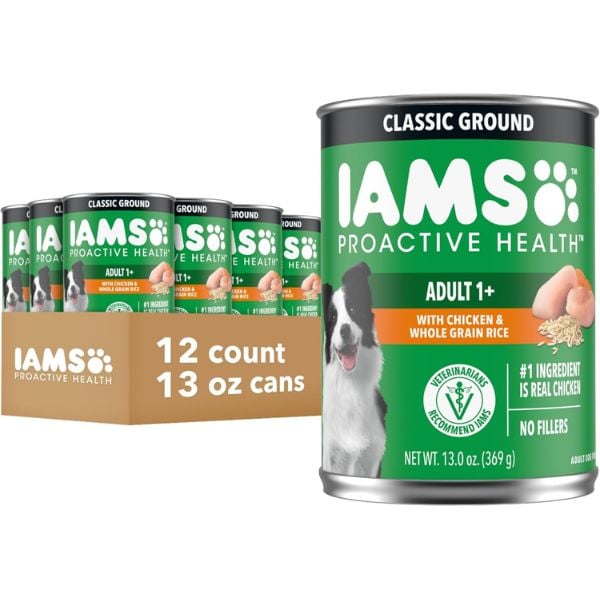
Wet Food Top Pick: Iams Proactive Health Adult Chicken & Rice (Classic Ground)
View on Amazon | View on Chewy
This Iams wet recipe delivers a straightforward protein base in a smooth, easy-to-eat texture that works well for dogs of all ages, especially seniors and picky eaters.
What it does well:
- Chicken as the primary protein source (also available in beef and lamb)
- Smooth pâté texture that’s easy to portion and digest
- Works well as a standalone meal or mixed with kibble
- Fewer flavor-driven additives than many gravy-style foods
Potential drawbacks:
- Limited variety compared to Pedigree’s wet lineup
- Not ideal for owners who prefer chunky or stew-style textures
- Contains synthetic dyes (as does Pedigree’s wet and dry food))
Best for:
Dogs who need simple, palatable wet food with better nutritional consistency — or owners looking for a reliable topper that won’t overpower the rest of the diet.
Price
- $26.96 (13-oz can (Pack of 12))
Price & Value Comparison
Cost is one of the biggest reasons these two brands are compared in the first place — and this is where Pedigree remains competitive.
Iams: Mid-Range Grocery Store Pricing
- Costs more per bag than Pedigree
- Still far below premium or veterinary brands
- Price reflects more targeted formulations, not boutique ingredients
Iams generally offers better nutritional value per calorie, even if the sticker price is higher.
Pedigree: Lower Cost, Wider Accessibility
- One of the most affordable nationally distributed dog foods
- Easy to find at grocery stores, big-box retailers, and online
- Lower price point makes long-term feeding more manageable for large dogs or multi-dog households
Pedigree wins on budget and availability, but those savings often come with tradeoffs in ingredient quality and formula specificity.
Value Takeaway
- If the lowest cost is the top priority → Pedigree
- If nutrition per dollar matters more → Iams
Final Verdict: Iams vs Pedigree
For most dogs, Iams is the better overall choice. It consistently offers:
- More intentional life-stage nutrition
- Slightly higher protein quality
- Better differentiation between puppy, adult, and senior needs
- Wet foods that function as more than just flavor enhancers
Pedigree still has a place, especially for budget-conscious households or dogs that do well on simpler, grain-heavy diets, but nutritionally, it doesn’t match Iams across as many categories. We also aren’t fans of Pedigree’s use of synthetic dyes, BHA, and other potentially harmful ingredients.
Beyond Kibble & Cans
Traditional kibble and canned food still work well for most dogs, but they’re no longer the only options on the table. Some owners choose fresh or air-dried dog food to add moisture, increase protein density, or better match their dog’s preferences.
Fresh brands like The Farmer’s Dog and Ollie use lightly cooked, minimally processed ingredients, while air-dried options from Spot & Tango and Badlands Ranch offer higher meat content with shelf-stable convenience. These diets can be a good fit for some dogs, but they’re typically more expensive and not necessary for every household.
If you’re curious about alternatives, we’ve tested and reviewed these options to help you decide whether a fresh or air-dried diet makes sense for your dog — or whether a well-formulated kibble like Iams is still the best fit.
Have you fed your dog Iams or Pedigree? Share your experience in the comments — what worked, what didn’t, and what you’d recommend to other dog owners trying to decide.