When you purchase through links on our site, we may earn a commission. Here’s how it works.
If your dog stretches the moment they see you, that’s not random. In many cases, it has less to do with tight muscles and more to do with who you are to them.
Table of Contents
And while it looks simple, that stretch can mean very different things depending on when it happens, who it’s for, and what comes next.

It’s Not Just A Stretch: What Your Dog Is Really Saying With That Movement
Dogs stretch all the time. But when a stretch shows up because you did, it usually means something more.
This isn’t just a physical reset. It’s a response.
Many dogs stretch the moment their person walks into the room, makes eye contact, or shifts into a familiar routine. That timing matters. It tells you the stretch isn’t happening in isolation — it’s happening with you in mind.
Why This Stretch Shows Up The Moment You Walk In
Dogs are extremely good at pattern recognition. Over time, they learn that your arrival predicts good things, like attention, movement, or shared routines.
That anticipation often comes out as a stretch because it’s:
- Slow enough to be noticed
- Non-threatening
- Easy to repeat
- Likely to get a response
It’s one of the clearest ways your dog can say, “I see you.”
Quick Takeaway: A stretch that happens because you appeared is usually intentional, not mechanical.
Why It Looks So Deliberate
Some stretches are subtle. Others look exaggerated on purpose. When a dog wants to be understood, they tend to use bigger, slower body language.
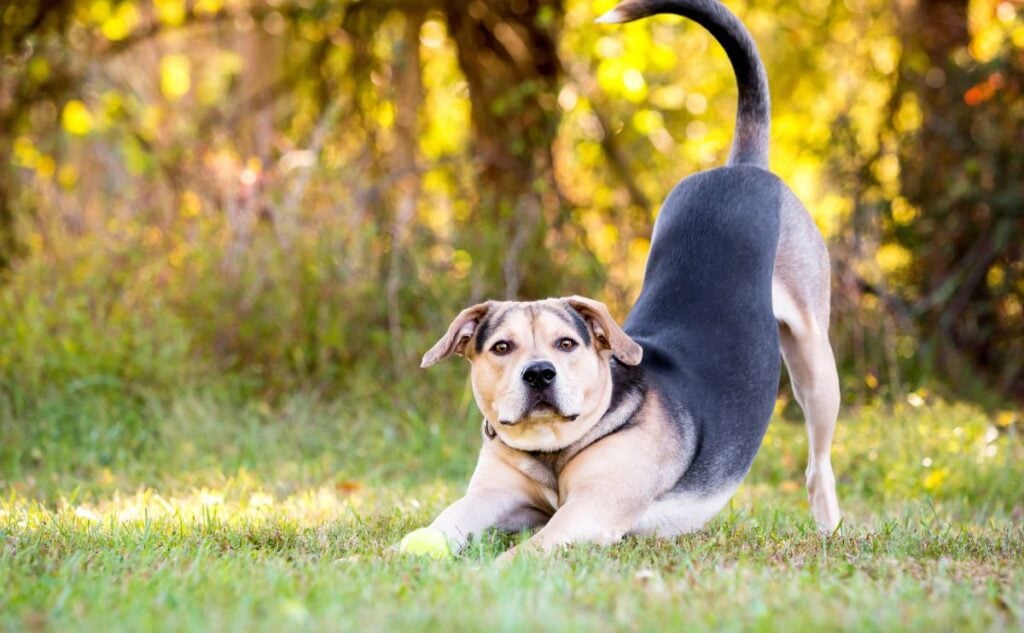
Stretching elongates the body, lowers the chest, and creates a clear visual signal without excitement or tension. That’s why these stretches often feel intentional. They’re meant to be seen.
Stretching vs Just Waking Up
Not every stretch carries meaning.
A stretch that happens after sleep is usually quick, automatic, and disconnected from whatever you’re doing. There’s no pause, no eye contact, and no expectation that you’ll respond.
A stretch that shows up because you appeared feels different.
It often includes:
- A glance to check if you’re watching
- A brief pause afterward
- A shift toward you or into the room
That pause is important. It’s the difference between loosening muscles and communicating.
5 Reasons Dogs Stretch When They See You
Dogs don’t stretch randomly. But they also don’t stretch for just one reason.
The same movement can mean very different things depending on timing, posture, and what comes next. These are the most common explanations — and how to tell which one you’re seeing.
1. They’re Greeting You (Affection & Trust)
Not all greeting stretches happen with all four paws on the ground. Some dogs stretch upward, rising onto their hind legs and lengthening their bodies toward you.
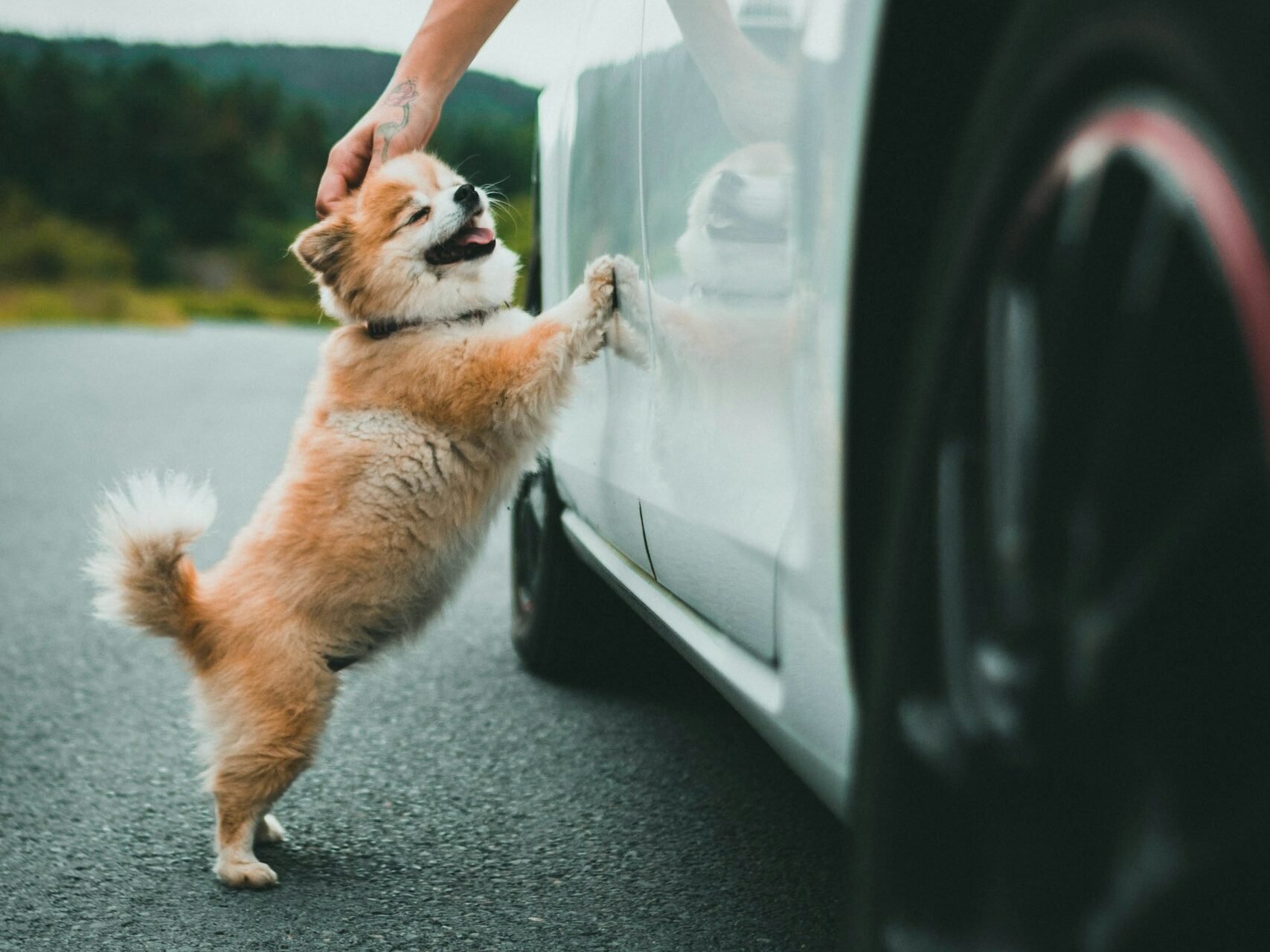
In these moments, the movement is about closing the distance. Your dog is using a stretch-like motion to reach you, seek contact, or make sure they’re noticed. Other dogs greet this way closer to the ground, often with a bow-like posture.
Common greeting stretch signs include:
- A bowing posture with the rear end raised or an upward stretch toward you
- A soft or wagging tail
- Perky ears or relaxed eye contact
- A brief pause, as if waiting for you to respond
This stretch functions as a calm, polite greeting. Instead of jumping or barking, your dog is saying, “I see you. I’m happy you’re here.”
Watch: This dog stretches toward their human with eye contact and a wagging tail — a calm, affectionate greeting.
2. They’re Inviting Play Or Resetting The Mood
Sometimes a stretch is an invitation. In these cases, you’re usually seeing a play bow — the classic front-legs-down, rear-up posture used to signal friendly intent.
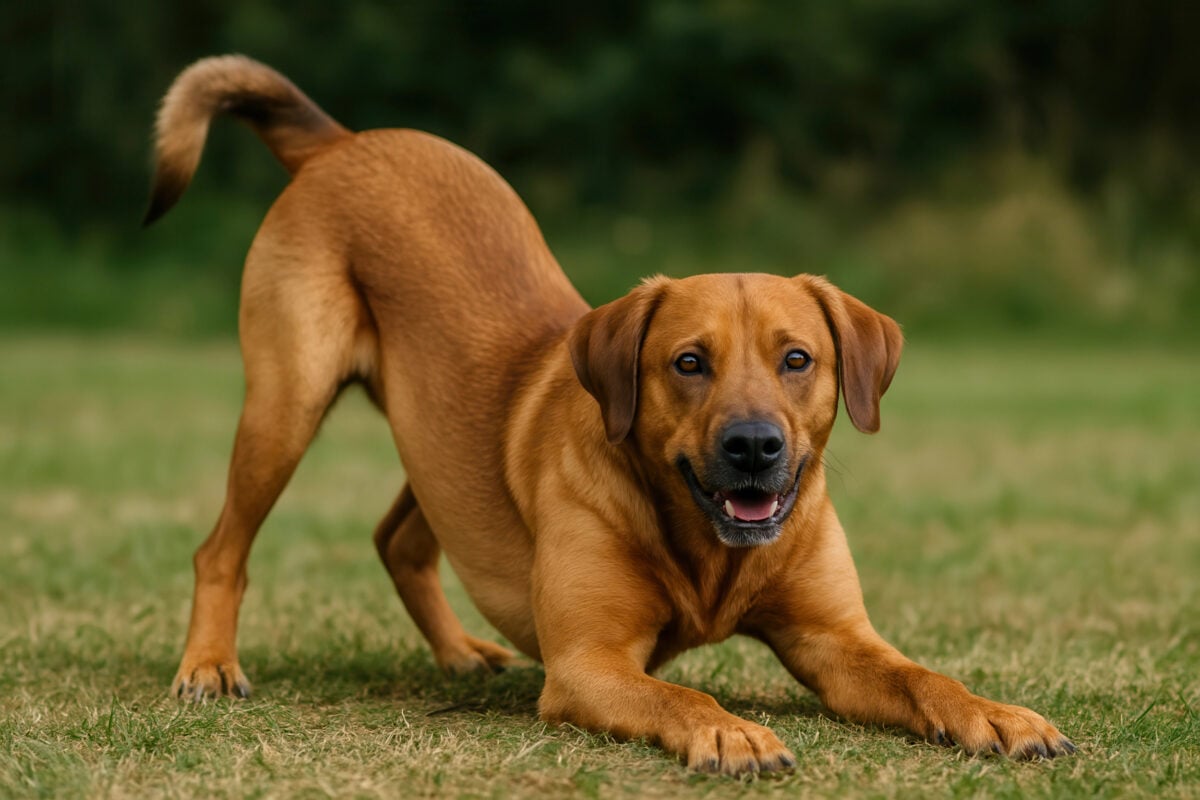
This stretch often:
- Happens quickly
- Looks bouncy or exaggerated
- Comes with a wagging tail and excited expression
- Is followed immediately by movement, zoomies, or grabbing a toy
Dogs also use this stretch to reset play, especially when things get rough or intense. You might see a dog pause mid-wrestle, bow, and then re-engage. It’s their way of saying, “Still playing. Still friendly.”
Watch: This Doberman initiates play by quickly dropping into a bow. Dogs also stretch into a bow as a polite play cue for other dogs. You’ll see this move a lot at the dog park.
3. They’re Releasing Stress Or Regulating Emotion
Not all stretches are about you. Some are about self-regulation.
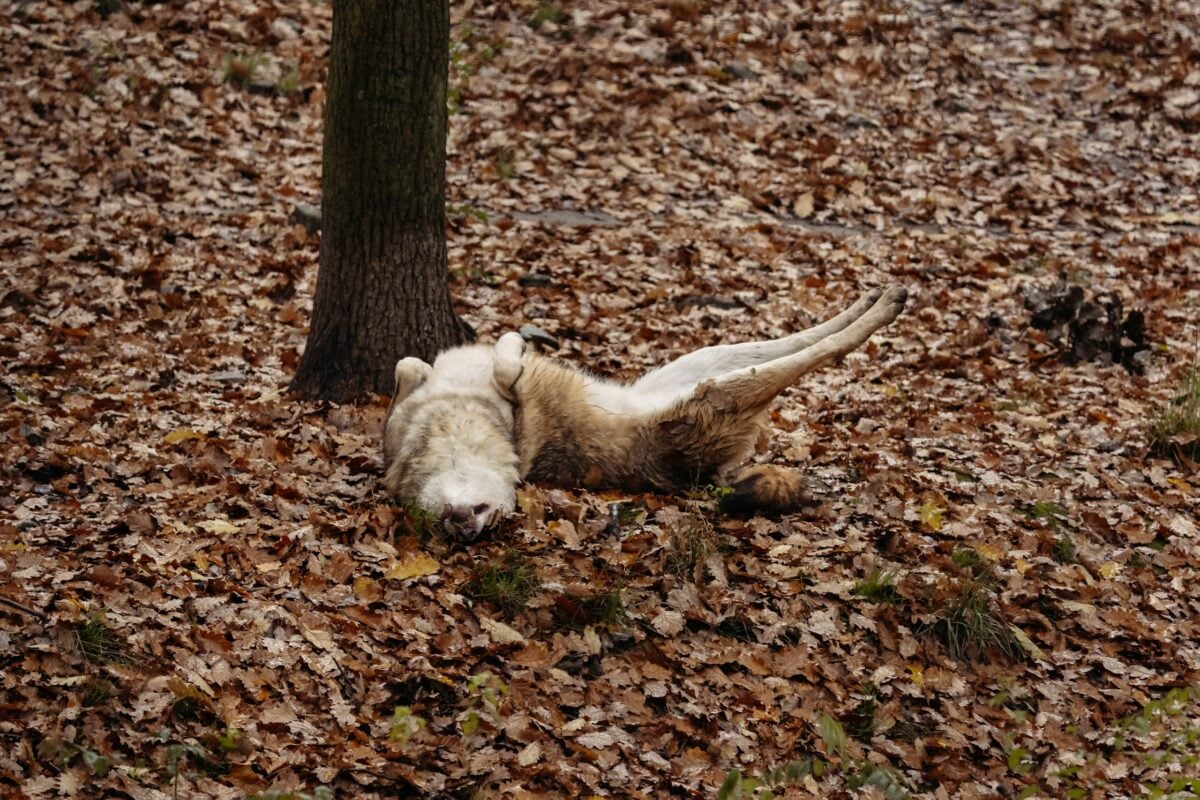
Dogs often stretch:
- After moments of excitement
- Following loud or chaotic activity
- When transitioning from high energy to calm
These stretches help release physical and emotional tension.
You might notice:
- A slower, more deliberate stretch
- A shake-off immediately afterward
- No attempt to engage you
This kind of stretch isn’t a greeting or invitation. It’s more like a deep breath.
Watch: This stretching paired with rear-leg extensions or ground-kicking, it’s a good indicator that the dog is releasing tension and expressing confidence in their environment. Brief eye contact here is often a social check-in, not reassurance-seeking.
4. They’re Easing Discomfort (Context Matters)
Sometimes stretching is about relief.
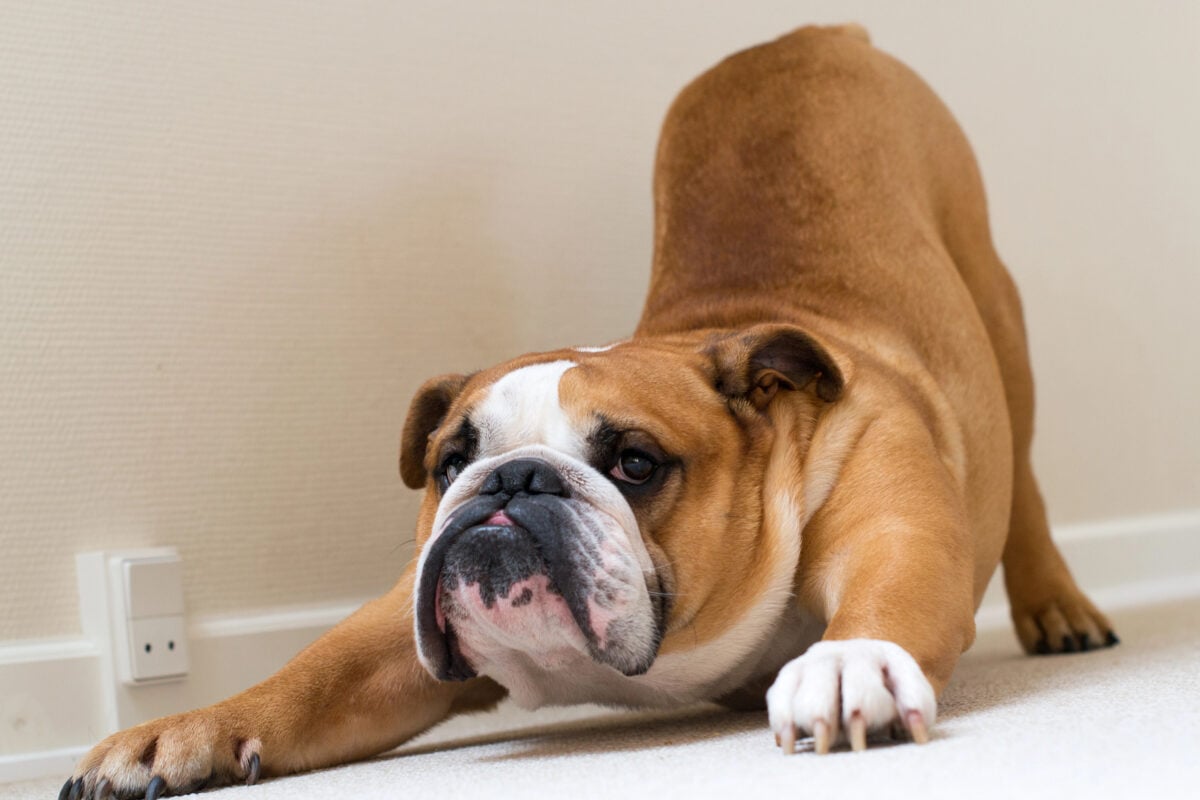
Dogs may stretch in certain ways to temporarily reduce discomfort, particularly in the abdomen or back. These stretches often repeat and don’t lead to play or interaction.
Watch closely if you see:
- Repeated stretching with no clear trigger
- A tense or uncomfortable expression
- Little interest in interaction afterward
In these cases, the pattern matters more than the posture itself. One stretch on its own isn’t alarming. Repeated stretching, especially alongside other symptoms, deserves attention.
Watch: This dog assumes a bow-like posture at the vet — but in this context, with hesitancy and no social invitation, it’s clearly a pain-related stretch.
5. They’re Just Stretching Muscles
Sometimes, your dog is stretching for the same reason you do when you stand up after sitting too long.
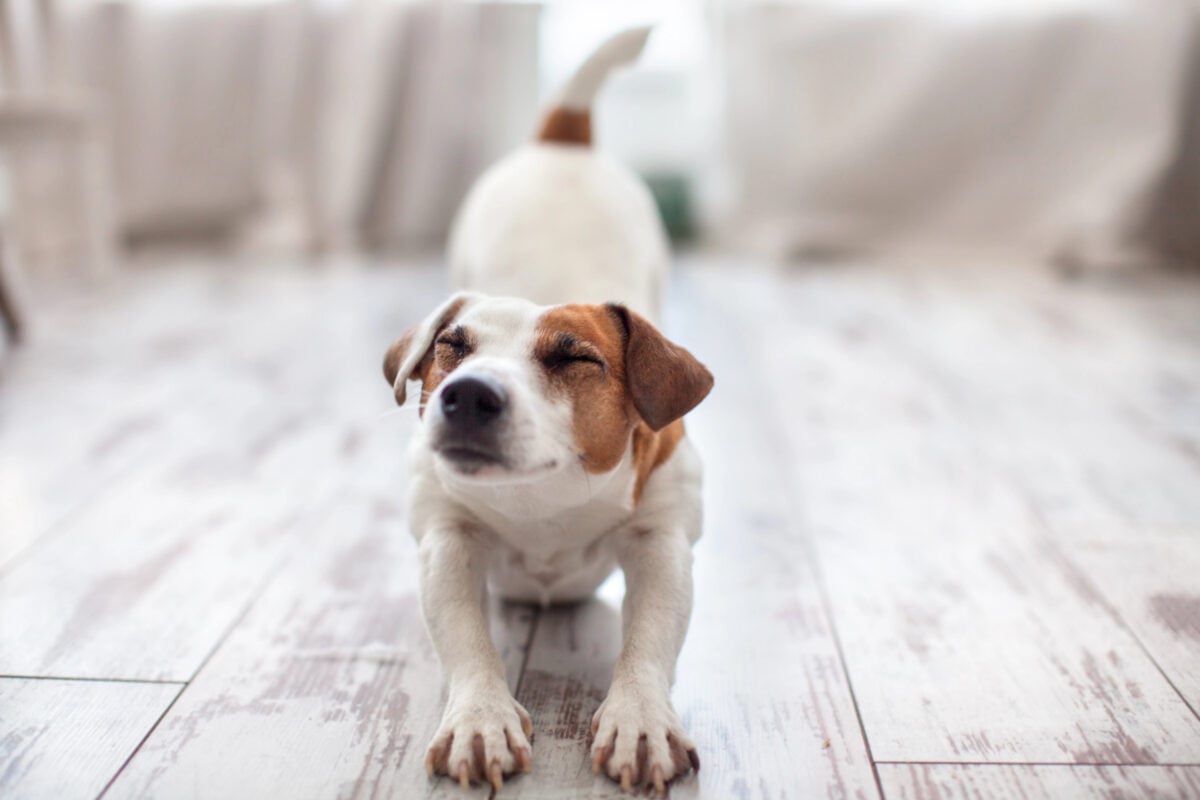
Dogs stretch their bodies to:
- Wake up after a nap
- Loosen stiff joints
- Improve circulation
- Prepare for movement
You’ll often see these stretches after your dog has been asleep for a long period, especially first thing in the morning or after an afternoon nap.
These stretches can take many forms:
- A long, slow stretch without urgency
- A sideways stretch with legs extended
- A full-body elongation paired with a yawn
In these moments, the stretch is primarily physical, not emotional.
Watch: Some stretches are part of routine transitions, like waking up or preparing to go outside.
Why Some Dogs Stretch Only For Certain People
If your dog stretches when they see you but barely reacts to other people, that’s not your imagination. Many dogs reserve certain behaviors for a very small circle. Stretching can be one of them.
This is where the behavior stops being generic and starts being personal.
Dogs Don’t Bond Equally With Everyone
Dogs form attachment hierarchies, just like humans do. They may enjoy lots of people, tolerate some, and deeply trust a few.
The difference doesn’t always show up as excitement. It shows up as relaxed behavior. Stretching is one of those signals.
Watch: Dogs are most likely to stretch openly around people they feel emotionally safe with.
Why Stretching Signals Trust, Not Just Excitement
Stretching exposes vulnerable parts of the body, including the chest, abdomen, and joints. Dogs don’t linger in that position unless they feel secure.
That’s why:
- Nervous dogs rarely stretch around strangers
- Dogs in new environments stretch less
- Stretching happens most often at home, with familiar people
When a dog stretches toward someone, they’re directing that comfort outward. It’s a quiet sign of trust.
Watch: See how this stretch follows approach and social engagement — a great example of a greeting stretch.
If Your Dog Does This For You, It Usually Means…
This is the part most people are quietly wondering about.
If your dog stretches when they see you, it often means:
- You’re predictable
- You respond consistently
- You don’t overwhelm them
- You’re part of their routine
In other words, you make their world feel stable.
Dogs are comfort-seeking animals. They gravitate toward people who help them feel grounded. Stretching is one way that comfort shows up physically.
Why This Behavior Can Change Over Time
Stretching as a greeting often develops:
- After a dog settles into a home
- As trust deepens
- When routines become consistent
- As anxiety decreases
Rescue dogs, in particular, may not stretch openly early on. As they decompress, new behaviors emerge.
Quiet Milestone: Many dogs don’t stretch freely until they truly feel at home.
What It Does Not Mean
If your dog doesn’t stretch for you, it does not mean:
- You’re doing something wrong
- Your dog doesn’t love you
- Your bond is weak
Dogs show connection in many ways. Stretching is just one dialect in a very large emotional language.
Our Personal Experience With The Greeting Stretch
My dog, Falkor, is a little guy with a huge heart. He greets the world with a joyful play bow, stretching into a perfect curve: head low, tail high, his whole body saying, “I’m so happy to see you!” It’s his signature hello, offered to everyone he meets, whether you’re a neighbor or a stranger with kind eyes.
But for the people he truly loves, Falkor does something more. He stretches up on his hind legs, front paws reaching as high as they’ll go, barely brushing my thigh but filled with effort and heart.
It’s not just a stretch. It’s a quiet hug, a way of saying, “You matter most.” And when he does it, I can’t help but feel lucky to be one of his chosen few.
– Danielle DeGroot, Falkor’s Human & Writer at Canine Journal
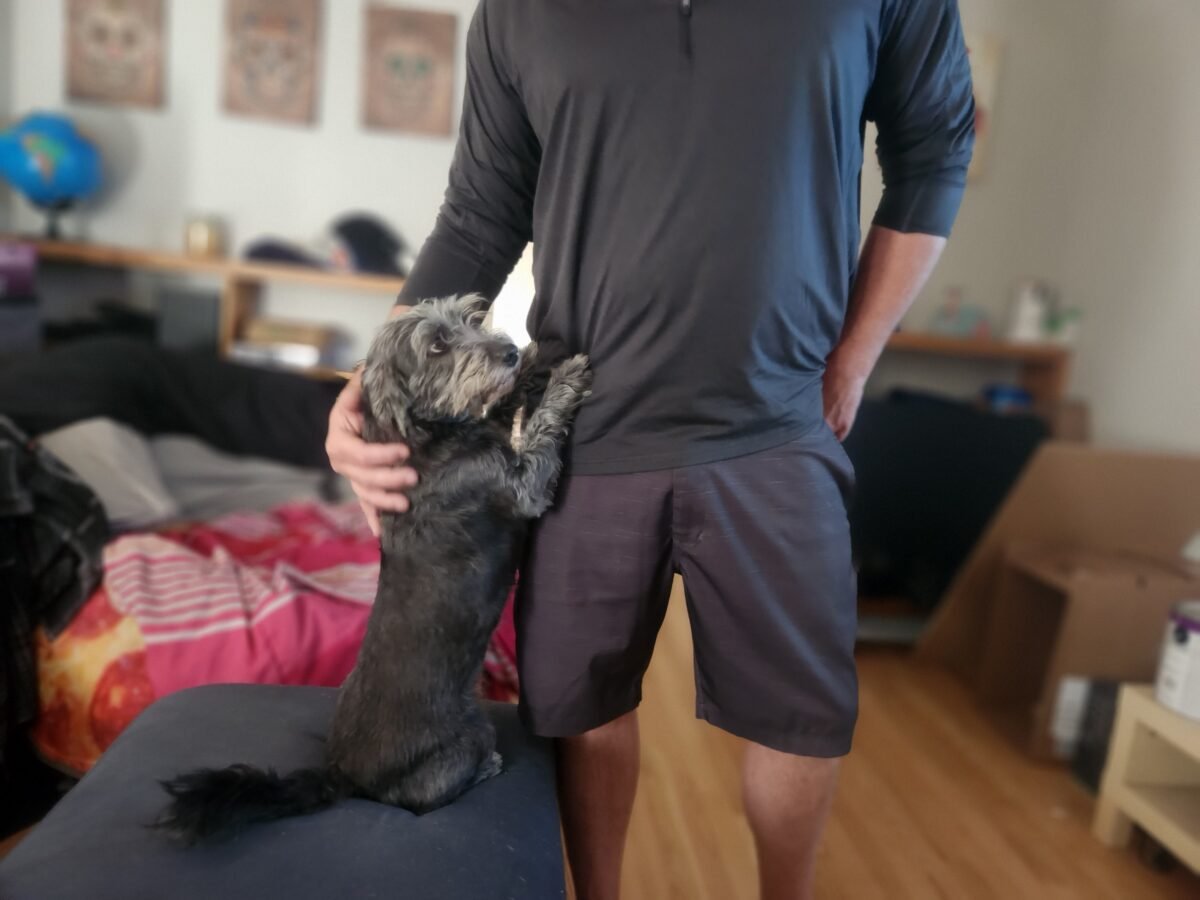
Why Some Dogs Prefer Stretching Over Jumping
Not all dogs are jumpers.
Some are older or more reserved. Some have learned through experience that calm behavior gets better reactions from their humans.
For these dogs, stretching becomes the polite, emotionally loaded alternative to jumping. It still says, “I’m happy you’re here,” just in a quieter language.
Watch: This senior rescue dog greets their owners with a stretch and a smile.
How Human Reactions Shape The Greeting
If you’ve ever laughed, talked to your dog, or reached down when they stretched, you reinforced that behavior — even if you didn’t mean to.
Over time, your dog learns: “This is the version of excitement that works.” Stretching becomes a learned greeting style, shaped by your responses.
Important: If you consistently react positively to a greeting stretch, your dog is more likely to keep using it as their signature hello.
Why This Doesn’t Happen Overnight
Most dogs don’t start life greeting this way.
Stretching as a greeting often develops:
- As dogs mature
- After training discourages jumping
- When routines become predictable
- As dogs become more emotionally regulated
What looks like a personality trait is often a relationship-specific behavior.
Learned Behavior & Accidental Cueing (This Is Important)
Some stretches start as instinct. Others become habits.
Dogs are born knowing how to stretch. But how, when, and why they use stretching around humans is often learned — sometimes without us realizing it.
That’s where accidental cueing comes in.
How Dogs Learn That Stretching “Works”
Dogs are excellent pattern readers. If a stretch consistently leads to something positive — attention, praise, movement, or access to something they want — the behavior sticks.
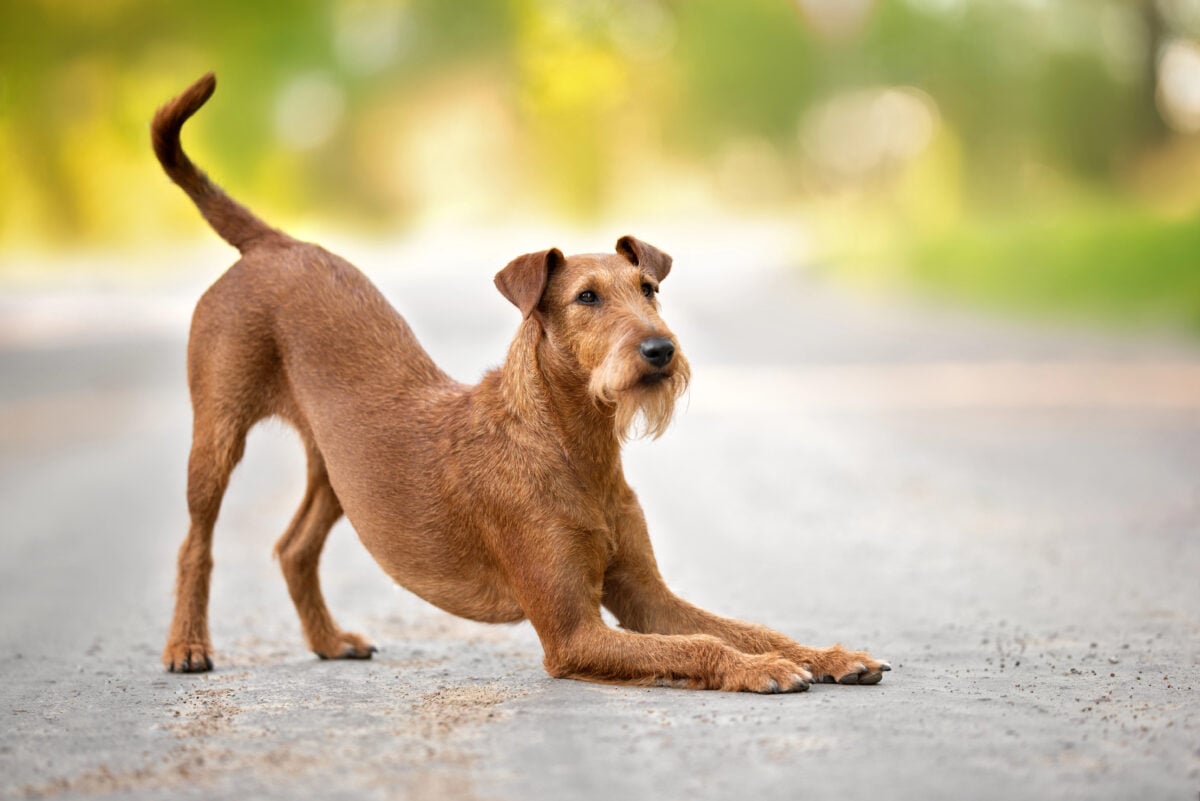
Over time, your dog learns: “When I stretch during this moment, good things happen.” The stretch itself doesn’t change. The meaning does.
This is why stretching can shift from a purely physical action into a reliable communication tool.
Common Ways We Accidentally Teach Stretching
Most people never set out to teach this behavior. It usually happens quietly, over dozens of small interactions.
Common accidental cues include:
- Bending down to clip on a leash
- Picking up keys or a collar
- Saying “BIG stretch!” in a playful voice
- Making eye contact and waiting
- Laughing or talking while your dog stretches
From your dog’s perspective, these moments are crystal clear. Stretch → attention follows. That’s reinforcement.
Why It Can Feel Like Your Dog Is Stalling
This is where people get confused. Because the stretch happens right when you’re trying to do something, it can feel intentional — even manipulative.
But from your dog’s point of view, they’re not stalling. They’re responding to a familiar cue sequence.
Your movement signals action. Their stretch has worked before. So they do it again.
Our Personal Experience
For the longest time, I thought my dog was playing a trick on me. Every time I’d bend down to put her collar on, she’d suddenly drop into this dramatic, slow-motion stretch, front legs out, butt in the air, big sigh like she was starring in her own yoga video.
And, of course, she’d wait until I was already crouched down, making me awkwardly hover there while she did her thing. I used to find it so annoying, like, why not stretch before I get there?
After looking into it more, I realized what was actually happening.
When dogs stretch in front of you during these moments, it’s often a sign of comfort and familiarity — and a behavior that’s been quietly reinforced over time. She wasn’t stalling. She was responding to a pattern we’d built together.
Now, every time she stretches before heading out, I see it for what it really is: a small, learned ritual. A mix of anticipation, comfort, and trust.
– Kimberly Alt, Rescue Dog Mom, Writer & Pet Insurance Expert at Canine Journal
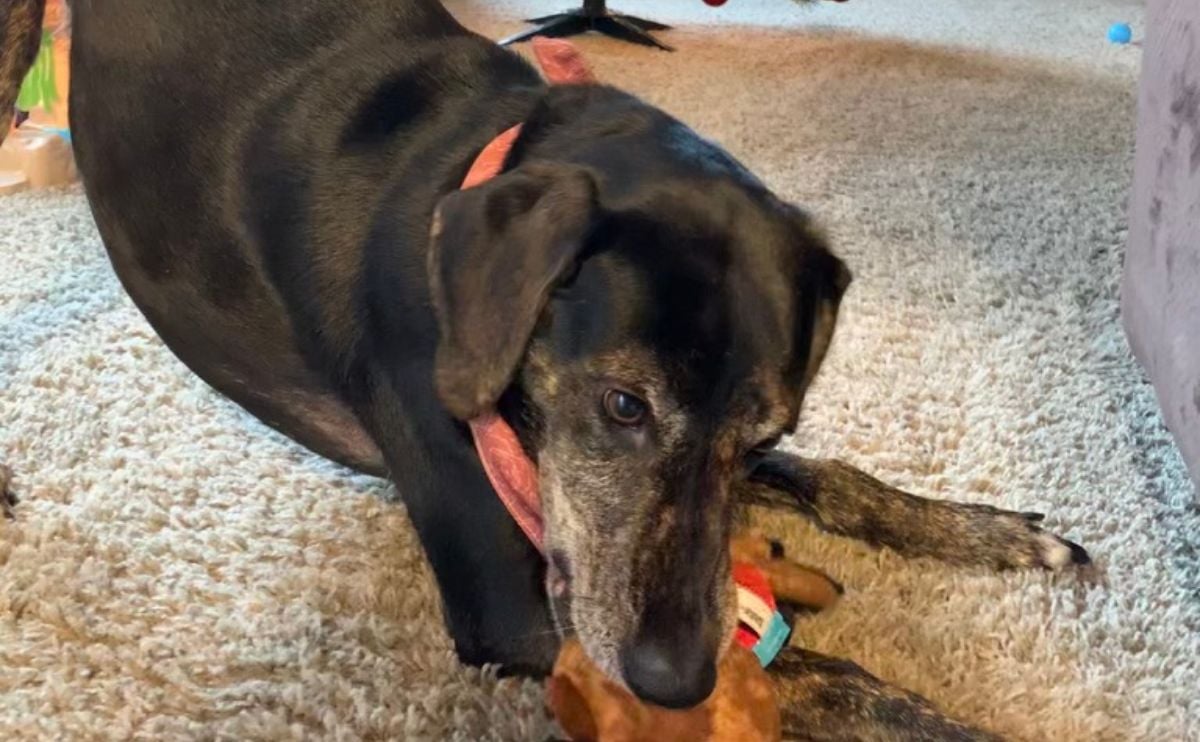
When Stretching Overlaps With Routine
Dogs quickly learn daily rhythms. If stretching is followed by something predictable — dinner, a walk, playtime — the stretch can become part of that transition.
For example:
- A dog stretches at the end of the workday because they’ve learned what comes next
- A stretch happens when you stand up because movement usually follows
- A dog stretches before meals because their body is preparing to get moving
In these cases, the stretch isn’t necessarily about affection or play. It’s a body-level reset paired with anticipation. The meaning isn’t, “I’m talking to you.” It’s, “My body is ready to shift gears.”
Our Personal Experience: When Stretching Becomes Ritual
The moment I close my laptop, Rio — my very expressive Golden Retriever — springs to life with a big bow stretch like he’s had a long day at the office, even though he’s just been snoozing. It makes me smile every time.
That stretch has become our little ritual, his way of saying,“Work’s done. Let’s do something.”
– Tara Maurer, Rio’s Human & Writer at Canine Journal
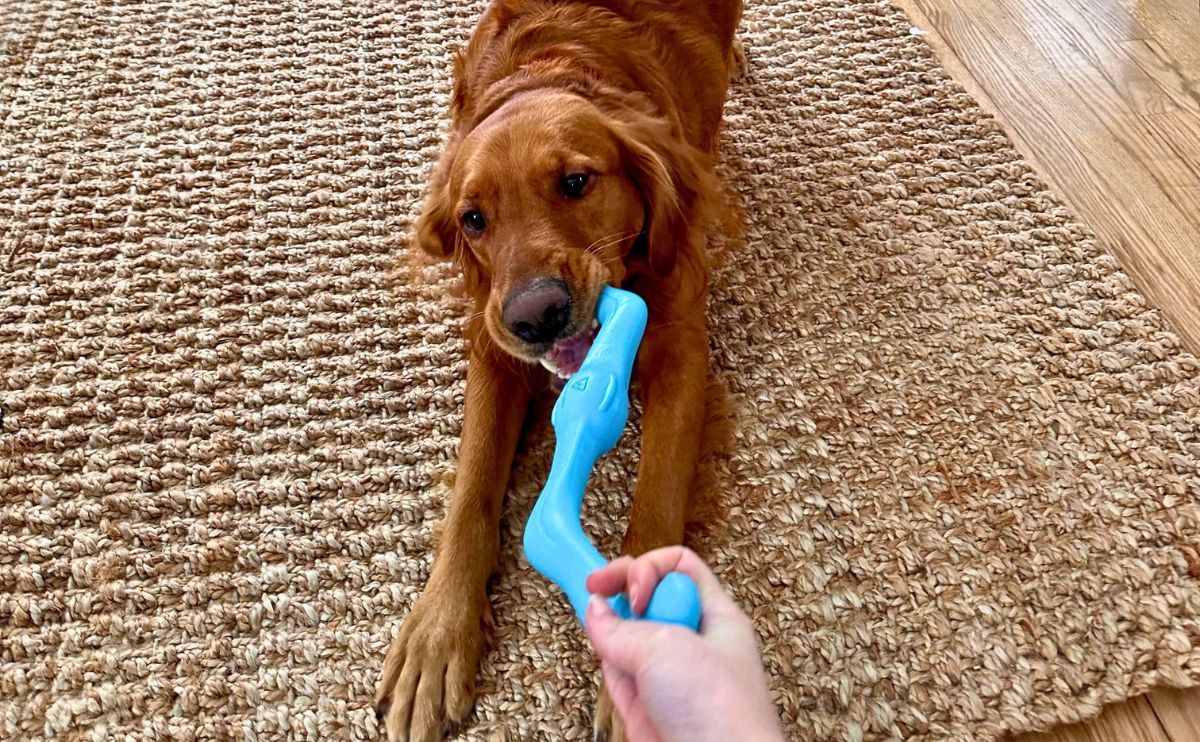
What Is Dog Bowing? (And How It’s Different From Stretching)
Dogs stretch for all kinds of reasons. They stretch after naps, during belly rubs, and when they’re loosening stiff muscles.
But when a dog lowers their front legs, lowers their chest, and keeps their rear end raised, that posture is called a bow.
What Makes A Bow A Bow
A dog bow is defined by posture, not intent.
It typically looks like this:
- Front legs extended forward
- Chest lowered toward the ground
- Rear end raised
- Back often curved
You’ll often see this position when a dog is interacting with others, but the posture itself doesn’t tell you why the dog is doing it. That’s where context comes in.
2 Types Of Dog Bows
Dog bowing isn’t a single behavior. It’s a stretching posture used with intention, and that intention changes based on context.
Understanding the difference matters because one version invites interaction, while the other may signal discomfort.
The Play Bow
The play bow is the version most people recognize. Dogs use this posture to communicate friendly intent and initiate interaction. It’s a way of saying, “Everything that comes next is meant to be playful.”
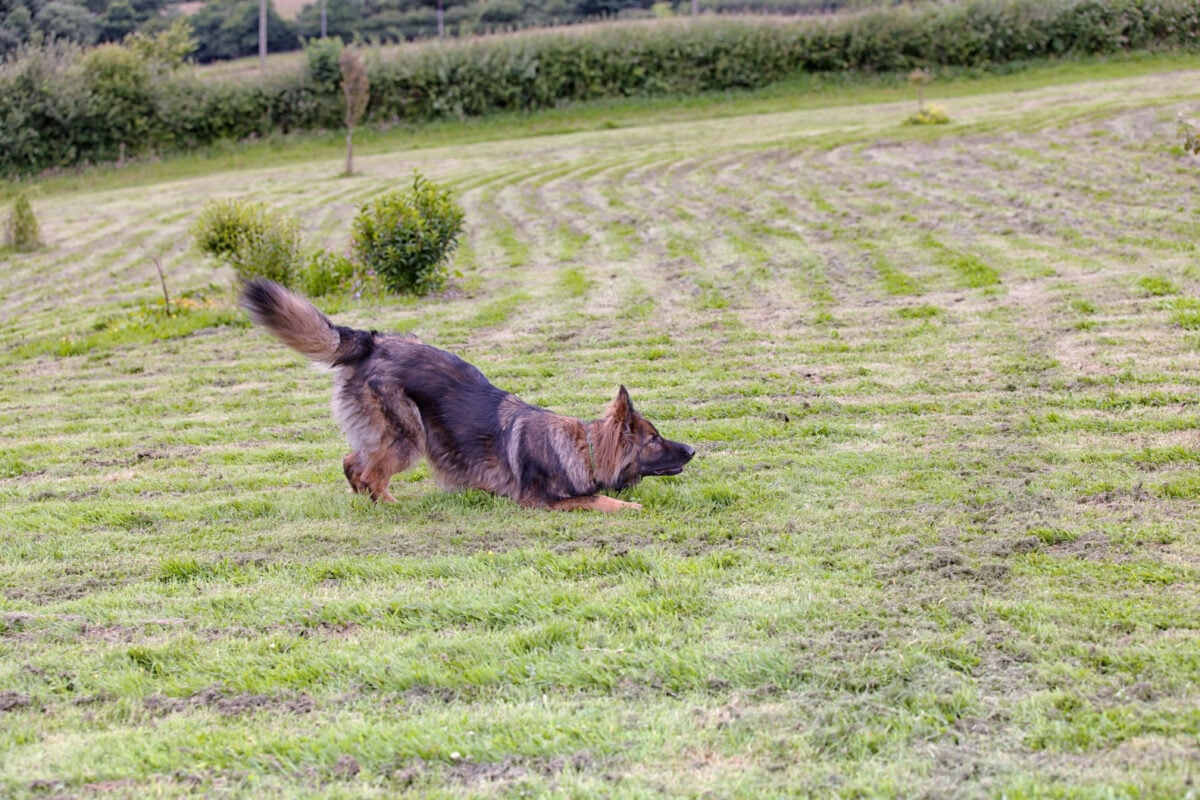
A play bow often:
- Happens quickly or repeatedly
- Looks loose and exaggerated
- Comes with an alert, excited expression
- Leads directly into movement or play
You’ll see play bows during games with other dogs, during roughhousing, or when a dog wants to engage you.
When directed at a person, the play bow often includes eye contact and a brief pause, as if your dog is checking whether you’re ready to join in.
The Prayer Position (When Stretching Signals Discomfort)
At first glance, the prayer position can look very similar to a play bow. The posture is nearly identical, but the reason behind it is very different.
In many cases, this position is associated with abdominal pain or internal discomfort.
When a dog lowers their chest while keeping their rear raised, the posture can temporarily relieve abdominal pressure, providing short-term pain relief. That’s why some dogs return to this position repeatedly.
Unlike play bows, this stretch does not invite interaction.
You may notice that your dog:
- Holds the position longer than usual
- Appears tense rather than relaxed
- Drops head close to floor
- Repositions frequently instead of moving into play
The posture itself isn’t the emergency. The pattern and accompanying symptoms are what matter.
Symptoms To Watch For
If you see this stretch happening repeatedly, especially outside of play or routine moments, watch for additional signs of stomach or abdominal issues, including:
- Vomiting or diarrhea
- Excessive panting
- Bad breath
- Increased drooling
- Shaking or whimpering
- A bloated or distended abdomen
- Changes in appetite
- Low energy or lethargy
- Noticeable changes in behavior
What This Stretch Can Signal
Repeated use of the prayer position has been linked to conditions such as:
- Pancreatitis
- Bloat (gastric dilation-volvulus)
- Intestinal blockages
- Other causes of abdominal pain
This doesn’t mean every stretch like this is serious. But if the posture appears frequently, without a clear trigger, or alongside other symptoms, a trip to the vet is necessary.
When A Stretch Is A Red Flag, Not A Greeting
Most stretches are harmless. Many are meaningful. A small number signal discomfort.
Knowing the difference doesn’t require panic — just awareness.
Signs A Stretch May Signal Discomfort
A stretch becomes more concerning when it loses its social context and starts repeating without a clear reason.
Pay closer attention if your dog:
- Repeatedly stretches with no obvious trigger
- Holds the stretch longer than usual
- Appears tense instead of relaxed
- Avoids eye contact or seems withdrawn
- Repositions frequently, as if trying to get comfortable
These stretches don’t invite interaction. They don’t lead into play. They often end with your dog settling, pacing, or stretching again.
Watch The Whole Picture, Not Just The Stretch
A single stretch is rarely meaningful on its own. What matters is what’s happening around it.
Be especially cautious if stretching is paired with:
- Vomiting or diarrhea
- Excessive panting or drooling
- Shaking or whimpering
- A bloated or firm abdomen
- Changes in appetite
- Low energy or unusual lethargy
- Noticeable behavior changes
These combinations can point to abdominal discomfort or other internal issues, even if your dog still appears alert.
When To Call Your Vet
You don’t need to rush to the vet for every stretch. But you should reach out if:
- The stretch appears frequently and repeatedly
- There’s no clear routine or trigger
- Your dog seems uncomfortable rather than relaxed
- Additional symptoms show up
- The behavior is new or worsening
Conditions like pancreatitis, gastrointestinal upset, or bloat can sometimes show up subtly at first. Early awareness helps you act sooner — not panic sooner.
Frequently Asked Questions
These quick answers address the most common questions dog parents have when they notice their dog stretching toward them, staring afterward, or repeating the behavior in certain moments.
Don’t see your question? Respond in the comments, and we’ll get back to you!
Is My Dog Stretching Because They Love Me?
Often, yes. When a stretch happens specifically when you appear and includes eye contact or a pause, it’s usually a sign of comfort and positive anticipation.
It doesn’t mean love in a human sense, but it does indicate trust and emotional safety.
Is A Dog Stretch The Same Thing As A Play Bow?
Not always. A play bow is defined by posture and context and usually leads directly into play. Other stretches can be greetings, stress releases, or physical resets depending on timing and follow-through.
Why Does My Dog Stretch And Then Just Stare At Me?
It usually means your dog is waiting to see what happens next. This often shows up in greeting stretches or learned behaviors that have been reinforced by past reactions.
Should I Be Worried If My Dog Stretches A Lot?
Occasional stretching is normal. Repeated stretching without a clear reason, especially if paired with lethargy, vomiting, or discomfort, is worth monitoring and discussing with your vet.
Why Does My Dog Stretch For Me But Not For Other People?
Stretching is a vulnerable behavior. Many dogs only do it around people they feel emotionally safe with or have predictable routines with. This is common and not a sign of poor socialization.
Can I Accidentally Teach My Dog To Stretch Like This?
Yes. If stretching consistently earns attention, praise, or access to something your dog wants, it can become a learned greeting or transition behavior over time.
Interpreting Other Quirky Dog Behavior
If you’ve ever wondered why your dog constantly paws you or licks your hands, we’ve got the answers you’re dying to know. Or find out why your pup follows you everywhere you go. Our furry friends are love bugs in so many ways, but it can get overwhelming at times. Ever heard of personal space?! See if your dog makes our list of the most clingy breeds. Also, discover the 25 most affectionate dog breeds.