When you purchase through links on our site, we may earn a commission at no extra cost to you. Learn more.
You wake up, look at your pup, and notice a crusty buildup in the corner of their eye.
Table of Contents
Gross? Maybe. An emergency? Not necessarily.
While I always recommend seeking medical guidance for serious health problems, many conditions can be safely and effectively treated at home. This guide breaks down exactly what’s normal, what’s not, and which home remedies actually help.

Is Dog Eye Discharge Normal?
The short answer is yes, sometimes.
A little crust in the morning is usually normal. Just like humans, dogs can wake up with a bit of eye gunk after a good night’s sleep. Clear, watery tears after a windy walk or a roll in the grass are also common.
However, if your dog’s eyes are producing yellow or green discharge, sticking shut, or causing them to paw at their face, something more serious could be going on.
Rule of Thumb
- If the discharge is clear and occasional, it’s probably nothing to worry about.
- If it’s colored, constant, or making your dog uncomfortable, it’s time to call your veterinarian.
Although eye boogers can be gross, they’re also your dog’s way of telling you something might be wrong.
Before You Try A Home Remedy
Before reaching for a home remedy, take a minute to assess what you’re seeing. Mild, clear eye discharge is often harmless, but the appearance of the discharge and any accompanying symptoms can tell you whether it’s appropriate to monitor at home or time to call your veterinarian.
Start by gently wiping away any discharge with a clean, damp, soft cloth or sterile saline solution so you can get a better look at your dog’s eye. Then check the color of the discharge and watch for warning signs.
Contact your veterinarian promptly if your dog has any of the following:
- Squinting or keeping one eye closed
- Repeated pawing or rubbing at the eye
- Redness or swelling around the eye
- A cloudy or bluish-looking eye
- Thick yellow, green, or bloody discharge
- Symptoms affecting only one eye after a possible injury
- Eye discharge that rapidly worsens or keeps returning
If none of these signs are present and the discharge is mild, clear, and occasional, simple home care may be appropriate while you continue to monitor your dog.
We Asked a Vet: When Should You Worry About Eye Gunk?
I spoke with Dr Joanna Woodnut, MRCVS, to better understand what normal vs. harmful dog eye discharge is. Here’s what she shared:
“When your dog’s eyes are healthy, they should have a tear film that keeps them moist and protects them from dust and debris. However, discharge or wetness at the inner corner of your dog’s eyes could indicate a problem. Discharge can range from clear, watery tear overflow to thicker, yellow-green mucus or pus,” Dr. Joanna Woodnut, MRCVS.
She continues, “If your dog’s eye is painful, you might notice them closing it more than usual or squinting slightly. You might also see them blinking or winking a lot. If your dog is pawing at their face or rubbing their eye against the furniture, it could mean that their eye is itchy or sore.”
What Causes Eye Discharge in Dogs? 9 Common Triggers
Eye gunk isn’t just a cosmetic issue. It’s your dog’s signaling that something’s up, whether it’s seasonal allergies or a more serious eye condition. Below are the most common reasons your pup’s eyes might leak, crust, or ooze with mystery slime.
1. Allergies
Like people, dogs can be allergic to pollen, dust, mold, grass, and other environmental triggers. If your dog’s eyes water more during allergy season or after spending time outdoors, allergies may be to blame. Other common signs include sneezing, itchy skin, and red eyes.
Learn more about dog eye allergies.
2. Blocked Tear Ducts
Normally, tears drain through small ducts in the corners of the eyes. When those ducts become blocked, tears spill onto the face instead.
This constant moisture can lead to tear staining, skin irritation, and crusty buildup beneath the eyes. Blocked tear ducts are especially common in flat-faced breeds such as Pugs and Shih Tzus.
3. Breed-Related Issues
Some dogs are simply more prone to eye discharge because of their facial structure. Flat-faced breeds, dogs with prominent eyes, and those with long facial hair often experience more tearing than other breeds.
Keeping the hair around the eyes neatly trimmed and gently cleaning away discharge can help reduce irritation.
4. Corneal Ulcers
Corneal ulcers are open sores on the surface of the eye that can develop after trauma, dry eye, or infection. They often cause cloudy or yellow discharge along with squinting, excessive tearing, and eye pain.
Corneal ulcers are painful and require prompt veterinary treatment to help prevent permanent damage.
5. Dry Eye (Keratoconjunctivitis Sicca)
Dry eye occurs when the eyes don’t produce enough tears to stay properly lubricated. Although it sounds counterintuitive, this condition often causes thick, sticky discharge as the eye responds to chronic irritation.
Without treatment, dry eye can damage the cornea. Your veterinarian may recommend prescription eye medications to stimulate tear production and protect the eye.
6. Eyelash or Eyelid Issues
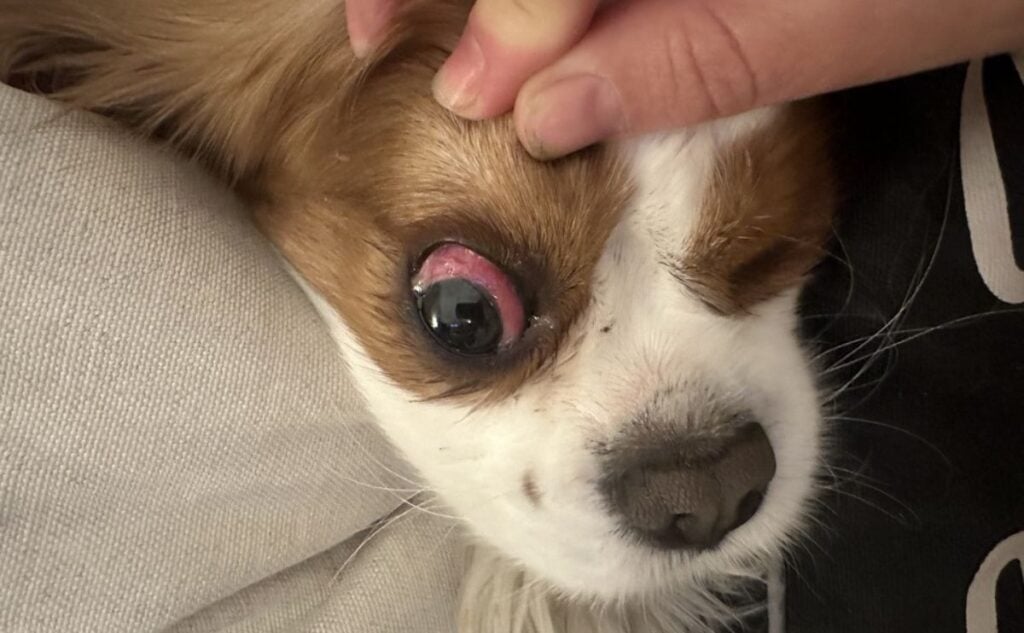
Ingrown eyelashes, eyelid tumors, and other eyelid abnormalities can constantly irritate the surface of the eye. The body responds by producing excess tears to protect itself, which turns into the familiar goop. This might be the reason you notice squinting or redness along with the discharge.
7. Infections
Bacterial and viral eye infections commonly produce thick yellow or green discharge. Dogs with an eye infection may also rub at their eyes, blink excessively, squint, or become more sensitive to light.
Most eye infections require veterinary diagnosis and prescription medication.
8. Foreign Objects
Dust, dirt, grass seeds, stray hairs, or other debris can become trapped in the eye and cause irritation. If the discharge starts suddenly after being outdoors, a foreign object may be the cause.
Redness, excessive blinking, squinting, or symptoms affecting only one eye are common clues.
9. Wind Exposure
Wind can dry and irritate the surface of your dog’s eyes, leading to temporary watery discharge. This is more common after riding in a vehicle with their head near an open window or spending time outside on particularly windy days.
If watery eyes occur frequently after wind exposure, limiting direct airflow and discussing protective options with your veterinarian may help.
What Other Symptoms Accompany Runny Eyes?
If your pup has runny eyes after being outside but the issue clears up quickly, debris or a sharp wind is likely to blame; however, if the watery eyes last longer or you notice any of the symptoms below, reach out to your veterinarian.
The accompanying symptoms may be signs of a more serious eye condition:
- Bumping into objects or loss of vision
- Cloudy eyes
- Eye puffiness, swelling
- Pawing at the face
- Red eyes
- Squinting
What Eye Discharge Color Says About Your Dog’s Health
The color of your dog’s eye discharge can provide clues about what’s causing it. While it’s not enough to diagnose the problem on its own, it can help you decide whether simple home care is appropriate or if it’s time to call your veterinarian.

Clear Discharge
Clear, watery discharge is often linked to allergies or environmental irritants like wind, dust, or pollen. It can also occur with blocked tear ducts, corneal injuries, or glaucoma, so pay attention to any other symptoms your dog is showing.
Crusty Discharge
A small amount of crusty “eye gunk” after sleeping is completely normal. It’s made up of tears, oils, and skin cells that collect overnight.
However, excessive crusting or discharge that returns throughout the day may be a sign of dry eye or another underlying eye condition.
Red Tear Stains
Reddish-brown tear stains are common, especially in flat-faced breeds like Pugs and French Bulldogs. The staining happens when tears are exposed to air and oxidize over time.
Regularly wiping the area with a damp cloth can help reduce staining. Persistent tearing may also point to blocked tear ducts or another treatable eye problem.
Yellow or Green Discharge
Yellow or green discharge is generally a sign of an eye infection. You may notice signs of conjunctivitis, including eye redness and inflammation. We share all you need to know about conjunctivitis in dogs.
Our Personal Experience With Dog Eye Discharge
Our Cavalier King Charles Spaniel dog is prone to eye boogers. We wipe them out of his eyes multiple times a day, and it’s usually the worst right when waking up. Sometimes in the spring when there is a lot of pollen in the air, the color gets a bit more green and thick. We often use eye wipes or just a warm paper towel to clean the eyes.
– Sadie Cornelius, Cavalier King Charles Spaniel Dog Mom & Marketing for Canine Journal

When to See the Vet
Eye discharge is common, but some signs mean it’s time to stop using home remedies and call your vet.
Call Your Vet if Your Dog has:
- Thick yellow, green, or smelly discharge
- Eyes that are red, swollen, or painful
- Squinting, blinking more than usual, or pawing at the eyes
- A cloudy film over one or both eyes
- Discharge that doesn’t improve in 48 hours
Trust your gut. If your dog seems uncomfortable or “off,” a quick checkup can prevent serious issues—and ease your mind.
Learn all the signs of severe eye conditions in dogs via our article covering dog eye problems. We break down the difference between severe eye conditions — like cataracts and glaucoma — with more insight from veterinarian Dr. Joanna Woodnut.
Does Pet Insurance Cover Eye Conditions?
Yes, most pet insurance plans cover eye conditions, as long as the symptoms didn’t appear before you enrolled or during the waiting period.
How To Clean Dog Eye Discharge (The Right Way)
To clean discharge from the eyes and eyelids, treat the area with a simple saline solution. You can make a cleansing salt solution at home by mixing 1/4 teaspoon of sea salt with a cup of warm distilled or filtered water.
Carefully wipe the area with gauze or a cotton ball using this solution. Be very gentle; sometimes patience is needed to soften and remove crusted discharge. You can also try using dog eye wipes specially made for pups.
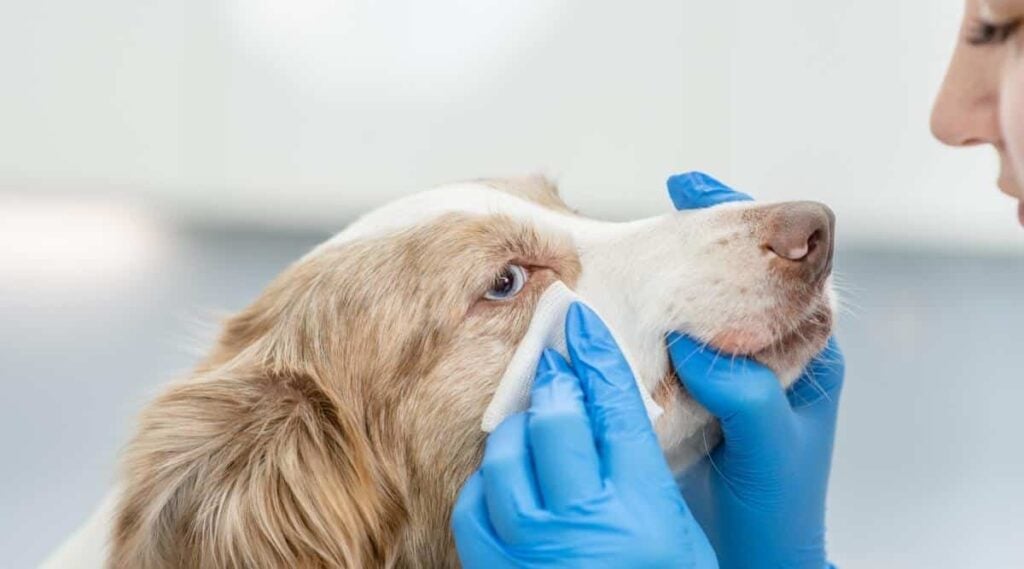
Rinse the eye area several times daily or as needed. Once the area is clear, use one of the following dog-runny eye home remedies.
When Home Remedies Are Appropriate
Home care is best reserved for dogs with mild, clear, occasional eye discharge and no other concerning symptoms.
If your dog has yellow, green, white, or bloody discharge, obvious pain, swelling, cloudiness, persistent squinting, or symptoms that continue to worsen, skip the home remedies and schedule a veterinary exam. Many eye conditions can progress quickly, and delaying treatment can increase the risk of permanent damage.
Common Mistakes Owners Make
Even well-intentioned home care can sometimes make an eye problem worse. Avoid these common mistakes:
- Using human eye drops without your veterinarian’s approval
- Touching the eye directly instead of gently wiping around it
- Reusing the same cloth on both eyes, which can spread infection
- Waiting too long when discharge changes color or becomes more frequent
- Assuming recurring eye discharge is “normal” for the breed without ruling out an underlying problem
When in doubt, it’s always safer to have your veterinarian examine your dog’s eye.
6 Home Remedies For Dog Eye Discharge
Your dog may have runny eyes for many reasons, including allergies, blocked tear ducts, infection, foreign objects, and glaucoma. While not all of these conditions can be treated at home, many can. Once you have cleaned your dog’s eyes, try one of the following canine eye discharge home remedies.
Always consult your veterinarian before applying anything near your dog’s eyes, especially if symptoms persist or worsen
1. Soothing Oils
For irritated or dry eyes, apply a small amount of coconut or castor oil to a clean cotton ball and wipe your dog’s eyelids with it. Both oils have anti-inflammatory properties and can alleviate dry eyes and prevent the formation of eye crust.

You can also give your pup fish oil internally to moisturize their eyes from the inside out. Our article on fish oil for dogs shares more benefits and our favorites.
2. Eyebright
Eyebright is an anticatarrhal herb, meaning that it helps remove excess mucus. As excessive moisture around the eyes can increase the likelihood of infection, this herb is useful in its ability to dry up mucus and restrict fluid secretion to prevent infections. Eyebright is also helpful for allergies and eye irritation.

To make an herbal infusion, boil 1 cup of water and pour it over 1 teaspoon of dried eyebright. Cover and let it steep for 15 minutes.
Then, strain the liquid, leaving the solid pieces behind. Add 1/4 teaspoon sea salt to the infusion, stir, and let cool.
Once the solution has cooled, gently treat your dog’s eyes. You can apply the solution three times a day or as needed.
3. Chamomile Tea
Chamomile is another herb famously known for its calming effect on the nerves for relief from anxiety and insomnia. However, this herb has many other health benefits, including anti-inflammatory and pain-relieving properties.
Using a tea bag, prepare a cup of chamomile tea. Let the liquid steep until cooled. Then, remove the tea bag and hold it over your pooch’s eyes, allowing some of the liquid to seep into their eyes.

Save the remaining tea and apply the solution with a cotton ball several times daily to clean the eyes and help counteract infection.
4. Goldenseal
If your pet’s eyes are infected or discharging thick, yellow mucus, try making a goldenseal infusion.
Goldenseal root is an antimicrobial herb that clears mucus on contact. It can also help prevent blocked tear ducts by removing the bacteria causing tear stains.

To make a treatment, pour 1 cup of boiling water over 1/4 teaspoon of goldenseal powder. Let steep for 15 minutes, and then filter the liquid.
Add 1/4 teaspoon of sea salt to the solution, stir, and let cool. Use the goldenseal to treat the eyes three times daily or as needed.
5. Witch Hazel
Another astringent herb, witch hazel, helps restrict mucus secretion and soothes itchy, irritated skin. Most commercially available witch hazel products are made with alcohol, which is toxic to dogs when ingested. Instead, look for an alcohol-free witch hazel.

Apply witch hazel generously to the eye area with gauze or a cotton pad as needed.
6. Colloidal Silver
If you’re a fan of natural remedies, you likely already have colloidal silver in your medicine cabinet. This antimicrobial liquid may fight bacteria, viruses, and fungi and may be used to treat wounds and infections.

Colloidal silver is available in various forms (e.g., liquids and gels). Follow the directions on the label.
You should apply liquids and gels around the eye using a cotton pad. It’s so important to buy your colloidal silver from a reputable company. I always recommend Sovereign Silver because it has an extremely small particle size.
Keep It Clean: Grooming Tips for Clearer Eyes
Although it is not exactly a dog eye discharge home remedy, regular grooming can make a big difference in preventing eye discharge. Use a damp cloth or dog-safe eye wipes to gently clean away the crust, especially in the morning or after outdoor play.
Dogs with long facial hair, such as Shih Tzus, Lhasa Apsos, and Maltese, often benefit from keeping the hair around their eyes neatly trimmed so it doesn’t trap moisture or irritate the eye. If you’re uncomfortable trimming around the face, ask your groomer to keep the area tidy during regular appointments.
Flat-faced breeds like Pugs, French Bulldogs, and Bulldogs may naturally produce more tears because of their facial structure. Wiping their eyes daily and keeping facial folds clean and dry can help reduce staining and irritation, but frequent discharge should never be dismissed if it’s accompanied by redness, squinting, or changes in the eye itself.
Frequently Asked Questions
Some of our readers still have questions about canine eye discharge and how to relieve it. Don’t see your question? Respond in the comments, and we’ll get back to you!
What’s The Best Dog Eye Discharge Home Remedy?
The best treatment will vary widely based on your dog’s systems and what you have at home. Pay attention to eye discharge color and other symptoms to pick the best remedy for your pooch.
Are These Remedies Safe for All Dog Breeds and Sizes?
Most gentle home remedies, like chamomile tea compresses or saline rinses, are generally safe for dogs of all breeds and sizes when used properly. However, some breeds (e.g., Pugs, Bulldogs, Shih Tzus) are more prone to eye issues due to their facial structure and may require extra caution.
Always test remedies on a small area first and consult your vet if your dog is brachycephalic, a puppy, or has a preexisting eye condition.
What Is A Natural Anti-Inflammatory For Dog Eyes?
Eyebright and chamomile are both anti-inflammatory herbs. If you don’t have these on hand, try coconut oil.
What Human Eye Drops Are Safe For Dogs?
Consult your vet before using human eye drops. Instead, make your saline solution at home by mixing 1/4 teaspoon of sea salt with a cup of warm distilled or filtered water. Wipe the solution around the eye with a cotton ball or gauze.
We also share our picks for eye drops for dogs.
How Diet Supports Your Dog’s Eye Health
Healthy eyes don’t start at the surface. They start in the bowl.
Your dog’s nutrition plays a major role in how well their eyes function and heal. Diets rich in omega-3 fatty acids, antioxidants, and eye-supporting vitamins like A and E can help reduce inflammation, support tear production, and protect sensitive tissues from long-term damage. If your pup struggles with chronic eye gunk or seasonal irritation, a nutritional boost might make more of a difference than you think.
Look for high-quality dog food or supplements that include fish oil or flaxseed for their anti-inflammatory omega-3s. Add in foods like blueberries, carrots, and spinach, which are packed with antioxidants that protect the eyes from oxidative stress.