When you purchase through links on our site, we may earn a commission at no extra cost to you. Learn more.
Some dogs have the kind of presence that makes people think twice before approaching. Whether it’s a deep bark, watchful stare, muscular build, or reputation as a fearless protector, these breeds often give the impression that they’re all business.
Table of Contents
But first impressions rarely tell the whole story. Many dogs that act tough around strangers are affectionate, playful, and deeply devoted to the people they love.
Below are 20 breeds that prove you can’t judge a dog by their appearance, grouped by the kind of “tough” first impression they give.
Why Some Dogs Look Scary (Even When They Aren’t)
It’s human nature to judge a dog by first impressions. A muscular frame, confident stance, watchful expression, or even a deep bark and rumbling “woof” can make certain breeds seem intimidating before they ever take a step toward you.
Want our human-written content to rank above AI-generated garbage? Help us out by clicking this button!
In reality, those traits often reflect the jobs these dogs were originally bred to do, such as guarding livestock, protecting property, or working alongside people. A dog’s appearance or bravado says very little about how affectionate, playful, or gentle it is with its family.
While every dog is an individual and early socialization and training matter, many of the breeds below are famous for proving first impressions wrong.
Start Here: Which Tough Dog Fits You?
Not all tough-looking dogs are intimidating for the same reason. Some have serious guard dog reputations, while others simply turn heads because they’re enormous or built like athletes.
If you’re not sure where to start, pick the type of “big softie” that appeals to you most.
- I want a loyal protector who’s a marshmallow at home → Start with the Guardian Breeds That Are Secret Softies
- I love giant dogs that make people do a double-take → Jump to the Giant Breeds With Gentle Hearts
- I want a dog that looks serious but has a goofy side → Check out the Imposing Breeds With Playful Personalities
- I love muscular, strong dogs that adore their families → Head to the Powerful Breeds That Love Their Families
Every breed below has its own personality, quirks, and care needs, but they all have one thing in common: they’re proof that you can’t judge a dog by its looks.
Meet The 20 Biggest Softies In Disguise
Some earned their intimidating reputations by guarding livestock, protecting families, or working alongside hunters. Others simply have the size, muscle, or serious expression that makes strangers keep their distance.
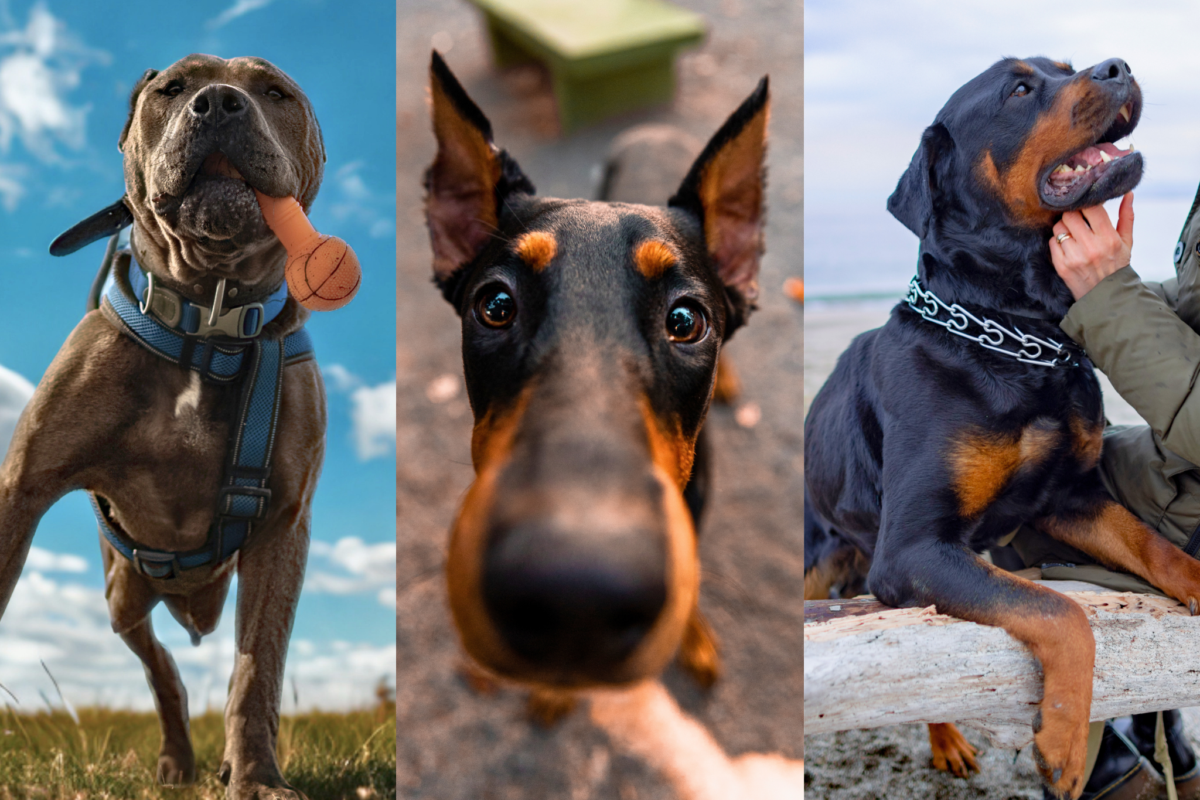
Get to know them, though, and you’ll find many are affectionate family companions, oversized cuddle bugs, and loyal shadows that rarely want to leave your side. The 20 breeds below are grouped by the kind of tough first impression they give, but they all share one surprising trait: behind those intimidating looks is often a dog with a heart of gold.
5 Guardian Breeds That Are Secret Softies
With confident stances, muscular builds, and natural protective instincts, these breeds often have intimidating reputations. At home, though, many become highly affectionate dogs that crave attention, cuddle with their families, and keep a gentle eye on the people they love.
1. Cane Corso
The Cane Corso is a powerful Italian mastiff originally developed to guard farms, protect livestock, and hunt large game. Its broad head, muscular build, and confident presence still reflect the demanding jobs it was bred to perform centuries ago.
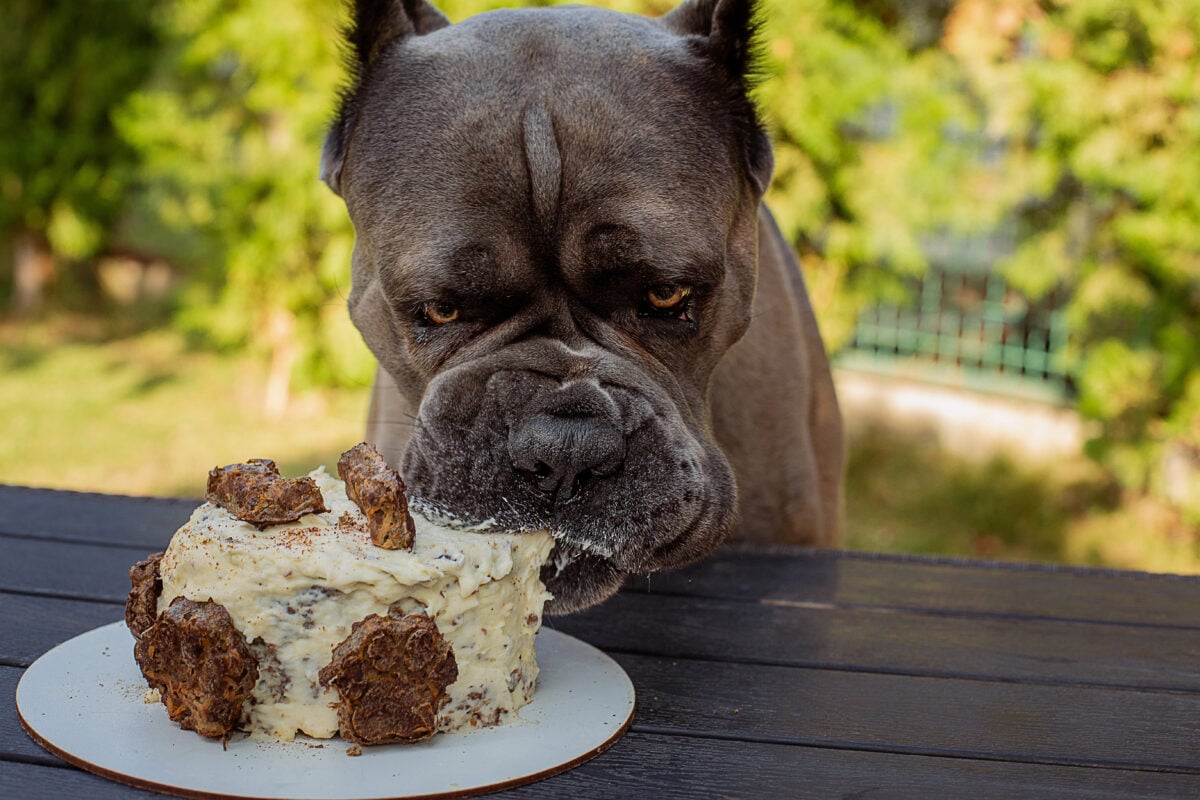
Today, Cane Corsos are known just as much for their loyalty as their protective instincts. They love staying close to their families, quietly following their favorite people from room to room and keeping watch from nearby.
At A Glance:
- Size: Extra large (85-110 pounds)
- Temperament: Loyal, intelligent, protective
- Energy Level: Moderate to high
- Social/Adaptability: Naturally reserved with strangers; can become territorial or reactive without proper management
- Family Life: Deeply devoted to their family; early socialization with children and other pets highly recommended
- Best For: Experienced owners looking for a loyal guardian and close family companion
Science Spotlight: Research shows that skull shape and jaw structure are major factors influencing a dog’s potential bite strength. With its broad head and jaw musculature, the Cane Corso consistently ranks among the breeds capable of producing the strongest bite forces. Learn more about the science behind bite strength in our guides to dog bite statistics and dog attacks by breed.
2. Rottweiler
Rottweilers were originally bred in Germany to drive cattle and protect livestock, giving them the strength, confidence, and steady temperament needed for demanding work. Their muscular build and watchful expression have made them one of the world’s most recognizable guardian breeds.
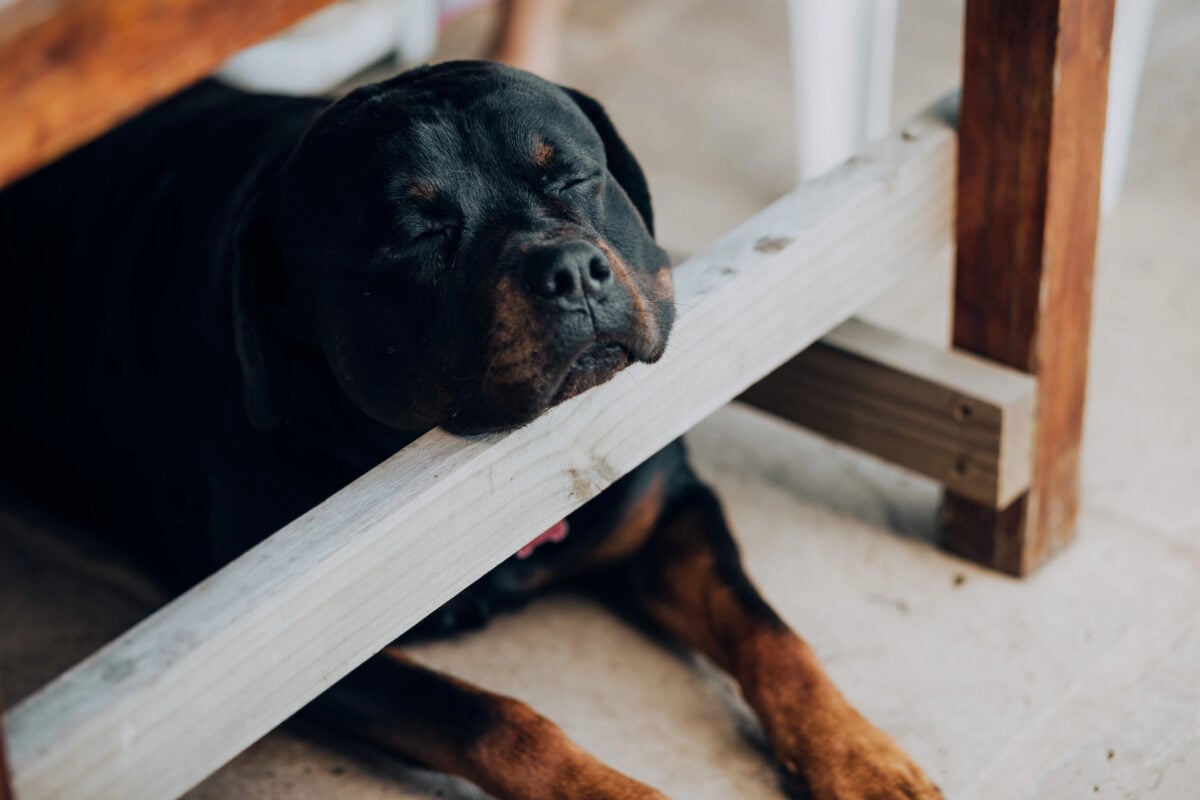
With their families, Rottweilers are often affectionate, playful, and surprisingly gentle. They thriveon companionship, and many owners lovingly describe them as giant babies who lean in for affection, seek out cuddles, and happily try to squeeze into laps despite their size.
At A Glance:
- Size: Large (80-145 pounds)
- Temperament: Loyal, confident, affectionate
- Energy Level: Moderate
- Social/Adaptability: Confident and adaptable; typically reserved until properly introduced
- Family Life: Very affectionate with family; early socialization with children and other pets highly recommended
- Best For: Active families and experienced owners looking for a devoted protector
Owner Note: Rottweilers may be affectionate family companions, but they’re not a low-maintenance breed. Their size, strength, and protective instincts mean they need socialization, consistent obedience training, and confident leadership from day one. Learn more in our guide to high-maintenance dog breeds.
3. Doberman Pinscher
The Doberman Pinscher was developed in Germany by Louis Dobermann, a tax collector who wanted an intelligent and athletic dog capable of protecting him from would-be robbers. That combination of speed, confidence, and elegance still defines the breed today.
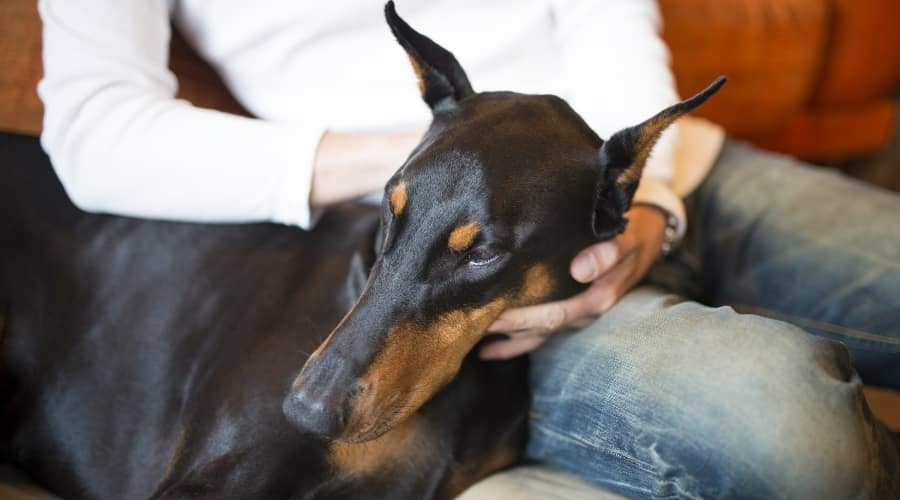
Despite their serious reputation, Dobermans are incredibly people-oriented dogs. They form exceptionally close bonds with their families and often earn the nickname “Velcro dog” because they’re happiest staying right by their owner’s side.
At A Glance:
- Size: Large (60-100 pounds)
- Temperament: Intelligent, alert, loyal
- Energy Level: High
- Social/Adaptability: Highly people-oriented and adapts well when properly socialized
- Family Life: Affectionate with family and good with young children
- Best For: Active owners who want an intelligent, trainable companion
Fun Fact: If a Doberman trusts you, there’s a good chance you’ll experience the famous “Doberman lean.” This affectionate behavior is the breed’s way of staying close to its favorite people and often comes with very little respect for personal space. Learn more about why dogs lean against their owners.
4. German Shepherd
Originally developed to herd sheep, the German Shepherd quickly became one of the world’s most versatile working dogs. Today, they’re trusted as police, military, search-and-rescue, and service dogs because of their intelligence and willingness to work alongside people.
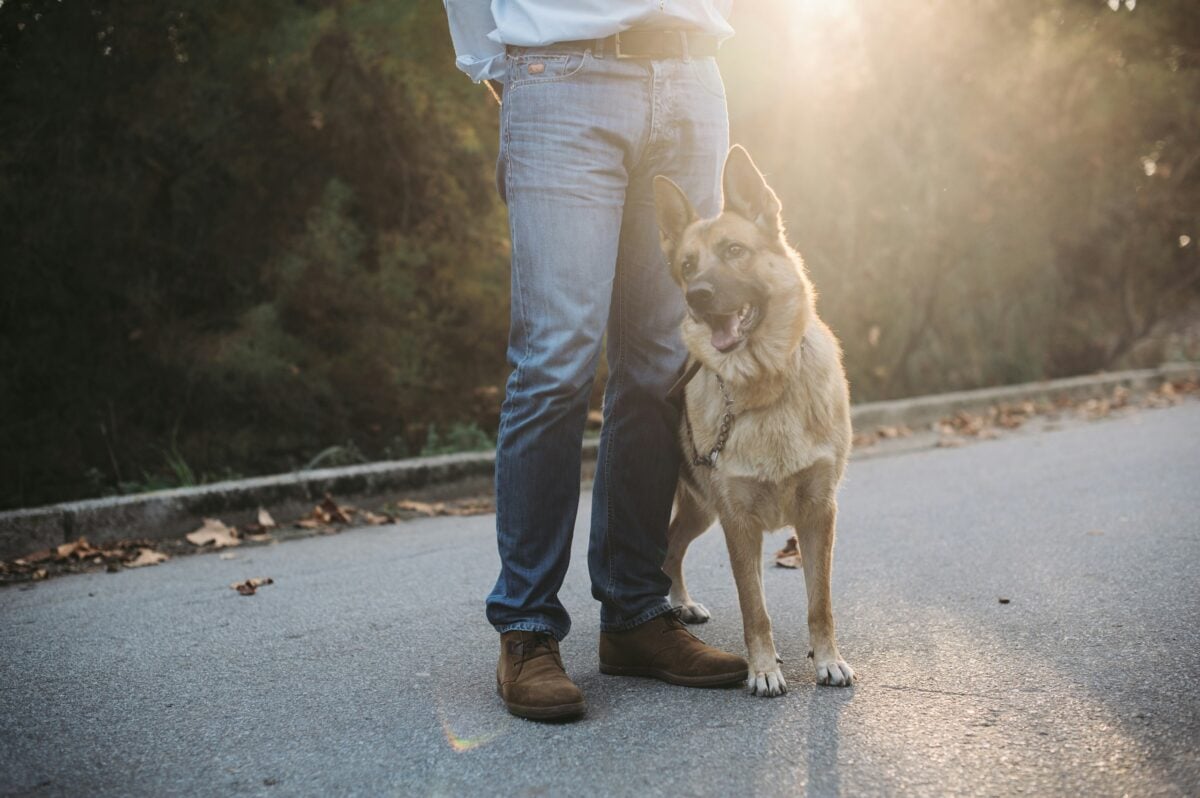
That same devotion carries over into family life. German Shepherds love having a job to do, but their favorite job is often simply being with their people, whether that’s joining a hike, playing in the yard, or keeping the family company at home.
At A Glance:
- Size: Large (50-90 pounds)
- Temperament: Courageous, confident, smart
- Energy Level: High
- Social/Adaptability: Playful and very adaptable but naturally cautious around unfamiliar people
- Family Life: Thrives when given a purpose and enjoys being actively involved in family life
- Best For: Active families committed to training and mental stimulation
Worth Knowing: German Shepherds are often more emotionally sensitive than people expect. They bond intensely with their family, and can experience separation anxiety if left alone for too long. Consistent routines and positive reinforcement typically bring out the best in the breed.
5. Boerboel
The Boerboel was developed in South Africa to guard remote farms, where strength, confidence, and sound judgment were essential. Its massive frame and calm, watchful demeanor still make it one of the most imposing mastiff breeds.
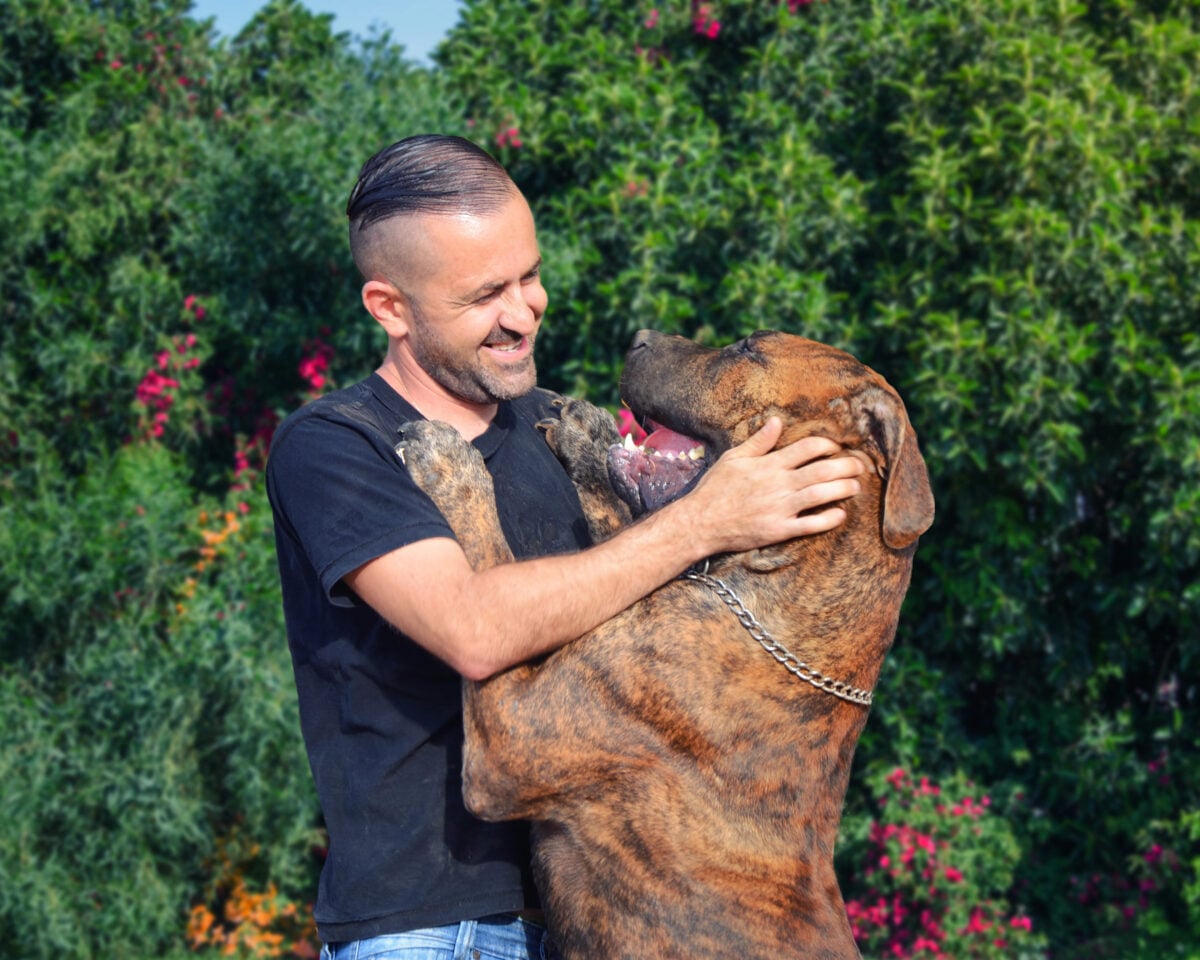
With the people they know and trust, Boerboels are remarkably gentle and devoted companions. They tend to stay close to their families, patiently keeping an eyeon everything while quietly soaking up attention from their favorite humans.
At A Glance:
- Size: Extra large (150-200 pounds)
- Temperament: Calm, confident, intelligent
- Energy Level: Moderate
- Social/Adaptability: Moderately adaptable; reserved with strangers
- Family Life: Deeply devoted to its family and generally good with children, but not typically the best fit for multi-dog households
- Best For: Experienced owners looking for a confident guardian and loyal companion
Worth Comparing: The Boerboel is less common than many giant guardian breeds, but it’s often compared to the English Mastiff and Cane Corso. While all three are loyal family protectors, the Boerboel is generally heavier than the Cane Corso and more athletic than the English Mastiff. Explore our English Mastiff vs. Boerboel and Cane Corso vs. Boerboel comparisons.
Curious About Other Loyal Guardians?
If you’re looking for a breed with stronger guardian instincts and a more reserved temperament, these breeds are worth exploring.
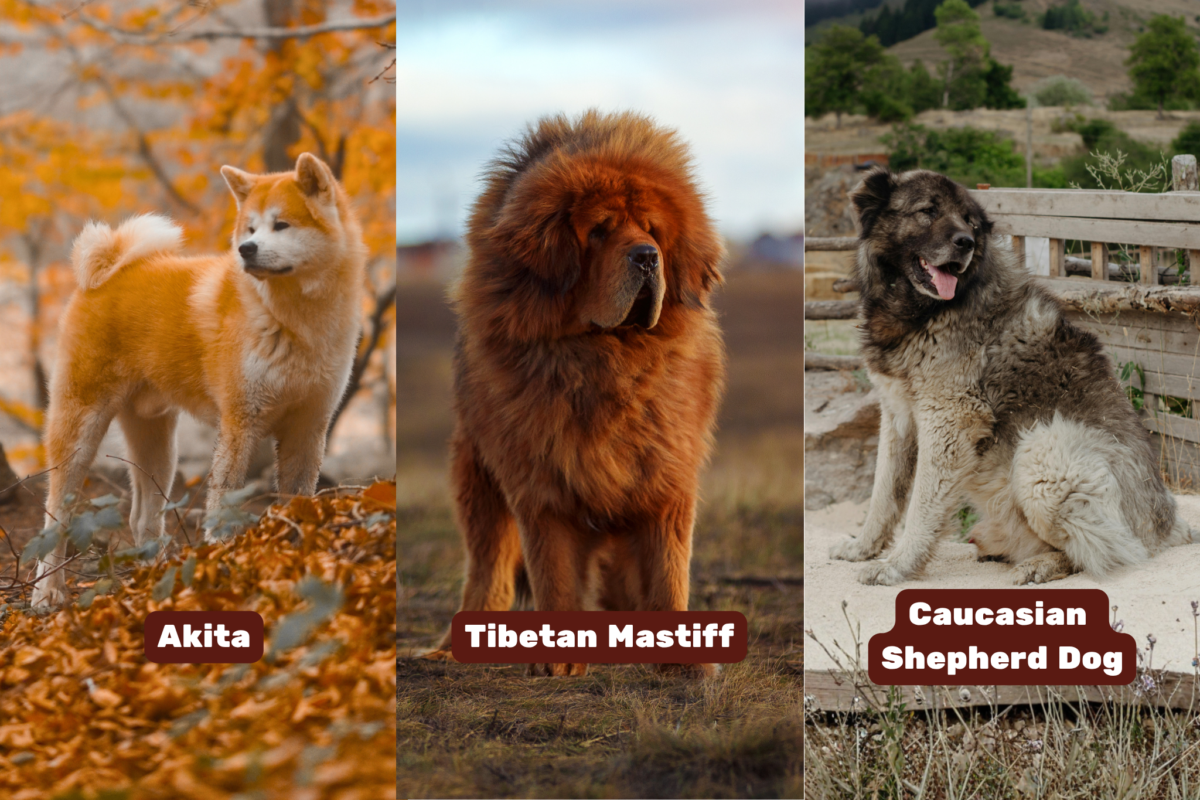
- Akita — Quiet, dignified, and naturally reserved with strangers while remaining deeply loyal to its family
- Tibetan Mastiff — An ancient livestock guardian known for its independence, territorial instincts, and unwavering devotion to its family
- Caucasian Shepherd Dog — Bred to protect livestock from wolves and bears, this giant guardian is fiercely loyal but naturally wary of strangers.
5 Giant Breeds With Gentle Hearts
Their sheer size can stop people in their tracks, but many of the world’s biggest dogs are surprisingly calm, patient, and affectionate. While every dog needs proper training and socialization, these gentle giants often become oversized couch companions who’d rather lean against you than look for trouble.
1. Great Dane
The Great Dane is often called the “Apollo of dogs” because of its towering height and elegant build. Originally developed in Germany to hunt wild boar, today’s Great Danes are far more likely to claim an entire couch than chase dangerous game.
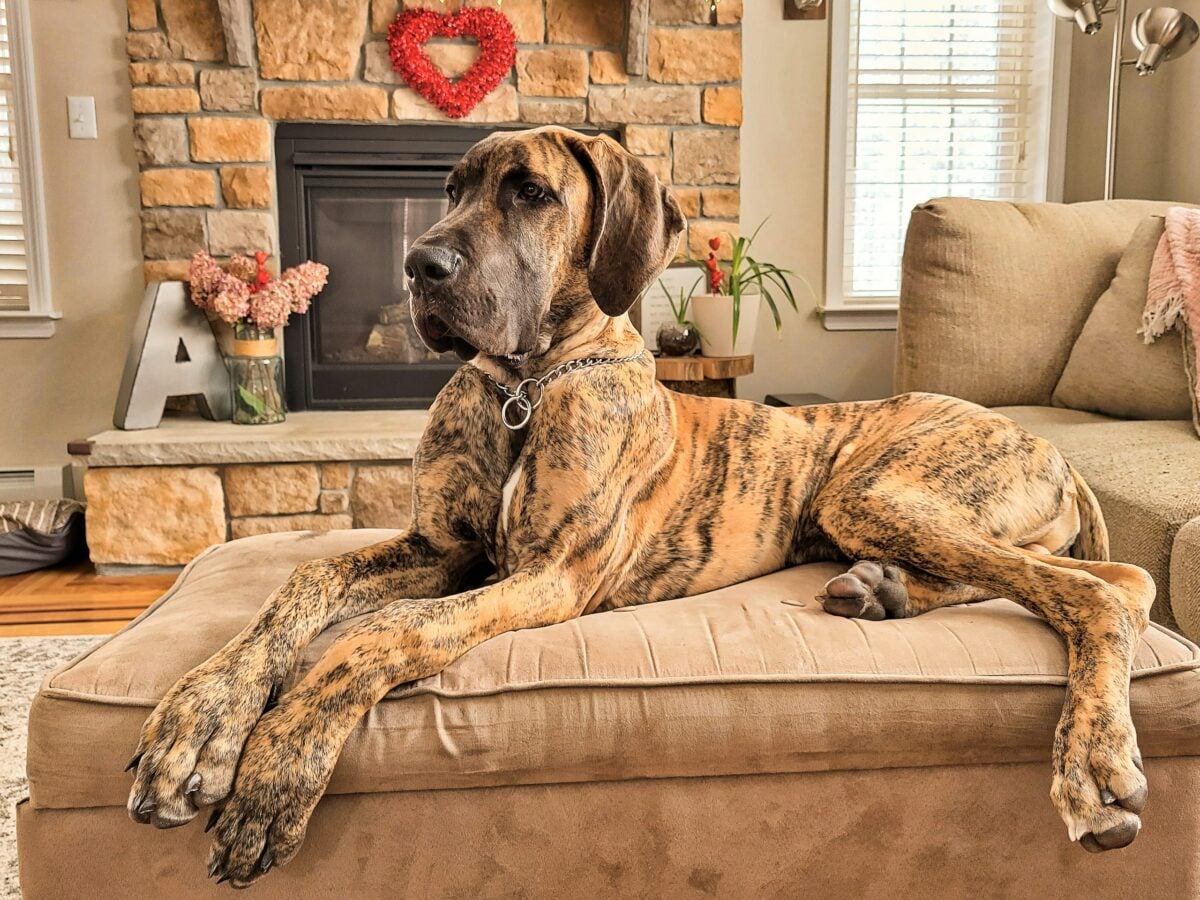
Despite their imposing size, Great Danes are typically calm, affectionate companions that form strong bonds with their families. Many owners describe them as oversized lap dogs who have no idea just how big they really are.
At A Glance:
- Size: Giant (110-175 pounds)
- Temperament: Gentle, friendly, patient
- Energy Level: Moderate
- Social/Adaptability: Adaptable but needs plenty of living space
- Family Life: Very affectionate with family; supervision recommended around young children and other dogs
- Best For: Owners who want a giant companion with a calm personality
Fun Fact: Great Danes are among the tallest dog breeds in the world. Standingon their hind legs, many are taller than the average adult.
2. Mastiff
The English Mastiff is one of the oldest and heaviest dog breeds in the world. For centuries, these massive dogs guarded estates, accompanied armies, and impressed visitors simply by standing nearby.
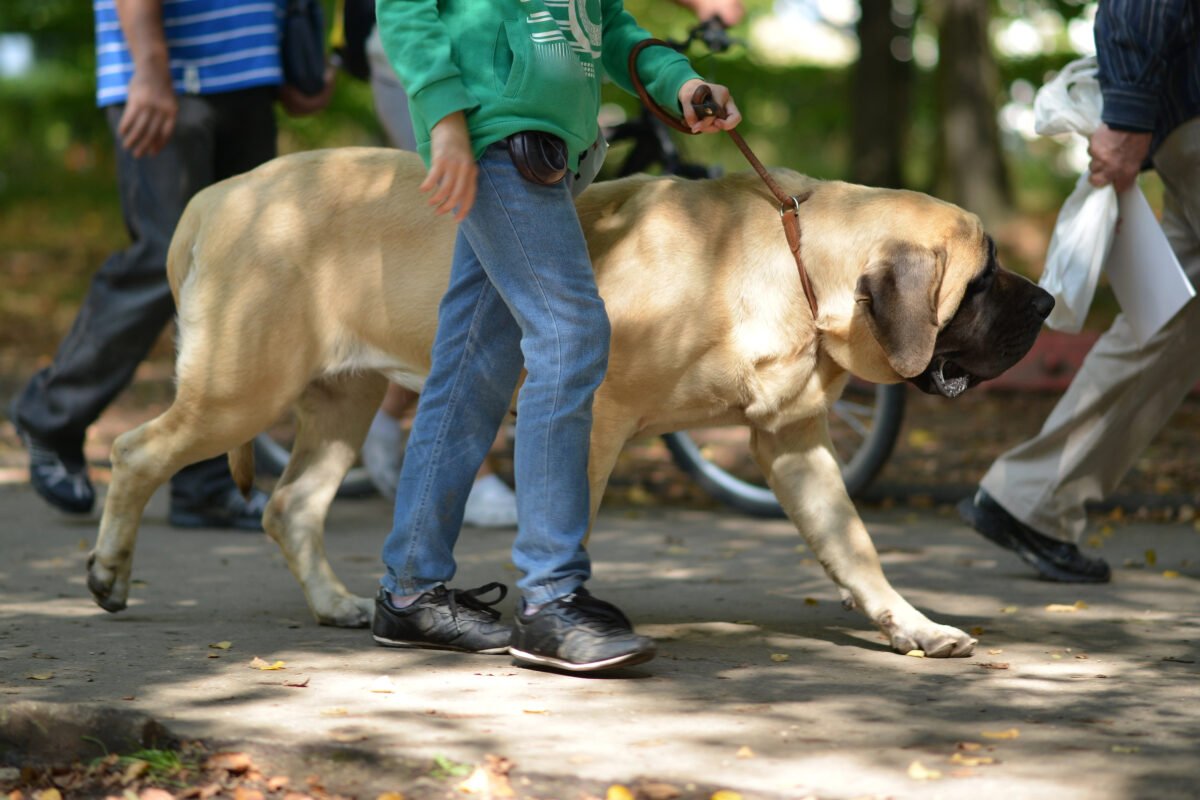
Today, most Mastiffs are remarkably mellow dogs that would rather nap beside their owners than patrol the yard. Their quiet confidence and affectionate nature often surprise people meeting one for the first time.
At A Glance:
- Size: Giant (120-230 pounds)
- Temperament: Dignified, calm, courageous
- Energy Level: Low to moderate
- Social/Adaptability: Relaxed and adaptable but best suited to homes with space
- Family Life: Deeply devoted to family and gentle with children
- Best For: Owners looking for a quiet, low-energy breed
Size Comparison: English Mastiffs are among the largest dog breeds in the world. See how they compare to other canine giants in our large dog breeds guide.
3. Saint Bernard
Saint Bernards became famous for rescuing stranded travelers in the snowy Alps, where their enormous size and incredible strength helped save countless lives. That same dependable nature still defines the breed today.
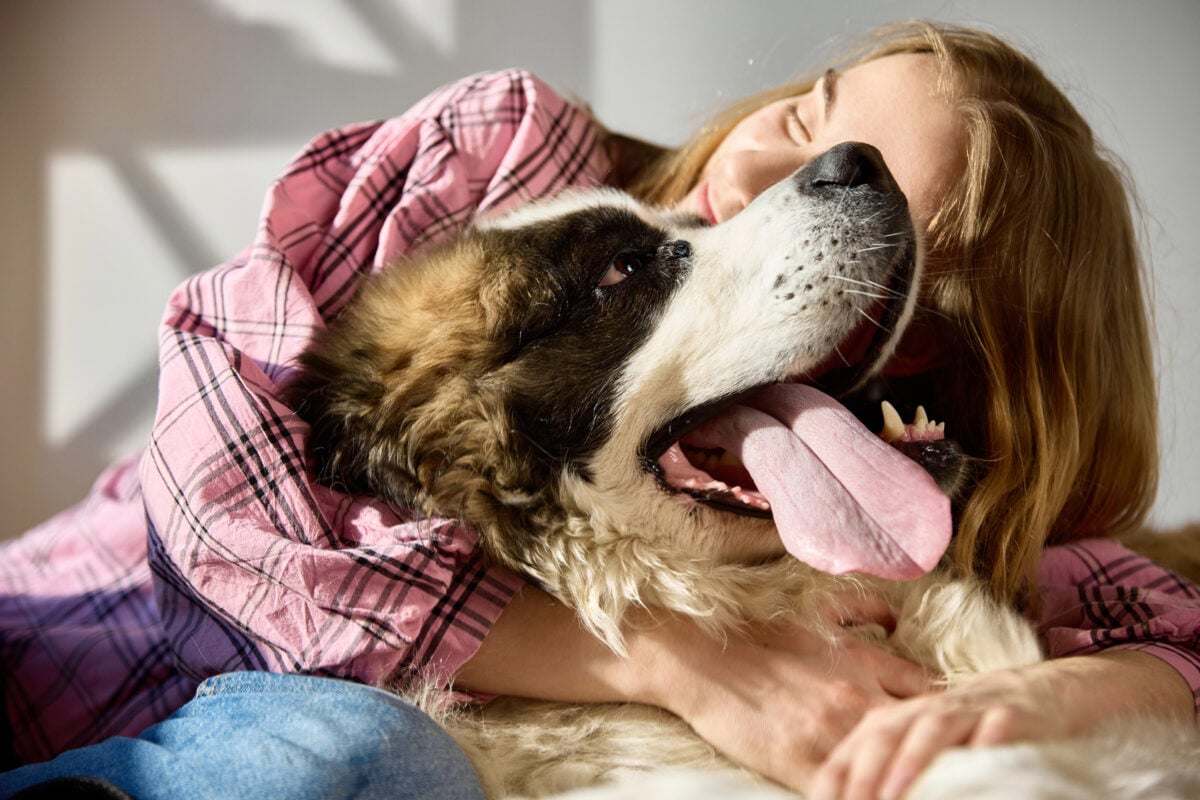
Although they look intimidating, Saint Bernards are famously patient, gentle, and affectionate with their families. They’re often happiest relaxing near their people and have earned a reputation as one of the classic “gentle giant” breeds.
At A Glance:
- Size: Giant (120-180 pounds)
- Temperament: Calm, playful, affectionate
- Energy Level: Low to moderate
- Social/Adaptability: Easygoing and adaptable with consistent routines
- Family Life: Excellent with children and devoted to family
- Best For: Families wanting a calm, easygoing giant breed
Worth Comparing: Love giant, fluffy dogs? Compare the Saint Bernard vs. Bernese Mountain Dog and Saint Bernard vs. Newfoundland to see which breed fits your lifestyle best.
4. Newfoundland
Newfoundlands were developed to help Canadian fishermen haul nets, pull carts, and perform water rescues. Their strength is legendary, but so is their famously sweet temperament.
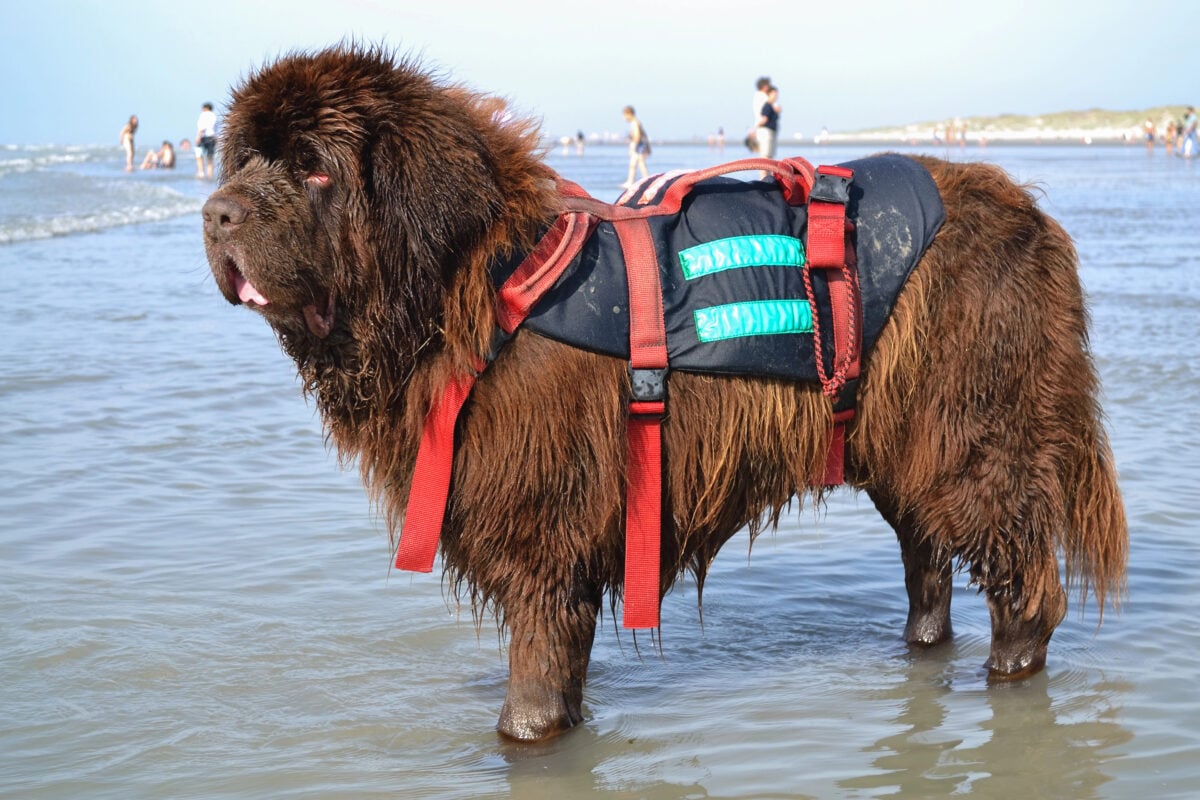
These gentle giants are exceptionally patient and are often described as natural babysitters because of how calm and tolerant they tend to be with children. They thrive when they’re included as part of the family.
At A Glance:
- Size: Giant (100-150 pounds)
- Temperament: Sweet, patient, dependable
- Energy Level: Moderate
- Social/Adaptability: Friendly, social, and eager to be included
- Family Life: Outstanding with children and other pets
- Best For: Families who have the space for a giant, affectionate companion
Did You Know? Newfoundlands have partially webbed feet and an instinctive love of swimming, making them one of the most accomplished water rescue breeds in the world.
5. Irish Wolfhound
Originally bred to hunt wolves and elk, the Irish Wolfhound combines tremendous size with an unexpectedly gentle personality. Their long legs and wiry coats give them an imposing silhouette, but they’re typically quiet, polite dogs.
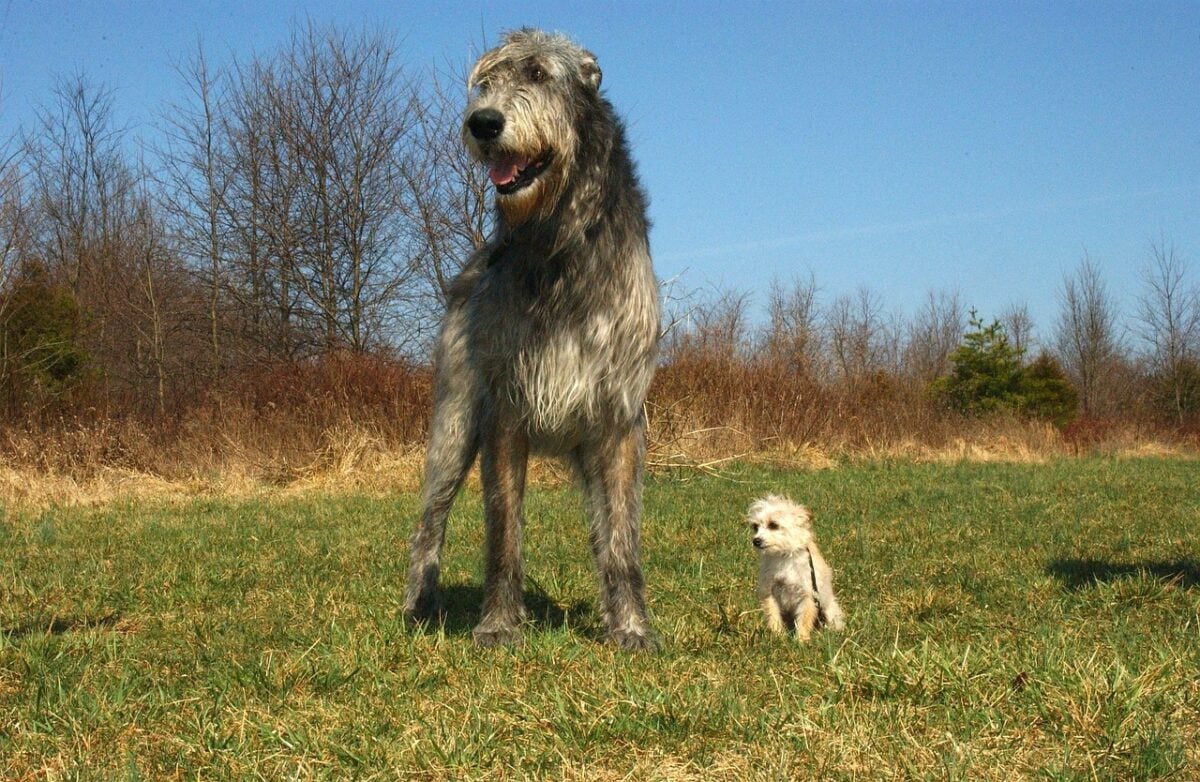
Irish Wolfhounds tend to be calm around the home and bond closely with their families. While they still enjoy a good run, they’re usually content spending the rest of the day stretched out somewhere comfortable.
At A Glance:
- Size: Giant (105-110 pounds)
- Temperament: Gentle, dignified, friendly
- Energy Level: Moderate
- Social/Adaptability: Moderately adaptable and generally welcoming with strangers
- Family Life: Very affectionate with family, gentle with respectful children, and typically gets along well with other dogs
- Best For: Owners wanting a laid-back companion breed
What To Know: Irish Wolfhounds are the tallest breed recognized by the AKC, but their lifespan is considerably shorter than most dogs because of their giant size.
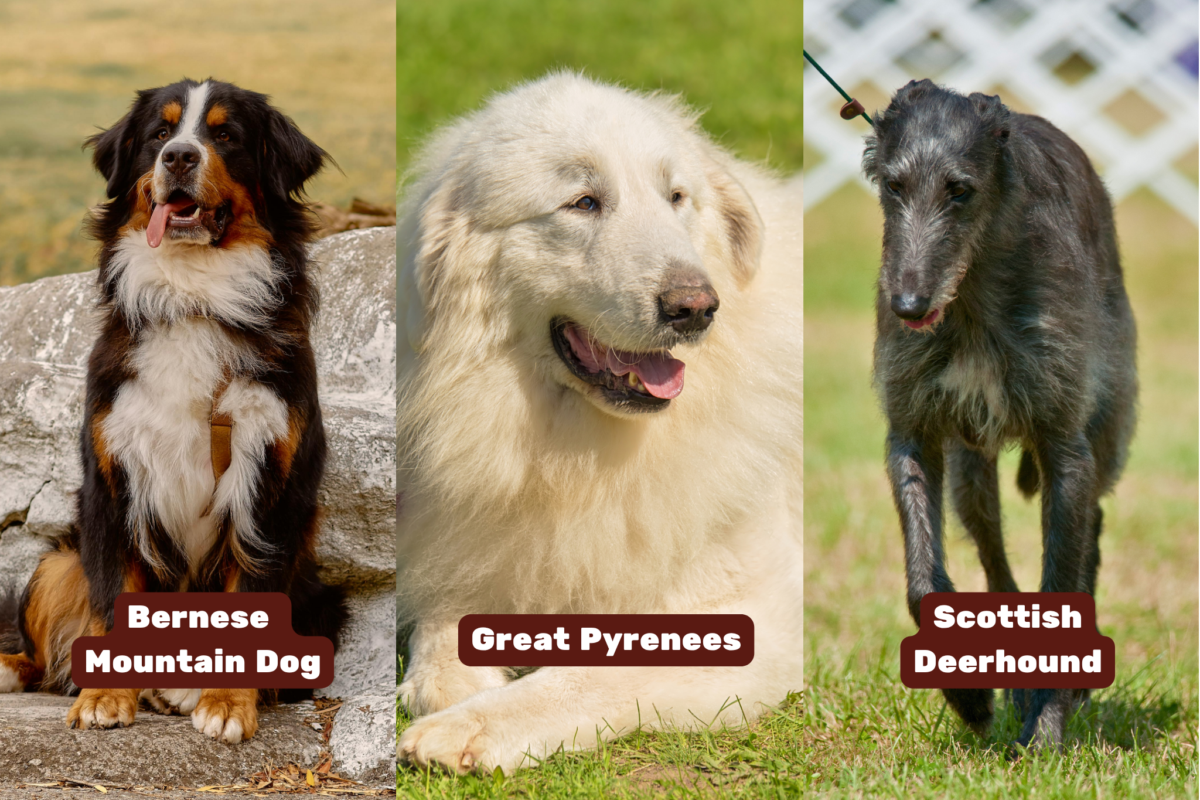
Love Gentle Giants?
These giant breeds also have a reputation for calm, affectionate personalities:
- Bernese Mountain Dog — Gentle, eager to please, and family-oriented
- Great Pyrenees — An independent livestock guardian that calmly watches over their family and property while remaining affectionate with those they knows
- Scottish Deerhound — Quiet, dignified, and surprisingly relaxed indoors
5 Imposing Breeds With Playful Personalities
These dogs look serious, but owners know they have a goofy, playful side that doesn’t match their intimidating appearance. Whether they’re carrying oversized sticks, acting like lap dogs, or making everyone laugh with their antics, these breeds prove that a tough exterior doesn’t always reflect what’s underneath.
1. Bullmastiff
The Bullmastiff was developed in England to help gamekeepers guard estates from poachers. The breed needed to be strong, quiet, and confident enough to stop a person without being overly reactive.
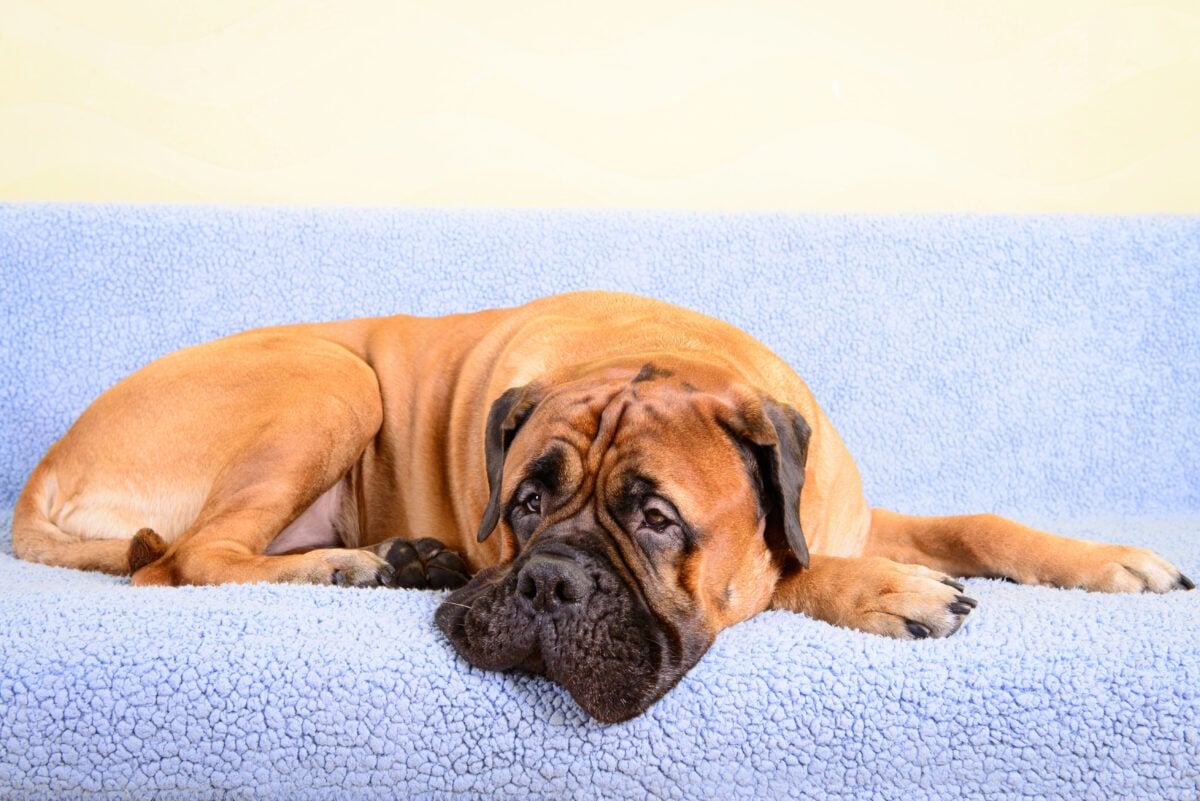
Today, Bullmastiffs are usually calm, affectionate dogs that save most of their energy for short bursts of play. Many are gentle with their families, fond of lounging nearby, and surprisingly silly when they decide it’s time for zoomies.
At A Glance:
- Size: Giant (100-130 pounds)
- Temperament: Brave, loyal, affectionate
- Energy Level: Moderate to high
- Social/Adaptability: Vigilant and reserved with unfamiliar people
- Family Life: Affectionate and naturally protective; early socialization with children and other pets highly recommended
- Best For: Owners wanting a quiet dog with a mellow home personality
History Highlight: The Bullmastiff was created by crossing Bulldogs with Mastiffs, producing a dog that was powerful but smaller and more manageable than other mastiff breads.
2. Dogo Argentino
The Dogo Argentino was developed in Argentina as a powerful big-game hunting dog. Its athletic build, white coat, and confident presence give it one of the most striking appearances on this list.
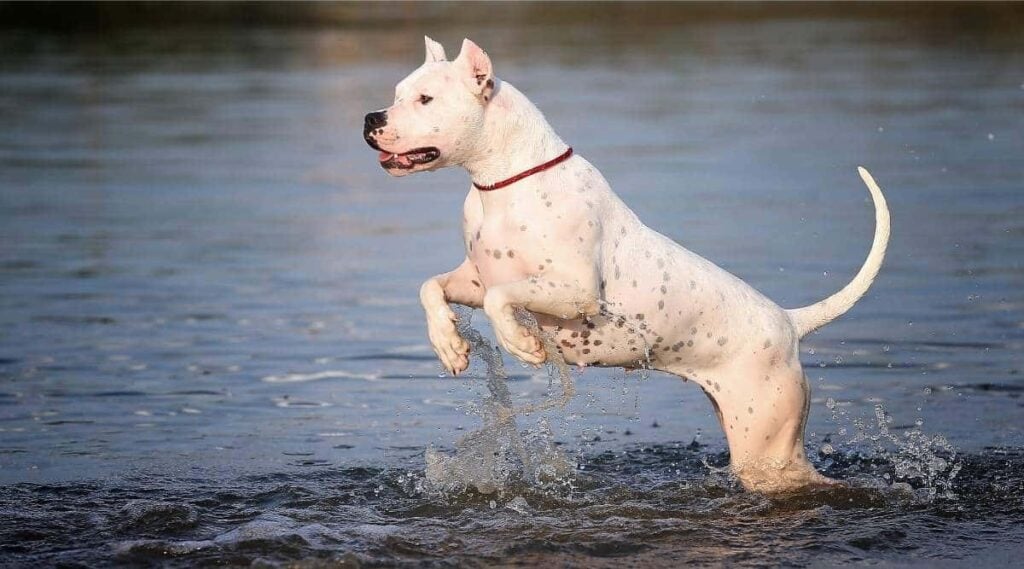
At home, Dogos are often affectionate, playful, and intensely loyal to their families. They enjoy activity, structure, and close companionship, but their strength and drive make early training and socialization especially important.
At A Glance:
- Size: Large (80-100 pounds)
- Temperament: Loyal, courageous, athletic
- Energy Level: High
- Social/Adaptability: Friendly and adaptable; requires consistent socialization from an early age
- Family Life: Affectionate and family-oriented; supervision recommended around young children and other pets
- Best For: Active, experienced owners who can provide structure, training, and exercise
Good To Know: Dogo Argentinos are banned or restricted in some areas, so always check local laws before considering one. Their power, prey drive, and working history make responsible ownership essential.
3. Giant Schnauzer
The Giant Schnauzer is a powerful German working breed originally developed to drive cattle and guard farms. With its square build, dark coat, and intense expression, this breed often looks like it’s taking life very seriously.
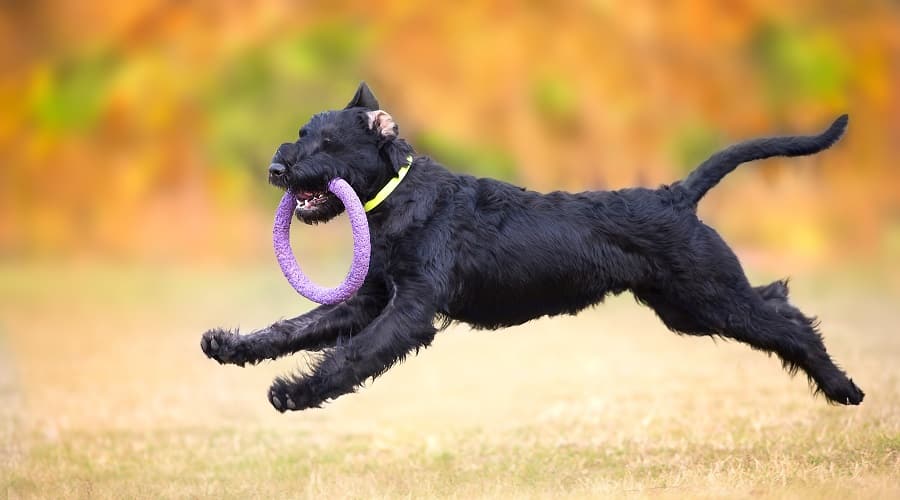
At home, Giant Schnauzers are often energetic, playful, and deeply attached to their families. They love games, training, and having something to do, which means their goofy side usually comes out when they have an outlet for all that intelligence.
At A Glance:
- Size: Large (55-95 pounds)
- Temperament: Alert, playful, loyal
- Energy Level: High
- Social/Adaptability: Adaptable but very wary of strangers
- Family Life: Affectionate; early socialization with children and other pets highly recommended
- Best For: Experienced, active owners who want a smart working breed
Good To Know: Giant Schnauzers need consistent training, structure, and plenty of mental stimulation. Without enough to do, their energy and intelligence can quickly turn into mischief.
4. Leonberger
The Leonberger was developed in Germany as a large companion and working dog. Their thick coat and massive size give them a serious, bear-like appearance.
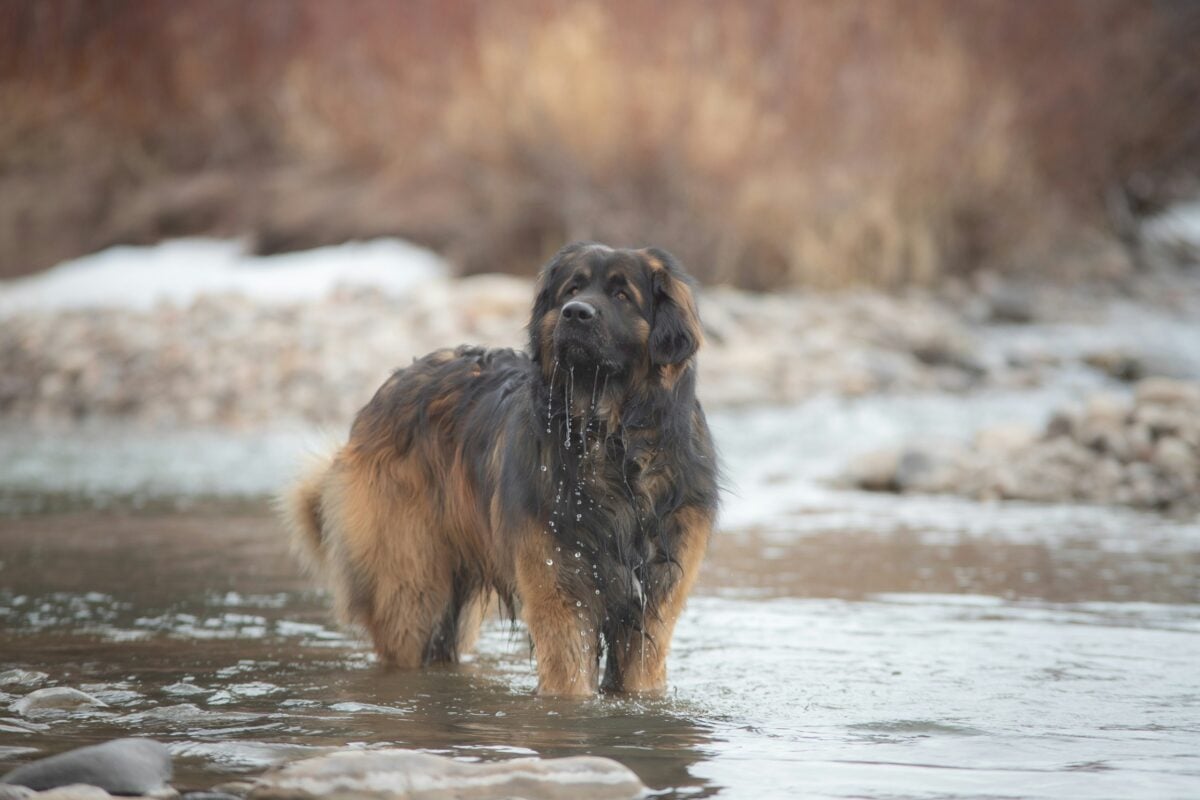
Leonbergers are known for being gentle, playful, and affectionate with their families. Many keep a puppy-like sense of humor well into adulthood and enjoy joining family adventures, splashing in water, or leaning into their people for attention.
At A Glance:
- Size: Giant (90-170 pounds)
- Temperament: Gentle, playful, friendly
- Energy Level: Moderate
- Social/Adaptability: Friendly, confident, and generally open to people
- Family Life: Affectionate, playful, and excellent with families
- Best For: Families wanting a giant companion with a silly, social personality
Fluffy Favorite: Love giant, shaggy dogs? The Leonberger is one of many gentle giants featured in our guide to the fluffiest dog breeds.
5. Greater Swiss Mountain Dog
The Greater Swiss Mountain Dog was bred in the Swiss Alps to pull carts, guard farms, and help with livestock. Its broad chest, sturdy frame, and serious expression still reflect that hardworking farm background.
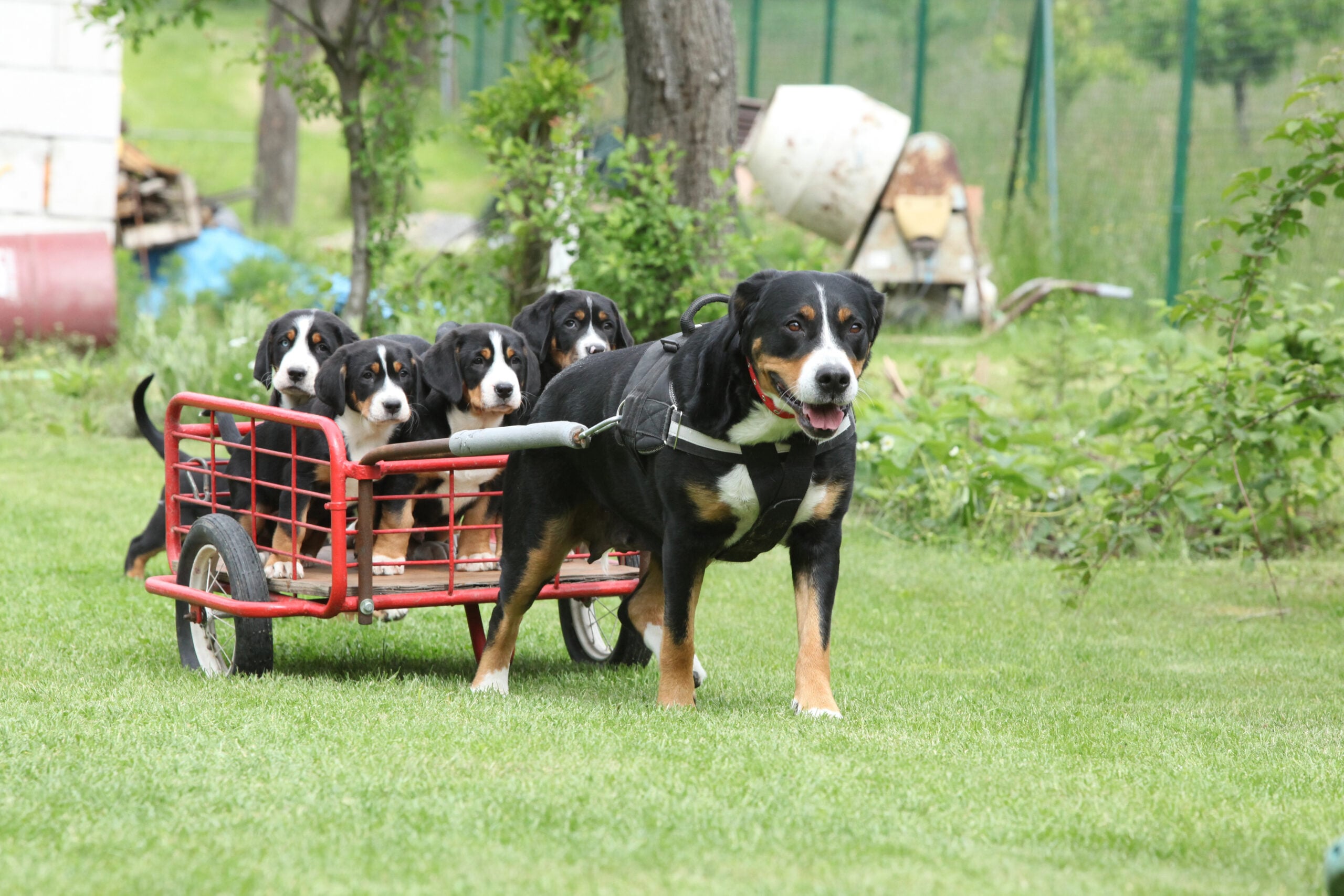
With family, Swissies are often cheerful, goofy, and eager to be included in whatever is happening. They tend to be good-natured companions who enjoy playtime, family outings, and staying close to their people.
At A Glance:
- Size: Large to giant (85-140 pounds)
- Temperament: Faithful, good-natured, confident
- Energy Level: Moderate to high
- Social/Adaptability: Friendly and adaptable with proper socialization
- Family Life: Dependable, affectionate, and enjoys family activities
- Best For: Families wanting a sturdy, social working breed
Swiss Cousins: The Greater Swiss Mountain Dog and Bernese Mountain Dog share Swiss roots, but differ in coat, size, and personality. Compare these gentle working dogs side by side.
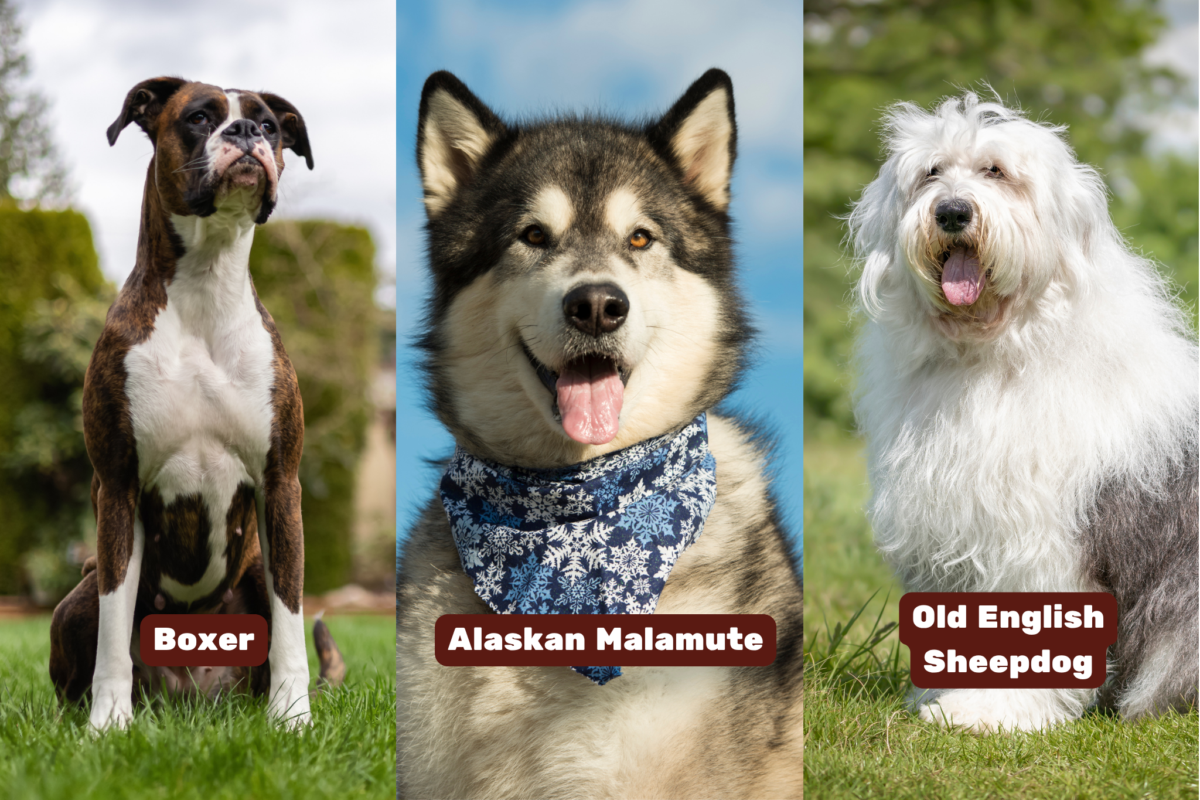
Want More Big Personalities?
These breeds also surprise owners with their goofy, affectionate side:
- Boxer — Energetic, clownish, and loves making people laugh
- Alaskan Malamute — Athletic and imposing, yet famous for its playful nature, expressive howls, and love of family adventures.
- Old English Sheepdog — Fluffy, friendly, and always entertaining
5 Powerful Breeds That Love Their Families
Their muscular builds and confident presence can make them look intimidating, but these breeds often form incredibly strong bonds with their families. While many are affectionate, loyal companions at home, they also need proper training, early socialization, and responsible ownership to help them thrive.
1. American Staffordshire Terrier
The American Staffordshire Terrier is a muscular, athletic breed that’s often confused with both the Staffordshire Bull Terrier and the American Pit Bull Terrier (Pitbull). While they share common ancestry, the AmStaff was further developed in the United States into a distinct breed known for its strength, confidence, and devotion to its family.
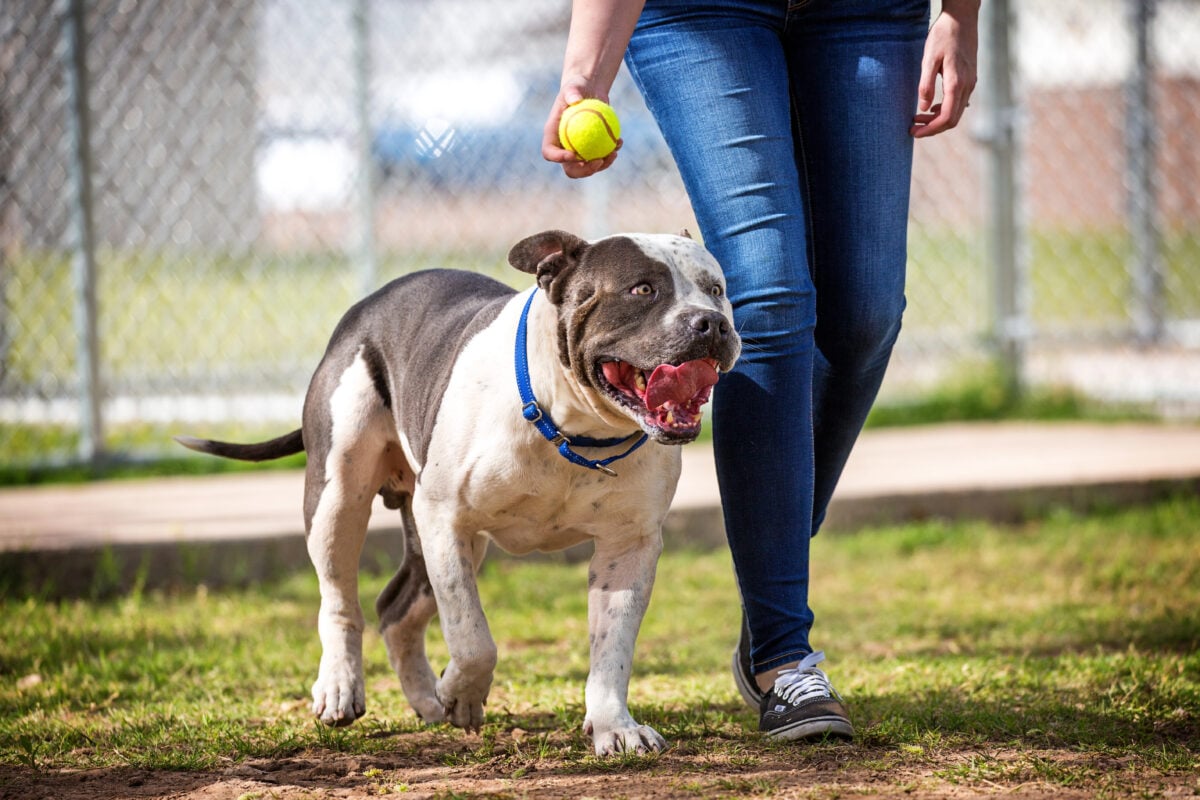
Owners know a different side of the AmStaff than many people expect. They’re affectionate, people-oriented dogs that love spending time with their family and are often happiest when included in everyday activities. Many are playful companions that think nothing of climbing onto the couch for cuddles.
- Size: Medium (55-70 pounds)
- Temperament: Confident, good-natured, smart
- Energy Level: Moderate
- Social/Adaptability: Moderately adaptable; open to strangers
- Family Life: Very affectionate with family; supervision recommended with young children and unfamiliar dogs
- Best For: Active owners committed to training and socialization
Breed Comparison: The American Staffordshire Terrier is often mistaken for the American Pit Bull Terrier. Learn how these dogs differ in our guide comparing the AmStaff vs Pitbull.
2. Staffordshire Bull Terrier
The Staffordshire Bull Terrier may be compact, but they’re packed with muscle and confidence. Originally developed as fighting dogs in England, today’s Staffies are much better known for their playful personalities and unwavering devotion to their families.
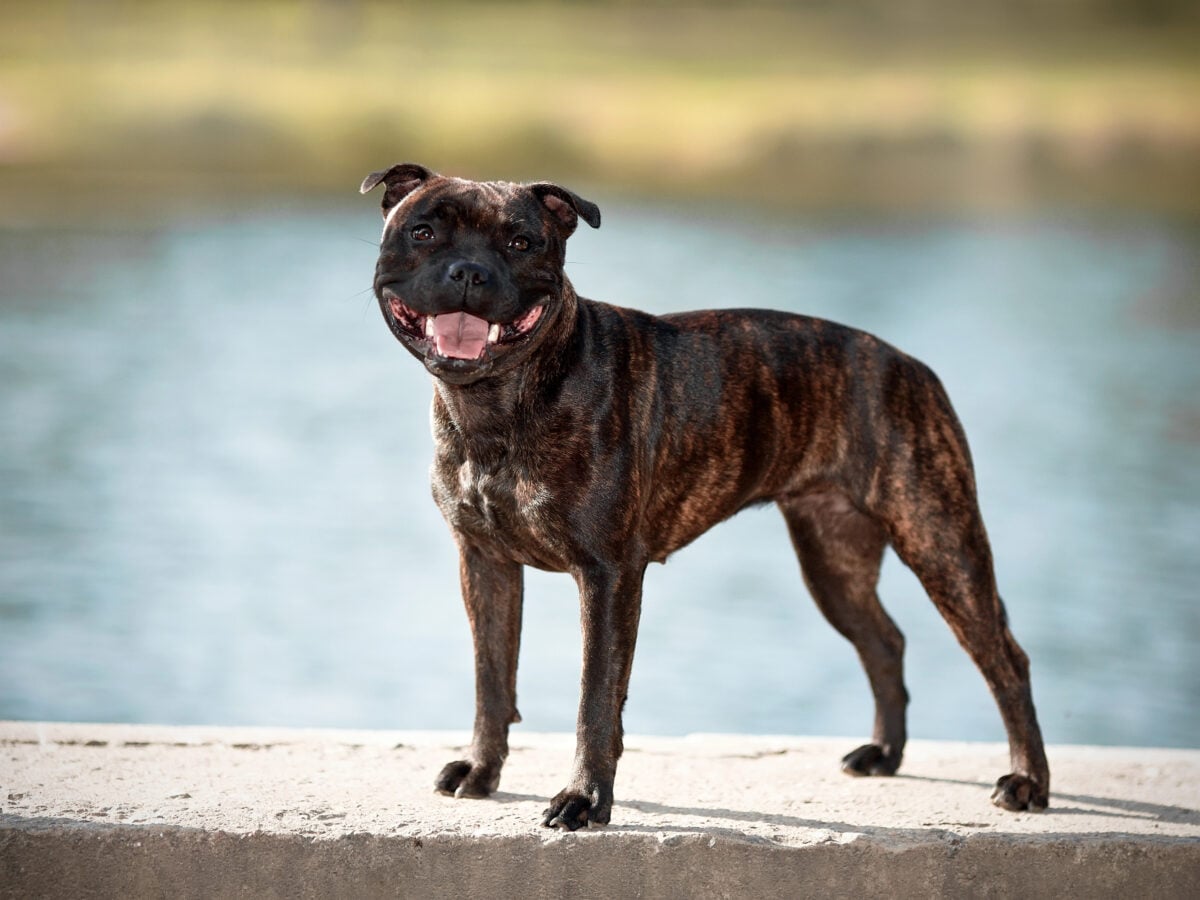
Owners often describe Staffies as affectionate clowns that never seem to outgrow their puppy phase. They love games, cuddles, and being the center of attention, making them one of the most people-oriented breedson this list.
At A Glance:
- Size: Medium (24-38 pounds)
- Temperament: Brave, affectionate, clever
- Energy Level: High
- Social/Adaptability: Adaptable and generally friendly with people
- Family Life: Extremely affectionate with family and good with young children
- Best For: Active families wanting a fun-loving companion
Fun Fact: Staffies are often called “Velcro dogs” because they love being close to their people and rarely pass up an opportunity to cuddle.
3. American Bully
The American Bully is a relatively new breed developed in the United States from the American Pit Bull Terrier and several bulldog breeds, including the American Bulldog and English Bulldog. Although its muscular build and broad head can look intimidating, the breed was intentionally developed as a confident, stable companion.
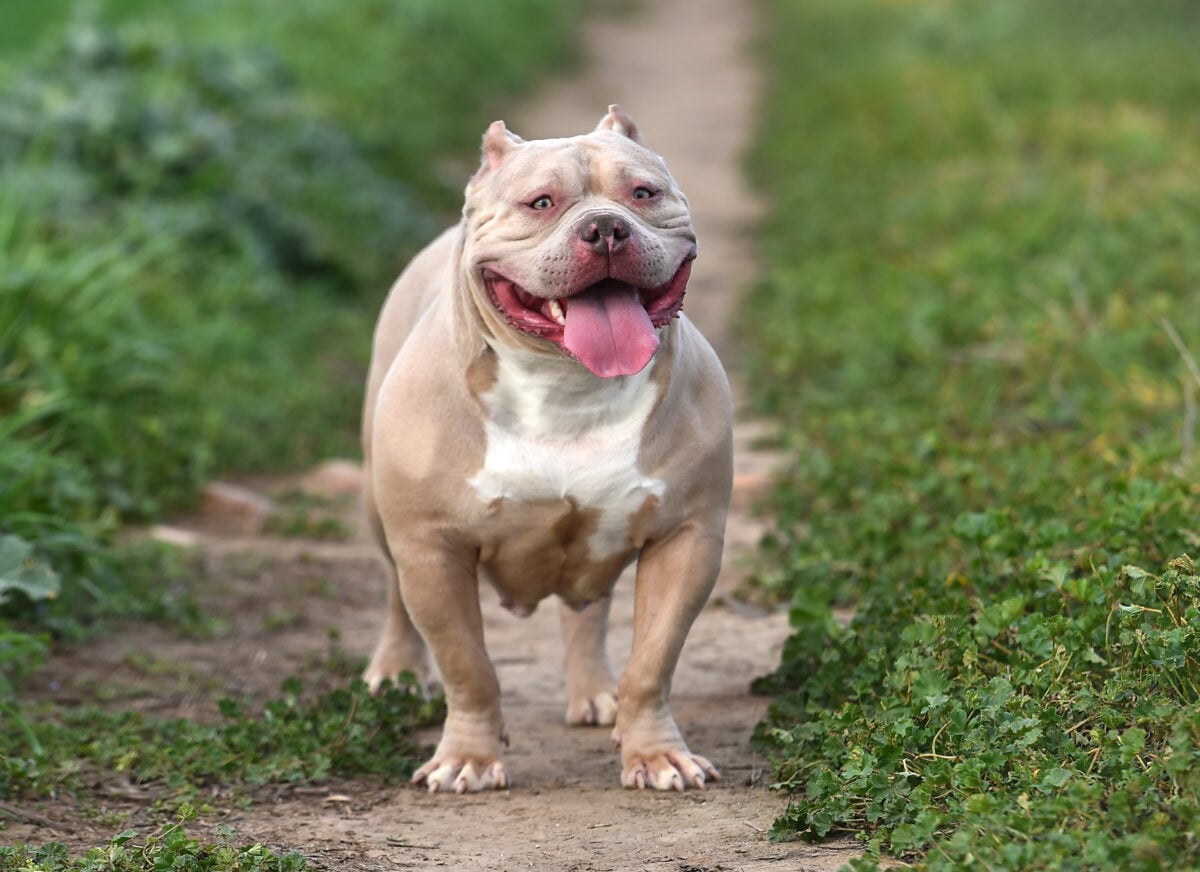
American Bullies are known for being affectionate, playful, and deeply devoted to their families. Many are outgoing, social dogs that thrive on attention and happily spend their day following their favorite people from room to room.
At A Glance:
- Size: Medium to large (70-120+ pounds, depending on variety)
- Temperament: Confident, affectionate, outgoing
- Energy Level: Moderate
- Social/Adaptability: Highly people-oriented and generally adaptable with proper training and socialization
- Family Life: Extremely affectionate with family; supervision recommended with young children and unfamiliar dogs
- Best For: Families wanting a loyal, companion-focused bully breed
Breed Recognition: The American Bully isn’t currently recognized by the American Kennel Club (AKC), but it is an officially recognized breed with both the United Kennel Club (UKC) and the American Bully Kennel Club (ABKC). The UKC recognizes four size varieties: Pocket, Standard, Classic, and XL.
4. Rhodesian Ridgeback
The Rhodesian Ridgeback was originally developed in southern Africa to help track lions, giving it one of the most impressive histories of any breed. Their athletic build and calm confidence can make them seem intimidating, especially to people meeting one for the first time.
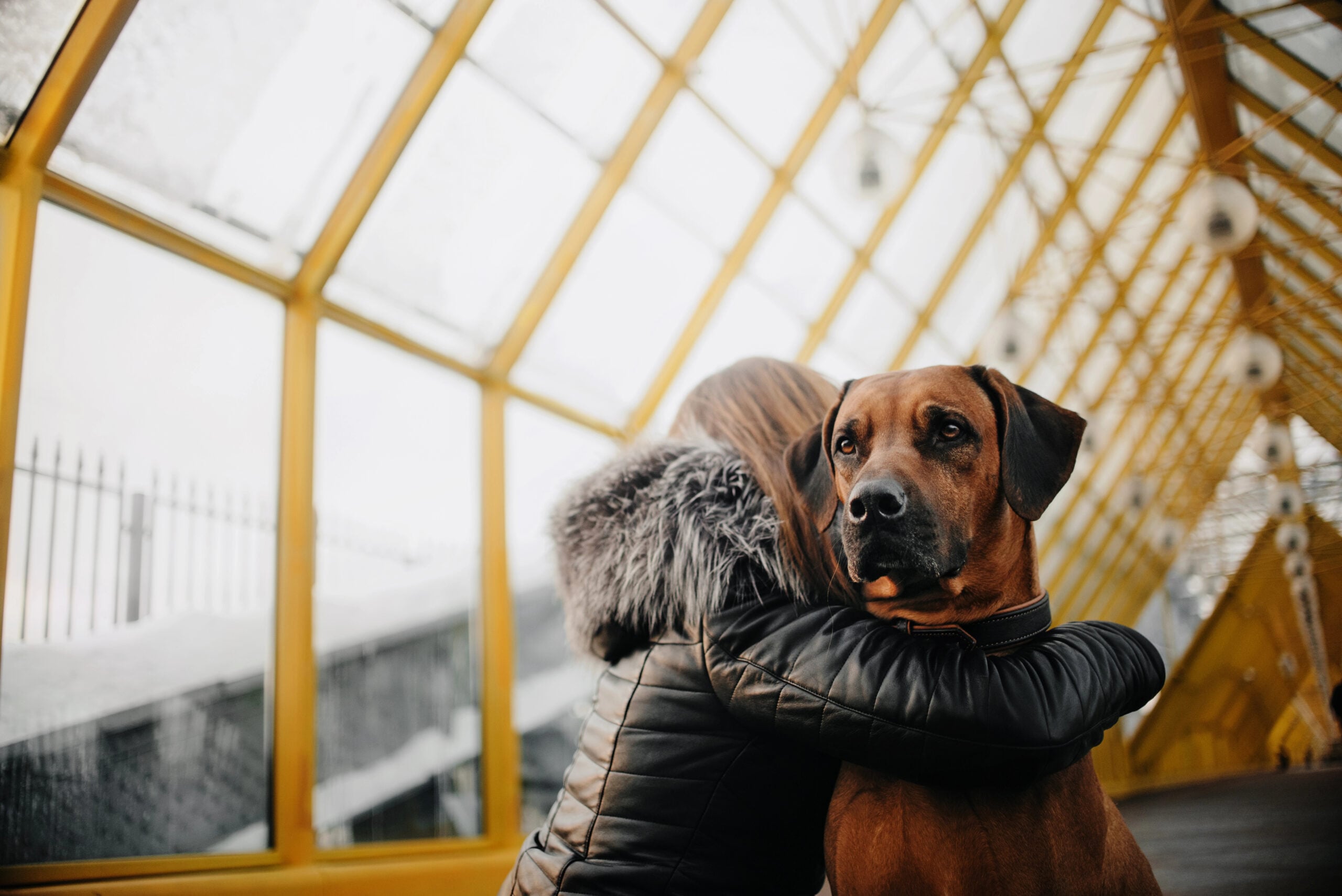
At home, Ridgebacks are typically quiet, loyal companions that form deep bonds with their families. While they can be reserved with strangers, they’re often affectionate, goofy, and surprisingly sensitive with the people they trust.
At A Glance:
- Size: Large (70-85 pounds)
- Temperament: Dignified, calm, affectionate
- Energy Level: Moderate
- Social/Adaptability: Very adaptable, but can be reserved with strangers
- Family Life: Devoted to family and great with children
- Best For: Owners wanting an athletic but laid-back watchdog
Signature Feature: That distinctive ridge of hair growing in the opposite direction along their back is unique to the breed and inspired its name.
5. Dogue de Bordeaux
The Dogue de Bordeaux is instantly recognizable by its enormous head, wrinkled face, and incredibly muscular build. While they look imposing, these French mastiffs are known for being deeply devoted companions that prefer spending time with their family over seeking attention from strangers.
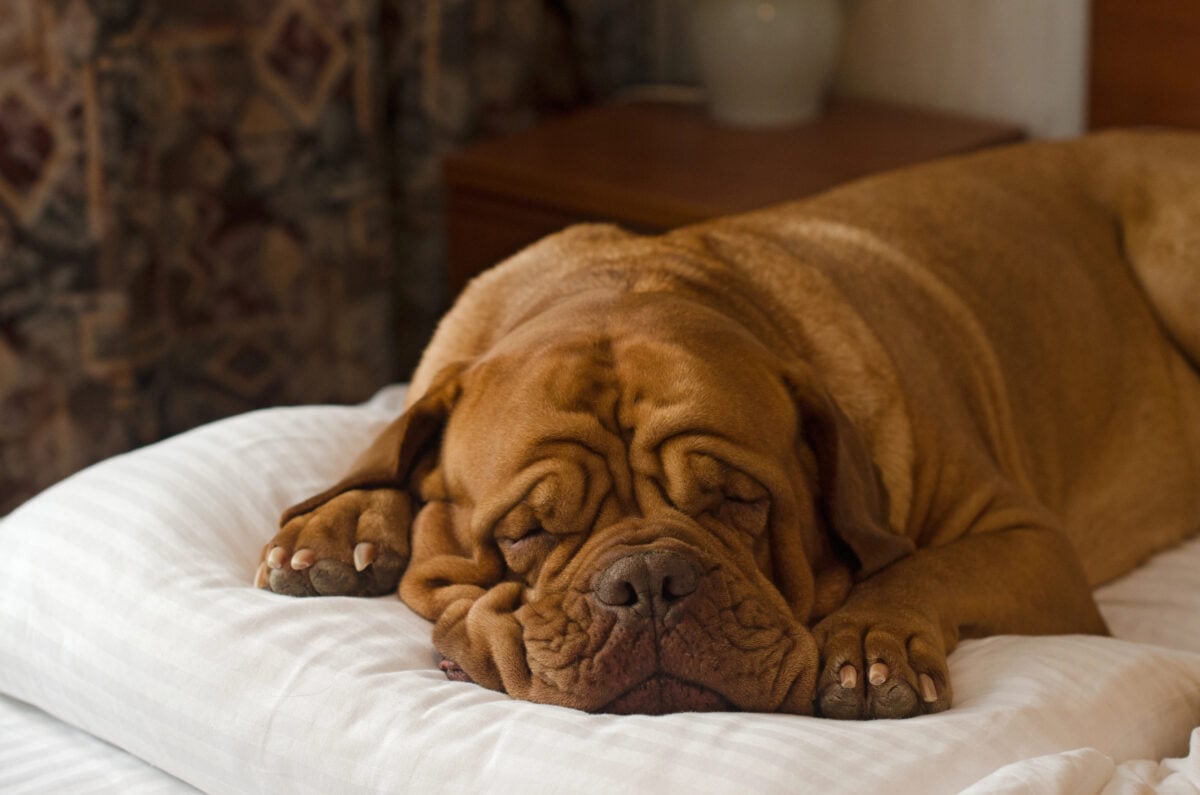
Many Dogues are calm around the house and surprisingly affectionate with the people they love. They enjoy relaxing nearby, soaking up attention, and quietly keeping an eye on everything happening at home.
At A Glance:
- Size: Giant (99-110 pounds)
- Temperament: Loyal, courageous, affectionate
- Energy Level: Moderate
- Social/Adaptability: Moderately adaptable; reserved with strangers
- Family Life: Extremely affectionate with family; supervision recommended with young children and unfamiliar dogs
- Best For: Owners seeking a calm, devoted guardian
Movie Star: The Dogue de Bordeaux gained worldwide fame after starring alongside Tom Hanks in “Turner & Hooch,” introducing millions of people to this lovable French giant.
Looking For More Powerful Family Dogs?
The breeds above combine strength, loyalty, and deep family bonds. If you’re looking for other muscular, devoted companions, these breeds are also worth considering.
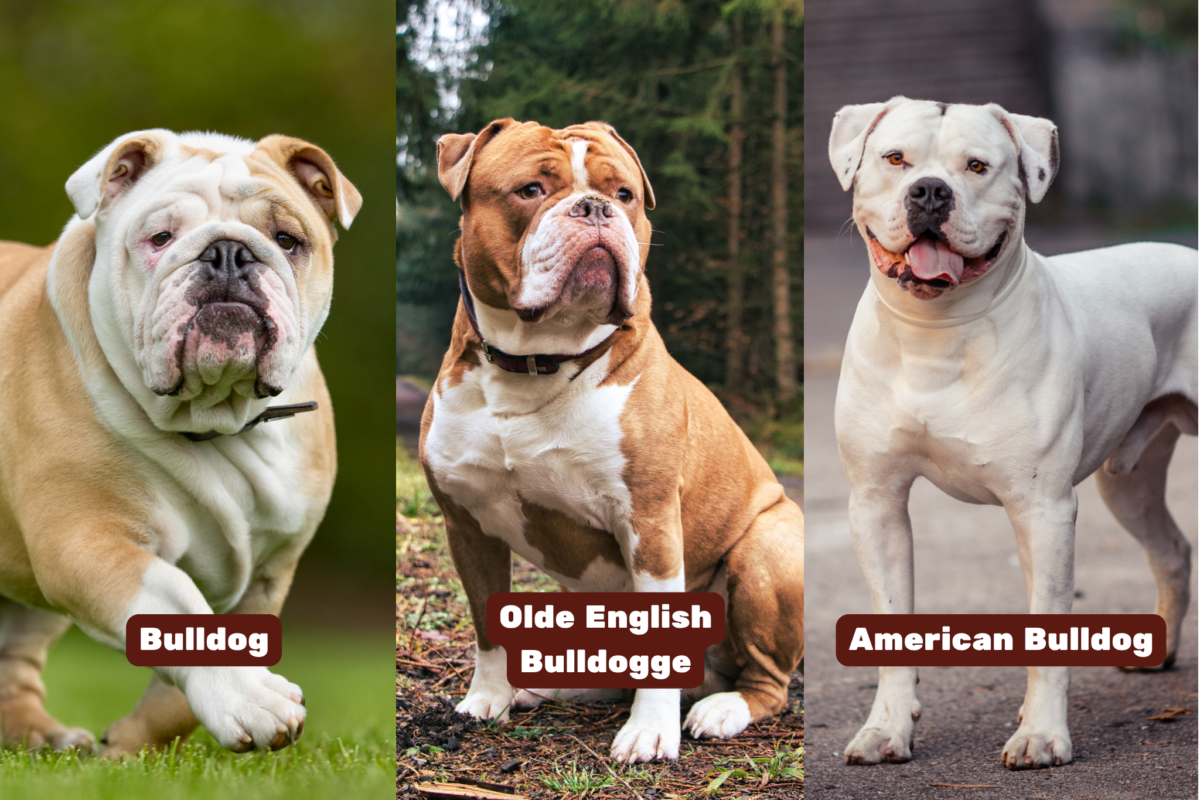
- Bulldog — Stocky, easygoing, and happiest spending time with their family
- Olde English Bulldogge — Muscular, companion-focused, and bred to be a healthier, more athletic bulldog
- American Bulldog — Athletic, affectionate, and devoted to the people they loves
Which Tough-Looking Dog Fits Your Lifestyle?
Thinking about bringing one of these impressive breeds into your home? While they may all look tough on the outside, their exercise needs, trainability, grooming, and personalities can be dramatically different.
Start with what matters most to you, and you’ll have a much easier time finding the breed that fits your lifestyle.
I Want A Family Companion
- Newfoundland — Famously gentle, patient, and one of the most devoted family dogs
- Saint Bernard — Calm, easygoing, and naturally tolerant with children
- Leonberger — Affectionate, playful, and thrives when included in everyday family activities
- Staffordshire Bull Terrier — Playful, affectionate, and happiest when spending time with its people
- American Bully — Confident, companion-focused, and eager to be involved in family life
I Want A Calm, Low-Energy Dog
- Mastiff — One of the most laid-back giant breeds, happiest relaxing with its family
- Saint Bernard — Easygoing, patient, and content with moderate daily activity
- Newfoundland — Gentle and calm at home, though it still enjoys regular walks and swimming
- Irish Wolfhound — Surprisingly relaxed indoors despite its towering size
- Rhodesian Ridgeback — Athletic outdoors but typically quiet and composed around the house
I Want A Dog That’s Easier To Train
- German Shepherd — Highly intelligent, eager to work, and one of the most versatile training breeds
- Doberman Pinscher — People-focused, quick to learn, and highly responsive with consistent training
- Rottweiler — Smart, loyal, and very trainable when socialized and guided early
- Greater Swiss Mountain Dog — Intelligent, willing to please, and generally responds well to patient, consistent training
- Staffordshire Bull Terrier — Eager, enthusiastic, and usually motivated by praise, play, and attention
I Want Low Grooming
- American Staffordshire Terrier — Low shedding and minimal grooming needs
- American Bully — Short coat with minimal brushing
- Dogo Argentino — Short coat with little shedding
- Staffordshire Bull Terrier — Quick weekly brushing is usually enough
- Doberman Pinscher — Sleek coat that’s easy to maintain (note: high shedding)
I Want A Dog That Turns Heads
- Great Dane — Towering, elegant, and impossible to miss
- Irish Wolfhound — Extremely tall, with a dramatic, wiry silhouette
- Mastiff — Massive, heavy-boned, and one of the largest dogs in the world
- Boerboel — Broad, muscular, and powerfully built
- Leonberger — Giant, lion-like, and strikingly fluffy
I Want An Active Adventure Buddy
- German Shepherd — Thrives on hiking, training, and spending time outdoors with their family
- Doberman Pinscher — Athletic, energetic, and happiest when they have an active owner
- Rhodesian Ridgeback — Built for endurance and loves long walks, hikes, and running
- Giant Schnauzer — Highly driven and excels in dog sports, obedience, and challenging activities
- Dogo Argentino — Powerful, athletic, and best suited for experienced owners who enjoy an active lifestyle
I’m An Experienced Dog Owner
- Cane Corso — Intelligent, protective, and thrives with confident, consistent leadership
- Rottweiler — Loyal and highly trainable but needs early socialization and ongoing training
- Giant Schnauzer — Exceptionally intelligent with high energy and a strong work drive
- Boerboel — Powerful guardian that requires experienced handling and clear boundaries
- Dogo Argentino — Athletic, determined, and best suited for owners comfortable managing a strong, independent working breed
Before You Choose A Tough-Looking Dog
A powerful appearance can be part of the appeal, but it shouldn’t be the only reason you choose a breed. These dogs vary widely in energy level, training needs, grooming, and health, so it’s important to think beyond looks before bringing one home.
1. Energy Level
Some intimidating-looking breeds are surprisingly laid-back, while others need a job to stay happy. A Bullmastiff or Dogue de Bordeaux may be content with moderate daily walks and plenty of downtime, while a Giant Schnauzer, Doberman Pinscher, or German Shepherd can become bored and destructive without enough physical exercise and mental stimulation.
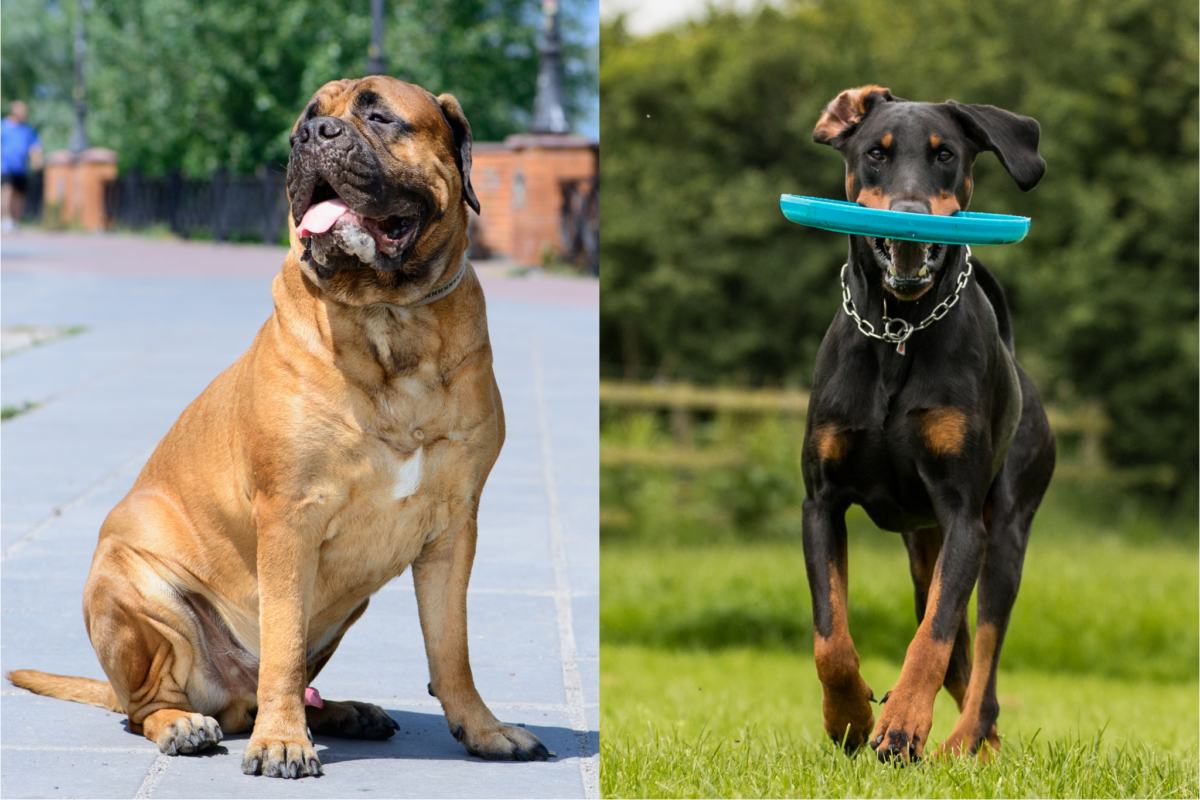
Be honest about how active you are. Matching your lifestyle to a dog’s energy level is one of the best ways to prevent behavior problems and build a successful relationship.
2. Grooming & Upkeep
A short coat doesn’t always mean low maintenance, and a fluffy coat requires more than an occasional brushing. Breeds like the Newfoundland, Leonberger, and Saint Bernard shed heavily, while the Giant Schnauzer needs regular professional grooming or hand-stripping to keep its coat healthy.
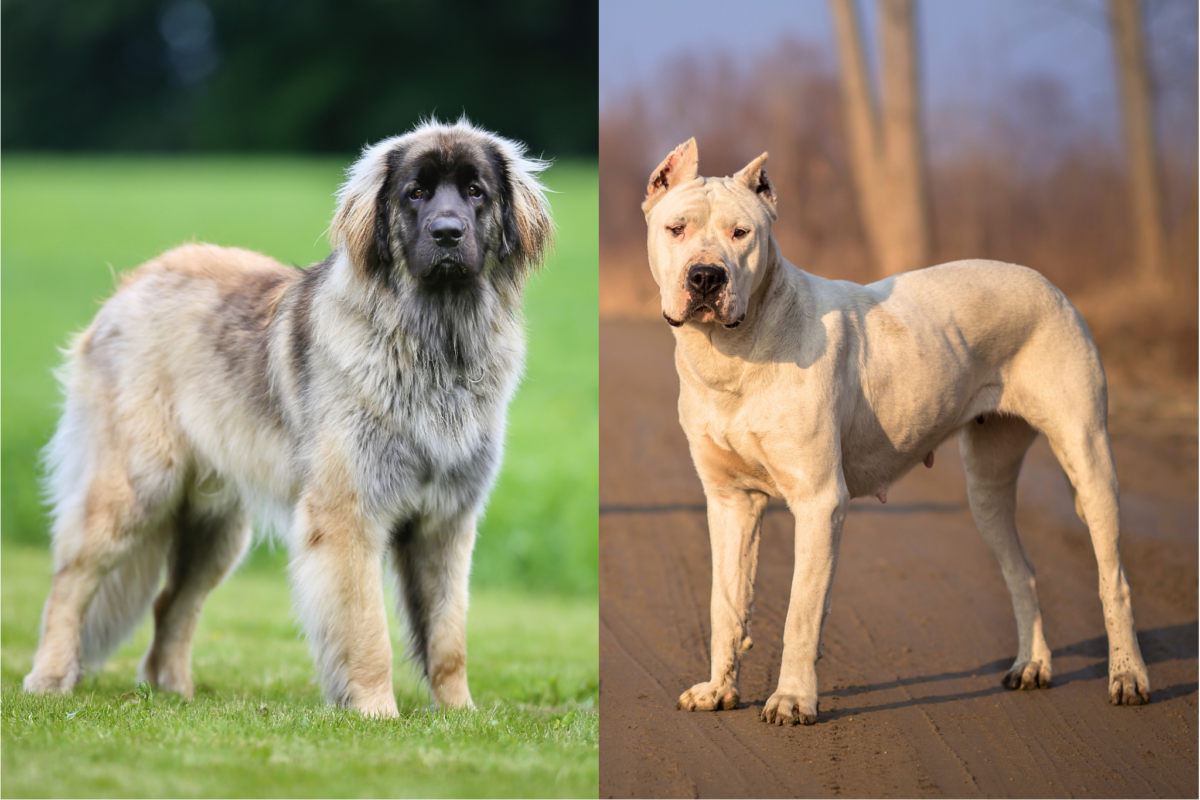
Beyond coat care, giant breeds also bring bigger everyday responsibilities. Larger beds, crates, vehicles, food bills, and cleanup all become part of daily life.
3. Trainability & Socialization
Many of these breeds are intelligent enough to learn almost anything, but intelligence doesn’t always mean they’re easy to train. Some are eager to please, while others are independent thinkers that need consistent guidance and clear expectations.
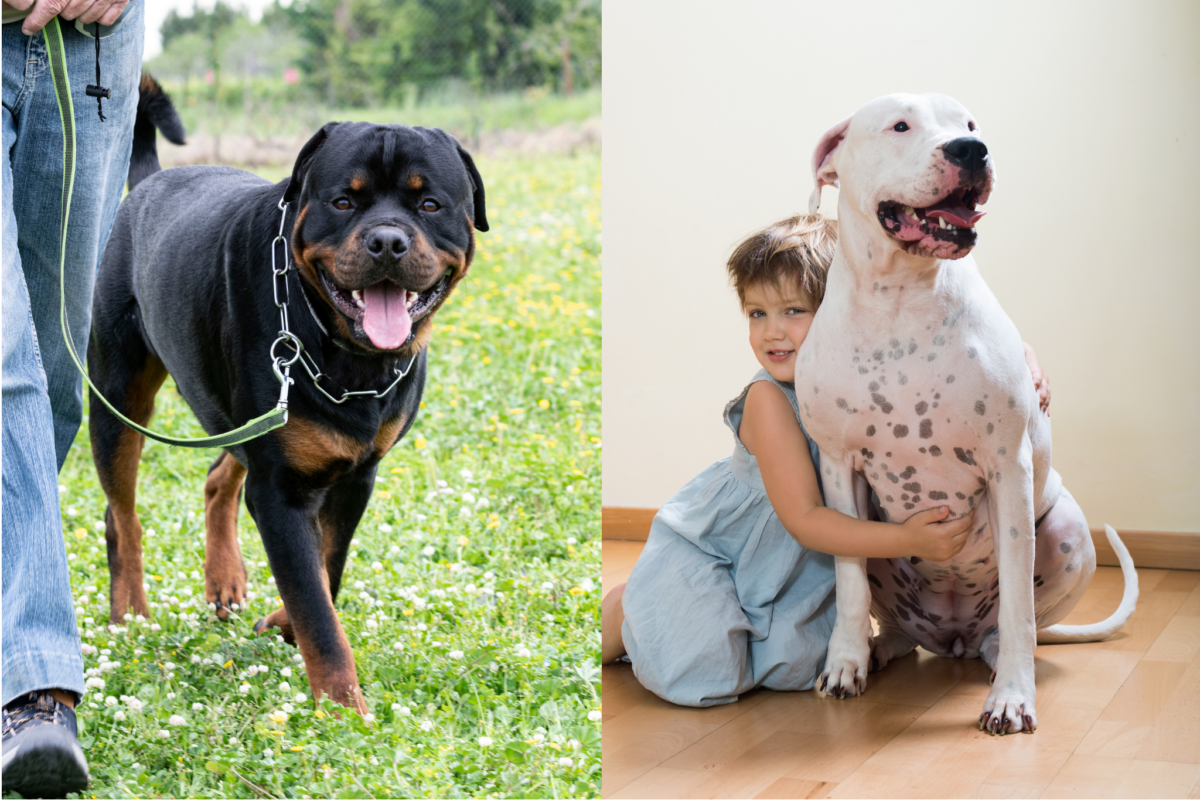
Early socialization is just as important as obedience training. Introducing puppies to new people, dogs, environments, and experiences helps them grow into confident, well-adjusted adults.
4. Size & Handling
Living with a 120-pound dog is very different from living with a 60-pound dog. Even the friendliest giant breeds can accidentally knock over children, pull hard on a leash, or require significant strength to manage in an emergency.
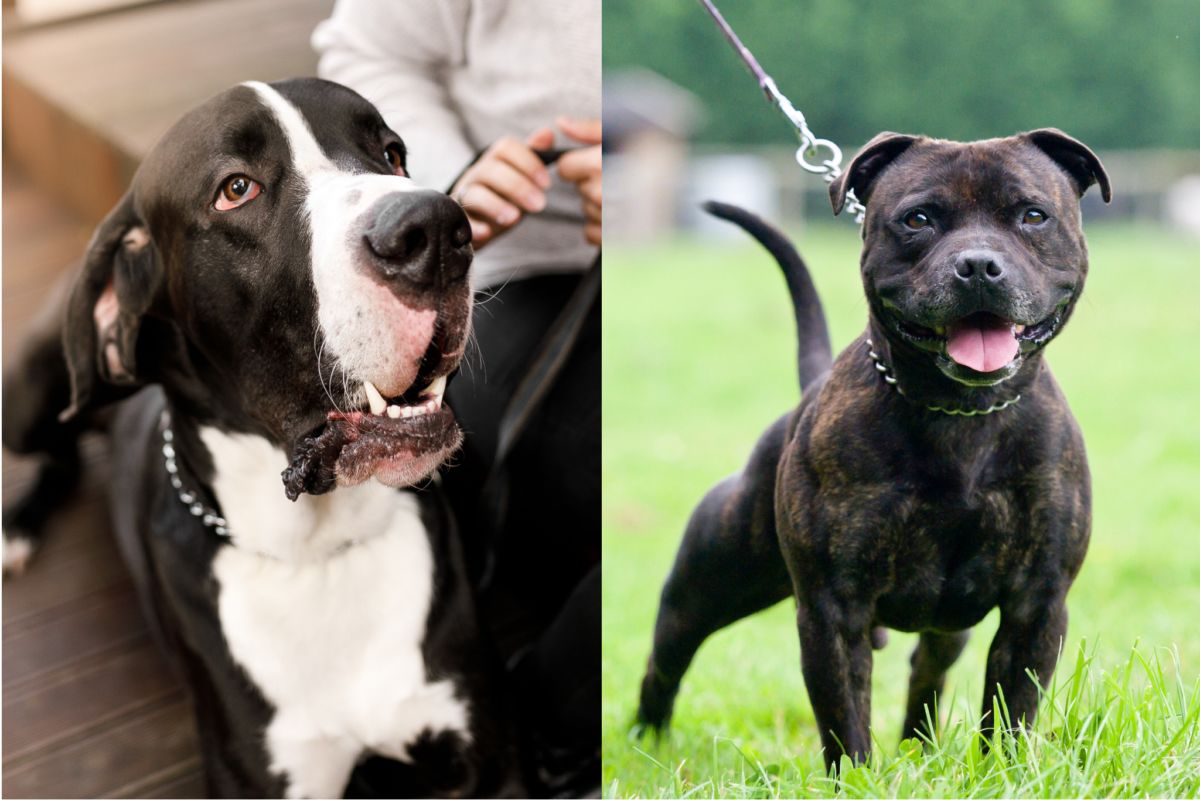
Before choosing a large or giant breed, think about your home, vehicle, travel plans, and whether everyone in the household can safely handle the dog.
5. Health & Veterinary Costs
Tough-looking dogs can also come with bigger veterinary bills. Larger breeds typically cost more to feed and treat, and many giant breeds are more prone to orthopedic conditions, bloat, heart disease, and shorter lifespans.
Several breeds on this list also have brachycephalic (short-nosed) features, which can increase the risk of breathing problems, overheating, eye injuries, and skin fold infections. Others may be predisposed to joint disease, certain cancers, or inherited heart conditions.
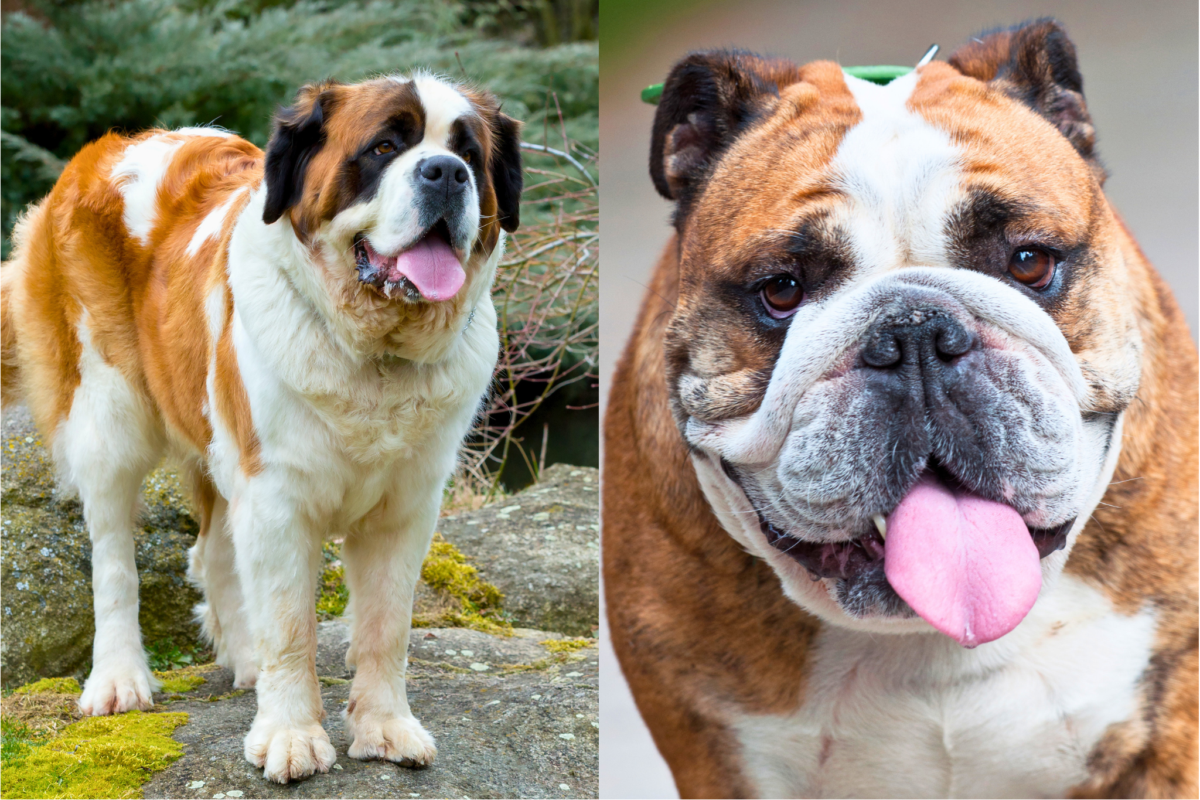
Pet insurance can help offset unexpected veterinary bills, especially for breeds with known health risks. Understanding those potential costs ahead of time can help you choose a breed that’s the right fit for both your lifestyle and your budget.
Common Myths About Tough-Looking Dogs
A broad head, muscular build, or giant size can make some breeds look intimidating, but appearance only tells part of the story. Here are some of the biggest misconceptions about tough-looking dogs and what prospective owners should know instead.
Myth #1: Tough-Looking Dogs Are Naturally Aggressive
A dog’s appearance doesn’t determine their temperament. While some breeds were developed for guarding or protection work, responsible breeding, early socialization, training, and individual personality all play a much larger role in how a dog behaves.
Myth #2: Bigger Dogs Need Bigger Homes
While giant breeds certainly need room to stretch out, many are surprisingly calm indoors. An English Mastiff or Saint Bernard is often content with a comfortable place to relax after a daily walk.
Meanwhile, some medium-sized breeds, such as the Giant Schnauzer or Doberman Pinscher, may require far more exercise and mental stimulation despite taking up less physical space.
Myth #3: Short Coats Mean Low Maintenance
A sleek coat may save time on brushing, but grooming is only one part of caring for a dog. Exercise, training, socialization, and routine health care often require far more time than coat maintenance.
Some of the easiest coats belong to breeds that still need experienced owners because of their strength, intelligence, or energy level.
Myth #4: These Dogs Are Only For Protectionbh
Many powerful breeds were originally developed to work alongside people as farm dogs, draft dogs, hunting companions, or family guardians. Today, most spend their days hiking, playing, or relaxing at home with their owners rather than protecting property.
For many families, these breeds are loyal companions first and watchdogs second.
Myth #5: They’re Bad With Children
Temperament, training, socialization, and supervision all matter far more than appearance. Regardless of breed, children should always be taught how to interact respectfully with dogs, and interactions should be supervised.
Frequently Asked Questions
Choosing a dog based on appearance alone rarely tells the whole story. Here are answers to some of the most common questions people ask about tough-looking dog breeds, their personalities, and what it’s really like to live with them.
Don’t see your question? Respond in the comments, and we’ll get back to you!
What Is The Friendliest Tough-Looking Dog?
Several breeds on this list are known for being exceptionally friendly with their families.Newfoundlands, Saint Bernards, Leonbergers, American Bullies, and Staffordshire Bull Terriers all have reputations for being affectionate, people-oriented companions. However, every dog is an individual, and early socialization plays a major role in shaping temperament.
Which Tough-Looking Dog Needs The Least Exercise?
English Mastiffs, Saint Bernards, and Irish Wolfhounds are generally among the more relaxed breeds in this guide. They still need daily walks and mental enrichment, but they’re typically less demanding than high-energy working breeds like the Giant Schnauzer, Doberman Pinscher, or Dogo Argentino.
Which Tough-Looking Dog Is Best For First-Time Owners?
For committed first-time owners, breeds like the American Bully, Staffordshire Bull Terrier, and Newfoundland are often more forgiving than high-drive guardian breeds.
Dogs such as the Cane Corso, Boerboel, Dogo Argentino, and Giant Schnauzer are generally better suited to experienced owners because of their size, strength, and training needs.
Are Tough-Looking Dogs More Aggressive?
No. A dog’s appearance doesn’t determine its temperament.
Genetics, responsible breeding, training, socialization, and life experiences all play a much larger role in behavior than size, muscle, or head shape. Many intimidating-looking breeds are gentle, affectionate companions when raised in the right environment.
What Is The Biggest Tough-Looking Dog?
It depends on how you measure size. The Irish Wolfhound is the tallest breed in this guide, while the English Mastiff is the heaviest. Both are known for their impressive size and surprisingly gentle personalities.
Keep Exploring Dog Breeds
From giant guardians to gentle giants, these breeds prove that appearances can be deceiving. If you’d like to learn more about intimidating-looking dogs, protective breeds, or other impressive large dogs, check out these related guides:
- Scariest Dog Breeds — Discover the breeds with the most intimidating appearances and learn what they’re really like behind the tough exterior.
- Best Guard Dogs — Explore breeds with strong protective instincts and find out which guardians are best suited for different homes and lifestyles.
- Large Dog Breeds — Compare dozens of giant and large breeds, from gentle family companions to powerful working dogs.