When you purchase through links on our site, we may earn a commission at no extra cost to you. Learn more.
Your puppy fits in your arms right now. Enjoy it.
Table of Contents
Because one day soon, you might blink and realize the “tiny baby” you brought home now takes up half the couch and somehow weighs more than you expected. The big question every puppy parent eventually asks is simple: how big is this little floof actually going to get?
While there’s no magic crystal ball, there are surprisingly good clues hiding in your puppy’s age, weight, and breed group. This guide breaks them down in a friendly, visual way so you can make your best guess without overthinking it.
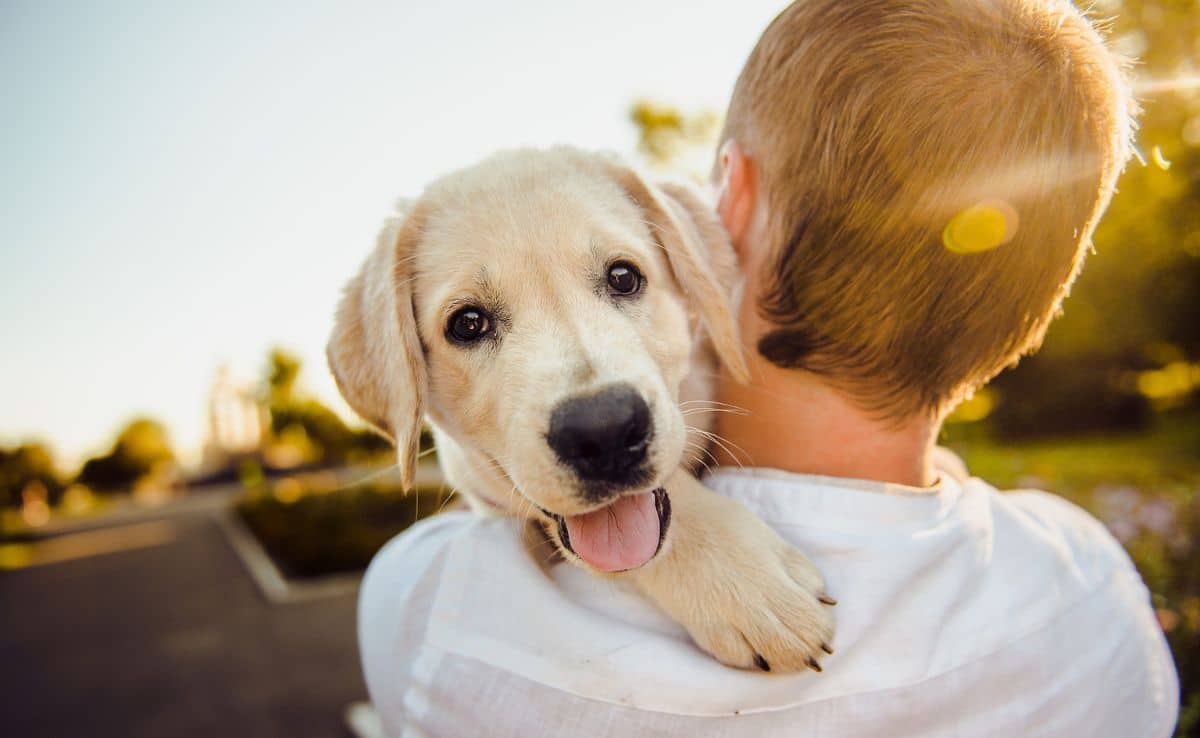
Is Your Puppy Hiding A Giant Inside?
In general, an average-sized dog at 12 months old weighs about two and a half times their weight at 14 weeks, or roughly double their weight at four months. These quick formulas can give you a rough starting point, but they don’t tell the whole story.
That’s because a puppy’s adult size is shaped by several important factors beyond age and weight.
Factors That Affect Your Dog’s Adult Size
- Breed: Growth rates and adult size vary widely by breed. See our section below that breaks down breed sizes.
- Parents: If you’re able to see your puppy’s parents, their size can offer one of the strongest clues. Adult dogs often fall somewhere between mom and dad, especially in purebred pups.
- Gender: Male puppies typically grow slightly larger than females of the same breed, though individual differences still apply.
- Neutering/Spaying: Puppies fixed early may grow a bit taller or heavier than average. This is because the procedure can affect the signals that tell growth plates when to close.
When the Math Gets It Wrong: Daisy’s Growth Curve
Let’s be honest: sometimes the tiniest puppy turns into a couch-crushing beast, and the one with bear paws? He ends up lap-sized, after all. Just like the tale one of our team members shared about adopting her rescue dog, Daisy.
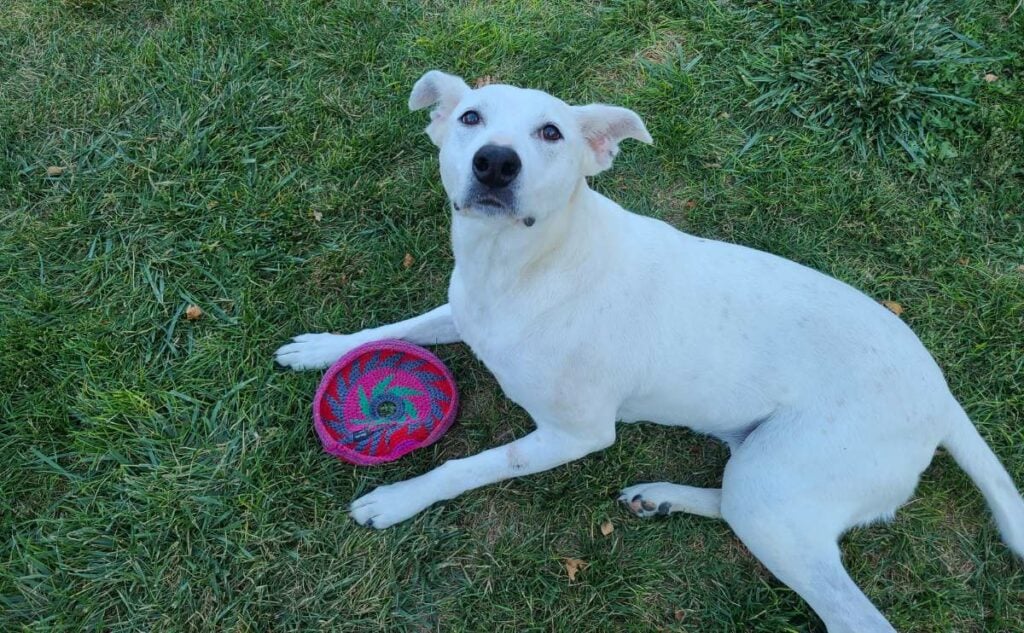
When we adopted Daisy, we were told she was a Lab mix who’d top out around 40 pounds. “She’s on the smaller side,” they said. “Probably won’t get much bigger.”
Perfect, we thought. A medium-sized dog! Easy to bathe, easy to lift, and just the right size to snuggle without losing circulation in your legs.
Bless our naïve little hearts. That was the beginning of the great underestimation.
Daisy was all gangly paws and floppy ears when we brought her home. She looked like she’d grow into a sturdy little companion, maybe a couch-sized dog, not a couch-destroying one. But then she kept growing. And growing. And growing.
By the time she was a year old, Daisy had rocketed past the 60-pound mark. We tried to tell ourselves it was “fluff.” By the time she hit 80 pounds, we had to admit the truth: Daisy was not a medium dog. Daisy was two dogs in a trench coat.
Now, she’s a glorious, oversized, lovable goofball who thinks she’s still lap-dog material. She’ll wedge herself between your legs like a cat, sit squarely on your feet when she’s anxious, and plop her entire weight onto your chest if you lie down within pouncing distance.
We were expecting a pocket-sized pal. We got a full-blown tank in a fur coat.
And honestly? We wouldn’t trade her for anything.
– Danielle DeGroot, Daisy’s Human & Canine Journal Writer
Breed Size Categories: How Puppy Growth Varies By Size
As we mentioned above, a dog’s growth rate varies by breed. That’s why size prediction formulas work best when you first understand which general size category your dog falls into.
Dog breeds are typically grouped into five size categories. There can be some overlap at the edges, but these ranges offer a helpful starting point.
- Toy: Up to 12 pounds
- Small: 12–25 pounds
- Medium: 25–50 pounds
- Large: 50–100 pounds
- Giant: Over 100 pounds
Each size group follows a different growth timeline and pattern, which affects when puppies grow fastest and when they typically stop growing.
Breed Size Growth Guide: Timelines & Weight Estimation Formulas
Not all puppies grow at the same speed or stop growing at the same time. The table below outlines when growth usually slows for each size group, along with commonly used formulas to estimate adult weight.
| Breed Size | Growth Completed By | Key Growth Period | Estimation Formula |
|---|---|---|---|
| Toy | 8–9 months | 0–11 weeks | 6-wk weight × 2 |
| Small | 8–12 months | 0–11 weeks | 6-wk weight × 2 |
| Medium | 9–12 months | 0–16 weeks | 14-wk weight × 2 + ½ of that |
| Large | 12–18 months | 0–20 weeks | (20-wk weight ÷ 20) × 52 OR double 6-mo |
| Giant | 12–18 months | 0–25 weeks | (20-wk weight ÷ 20) × 52 OR double 6-mo |
Toy Breeds: Growth Timeline & Adult Size Estimates
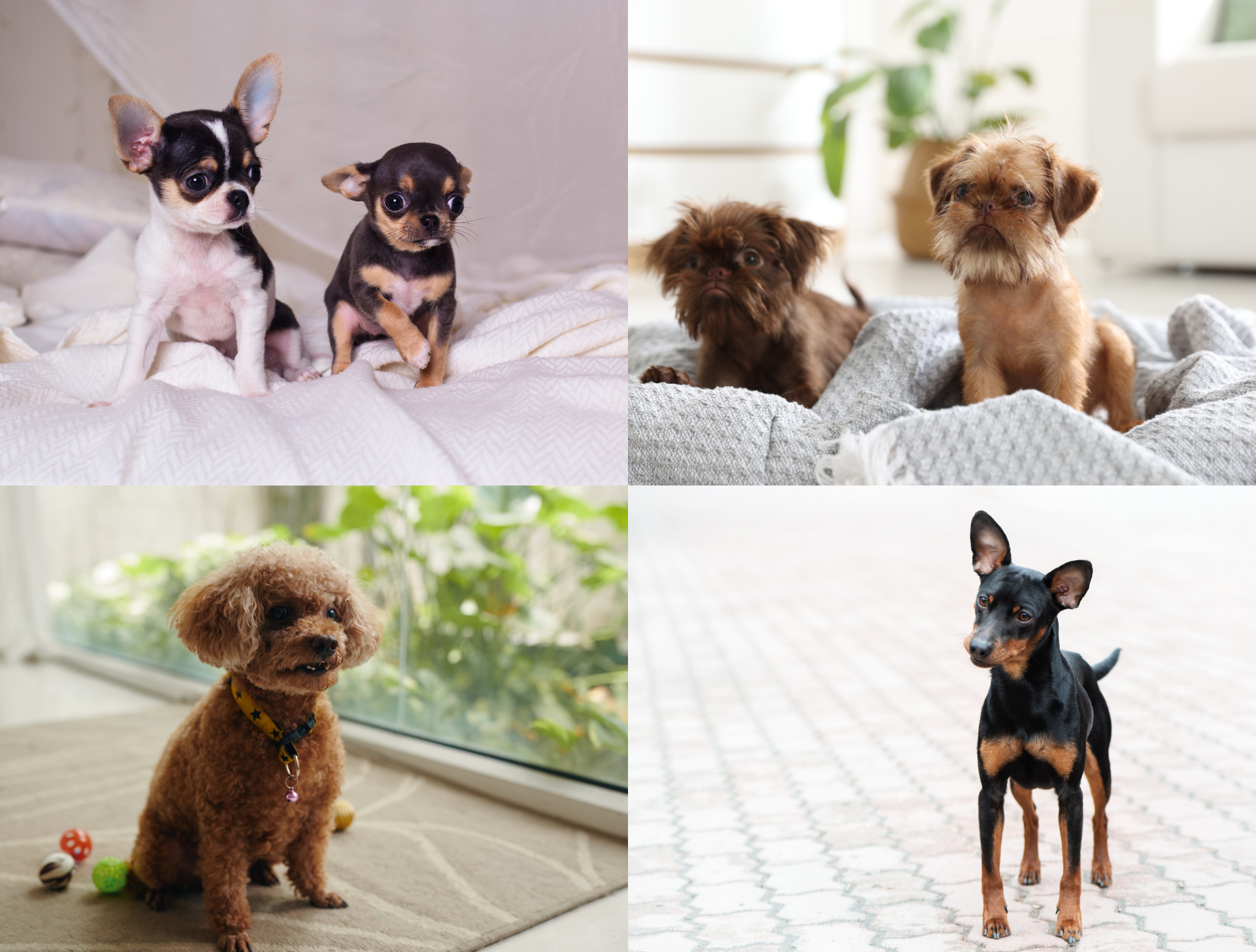
(Chihuahua, Maltese, Pomeranian, Shih Tzu, etc.)
Toy breeds grow fast and finish early. Most do the majority of their growing between birth and 11 weeks, then level off by about 8 to 9 months of age. By the time many owners start wondering how big their puppy will get, toy breeds are already close to their adult size.
- Growth pattern: Rapid early gains of about 5–10% of body weight per day during the first few weeks, or roughly 1–5 ounces per week.
- Size estimate formula: Take your puppy’s weight at 6 weeks, double it, then double it again.
- Example: 2-pound puppy at 6 weeks → 2 × 2 = 4 → 4 × 2 = 8 pounds as an adult
What Surprises People Most
Toy breeds often look “done” while they’re still puppies. Many reach adult height before their first birthday and spend the rest of the year filling out slightly rather than getting taller.
Planning Tip
Because toy breeds mature early, you may need to size up collars, harnesses, and crates sooner than expected. Food portions should also be adjusted carefully to avoid overfeeding once growth slows.
Watch: Toy breeds may stay small, but a lot changes fast. This Chihuahua’s “evolution” shows early growth in confidence and coordination.
Small Breeds: Growth Timeline & Adult Size Estimates
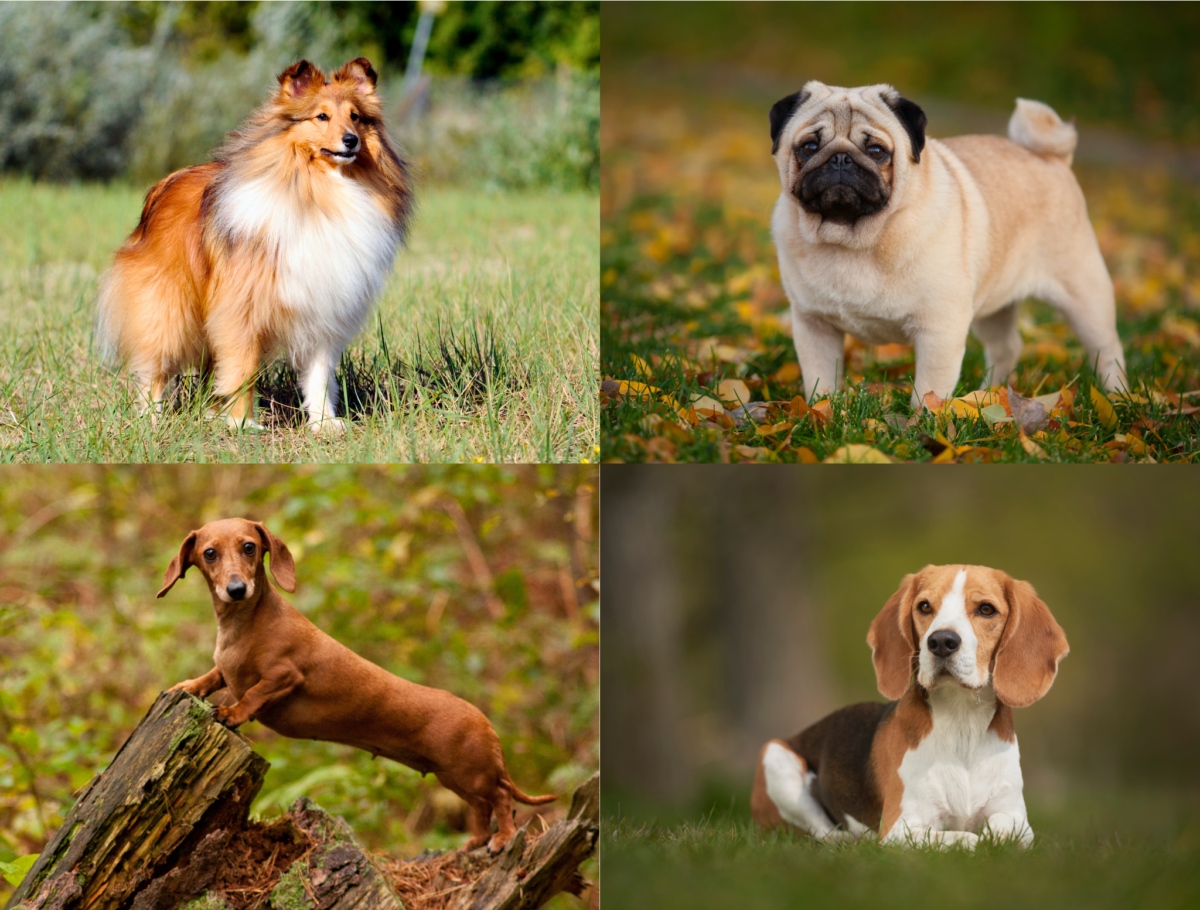
(Beagle, Pug, Sheltie, French Bulldog, etc.)
Small breeds grow quickly, but not quite as fast as toy breeds. Most of their rapid growth happens early, typically before 12 weeks, with growth tapering off between 8 and 12 months of age. By the end of their first year, most small dogs are very close to their adult size.
- Growth pattern: Steady weekly gains of about 5–8 ounces during early puppyhood. Growth slows noticeably after the first few months.
- Size estimate formula: Take your puppy’s weight at 6 weeks, double it, then double it again.
- Example: A 4-pound puppy at 6 weeks → 4 × 2 = 8 → 8 × 2 = 16 pounds as an adult
What surprises people most
Small breeds often look “full grown” long before they actually are. Many stop getting taller early, then spend several months filling out in the chest and body, which can make growth feel subtle and easy to miss.
Planning Tip
Small breeds finish growing earlier than people expect. Once growth slows, calorie needs drop quickly, so it’s important to adjust portions to avoid gradual weight gain.
Watch: Even small breeds don’t stay small for long. This Beagle’s growth from one to two months happens fast.
Medium Breeds: Growth Timeline & Adult Size Estimates
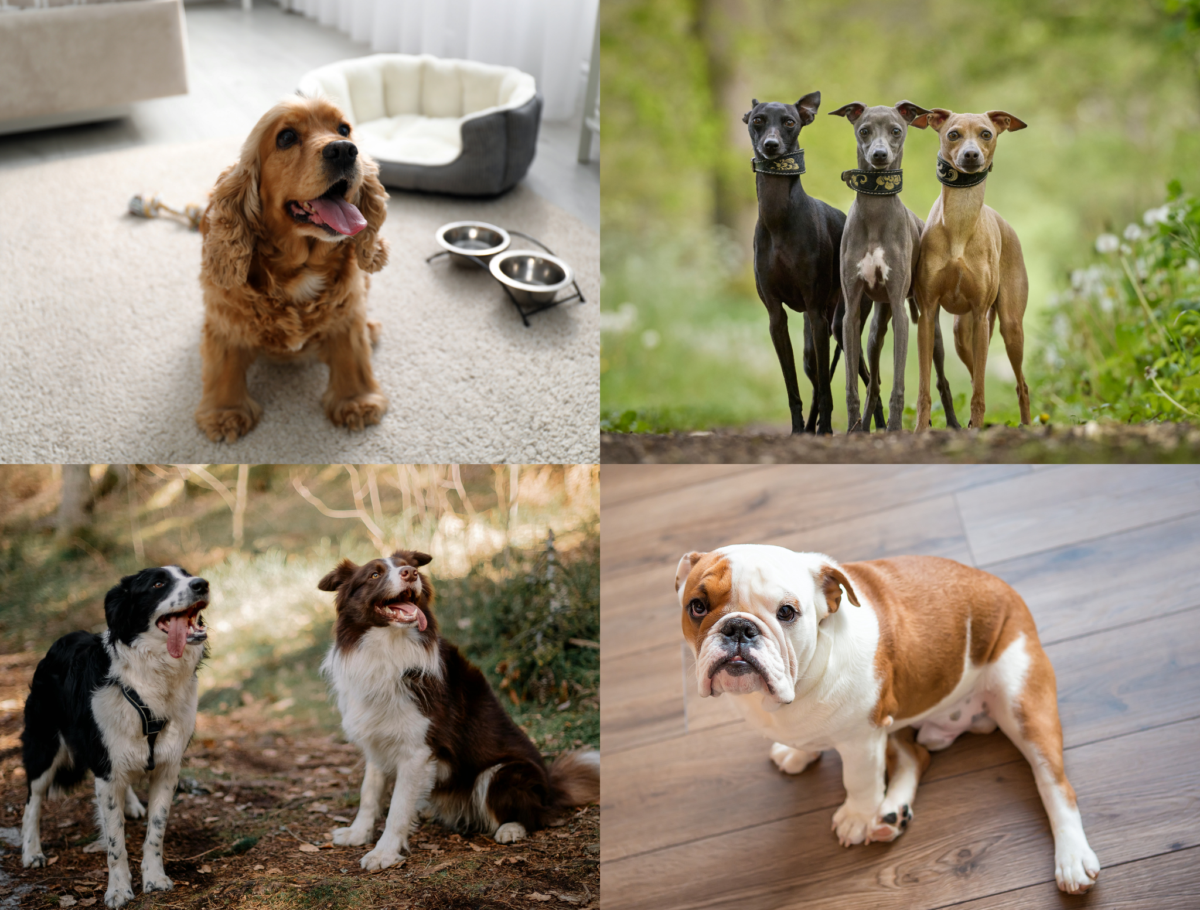
(Cocker Spaniel, Bulldog, Border Collie, Whippet, etc.)
Medium breeds sit right in the middle of the growth spectrum, which is why their size can feel hardest to predict. They grow more slowly than small breeds, but not nearly as long as large dogs. Most medium dogs finish growing between 9 and 12 months, with their biggest growth spurts happening early.
- Growth pattern: Steady but noticeable growth from birth through about 16 weeks, followed by a slower, more gradual pace.
- Size estimate formula: Take your puppy’s weight at 14 weeks, multiply it by 2, then add half of that amount.
- Example: 14 lbs × 2 = 28 + 7 = 35 pounds as an adult
What Surprises People Most
Medium breeds often look “almost done” for months before they actually are. Growth slows enough to be subtle, which can make owners think their dog has finished growing, only to notice more filling out later on.
Planning Tip
Medium breeds benefit from early, consistent training while their size is still manageable. This is a great window to reinforce leash manners, jumping behavior, and recall before strength and confidence fully catch up.
Watch: Not every puppy turns into a giant. Small to medium breeds often show their adult size much earliee. Watch this Cocker Spaniel grow from 8 weeks to 5 months.
Large Breeds: Growth Timeline & Adult Size Estimates
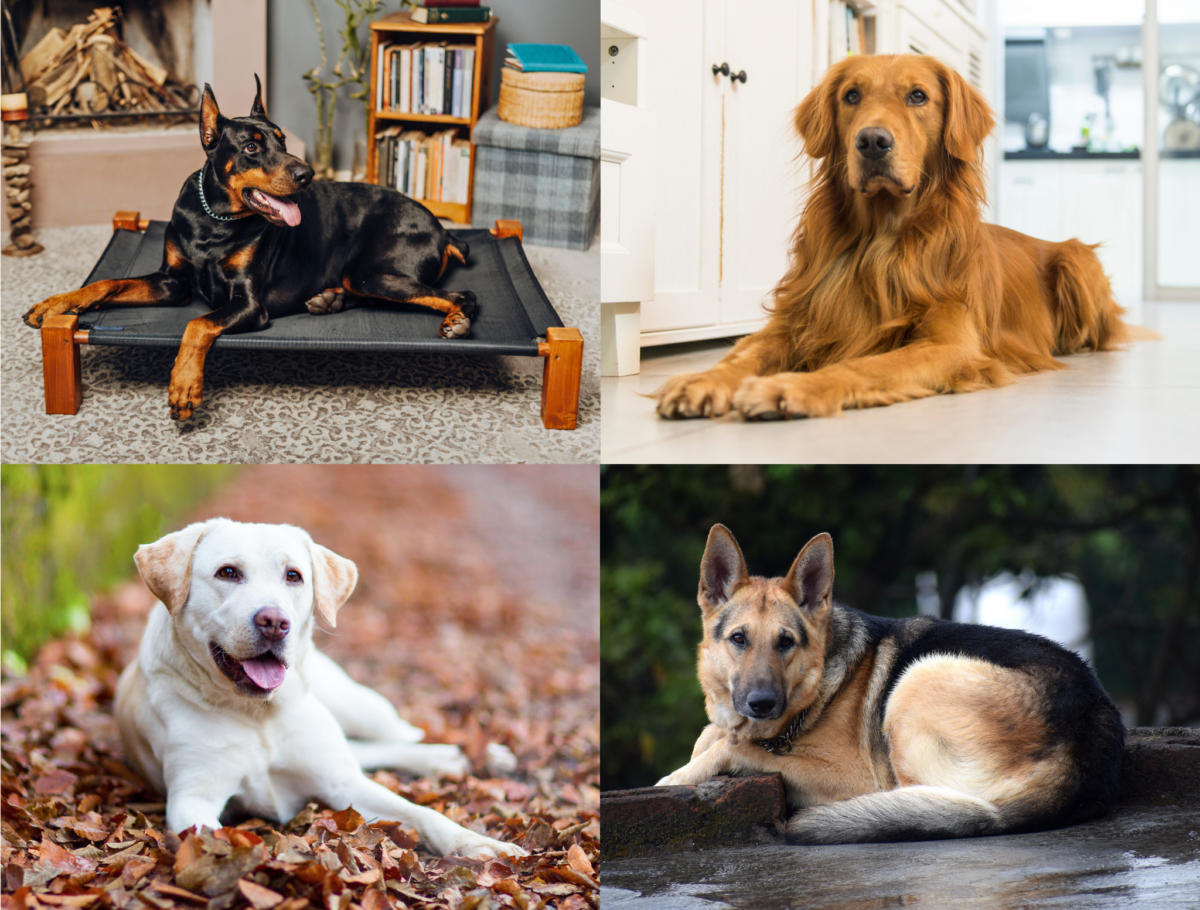
(Labrador, Golden Retriever, German Shepherd, Doberman, etc.)
Large breeds grow fast early, then take their time finishing. Most experience rapid growth during the first several months, but don’t fully mature until 12 to 18 months of age. Even after height growth slows, large dogs often continue filling out in muscle and bone well into their second year.
- Growth pattern: Rapid gains from birth through about 20 weeks, followed by slower, steady growth over many months.
- Size estimate formula: (Weight at 20 weeks ÷ 20) × 52
- Example: 35 lbs at 20 weeks → 35 ÷ 20 = 1.75 × 52 = 91 pounds as an adult
- Option 2: Double your puppy’s weight at 6 months
What Surprises People Most
Large breeds often go through awkward “teenage” phases where they look too tall, too thin, or oddly proportioned. This doesn’t mean something is wrong. It’s a normal part of rapid early growth followed by slower bone and muscle development.
Planning Tip
Protecting joints matters most for large breeds. Avoid excessive jumping, hard running, or forced exercise during growth spurts, and make sure food portions support slow, steady growth rather than rapid weight gain.
Watch: This is why puppy size guesses feel impossible. In less than a year, this Golden Retriever goes from arm-sized to couch-sized.
Giant Breeds: Growth Timeline & Adult Size Estimates
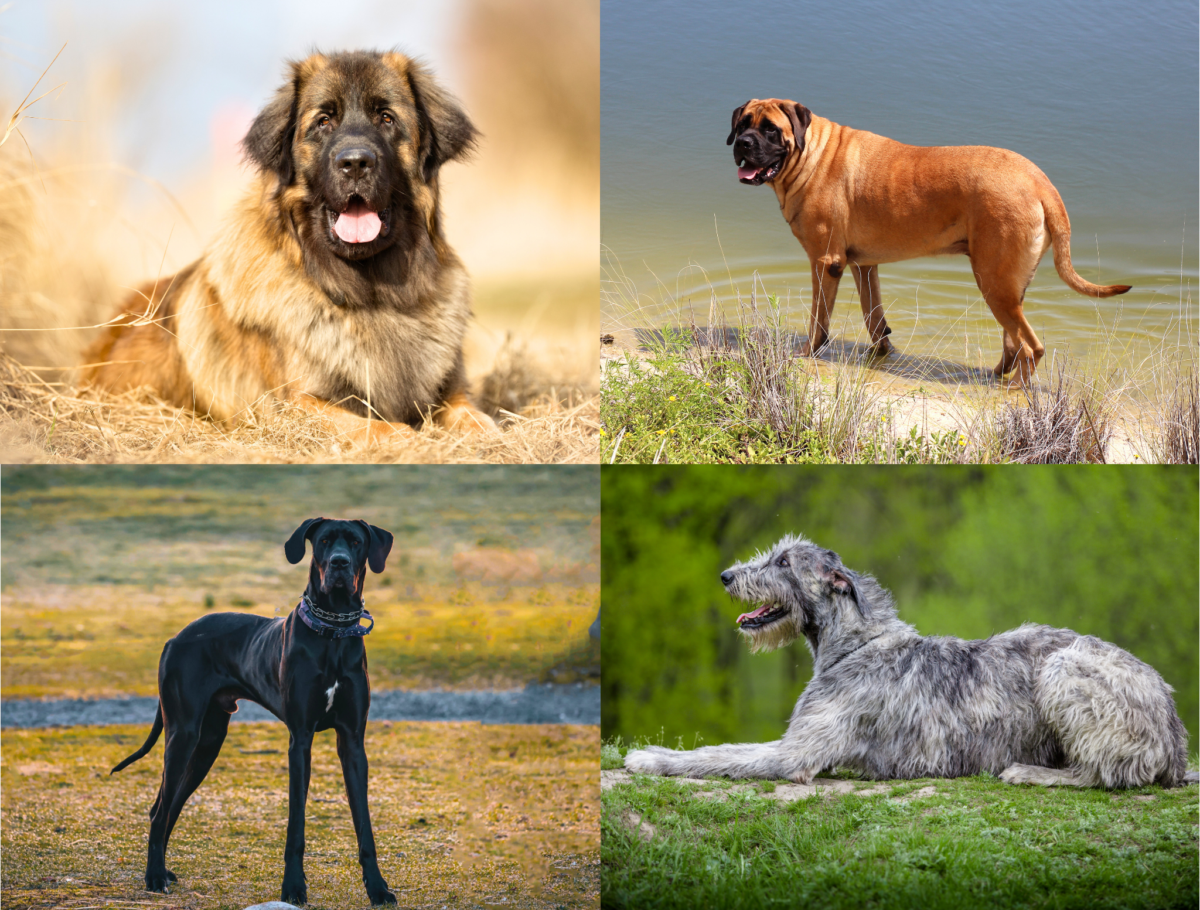
(Great Dane, Mastiff, Saint Bernard, Irish Wolfhound, etc.)
Giant breeds grow on a completely different timeline. While their fastest growth happens early, many take two to three years to fully mature. Even after they reach their adult height, they often continue filling out in muscle and mass long after other dogs have stopped growing.
- Growth pattern: Rapid early growth from birth through about 25 weeks, followed by a long, gradual period of filling out.
- Size estimate formula: (Weight at 20 weeks ÷ 20) × 52
- Example: 45 lbs at 20 weeks → 45 ÷ 20 = 2.25 × 52 = 117 pounds as an adult
- Option 2: Double your puppy’s weight at 6 months
What Surprises People Most
Giant breed puppies often look enormous early on, then seem to “stall” for months. That pause can be misleading. While visible growth slows, internal development like bone density and muscle strength is still happening behind the scenes.
Planning Tip
Giant breeds require long-term planning. Expect extended puppy food timelines, larger crate upgrades, and gradual increases in exercise.
Patience during growth is key, as pushing size or strength too fast can increase the risk of joint and mobility issues later on.
Watch: Same dog. Seven months apart. This is why early weight and breed size matter more than paw size when predicting adult growth.
What If You Don’t Know Your Puppy’s Breed?
Trying to predict the size of a mixed-breed puppy is like trying to guess the ending of a mystery novel. You might get close, but there are usually a few surprises along the way.
Shelters and rescues often make educated guesses based on appearance or the size of the parents (if known), but that’s not always accurate. Some mixed pups surprise you by staying small, while others grow into couch-crushing giants you didn’t see coming.
Want more certainty? A dog DNA test can help.
It won’t tell you your puppy’s future weight down to the pound, but it will reveal breed makeup, which is a huge clue. If you suspect your pup is part Great Dane and part mystery fluff, DNA testing could help you plan for the right crate, food, and lifestyle.
Just keep in mind: DNA results can take a few weeks, so the sooner you swab, the sooner you’ll know what you’re working with.
Canine Genetic Age Testing With EasyDNA
EasyDNA has made it easy to discover your dog’s actual age with a Canine Genetic Age test. It measures a dog’s telomeres’ length at a genetic level. It then uses that information to compare your dog to more than other breeds in its database to better define your dog’s breed and biological age.
Order a kit, send in your sample, and get the results back in two to three weeks. Visit EasyDNA’s website to learn more and buy a test.
Big Paws, Big Dog? Not Always
It’s one of the most common guesses people make, “Look at those paws! You’re going to be huge!” And while oversized puppy feet can hint that your dog has more growing to do, they’re not a foolproof predictor of adult size.

Why not? Because paw size varies by breed.
Some large dogs, like Collies, have surprisingly compact feet for their size. Conversely, Bulldogs and Basset Hounds often have big, chunky paws even though they’re relatively short and stocky when full-grown.
Paws are just one piece of the puzzle. A better way to estimate adult weight is to use your puppy’s current age and size, breed group, and growth curve. For mixed breeds or mystery pups, a DNA test can help reveal more accurate predictions based on breed mix and genetic data.
Bottom line: If the paws look big, your pup might grow into them. But don’t bet your crate size on it just yet.
How To Predict Your Dog’s Adult Height
Want a better idea of how tall your puppy will be as an adult? There’s a simple formula that gets you close.
Around 6 months of age, most puppies have reached about 75% of their adult height. To estimate the final number:
- Take their height at 6 months, multiply by 1.33, and you’ll get a close estimate of their adult height.
Example:
- A 6-month-old puppy that stands 15 inches tall at the shoulder
- 15 × 1.33 = 20 inches tall as an adult (roughly)
How to measure your dog’s height:
- Have them stand on a flat surface
- Measure from the top of their shoulders (also called the withers) down to the floor
- Make sure their legs are straight and they’re standing upright—not lounging or leaning
Keep in mind that giant breeds may take longer to reach full height, and some dogs continue to “fill out” even after they stop getting taller.
Tiny But Mighty: The Runt Might Catch Up
There’s a myth out there about the runt of the litter always staying small. We’re here to bust that myth once and for all.
While runts are usually the smallest in the litter at birth, that doesn’t mean they’re destined to stay that way forever. With proper care, nutrition, and a healthy environment, many runts catch up to their siblings. Some even surpass them in size.
Genetics, not just birth size, plays a significant role in how a dog grows. A slow start just means they had a scrappy beginning, not a final verdict on their future size.
Is Your Pup a Snack Monster? That Won’t Make Them Taller
More food equals more fluff, not necessarily more height. Overfeeding doesn’t make your dog taller or stronger. It just increases the risk of joint issues, obesity, and long-term health problems. The best growth is steady, slow, and supported by proper nutrition.
What to Expect at Each Growth Stage
Every puppy grows at their own pace, but there are some common milestones most dogs hit along the way. Knowing what to expect at each stage can help you stay one step ahead with training, feeding, and adjusting to your pup’s changing needs.
Newborn to 8 Weeks
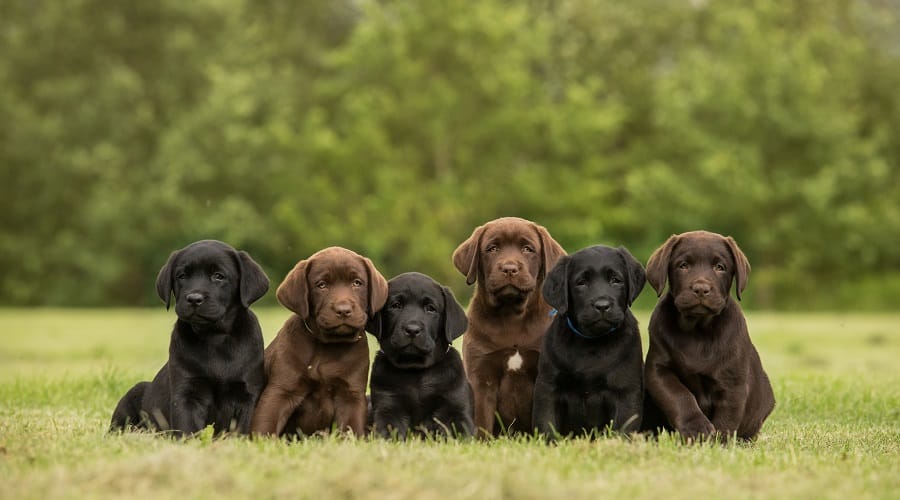
This is a rapid growth stage, but puppies are still nursing or just starting to transition to solid food. They rely heavily on their mother for warmth, nutrition, and early socialization. Most puppies are not ready to leave their litter before 8 weeks of age.
8 to 12 Weeks
This is when most puppies go home with their new families. Expect a big learning curve for both of you. Start crate training, housebreaking, and gentle socialization. Toy and small breeds may already show early signs of their adult size. First vet visits and vaccines usually happen during this window.
3 to 6 Months
The teething phase kicks in, and chewing often goes into overdrive. Growth is especially rapid for medium to large breeds. This is also a prime time for early training, leash work, and building daily routines. You may need to adjust collars or harnesses frequently as your puppy’s size changes.
6 to 12 Months
Small breeds begin to level out in size, while medium breeds are nearing their adult weight. Large and giant breeds still have a ways to go. Appetite may shift, and calorie needs should be monitored to avoid overfeeding. Many dogs begin to test boundaries at this age, so consistent training is important.
12 to 24 Months
Large breeds continue to gain muscle and fill out. Giant breeds may still be growing well into their second year. This is the stage when most dogs transition from puppy food to adult food. Behavioral maturity starts to show, but many still have bursts of energy and goofiness.
Fast Grower? Doesn’t Mean Future Giant
Fast early growth doesn’t always mean a huge adult. In fact, slow and steady growth is healthier for bones and joints, especially in large and giant breeds. The fastest-growing pup may just be hitting a growth spurt, not destined for record-breaking size.
Puppyhood Is The Best Time To Consider Pet Insurance
As a puppy, your dog has probably not shown any significant health concerns at a young age. Since pet insurance companies do not cover pre-existing conditions, the younger your dog is when you sign up, the better coverage you will likely receive throughout his lifetime.
Further, pet insurance can help support you financially during the unpredictable puppy years when dogs are more likely to chew on things they shouldn’t and run into dangerous situations. Check out our pet insurance 101 guide to learn more and determine whether pet insurance is worth it for your puppy. Use our tool below to get multiple quotes instantly.

When Do Dogs Stop Growing? Puppy Growth Chart
It’s one of the biggest questions new dog parents have, especially when their “puppy” is already the size of a small horse. The truth is that dogs don’t all stop growing at the same time. Breed size plays a major role; growth can continue well into the second year for larger pups.
The chart below gives a general timeline of when most dogs stop growing based on their size group so you can get a better idea of what’s normal for your puppy.
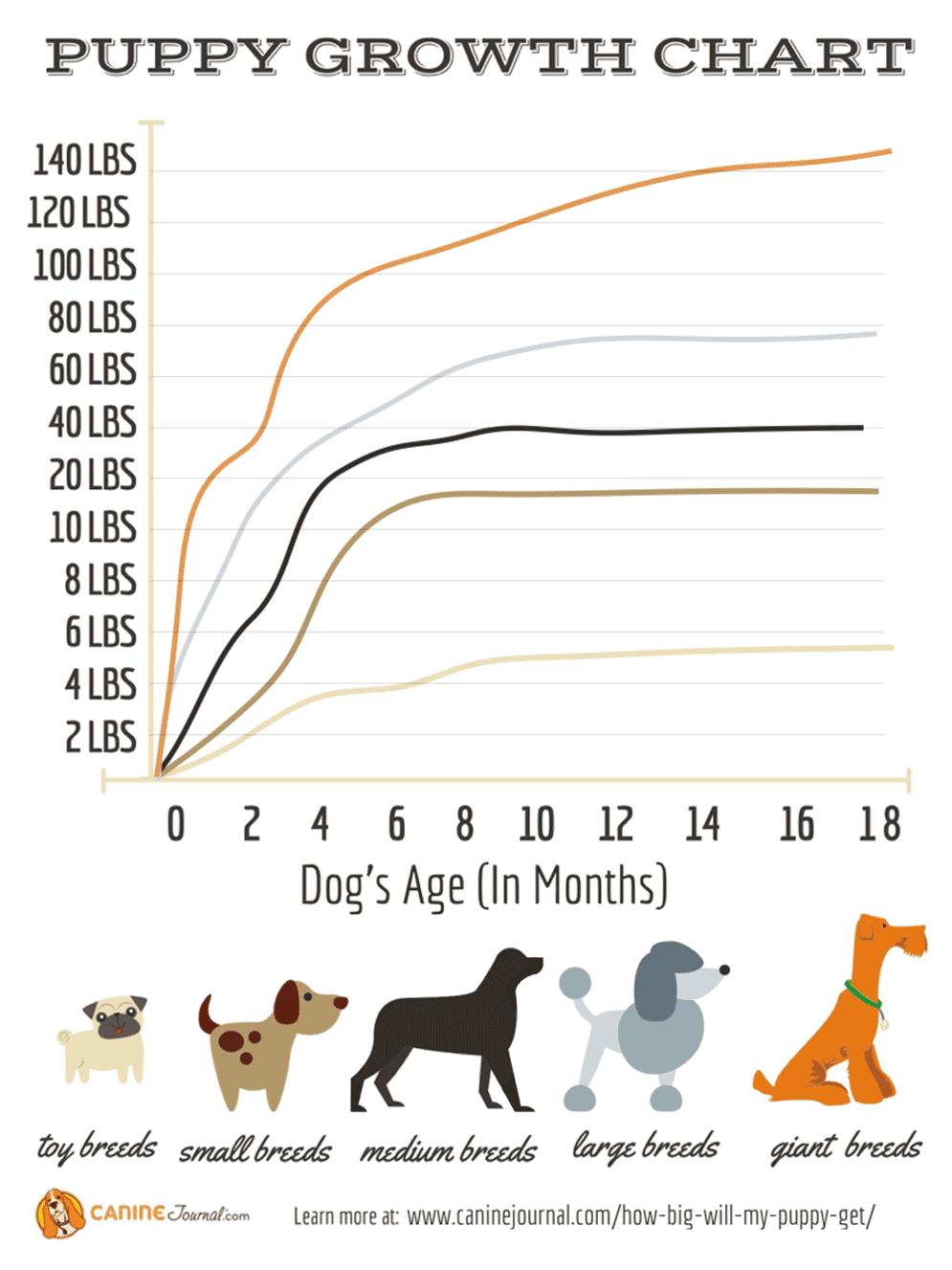
We have covered this topic in much more detail in our article about when do dogs stop growing.
5 Things That Impact Puppy Growth
Every puppy grows at their own pace, but it’s not just random. Growth is influenced by a mix of genetics, nutrition, health, and lifestyle. Here’s what actually shapes how big or small your pup turns out to be.
1. Genetics (also known as the blueprint)
Your puppy’s breed or breed mix plays the most significant role in determining adult size. A dog with large-breed parents is likely to grow bigger, even if they start off small. Mixed breeds can be trickier, especially when the parentage is unknown. This is where DNA testing can help (more on that above).
2. Nutrition
Feeding your puppy a balanced, age-appropriate diet is critical. Puppies need high-quality food with the right blend of protein, fat, calcium, and calories to support healthy bone and muscle growth. Underfeeding or feeding adult food too early can lead to stunted growth. Overfeeding can stress developing joints.
Breed size matters when it comes to nutrition. Large and giant breed puppies need food that supports slow, steady growth to protect their joints, while small breeds benefit from calorie-dense formulas that meet their fast metabolisms and tiny stomachs.
3. Spay or Neuter Timing
Early spaying or neutering can slightly affect growth. Some studies suggest that dogs fixed before puberty may grow taller than average because growth plates stay open longer. This doesn’t apply to every dog, but it’s something to discuss with your vet, especially for large or giant breeds.
4. Health Conditions
Puppies that battle intestinal parasites, chronic illness, or malnutrition early in life may grow more slowly or unevenly. Regular vet checkups, vaccines, and deworming help keep your puppy on track developmentally. We also cover how to address puppy fear periods to help dogs adjust.
5. Environment and Activity
Believe it or not, where and how your puppy lives matters, too. Puppies raised in enriched environments with room to play and explore often develop stronger muscles and coordination. On the flip side, overexertion—especially in large breeds—can lead to joint problems or growth plate injuries.
Keeping Your Dog Healthy at Every Stage
No matter how big your puppy ends up getting, their long-term health depends on more than just size predictions. Growth is just the beginning. From puppyhood to senior years, your dog will go through big changes, and it’s your job to help them thrive through each one.
Here’s how to support your pup as they grow:
- Feed for their size and life stage. Choose a dog food that’s tailored to their breed size and age. What works for a toy puppy won’t cut it for a growing Great Dane or a senior Beagle.
- Stay on top of vet care. Regular checkups, vaccines, and early screenings make a big difference.
- Exercise the right amount. Puppies need play, but too much high-impact activity—especially in large breeds—can put stress on developing joints.
- Watch their weight. Overfeeding during growth can lead to joint issues, while underfeeding may stunt healthy development.
- Invest in training early. A well-trained dog is safer, happier, and easier to live with at any age or size.
- Adjust as they mature. Crate size, collar fit, food portions, and daily routines will need to change as your dog grows. Stay flexible.
Big or small, clumsy or confident, your puppy is growing into your lifelong best friend. Understanding how they grow helps you care for them better every step of the way.
Want to Keep Your Dog Healthy Long After Puppyhood?
Check out our complete guide to caring for adult dogs, including feeding tips, common health concerns, and how to help your dog stay active and happy for years to come.