When you purchase through links on our site, we may earn a commission. Here’s how it works.
Choosing between a Rottweiler and a German Shepherd isn’t a “which one is better” question; it’s a which one matches your life question. Both breeds can be loyal, affectionate family dogs… and both can become overwhelming fast if their needs don’t match your schedule, space, and experience level.
Table of Contents
One is typically higher-drive and needs more daily work, the other is often more physically powerful and can be more stubborn about boundaries. If you’re deciding between them for family life, protection, or a working companion, this breakdown will help you choose the breed you’ll still love years from now — not just the one you love on paper.
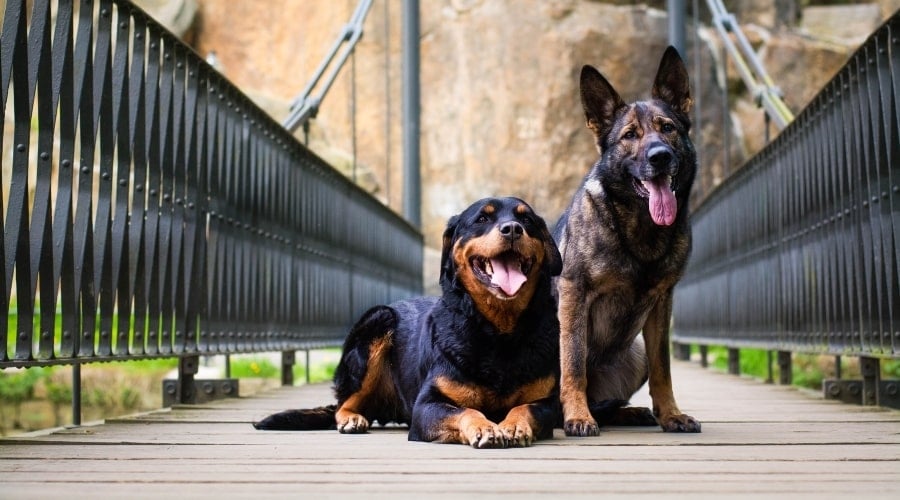
Breed Comparison
- Height22-27 Inches
- Height22-26 Inches
- Weight80-135 Pounds
- Weight50-90 Pounds
- TemperamentLoyal, Loving, Confident Guardian
- TemperamentConfident, Courageous, Smart
- EnergyAverage
- EnergyHigh
- HealthAverage
- HealthAverage
- Lifespan9-10 Years
- Lifespan12-14 Years
- Price$1,500 and Up
- Price$1,000 and Up
If you are not certain of your dog’s genetic makeup, you can use an at-home DNA test kit to find out.
Key Differences Between Rottweilers and German Shepherds
At a glance, Rottweilers and German Shepherds can seem very similar. Both are large, intelligent, confident dogs with strong protective instincts. However, once you look a little closer, some important differences begin to emerge, especially when it comes to size, energy, training style, and daily care.
- Build & Strength: Rottweilers are stockier, heavier, and more muscular, often giving them a more imposing physical presence. German Shepherds are leaner and more athletic, built for speed and endurance rather than sheer power.
- Movement & Agility: German Shepherds are typically faster and more agile, which helps explain their long history in police and military work. Rottweilers move with more deliberate strength and stability.
- Personality Tendencies: Rottweilers are often described as more dominant and self-assured, while German Shepherds tend to be more alert and responsive to their handlers. Both need confident leadership to thrive.
- Intelligence & Learning Style: Both breeds are very smart. German Shepherds are often quicker to pick up commands, while Rottweilers may take a bit more time but are capable of strong reliability once trained.
- Energy Levels: German Shepherds usually have higher daily exercise and mental stimulation needs. Rottweilers still require regular activity, but are often calmer once their needs are met.
- Coat & Grooming: German Shepherds have denser coats and shed heavily throughout the year. Rottweilers have shorter coats and generally require less grooming.
- Longevity: German Shepherds typically live a few years longer on average, while Rottweilers have a shorter lifespan, which is common among larger, heavier breeds.
These differences may seem subtle at first, but they can have a big impact on what it’s actually like to live with each breed day after day. The sections below explore these traits in more detail so you can better understand how each dog might fit into your home and lifestyle.
Breed History & Original Purpose
Looking at a dog’s history is an important part of the ‘will this pup fit into my life?’ research. Although the history of both breeds is not interlinked in any way, they are similar. Shepherds and Rottweilers have also acted as service dogs over the years. Both breeds were some of the first dogs to assist blind people.
According to breed standards from the American Kennel Club, both breeds were developed for demanding working roles, which helps explain their confidence and drive today.
Rottweiler History
One of the first things you should understand about these dogs is that they love to work. Rottweilers come from a Roman lineage. These dogs were used to maintain the herds that fed the armies as they moved around the continent.
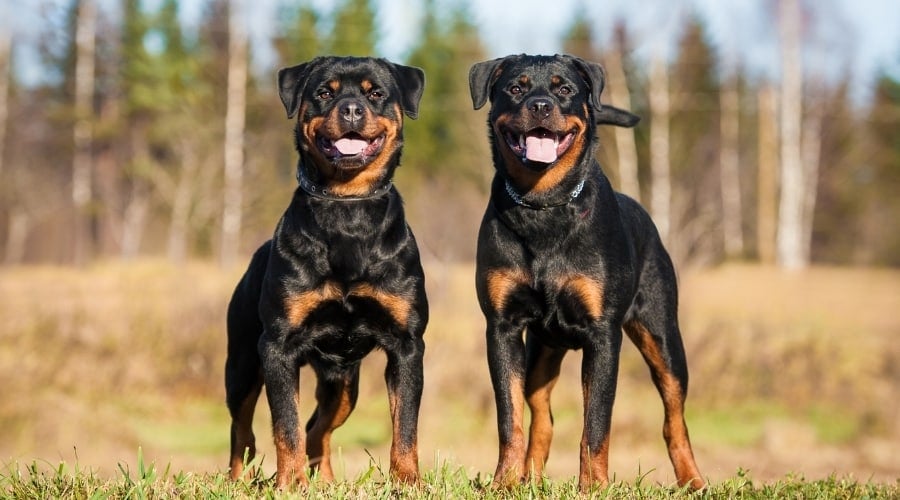
As they bred with local dogs, farmers began using the strong canines to drive their cattle to the marketplace. Rottweilers protected the butcher’s offerings and pulled carts to deliver the meat. They are named after the town of Rottweil, where they were used extensively.
Once clients purchased the meat, it is said they would put the money in purses strapped to the dogs’ necks for safekeeping. For this reason, the Rottweiler has been called “the butcher dog of Rottweil.”
By the time of the Industrial Revolution, cars and trains moved market supplies, so dogs were no longer needed. However, in the early 20th century, people bred these canines for their looks, personalities, and attractive qualities. Even though Rottweilers continued to be used as police and service dogs, they weren’t as active in the military as some other breeds.
German Shepherd History
German Shepherds have had plenty of military experience, even though they’re traditionally herding dogs. In the 18th century, a military man named Captain Max von Stephanitz sought to create the perfect herding dog. Using all of the best herding dogs from each northern and central district in Germany, the breed was created.
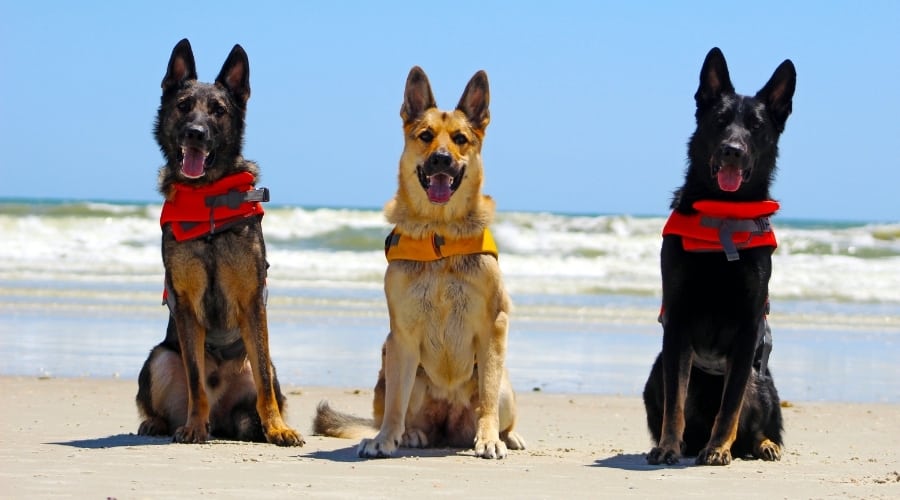
Although he made a great herding dog, his characteristics made him the perfect candidate for the police academy. Off he went, studied hard, and excelled with flying colors. Ever since then, he has been one of the most popular police K9s around the world.
Like the Rottweiler, the Shepherd’s popularity suffered a little from anti-German sentiment after the World Wars. So much so that he was renamed the Alsatian in many parts of the world and still goes by this name today.
As the breed has grown over the years, it has developed into two more distinct breeding lines, depending on your geographic location.
Physical Differences
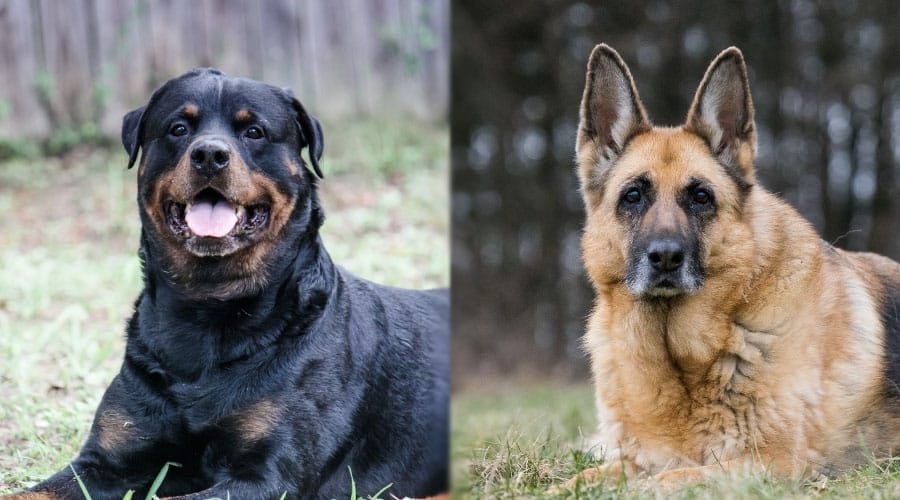
Rottweilers and German Shepherds are both large, powerful dogs, but their physical builds are noticeably different. These differences affect how they move, how they look, and how they may feel living with you day to day.
Size & Build
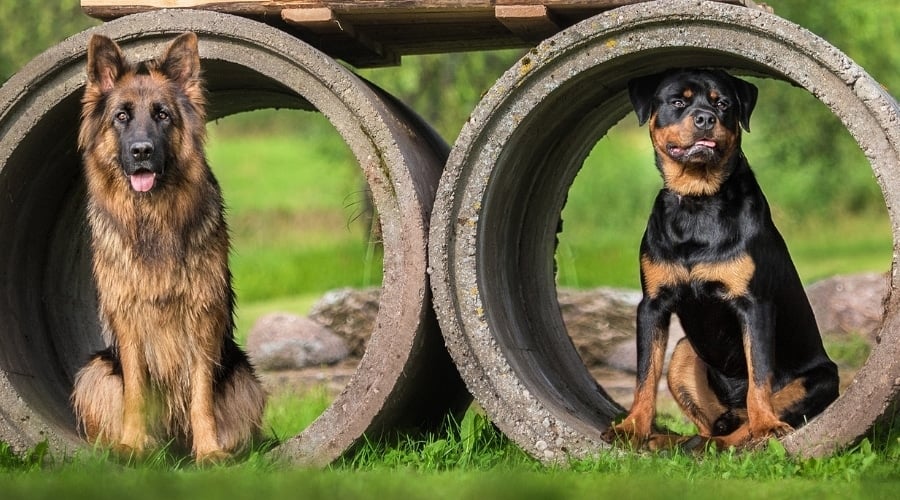
- Rottweilers are larger, stockier, and more square in shape.
- German Shepherds are longer, leaner, and built for athletic movement.
Typical adult sizes:
- Rottweiler males: 110–135 pounds
- Rottweiler females: 75–110 pounds
- German Shepherd males: 65–90 pounds
- German Shepherd females: 50–70 pounds
While these numbers show a clear size difference, weight alone isn’t everything. A highly energetic German Shepherd can feel just as “big” in daily life as a heavier but calmer Rottweiler.
Overall Structure
Beyond weight, each breed has a distinct silhouette:
- Rottweilers have a broad chest, thick neck, and a large, square head that contributes to their imposing appearance.
- German Shepherds have a more streamlined, athletic frame designed for speed, agility, and endurance.
These structural differences help explain why German Shepherds are often favored for police and working roles, while Rottweilers are known for their powerful, grounded presence.
Coat Type
Both breeds have double coats, but their length and maintenance differ:
- Rottweilers:
- Short to medium-length double coat
- Dense, smooth, and relatively low maintenance
- German Shepherds:
- Short, medium, or long coats with an undercoat
- Long coat variety without an undercoat also exists
- Requires more frequent brushing overall
Coat Colors
- Rottweilers are best known for their classic black-and-tan markings.
- German Shepherds appear in a wider range of colors, including:
- Black and tan
- Solid black
- Blue
- White
Quick takeaway (without deciding)
At a glance, Rottweilers tend to look heavier and more imposing, while German Shepherds appear lighter and more athletic. How these differences matter in real life becomes clearer in the sections on temperament, exercise, and grooming.
Temperament & Personality
Rottweilers and German Shepherds are often viewed as intimidating breeds, but with proper upbringing, both are known for being loyal, affectionate, and deeply bonded to their families. While they share many traits, their temperaments tend to express themselves in different ways.
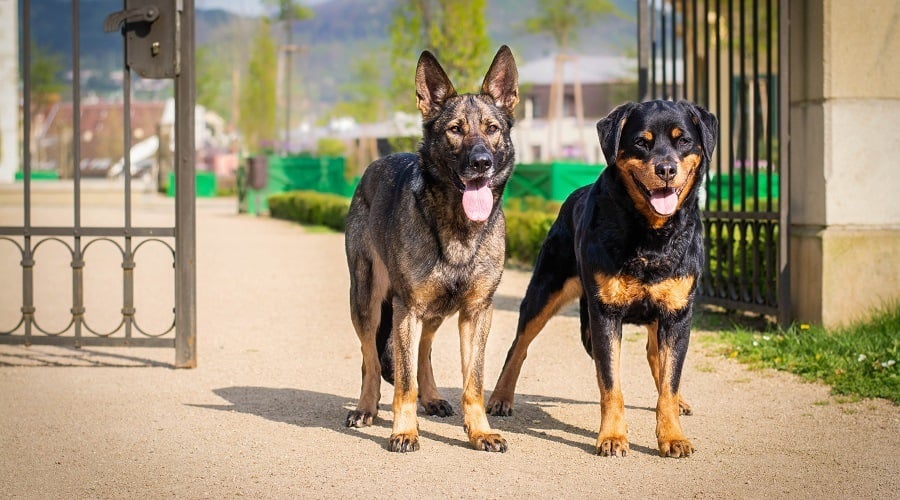
Rottweilers and German Shepherds are often viewed as intimidating breeds, but with proper upbringing, both are known for being loyal, affectionate, and deeply bonded to their families. While they share many traits, their temperaments tend to express themselves in different ways.
Confidence & Self-Assurance
Both breeds are naturally confident and self-assured. Without clear leadership and guidance, they may try to take charge of their environment.
- Rottweilers often show confidence through calm dominance and a steady presence.
- German Shepherds tend to express confidence through alertness and responsiveness to their surroundings.
Neither breed does well with inconsistent rules or unclear boundaries. They thrive best with owners who provide structure and direction.
Family Life & Affection
Despite their tough reputations, both breeds are known to be affectionate at home.
- Rottweilers are often described as goofy, loving, and deeply devoted to their families.
- German Shepherds are playful and affectionate as well, though typically a bit more focused and serious in demeanor.
With proper socialization, both breeds can do very well with children and often form strong bonds with all family members.
Protective Instincts
Both Rottweilers and German Shepherds were bred with protection in mind, and those instincts remain strong today.
- They are naturally territorial and alert.
- Neither breed is usually overly friendly with strangers at first.
- They tend to observe and assess new people before warming up.
Early and ongoing socialization helps ensure these instincts remain balanced rather than overly reactive.
Socialization & Strangers
Because of their protective nature, early exposure to new people, environments, and situations is especially important.
- Well-socialized dogs of either breed are typically confident and composed.
- Poorly socialized dogs may become overly suspicious or anxious.
Temperament issues are far more influenced by environment, training, and handling than by breed alone.
Research supports this idea. A large 2021 study published in Scientific Reports found that factors such as an owner’s experience, training methods, and daily environment play a significant role in canine behavior—often more so than breed alone. This reinforces the importance of early socialization, consistent training, and responsible ownership, especially for confident, protective breeds like Rottweilers and German Shepherds.
Emotional Sensitivity
Both breeds are intelligent and emotionally aware.
- They tend to form strong attachments to their owners.
- Neglect, isolation, or harsh training methods can lead to anxiety or behavioral issues.
- Positive reinforcement and regular interaction go a long way with both dogs.
Temperament in Real Life
While breed tendencies offer helpful guidance, individual personality can vary widely. Two dogs of the same breed may behave very differently depending on how they’re raised, trained, and cared for.
The sections on exercise, training, and daily care help paint a clearer picture of how these temperament traits show up in everyday life.
Exercise & Mental Stimulation
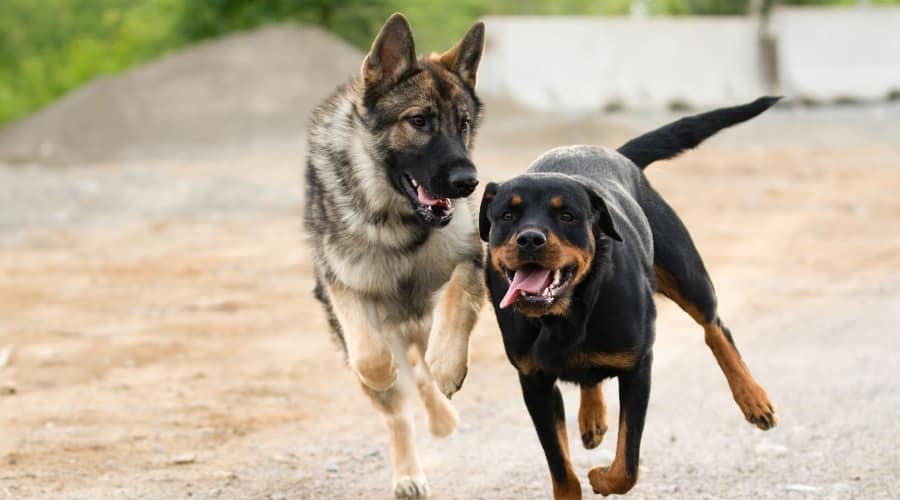
Both Rottweilers and German Shepherds are working breeds, which means regular exercise is not optional; it’s essential to their physical and mental well-being. That said, the type and intensity of exercise each breed needs can differ.
Daily Activity Needs
- German Shepherds typically require more daily exercise and mental stimulation. They thrive on structured activity, such as long walks, running, training sessions, interactive toys, and problem-solving games.
- Rottweilers also need regular exercise, but their energy levels are often more moderate. Many are satisfied with daily walks, playtime, and purposeful activities once their needs are met.
As a general guideline, Rottweilers often do well with around an hour of daily exercise, while German Shepherds may need closer to two hours, especially when young or highly driven.
Mental Stimulation Matters
Physical exercise alone isn’t enough for either breed. These dogs were bred to work, think, and make decisions.
- Puzzle toys, scent games, and training exercises help keep their minds engaged.
- Without mental stimulation, both breeds may create their own “jobs,” which often leads to unwanted behaviors.
In the wild, dogs spend much of their day searching for food. Mimicking that effort through enrichment activities can help satisfy natural instincts.
Boredom & Destructive Behaviors
When their exercise needs aren’t met, both breeds can become frustrated.
- German Shepherds may become restless, vocal, or destructive.
- Rottweilers may become stubborn, push boundaries, or develop behavioral issues.
These behaviors are often misinterpreted as “bad temperament,” when they are more accurately signs of unmet physical or mental needs.
Matching Exercise to Your Lifestyle
Exercise needs aren’t just about time—they’re about consistency.
- Families who enjoy outdoor activities, training, or structured routines may find it easier to meet a German Shepherd’s needs.
- Owners looking for a strong, capable dog with slightly lower daily intensity may find the Rottweiler’s exercise style easier to manage.
The next section on training explores how these energy levels and work drives affect how each breed learns and responds to guidance.
Training & Intelligence
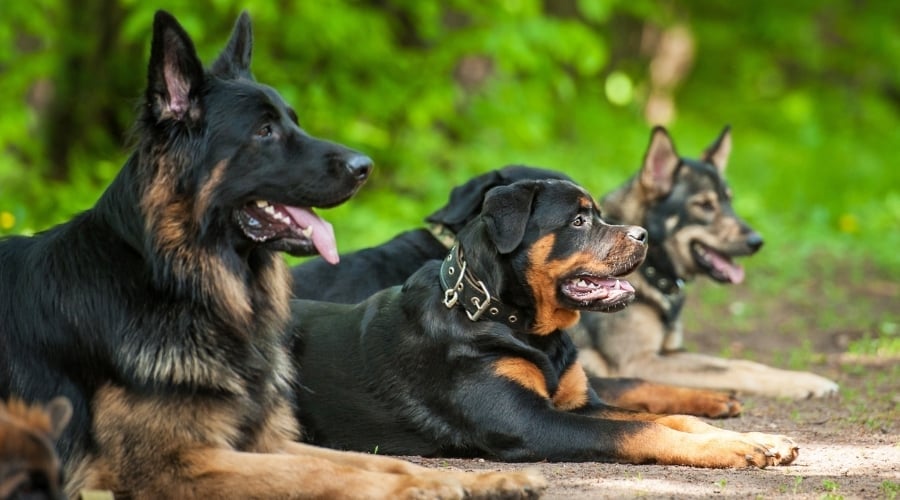
Rottweilers and German Shepherds are both highly intelligent, capable breeds—but they don’t always learn the same way. Their training success depends heavily on consistency, motivation, and whether their daily exercise and mental needs are being met.
Trainability & Learning Style
- German Shepherds tend to learn commands quickly and respond well to structured training. Many are highly handler-focused and thrive when they’re given clear tasks and routines.
- Rottweilers are also very trainable, but they can be more independent-minded. Some may take a little longer to mature mentally and may test boundaries if rules aren’t consistent.
In real life, both breeds do best when training is treated as an ongoing habit—not something that ends after puppyhood. Canine researcher Stanley Coren notes that breeds like German Shepherds tend to excel in working and obedience contexts, though individual learning ability varies widely.
Motivation: Food vs. Play
Most dogs can be motivated by a mix of rewards, but these breeds often lean differently:
- Rottweilers are frequently more food-motivated, which can make reward-based training very effective.
- German Shepherds often respond strongly to play, praise, and engagement, especially when training feels like a “job” they’re doing with you.
The best approach is to use what your dog values most and keep sessions short, positive, and consistent.
Consistency & Boundaries
Because both breeds are strong, confident, and capable, training isn’t just about tricks—it’s about safe, reliable behavior.
- Clear rules help prevent pushy or unruly habits from developing.
- Loose or inconsistent expectations can lead to leash pulling, ignoring commands, or guarding behaviors getting out of hand.
This is especially important during adolescence, when many large breeds test limits.
First-Time Owner Considerations
Neither breed is typically considered “easy mode” for brand-new dog owners. That doesn’t mean first-time owners can’t succeed, but it does mean you’ll want to plan ahead.
Both breeds tend to do best with:
- Early socialization
- Basic obedience as a foundation
- Ongoing mental stimulation (especially for German Shepherds)
- Confident handling and consistent routines
For many households, working with a qualified trainer early on can make a major difference—particularly for large, protective breeds.
Why does exercise affect training?
Training goes better when a dog’s physical and mental energy is appropriately managed. A bored, under-exercised working dog is more likely to be distracted, stubborn, or reactive—regardless of breed.
Health & Lifespan
Rottweilers and German Shepherds are generally healthy, robust breeds, but like most large dogs, they are predisposed to certain health conditions. Understanding these risks helps owners plan for preventative care rather than react to problems later.
Lifespan Differences
- Rottweilers typically live around 9–10 years.
- German Shepherds often live longer, averaging 12–14 years.
This difference is largely related to size. Larger and heavier breeds tend to age more quickly and have shorter lifespans overall.
Joint & Mobility Concerns
Both breeds are prone to joint issues, particularly hip and elbow dysplasia.
These conditions occur when the joint doesn’t form properly, which can lead to pain, mobility problems, and arthritis later in life. German Shepherds are often cited among the breeds most affected by hip dysplasia, while Rottweilers are also at notable risk due to their size and weight.
You can help to keep your dog’s hips and joints in top shape by using glucosamine supplements and making sure they have a soft but firm dog bed to rest on.
Maintaining a healthy weight, providing appropriate exercise, and using joint-supportive nutrition can help reduce long-term strain.
Breed-Specific Health Risks
Rottweilers may be more prone to:
- Heart conditions, including cardiomyopathy and subaortic stenosis
- Progressive retinal atrophy (PRA)
German Shepherds may be more prone to:
- Degenerative myelopathy typically appears later in life
- Digestive sensitivities in some bloodlines
Not every dog will experience these issues, but responsible breeding and routine veterinary care play a major role in reducing risk.
Preventative Care & Early Planning
- Regular veterinary checkups
- Health screening from reputable breeders
- Appropriate exercise and nutrition for large breeds
- Early attention to changes in mobility or comfort
Health in Real Life
While breed tendencies offer useful guidance, individual health outcomes vary widely. Genetics, lifestyle, diet, and quality of care all play a role. Being informed and proactive helps set both breeds up for the healthiest life possible.
Could Pet Insurance Help?
If your pet insurance covers exam fees and your dog needs to be examined, there is a good chance your policy will reimburse those costs based on your policy details. However, if you are a new customer, vet expenses will not be covered until after your policy’s defined waiting periods, so signing up once you have an existing health concern will not help this time. Pre-existing conditions are not covered by any current pet insurance plans.
This is why it is a great idea to sign up for a pet insurance policy when your pet is young and relatively healthy to ensure you will be covered when you need it most.
Nutrition & Feeding Needs
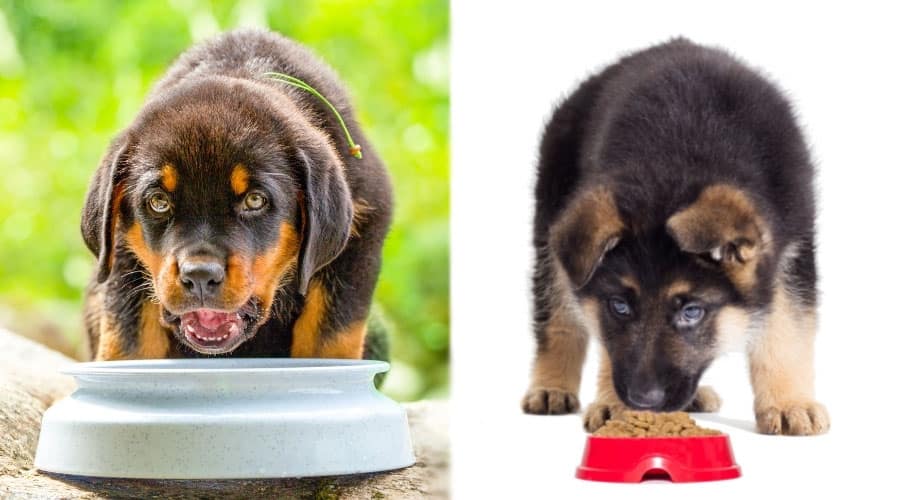
Proper nutrition plays an important role in the health, longevity, and behavior of both Rottweilers and German Shepherds. Because they are large, active breeds, their diets should support joint health, muscle maintenance, and steady energy levels.
Daily Food Intake
- Rottweilers often consume around 4–5 cups of kibble per day, depending on size, age, and activity level.
- German Shepherds usually eat about 2.5–3.5 cups per day, adjusted for growth stage and energy needs.
These amounts can vary widely based on metabolism, food quality, and lifestyle. Always follow feeding guidelines specific to the dog food you choose and your dog’s individual needs.
Large-Breed Nutrition Considerations
Both breeds benefit from diets formulated specifically for large dogs.
- Controlled calorie levels to support healthy growth
- Balanced calcium and phosphorus for joint development
- High-quality protein to maintain muscle mass
- Joint-supporting ingredients such as glucosamine and chondroitin
Overfeeding, especially during puppyhood, can increase the risk of joint problems later in life.
Veterinary nutritionists, including those at Tufts University, note that large-breed dogs benefit from controlled growth and balanced mineral intake to support long-term joint health.
Feeding Style & Structure
Because both breeds can be confident and strong-willed, mealtime structure matters.
- Using food as part of training can reinforce good behavior
- Asking for simple commands before meals helps establish routine and focus
- Puzzle feeders and slow-feeding bowls provide mental stimulation and help prevent overeating
Weight Management Matters
Maintaining a healthy weight is especially important for large breeds.
- Excess weight places added strain on joints and the heart
- Weight gain can worsen mobility issues over time
Regularly monitoring body condition and adjusting portions as needed can make a significant difference in long-term health.
Nutrition in Real Life
No single diet works for every dog. Age, activity level, health conditions, and personal preference all play a role. Working with your veterinarian to choose and adjust a diet over time helps ensure both breeds get what they need at each life stage.
Grooming & Shedding
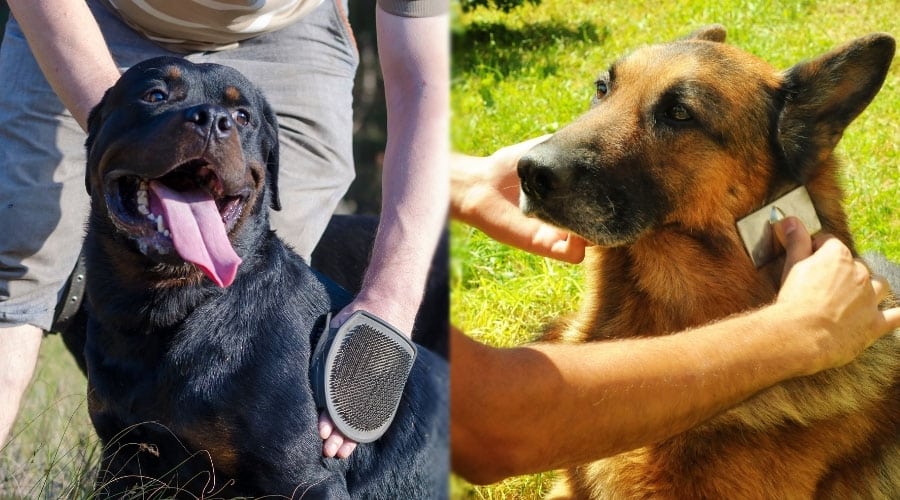
Rottweilers and German Shepherds both have double coats and shed throughout the year, but their grooming needs differ in frequency and intensity. Coat length, shedding cycles, and activity level all play a role in how much upkeep each breed requires.
Shedding Expectations
Both breeds shed year-round and experience heavier seasonal shedding, often referred to as “blowing coat.”
- German Shepherds are heavier shedders overall, especially long-coated varieties.
- Rottweilers shed consistently but tend to be easier to manage due to their shorter coats.
Brushing & Coat Maintenance
- Rottweilers
- Short to medium-length coat
- Brushing a few times per week is usually sufficient
- More frequent brushing during heavy shedding seasons helps control loose hair
- German Shepherds
- Coat length may be short, medium, or long
- Longer-coated Shepherds require more frequent brushing
- Daily brushing may be needed during peak shedding periods
Bathing & General Care
- Bathing every 8–12 weeks is typically sufficient unless the dog gets especially dirty.
- Overbathing can dry out the skin and strip natural oils.
- Dog-specific shampoos should always be used to avoid irritation.
Other routine grooming tasks—such as nail trimming, ear checks, and dental care—are generally similar for both breeds.
Grooming in Real Life
While neither breed is considered low-shedding, grooming requirements are manageable with a consistent routine. Introducing grooming early in puppyhood helps both dogs become comfortable with handling, which is especially important given their size and strength.
For owners who prefer less visible shedding and quicker grooming sessions, coat length may be an important factor to consider as you read on.
Cost of Ownership
The cost of owning a Rottweiler or a German Shepherd goes well beyond the initial purchase price. While there are some differences between the two breeds, long-term expenses are influenced by size, lifespan, health care, and daily needs.
Puppy Prices
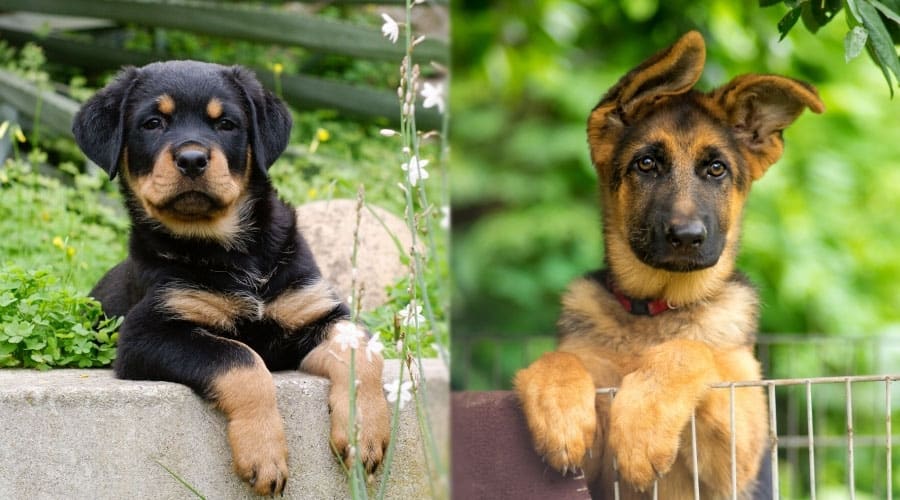
- Rottweiler puppies from reputable breeders often start around $1,500 or more.
- German Shepherd puppies typically start closer to $1,000, though pups from working or champion lines can cost significantly more.
Lower prices may sometimes indicate a lack of health testing or responsible breeding, which can lead to higher costs later on.
Ongoing Expenses
Common ongoing costs for both breeds include:
- Food and treats
- Routine veterinary care
- Preventative medications
- Grooming supplies
- Training classes
Because Rottweilers are larger and heavier, they often require more food and larger, more expensive gear, such as crates, beds, and harnesses.
Veterinary & Health-Related Costs
- Large-breed dogs may incur higher veterinary costs due to medication dosages and surgical needs.
- German Shepherds often live longer, which can mean more years of routine and senior care.
- Rottweilers may have fewer senior years, but can still face costly health issues during their lifetime.
Many owners choose to explore pet insurance early to help offset unexpected veterinary expenses.
Lifetime Cost Considerations
- Rottweilers may cost more year to year due to size-related expenses.
- German Shepherds may accumulate higher total costs over time due to their longer lifespan.
Cost in Real Life
Owning either breed is a long-term financial commitment. Budgeting for food, training, veterinary care, and enrichment ensures you can meet your dog’s needs at every life stage.
Which Breed Is Right for You?
Choosing between a Rottweiler and a German Shepherd isn’t about which breed is “better”—it’s about which one fits your lifestyle, experience, and expectations. Both dogs can be loyal, loving companions in the right home, but they thrive in different environments.
A Rottweiler May Be a Good Fit If You:
- Want a powerful, confident dog with a calm, steady presence
- Prefer a breed with slightly lower daily exercise intensity
- Are comfortable handling a large, strong dog
- Value loyalty and close family bonding
- Don’t want to manage heavy coat shedding year-round
Rottweilers tend to do best with owners who provide clear structure, consistent training, and early socialization.
A German Shepherd May Be a Good Fit If You:
- Enjoy an active lifestyle with daily exercise and training
- Want a highly responsive, task-oriented companion
- Are interested in ongoing mental stimulation and enrichment
- Don’t mind frequent brushing and shedding
- Appreciate a dog that thrives on structure and routine
German Shepherds often excel in homes where they have a “job,” whether that’s training, sports, or structured family activities.
An Honest Reality Check
Neither breed is considered low-maintenance, and neither is typically ideal for owners who want a very independent or low-energy dog. Both require time, commitment, and engagement to thrive.
When matched with the right home, both Rottweilers and German Shepherds are known for forming deep bonds with their families and offering years of companionship, protection, and affection.
Living Well With a Large-Breed Dog
Keeping a large-breed dog happy and healthy means thinking long term, from proper nutrition and joint support to consistent training and mental stimulation. Activities that challenge both the body and mind, such as structured exercise or dog sports, can play a big role in preventing boredom and unwanted behaviors.
It’s also worth being honest about time, budget, and energy. Large dogs often require more space, more structure, and more ongoing investment than smaller breeds. For some households, that commitment is deeply rewarding. For others, understanding those demands early can help avoid frustration down the road. Exploring trusted resources on large dog breeds, training options, and the real cost of dog ownership can help you plan ahead and set realistic expectations, no matter which breed ultimately fits best into your life.
Tell Us Your Experience
Have you lived with a Rottweiler or a German Shepherd? Real-life experience often tells a fuller story than breed descriptions alone. Share what surprised you, what challenged you, or what you wish you’d known before bringing your dog home.
Drop your thoughts in the comments below and help other readers learn from your experience.