When you purchase through links on our site, we may earn a commission at no extra cost to you. Learn more.
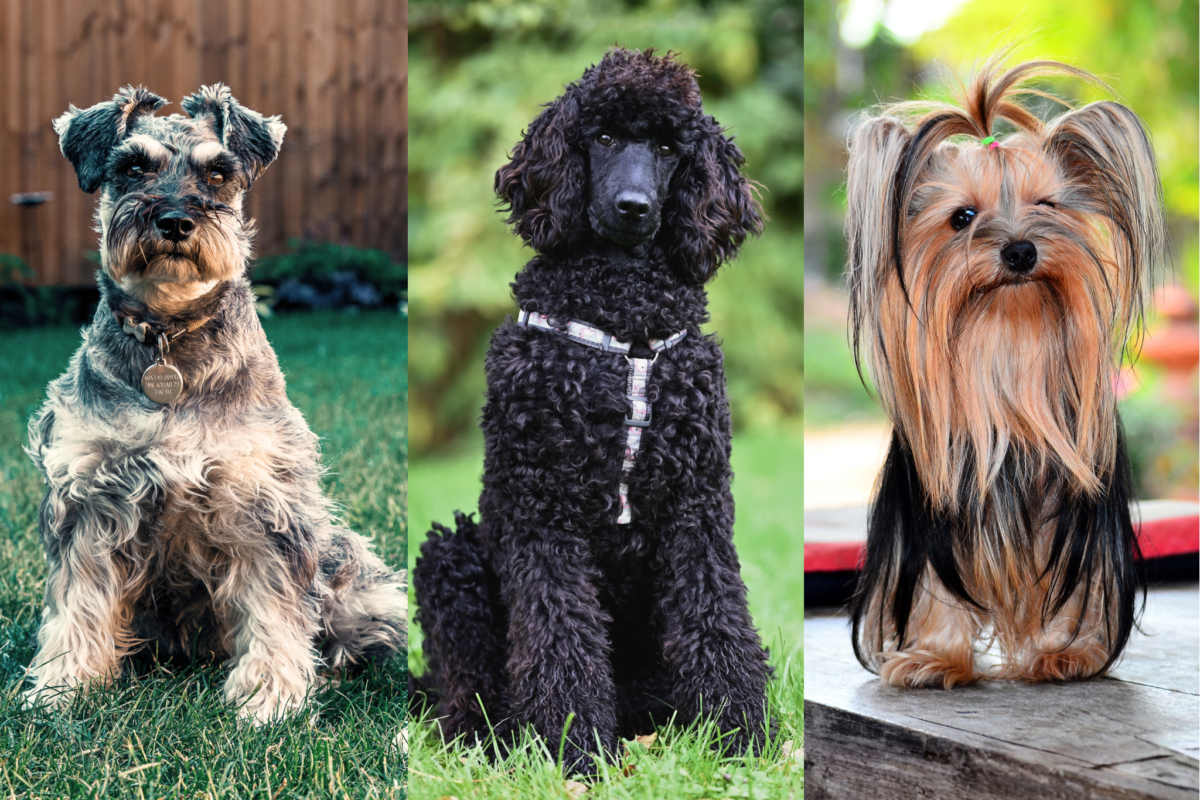
Love dogs but not the fur covering your clothes, furniture, and floors? Poodles, Miniature Schnauzers, and Yorkshire Terriers are among the most popular dogs that shed very little, while hairless breeds come closest to being genuinely non-shedding. Then, of course, there is the “Doodle” debate.
Table of Contents
So, which dogs actually shed the least? And equally important, what are the tradeoffs between breeds when it comes to grooming, allergies, and everyday care?
Here’s how the most popular options compare and what to consider before choosing one.
Quick Answer: Which Dogs Shed The Least?
Surprise, surprise: Hairless breeds shed the least because they have little or no coat to lose. The best-known hairless dog breeds include the Xoloitzcuintli, Chinese Crested, and American Hairless Terrier.
Among coated dogs, Poodles are one of the most dependable low-shedding choices. They combine several qualities associated with low shedding: a single, continuously growing coat with dense curls and a naturally harsh texture.
Other particularly low-shedding options include:
- Corded or flocked breeds: Bergamasco Sheepdog, Puli, and Komondor
- Curly-coated breeds: Bichon Frise, Portuguese Water Dog, and Lagotto Romagnolo
- Silky, hair-like coats: Yorkshire Terrier, Maltese, and Shih Tzu
- Wiry or harsh coats: Schnauzers, rough-coated Brussels Griffon, and Lakeland Terrier
What Makes A Dog Low-Shedding?
A coat can reduce visible shedding in several different ways:
- Little or no coat: Hairless breeds have almost no hair available to shed, although they still release skin cells and may have sparse hair on the head, feet, or tail.
- A longer growth cycle: Hair-like coats grow for longer before individual strands are released.
- No heavy seasonal undercoat: Many single-coated breeds avoid the large seasonal coat blowouts associated with dense double coats.
- Hair-retaining texture: Curls, cords, flocks, and some wiry coats hold loose hairs until grooming removes them.
Low shedding does not mean low maintenance. Many of these coats require frequent brushing, clipping, hand-stripping, cord maintenance, or professional grooming to prevent mats and remove trapped hair.
What About Doodles? Are They Low-Shedding?
Doodles are often promoted as low-shedding or hypoallergenic. Sometimes that’s true. Sometimes it isn’t.
Not all doodles are bred the same, and generation plays a major role in coat predictability. Even puppies from the same litter can develop noticeably different coat textures and shedding levels.
Why Doodle Generations Matter
Without getting too complicated, here is a rundown of how generations can affect coat predictability:
- F1: A Poodle crossed with another breed. These dogs can vary widely in coat texture and shedding.
- F1B: An F1 Doodle crossed back to a Poodle. The additional Poodle ancestry may improve the odds of a curlier, lower-shedding coat.
- F1BB: An F1B Doodle crossed back to a Poodle again. These dogs have more Poodle ancestry and may be more likely to inherit the Poodle’s low-shedding coat characteristics.
- F2: Two first-generation Doodles bred together. Their puppies can inherit a particularly wide range of coat traits.
- Multigenerational: Doodles bred from later-generation Doodle parents. Coat predictability depends on the parents’ genetics, coat traits, and the breeder’s selection practices.
That said, a doodle’s generation label alone isn’t a guarantee. Several genes influence coat traits, including those associated with curl, furnishings, and shedding.
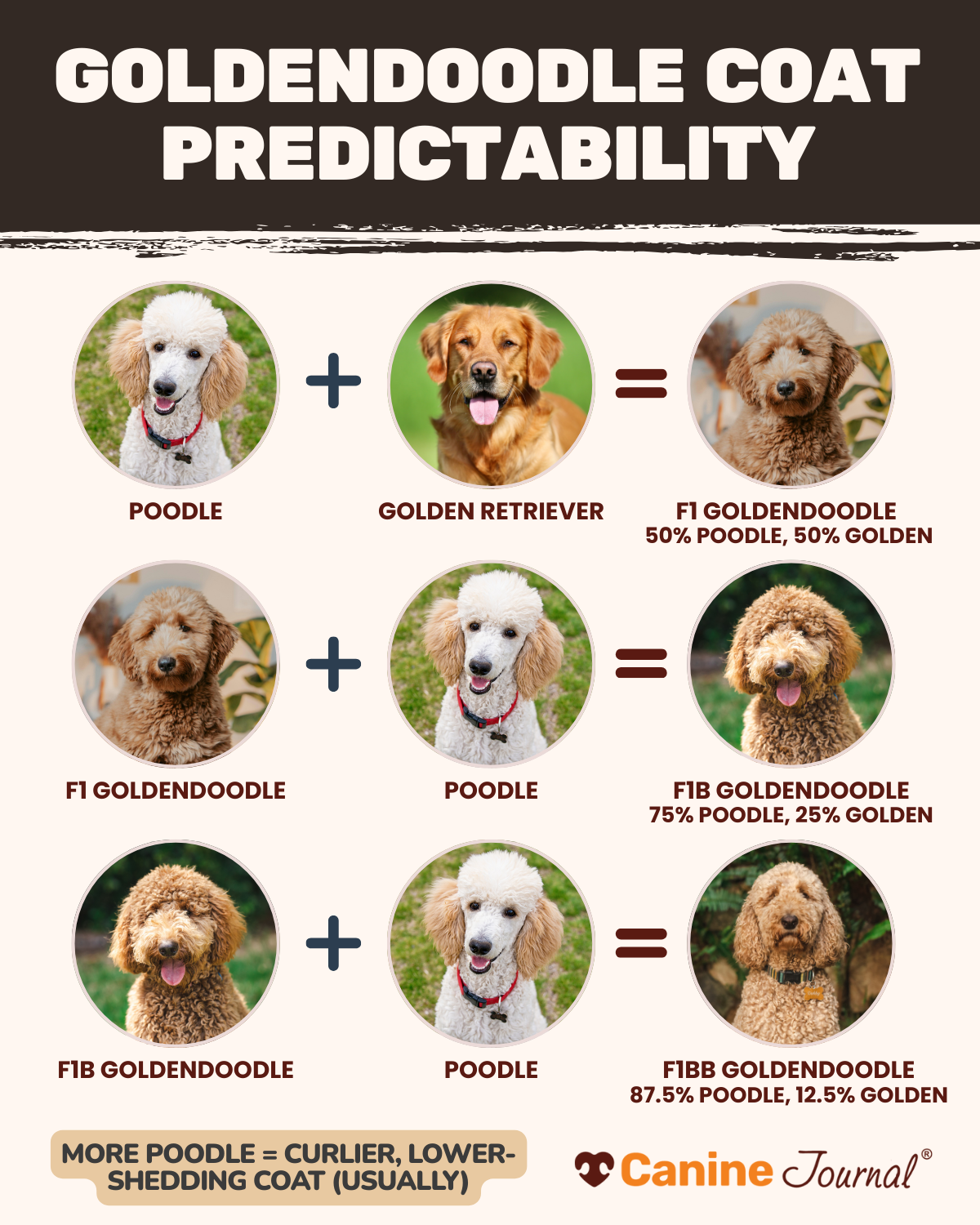
Key Takeaway: F1BB doodles may have better odds of developing curlier, lower-shedding coats because they have more Poodle ancestry. However, generation alone cannot guarantee coat type, shedding level, or suitability for someone with dog allergies. If shedding or allergies are major concerns, ask the breeder about the parents’ adult coats, shedding levels, and coat-genetics testing.
The Reality Of Non-Shedding Dogs
Here’s the reality: No coated dog is completely non-shedding. All dogs with hair or fur lose at least some of it as their coats grow and renew. With low-shedding breeds, loose hairs may fall gradually or remain trapped in the coat until brushing removes them.
Less Shedding Does Not Mean Less Work
As you might expect, there is typically a grooming tradeoff with low-shedding breeds:
- Silky, hair-like coats may require daily brushing and regular professional grooming.
- Curly coats may require frequent brushing and regular trimming to prevent tangles and painful mats.
- Wiry coats may require hand stripping to preserve their traditional texture and color.
- Hairless dogs have unique care requirements, including protection from sun, cold, dryness, and skin irritation.
If allergies are driving your search, keep in mind that less fur around the house may limit indoor allergen spread, but it doesn’t eliminate exposure.
What “Hypoallergenic” Actually Means
No dog breed is completely hypoallergenic or guaranteed not to trigger symptoms. Dog allergens are proteins found primarily in dander, saliva, and urine. They can collect on a dog’s coat and spread through shed hair, licking, physical contact, furniture, and household dust.
Low-shedding breeds may release less allergen-carrying hair into the home, but they still produce allergens. Even two dogs of the same breed can affect an allergy-sensitive person differently.
Do not choose a dog based on the “hypoallergenic” label alone. Spend time with the individual dog before adopting, ideally indoors, where you can better assess your reaction.
Regular grooming, vacuuming, washing dog bedding, and using air filtration may also help reduce allergens in the home. If allergies are a bigger concern than shedding alone, explore our list of dog breeds considered more hypoallergenic before choosing your next companion.
5 Popular Low-Shedding Dogs
If you’re looking for a low-shedding dog with a well-established coat and plenty of breed information available, start here. These popular breeds vary in size, personality, and activity level, but all leave relatively little loose hair around the home.
1. Poodle: Toy, Miniature & Standard
Smart, stylish, and impressively low-shedding, Poodles are beloved for their hypoallergenic coats and unmatched intelligence. Their dense coats retain much of the loose hair until brushing removes it, leaving considerably less hair around the home than most breeds.
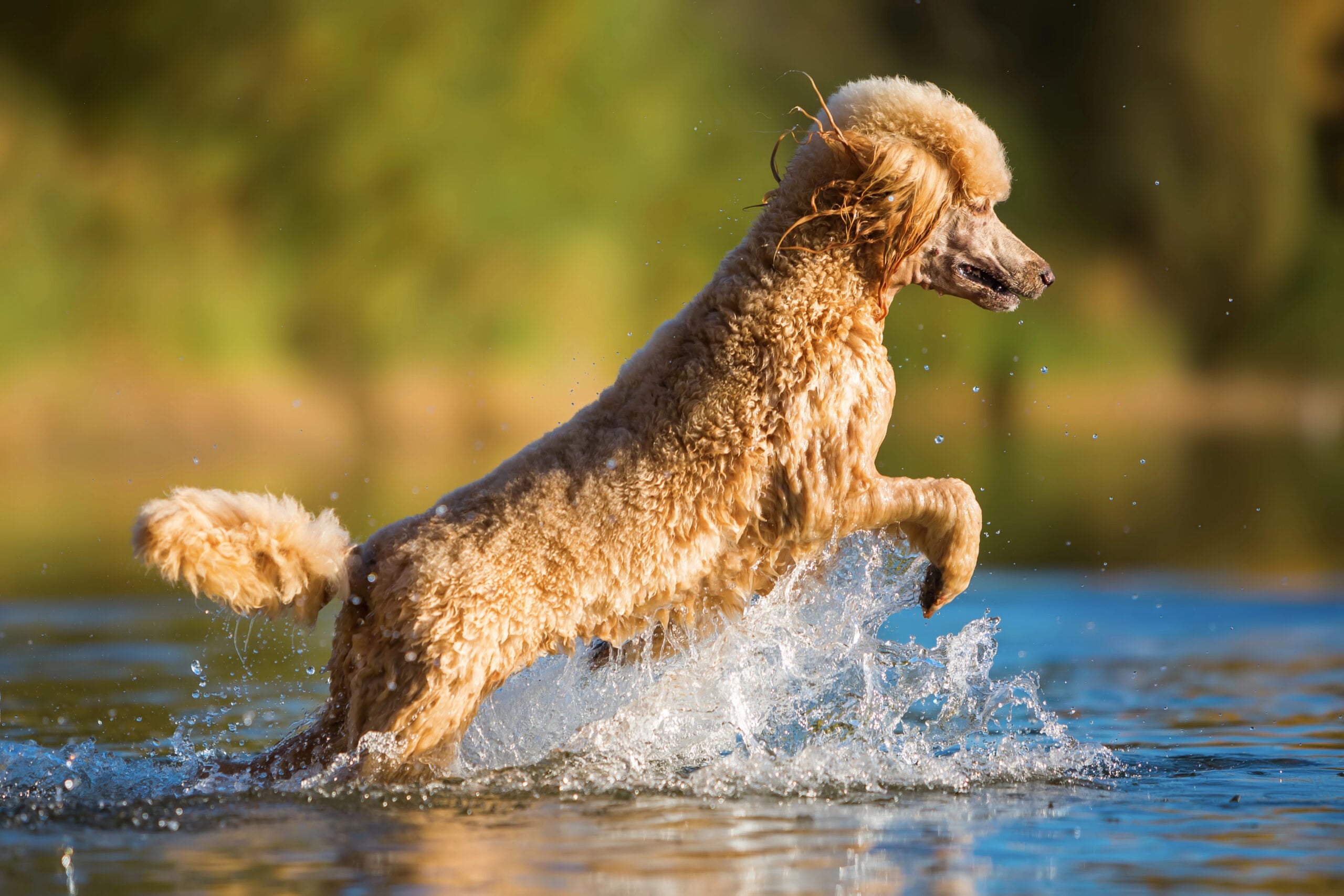
Poodles come in three sizes:
Regardless of size, Poodles are intelligent, athletic, highly trainable, and high energy. They need daily physical exercise and mental stimulation, as well as brushing several times a week and professional grooming every four to eight weeks to prevent tangles and mats.
Best for: Families, first-time owners, and anyone looking for one of the easiest dogs to train.
2. Schnauzer: Miniature, Standard & Giant
With their bushy eyebrows, distinctive beards, and watchful personalities, Schnauzers offer plenty of personality with relatively little loose hair around the home.
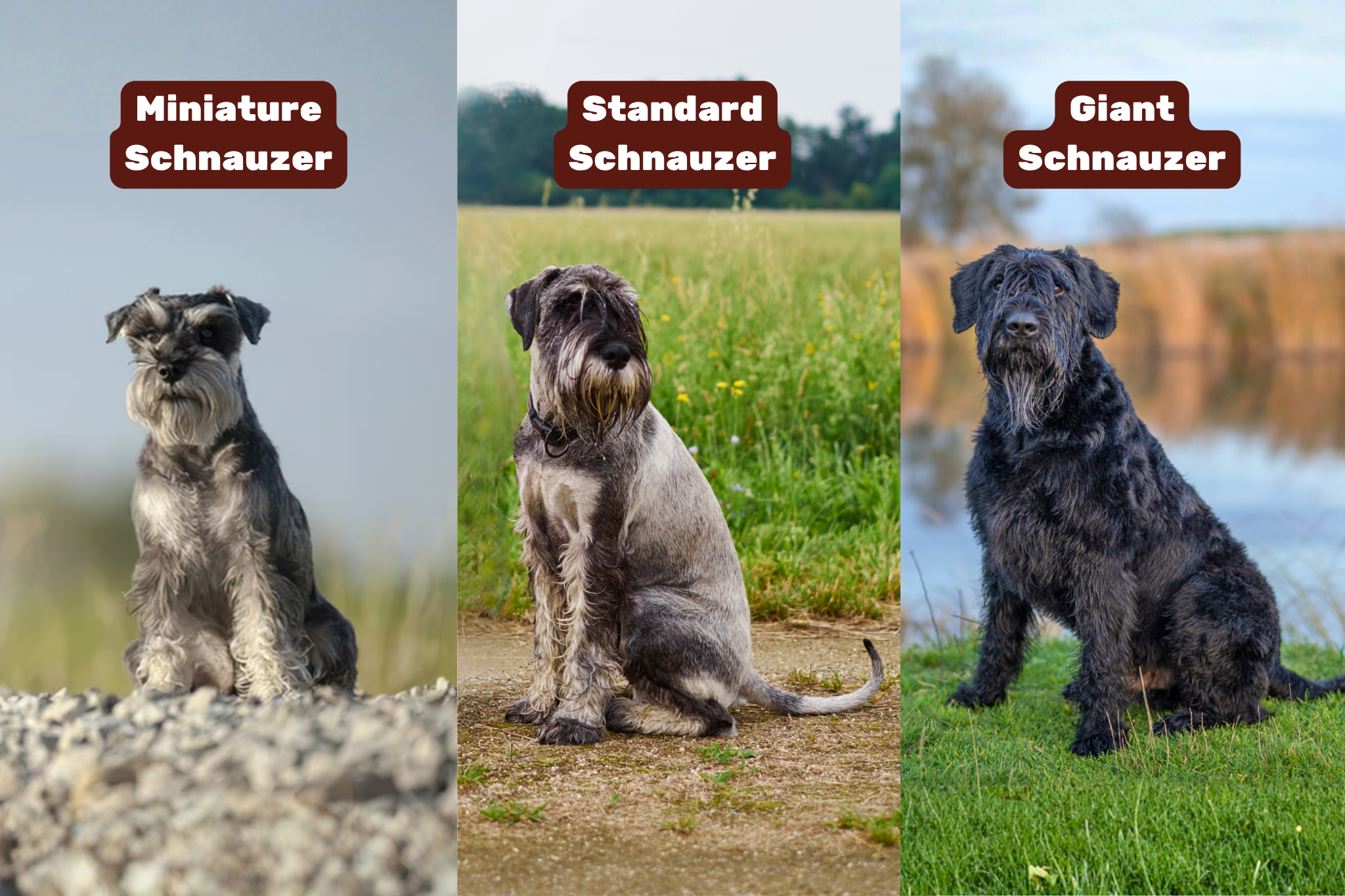
Schnauzers come in three sizes:
All Schnauzers have a coarse outer coat and softer undercoat that retain dead hairs until brushing or grooming removes them. They generally need weekly brushing and professional clipping or hand stripping every four to eight weeks.
All Schnauzers tend to be intelligent, alert, and devoted to their families. However, their exercise, training, and handling needs increase considerably with size, especially with the powerful, highly driven Giant Schnauzer.
Best for: Owners seeking a clever, watchful companion; the Miniature Schnauzer is particularly well-suited to apartment living and is considered one of the easier breeds to train.
3. Yorkshire Terrier
Elegance in miniature form, the Yorkshire Terrier wears a sleek, silky coat that falls like human hair and sheds very little. They typically stand 7 to 8 inches tall and weigh around 7 pounds, but their bold personalities are much larger than their tiny frames.
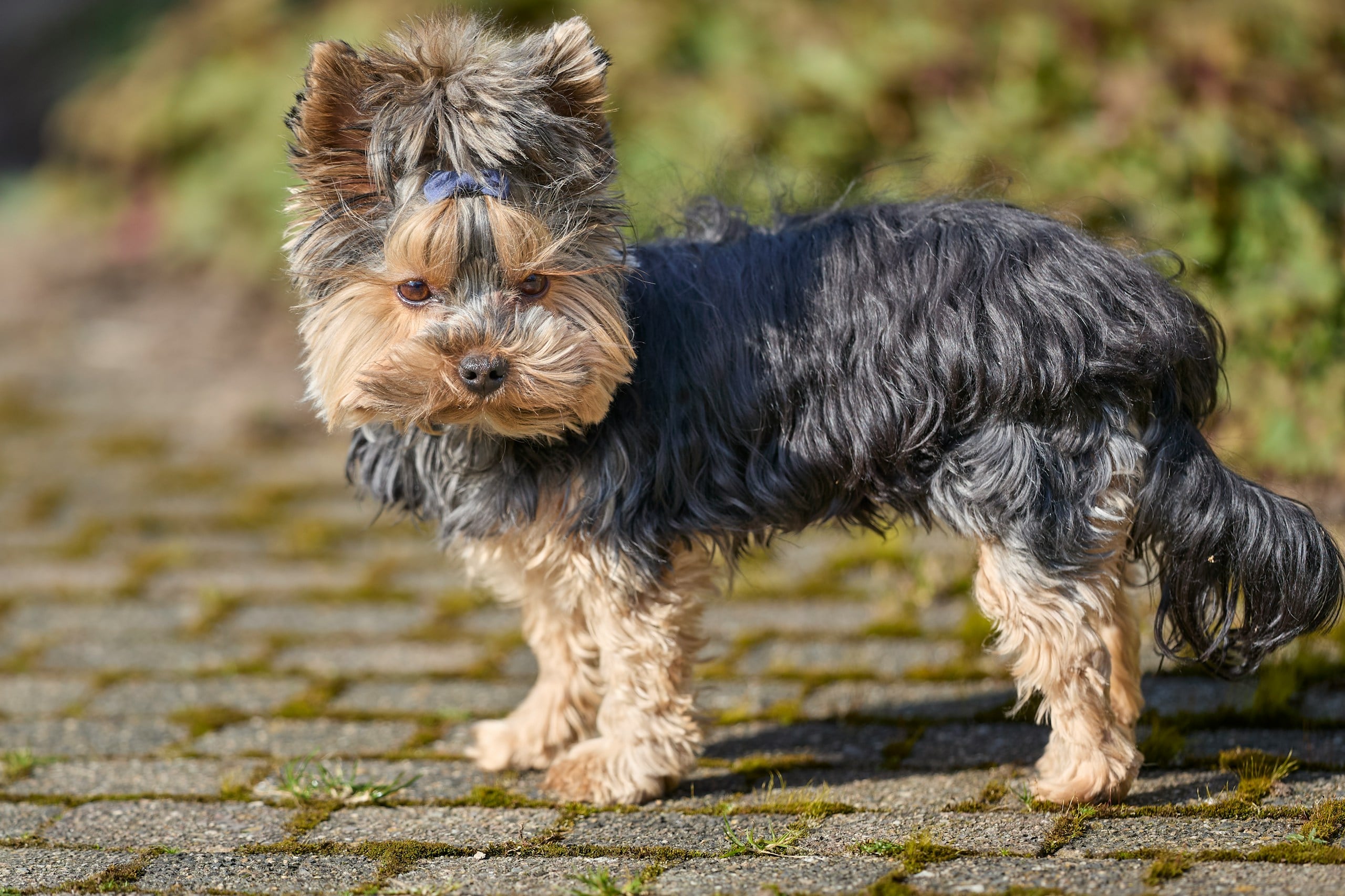
Yorkies need daily brushing when their coats are kept long — or several brushings a week in a short puppy cut — and occasional trims. Their facial hair also needs regular attention to keep it clean and away from their eyes.
They have moderate energy, and daily walks combined with indoor play generally satisfy their exercise needs. Consistent training and mental stimulation help channel their curious, confident terrier instincts.
Best for: First-time owners, people seeking a small companion dog, and anyone drawn to miniature breeds with big personalities.
4. Shih‑Tzu
Regal and affectionate, the Shih‑Tzu is a playful, sociable companion that typically stands 8 to 11 inches tall and weighs 9 to 16 pounds. Their friendly demeanor and adaptable size suit families, seniors, and city dwellers alike.
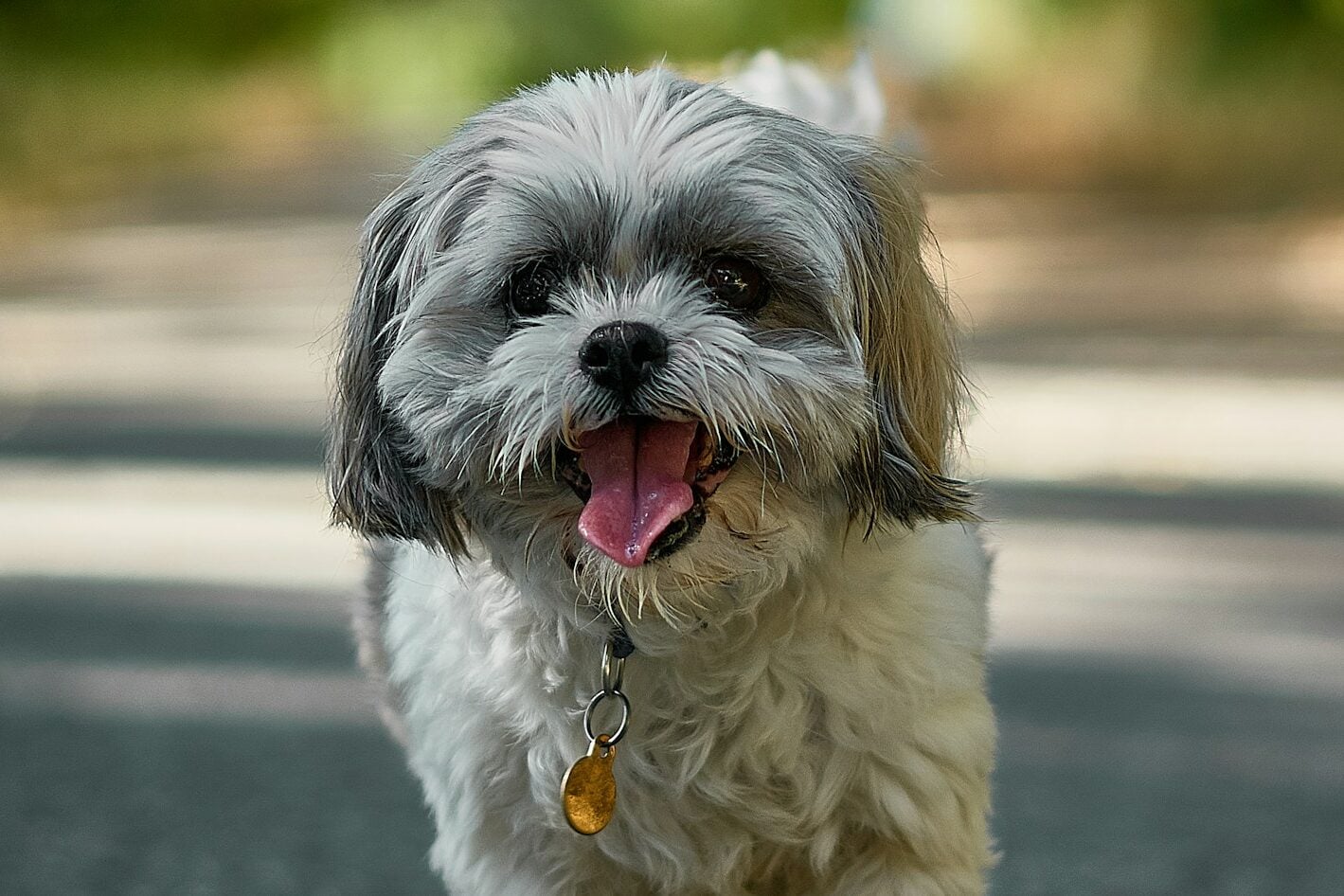
The Shih Tzu’s flowing double coat sheds very little, but it requires considerable upkeep. Long coats need daily brushing, while shorter puppy cuts still require regular brushing and professional trimming approximately every four to six weeks.
The breed has low-to-moderate energy, and short daily walks and indoor play usually provide enough exercise. They adapt particularly well to apartment living, although consistent training and early socialization help manage their independent streak.
Best for: First-time owners, apartment dwellers, and anyone seeking an affectionate companion dog with relatively modest exercise needs.
5. Maltese
The Maltese is tiny, elegant, and wrapped in a coat of silky white hair that barely sheds. Don’t be fooled by the glamour; beneath that luxurious coat is a bold, playful pup with tons of heart.
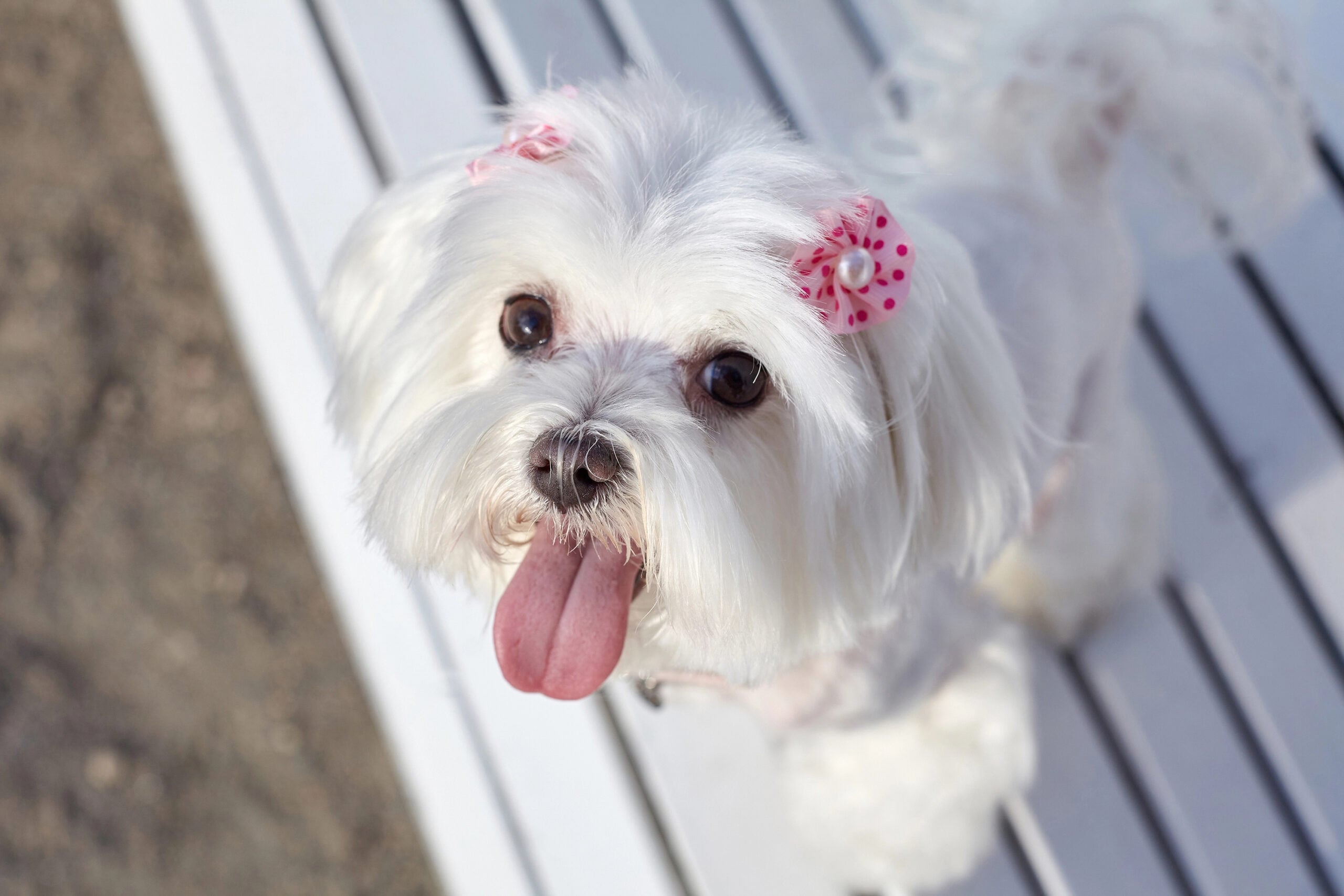
Because the Maltese coat grows continuously and has a long growth cycle, it requires daily brushing when kept long. A shorter puppy cut is easier to manage but still needs brushing several times a week and professional grooming approximately every four to six weeks.
Maltese have moderate energy, but their small size makes their exercise needs fairly manageable. A couple of short walks and several indoor play sessions each day are generally enough to keep them active and entertained.
Best for: Seniors, busy people who need a dog that’s ok being left home alone, or anyone who wants a cute dog with a long lifespan.
4 Hairless Dogs That Shed Little To No Hair
Want to avoid a full coat altogether? Hairless dogs come closest to being genuinely non-shedding because they have little or no hair to lose. However, they still shed skin cells, can trigger allergies, and require specialized skin care.
1. Xoloitzcuintli: Toy, Miniature & Standard (Hairless)
Meet one of the oldest hairless breeds in the world: the Xoloitzcuintli, also known as the Xolo or Mexican Hairless Dog. Hairless Xolos have smooth, exposed skin and may have small tufts of hairon the head, feet, or tail. They also come in a coated variety with a short, close-fitting coat.
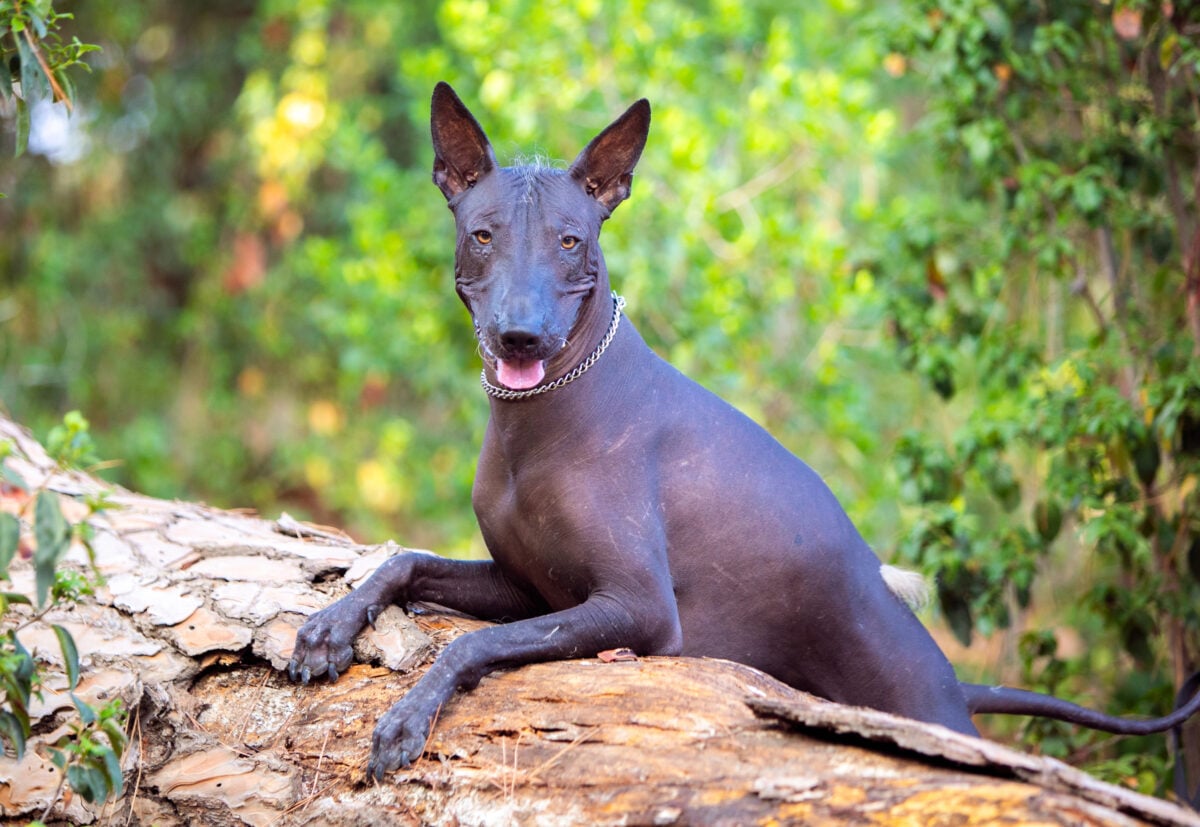
One of the breed’s biggest advantages is its size range:
- Toy: 5–15 pounds
- Miniature: 15–30 pounds
- Standard: 25–40 pounds
Although they do not require brushing, hairless Xolos still need attentive skin care. Bathe them as needed with a gentle dog shampoo, avoid overusing lotions or oils that can clog pores, and ask your vet about appropriate sun protection. Clothing may be necessary in intense sun or cold weather.
Xolos are calm, affectionate, and incredibly loyal. Their moderate exercise needs can usually be met with daily walks and play, although younger and larger Xolos may enjoy more vigorous activity.
Best for: Experienced owners seeking an unusual hairless dog with minimal shedding and an exceptionally long potential lifespan.
2. American Hairless Terrier
If you’ve ever wished for a lively, loyal dog without the mess of shedding, the American Hairless Terrier might be your dream match. from the Rat Terrier, these compact dogs are intelligent, playful, and full of terrier personality.
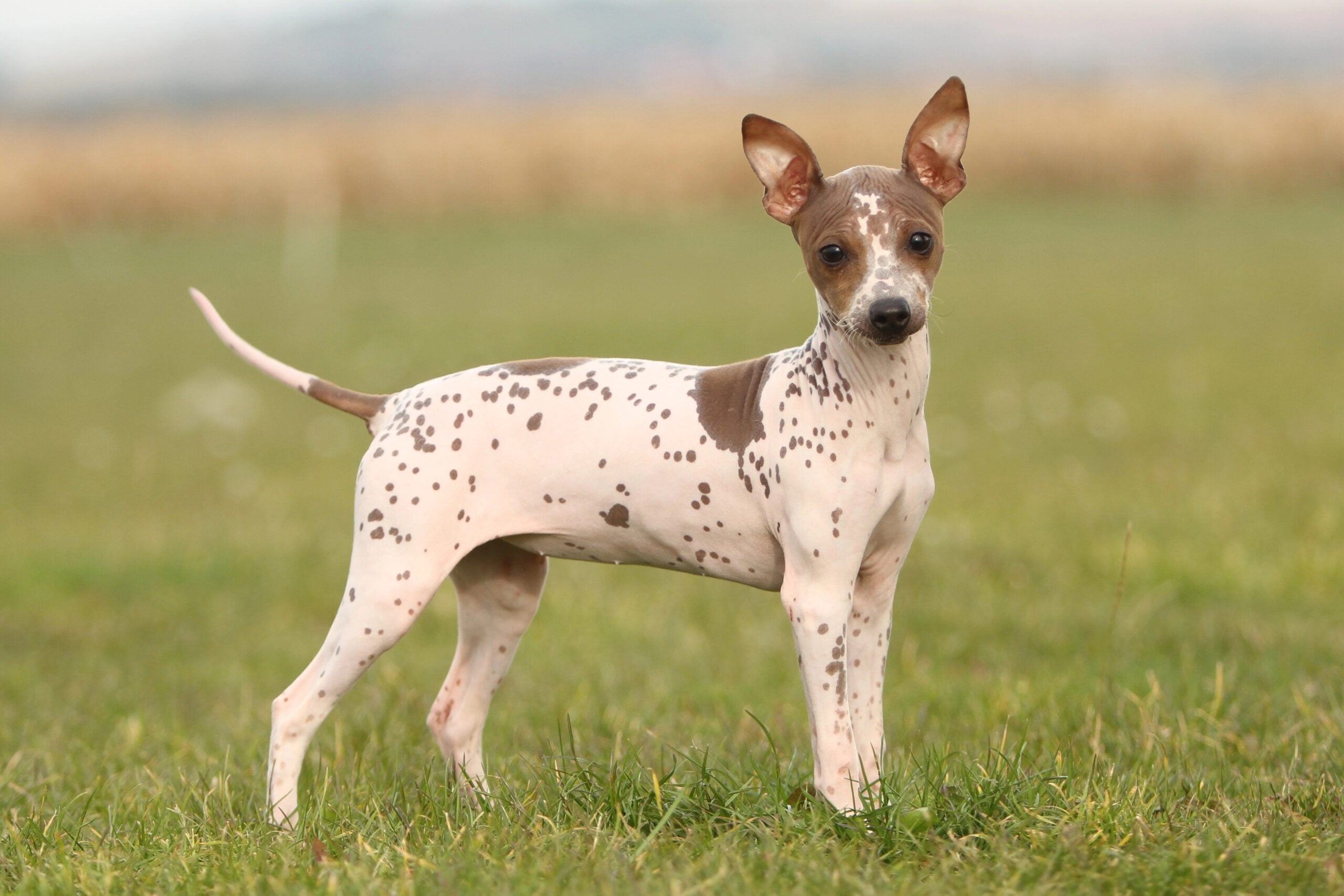
The breed comes in hairless and coated varieties. Hairless American Hairless Terriers need regular bathing and protection from sun, cold, and skin irritation, while the coated variety requires only occasional brushing.
These moderately energetic dogs generally do well with daily walks and indoor play, although many also enjoy training, agility, and other activities that engage their active minds.
Best for: Active households seeking a playful, trainable hairless dog without the grooming demands of a full coat.
3. Chinese Crested (Hairless)
The Chinese Crested is the pop star of hairless dogs — quirky, fabulous, and impossible to ignore. With a fluffy creston the head and tufts on the feet and tail, the hairless variety looks like it just walked off a fashion runway — or perhaps a Tim Burton set.
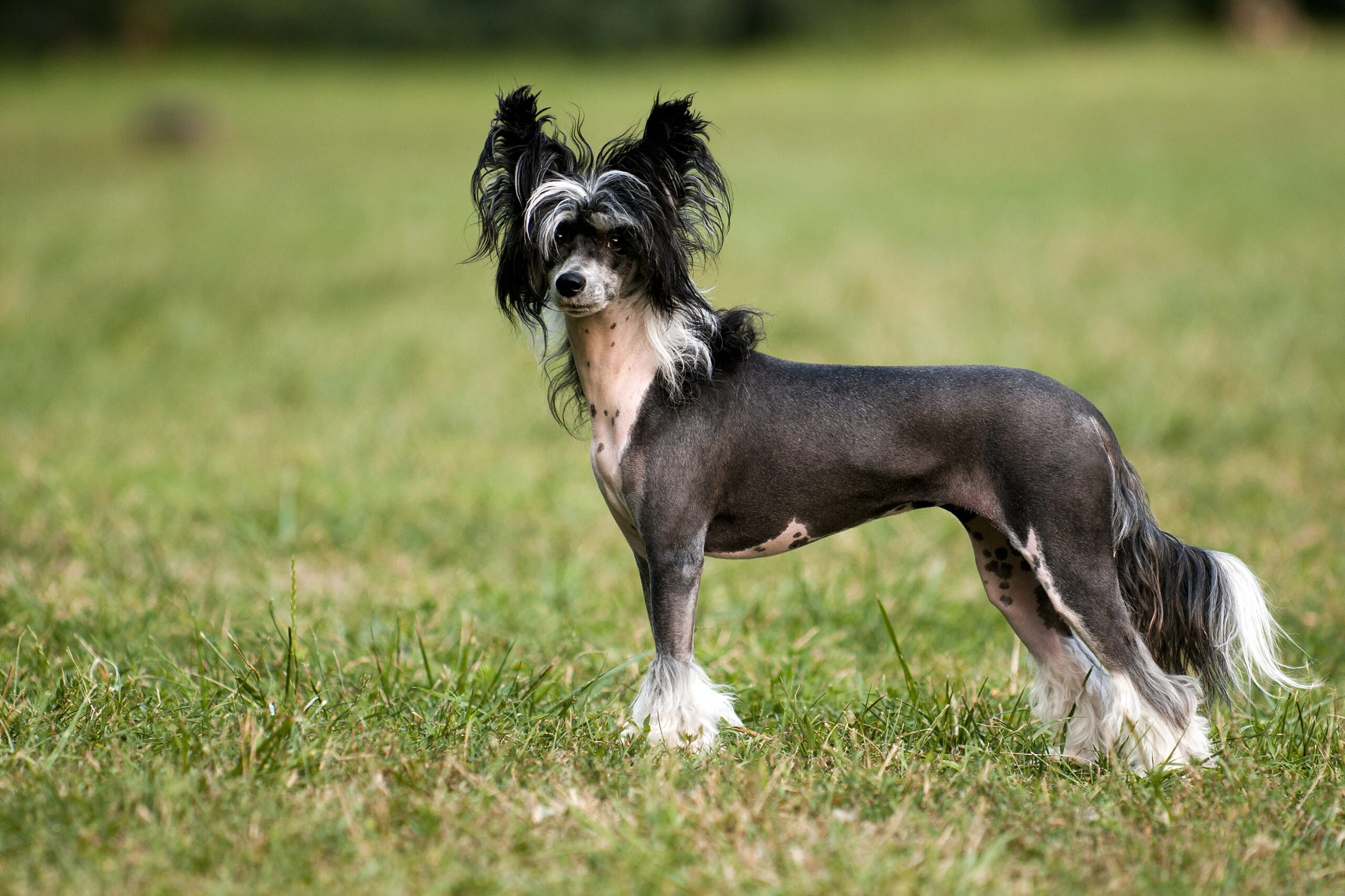
The breed comes in two varieties: the mostly hairless Hairless and the fully coated Powderpuff. Hairless dogs need regular bathing, skin checks, weather protection, and brushing around their crests, feet, and tails, while Powderpuffs require frequent brushing to prevent mats.
Chinese Cresteds have moderate energy, and short daily walks combined with indoor play generally satisfy their exercise needs. Their small size and devotion to their owners make them particularly well suited to apartment living.
Best for: Households seeking a portable hairless companion with the potential to be one of the longer-lived dog breeds.
4. Peruvian Inca Orchid (Hairless)
Also known as the Peruvian Hairless Dog, the Peruvian Inca Orchid is an ancient sighthound developed in Peru. They are intelligent, agile, and affectionate with their families, although they may be cautious around strangers.
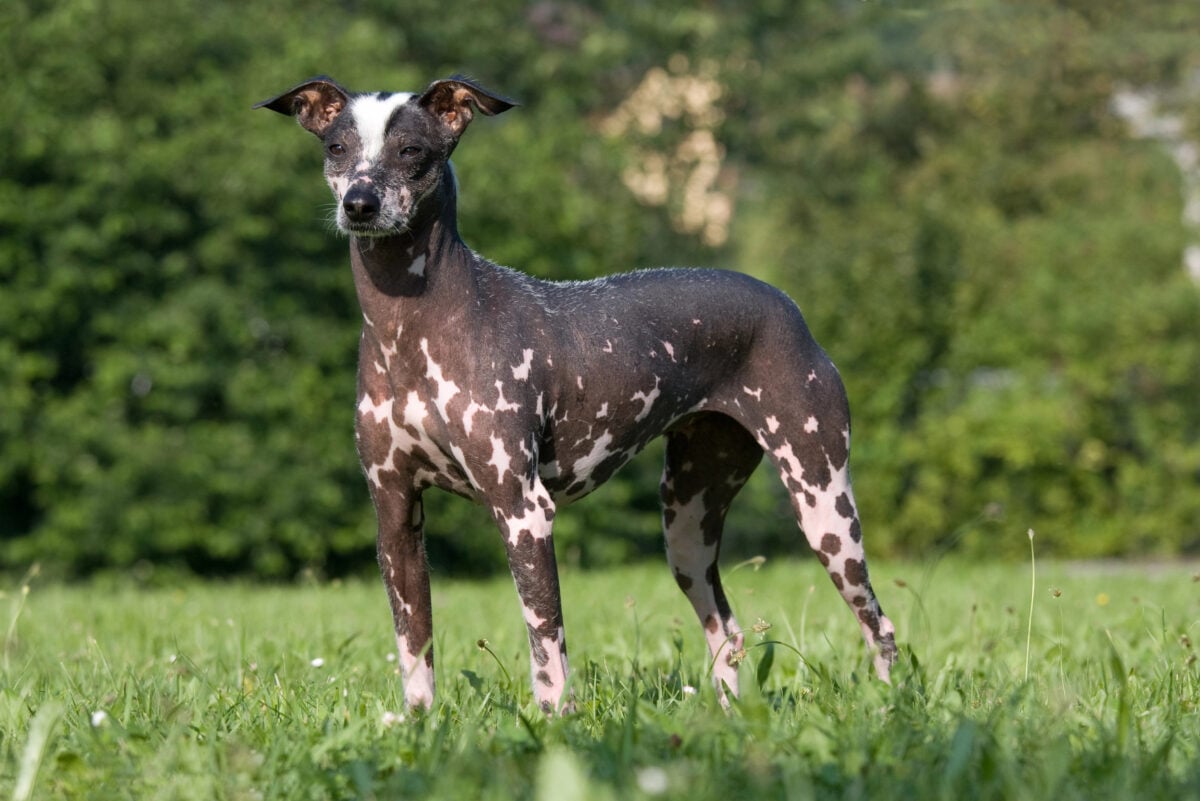
They can be hairless or coated and come in three sizes:
- Small: 8.5–17.5 pounds
- Medium: 17.5–26.5 pounds
- Large: 26.5–55 pounds
The hairless variety has exposed skin and may have small amounts of hairon the head, feet, or tail, while the coated variety has a short, smooth coat. Hairless dogs need gentle bathing as required, regular skin checks, and protection from intense sun and cold.
These moderately to highly energetic sighthounds need daily walks and opportunities to run in a securely fenced area. Their sensitivity, prey drive, and reserved nature make early socialization and attentive handling particularly important.
Best for: Experienced owners seeking an athletic, sensitive, and deeply loyal hairless dog.
8 Small Low-Shedding Dogs
Looking for a smaller dog without the constant layer of fur on your furniture? These low-shedding breeds range from cuddly lapdogs to lively, independent companions, so size and coat are not the only factors to consider.
1. Bichon Frise
This cheerful fluffball looks like a living cotton cloud and acts like a born entertainer. The Bichon Frise typically stands 9.5 to 11.5 inches tall and weighs 12 to 18 pounds, with a sturdy build and cheerful energy.
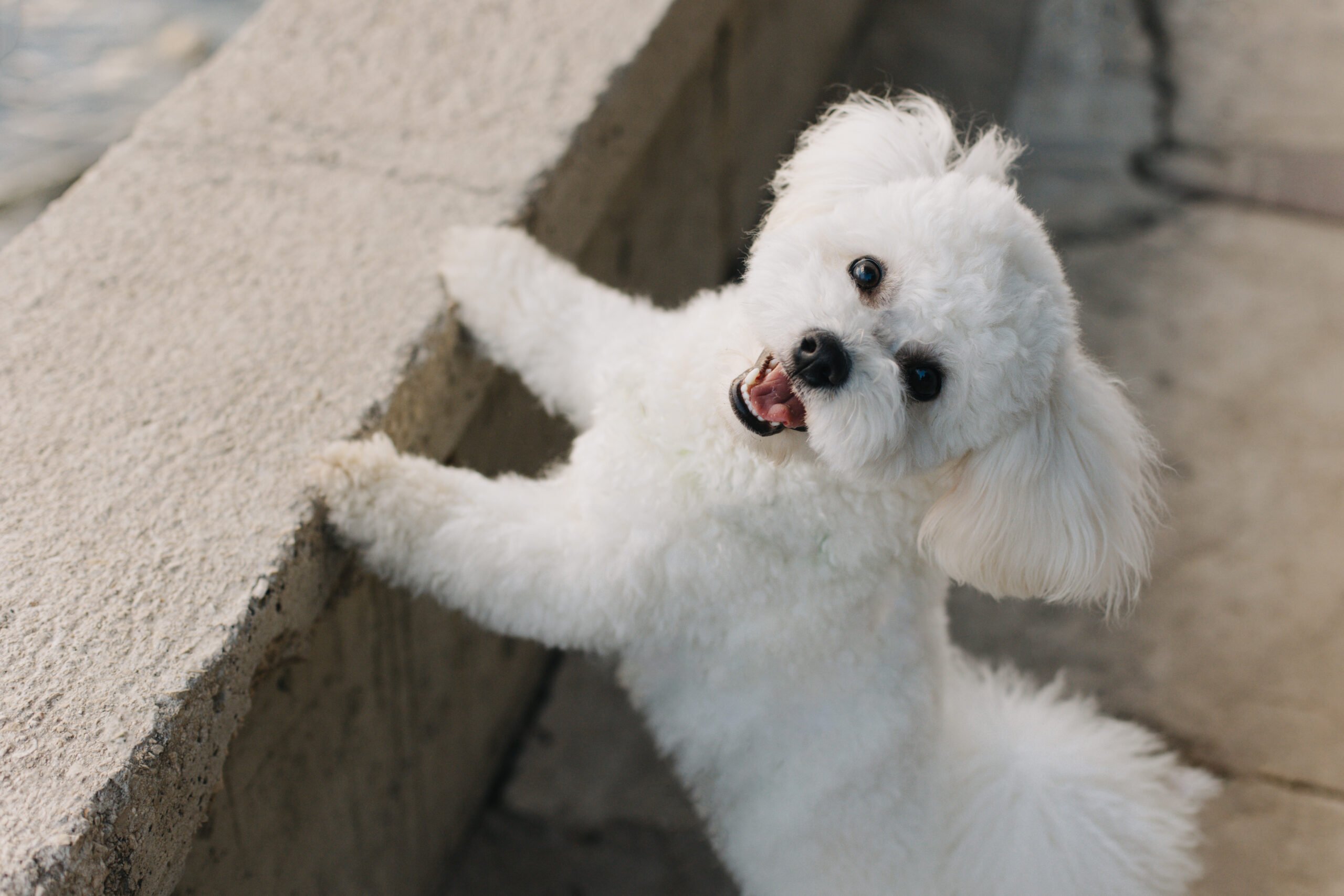
Their soft, curly coats shed very little and retain loose hairs until brushing removes them. Bichons need brushing several times a week — ideally daily — and professional grooming approximately every four to six weeks.
Bichons have moderate energy that can generally be satisfied with daily walks and lively play sessions. They are social dogs that thrive on companionship, training, and being included in family activities.
Best for: First-time owners, seniors, apartment dwellers, and anyone seeking an affectionate companion.
2. Lhasa Apso
Originally developed as a sentinel in Tibetan monasteries and palaces, the Lhasa Apso is confident, intelligent, and affectionate with family but often reserved around strangers. These compact dogs generally stand 10 to 11 inches tall and weigh 12 to 18 pounds.
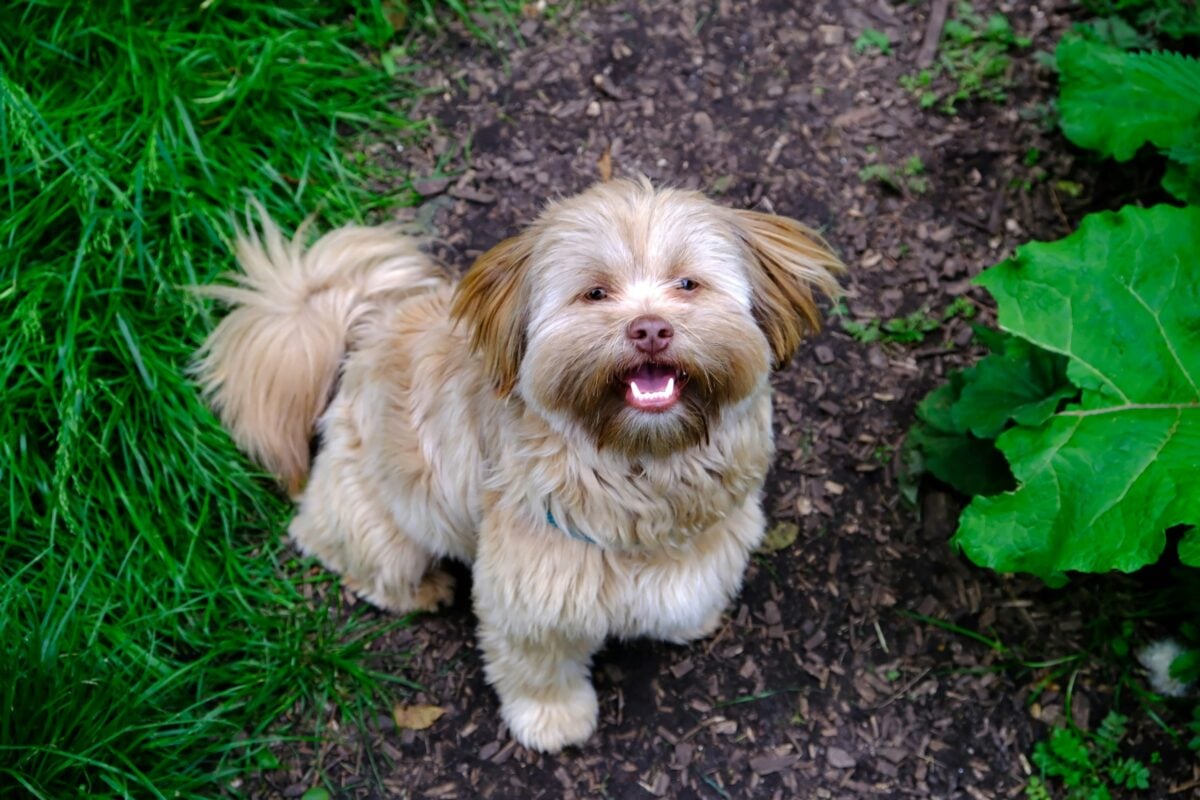
Despite having a dense double coat, Lhasas shed surprisingly little because released hairs remain within the long outer coat until brushing removes them. A full coat requires daily brushing and careful detangling, while a shorter puppy cut still needs brushing several times a week and regular professional grooming.
Lhasa Apsos have moderate energy, and daily walks and indoor play generally meet their exercise needs. Their independent nature and tendency to assess situations for themselves make patient training and early socialization important.
Best for: Experienced small-dog owners who appreciate confident, independent dog breeds.
3. Havanese
The Havanese may be small, but this Cuban companion is bursting with personality and charm. Smart, social, and eager to please, Havanese dogs thriveon human interaction.
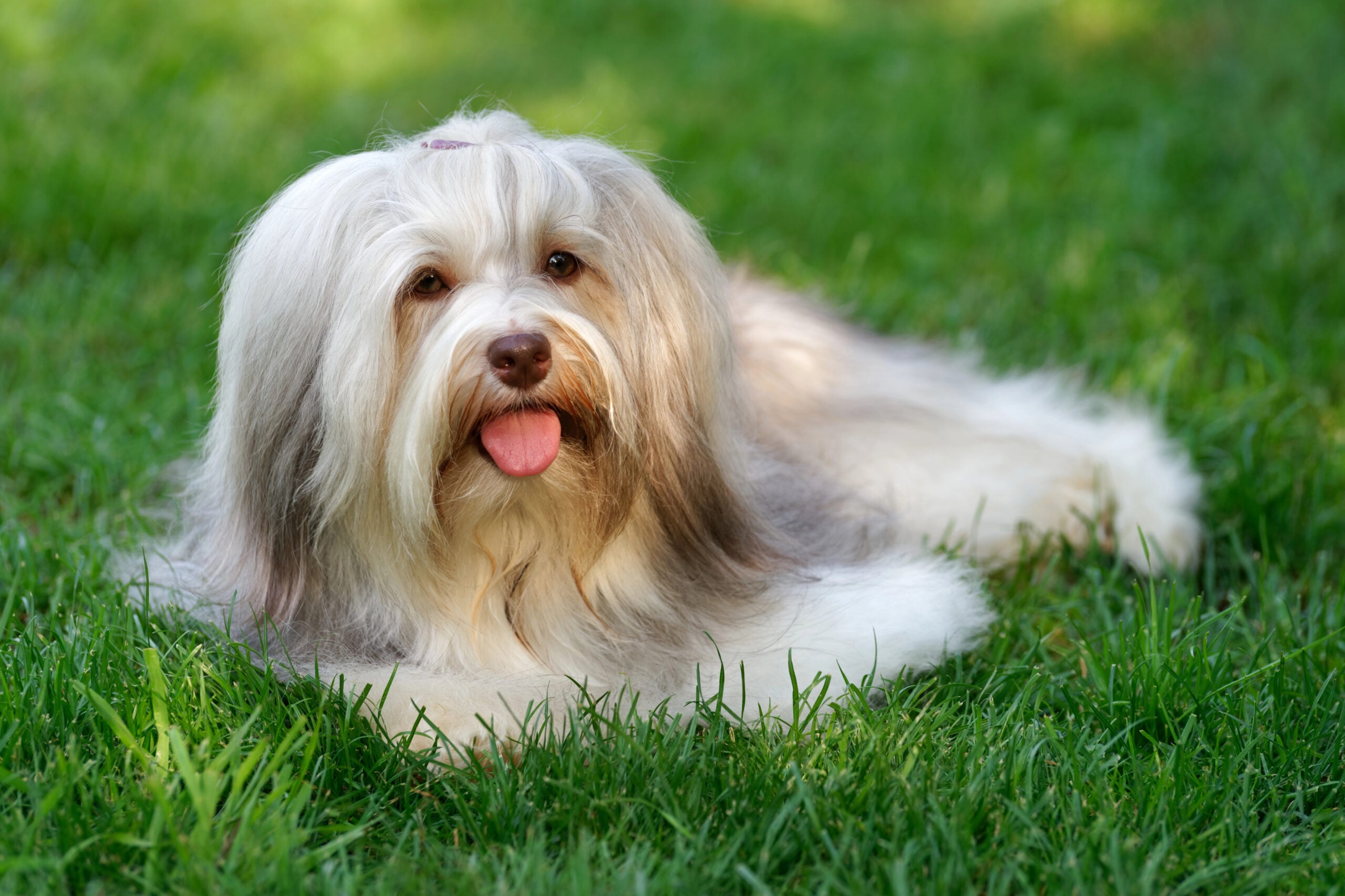
Their long, low-shedding coats can be wavy, curly, or even corded. Uncorded coats need frequent — often daily — brushing and regular grooming, while corded coats require careful separation, washing, and thorough drying.
Havanese have moderate energy, and daily walks and interactive play generally provide enough exercise. They enjoy training and being included in family activities but may struggle when regularly left alone for extended periods.
Best for: Seniors, people seeking an affectionate emotional support dog, and families interested in one of the generally healthier dog breeds.
4. Coton de Tulear
Hailing from Madagascar, the Coton de Tulear is an affectionate, clownish companion known for being deeply devoted to family. Cotons typically stand 9 to 11 inches tall and weigh 8 to 15 pounds.
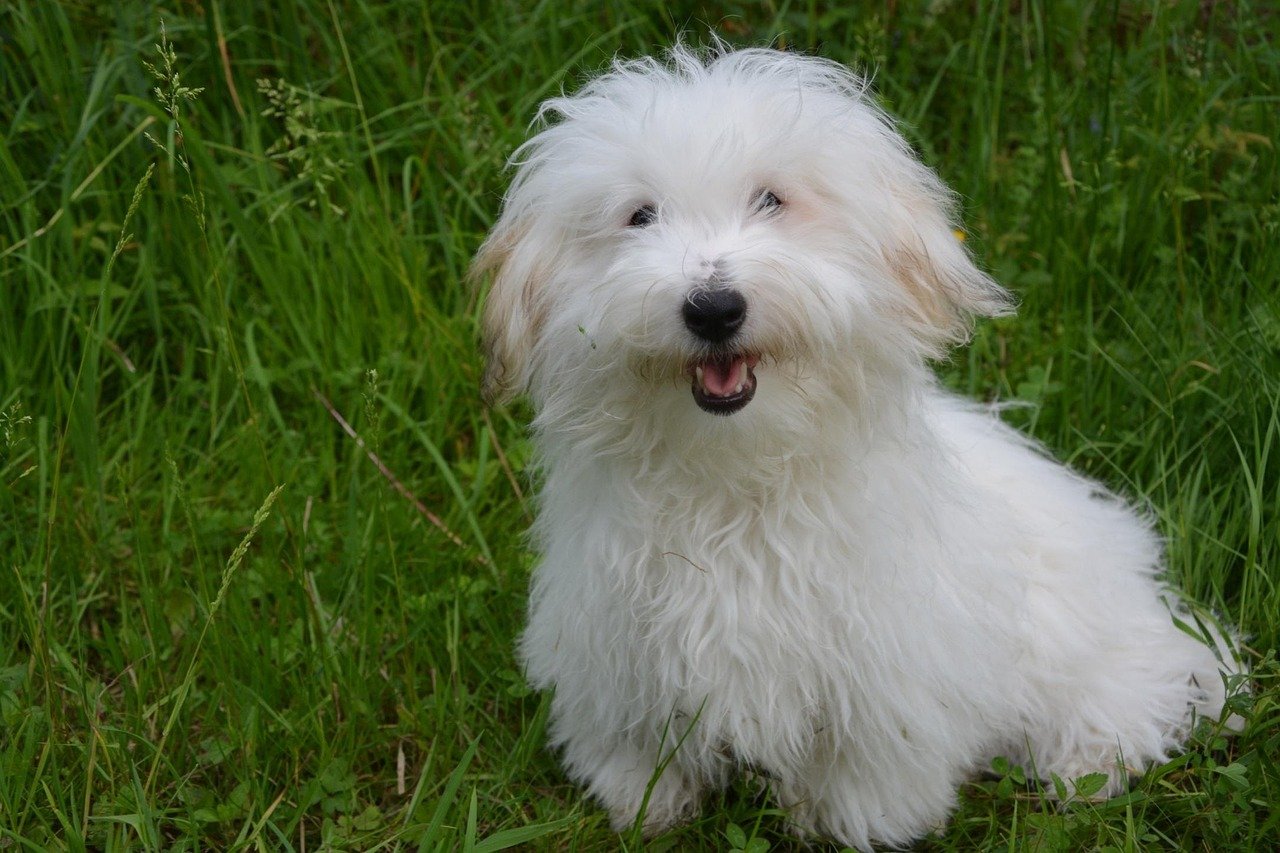
Their cotton-like coats shed very little but readily develop tangles and mats. They need daily or near-daily brushing, careful attention behind the ears and around the legs, and regular bathing and trimming.
Cotons have moderate energy and generally do well with daily walks, indoor play, and short training sessions. Their adaptable size suits apartment living, but these social dogs need considerable interaction with their people.
Best for: Apartment dwellers, anyone seeking an affectionate “Velcro dog,” and people drawn to breeds with a long lifespan.
5. Brussels Griffon (Rough-Coated)
Equal parts Ewok and aristocrat, the Brussels Griffon is a toy breed with a larger-than-life attitude and a face that begs to be meme’d. These sensitive, devoted dogs stand 7 to 10 inches tall, weigh 8 to 10 pounds, and tend to follow their favorite people everywhere.
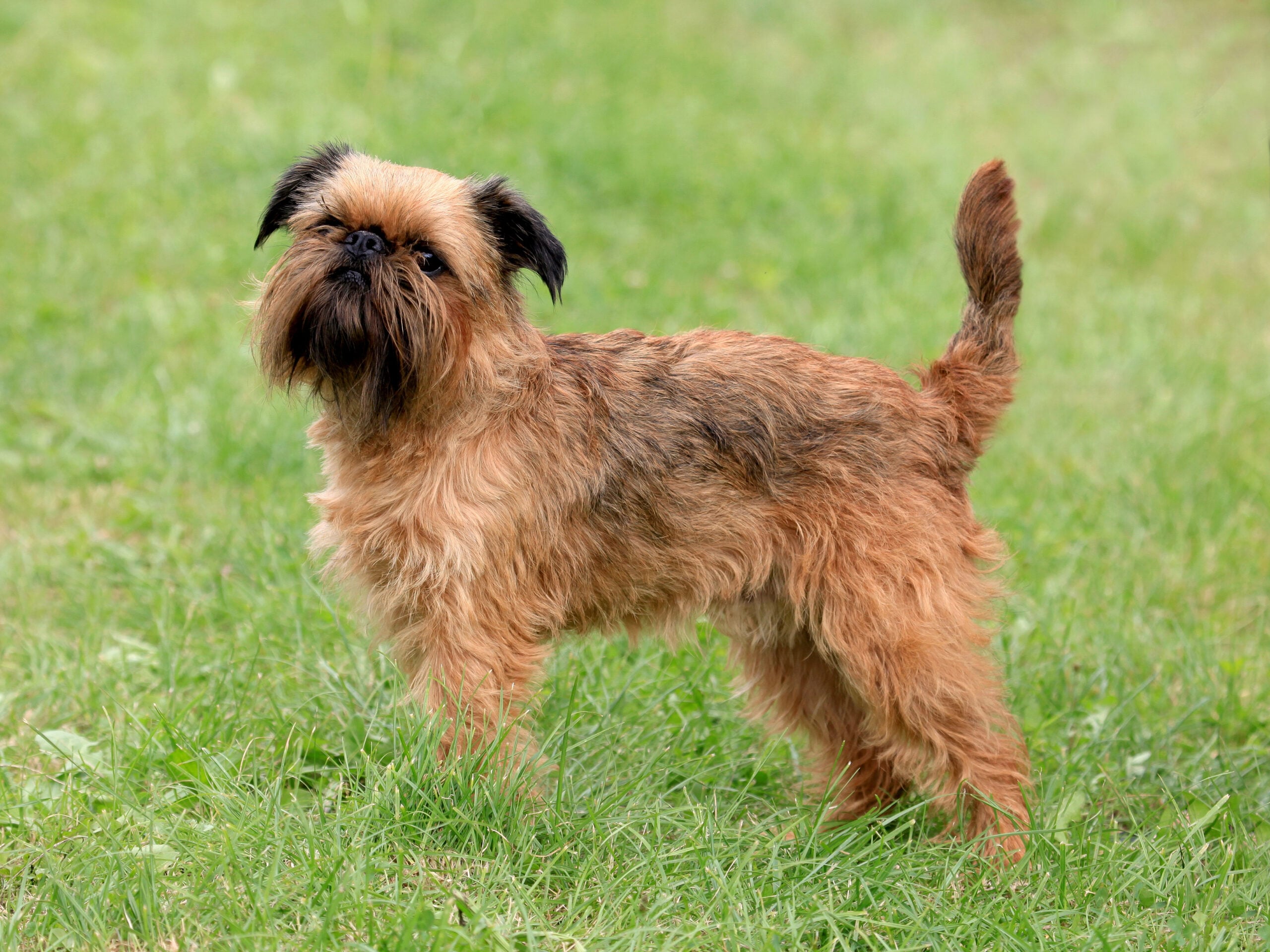
Brussels Griffons come in smooth and rough coats. The low-shedding rough coat needs weekly brushing and periodic clipping or hand stripping, while the smooth coat requires less grooming but releases more noticeable hair.
Griffs have moderate energy, and short daily walks and indoor play generally meet their exercise needs. They respond best to gentle, positive training and do not usually enjoy being left alone for long periods.
Best for: Seniors, affectionate households, and anyone seeking a quirky miniature dog with an almost catlike personality.
6. Biewer Terrier
Closely related to the Yorkshire Terrier, the Biewer Terrier is an affectionate, playful toy dog with an elegant blue, white, and gold coat. These people-oriented companions generally stand 7 to 11 inches tall and weigh 4 to 8 pounds.
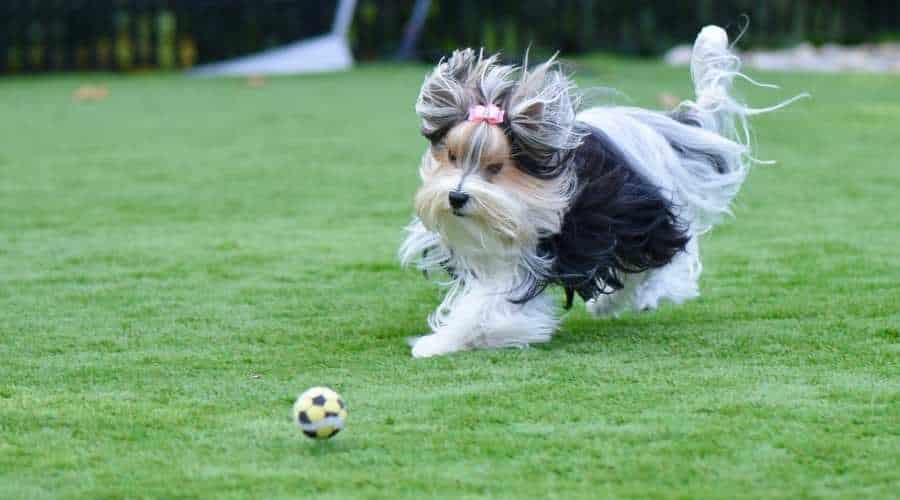
Their long, silky coats release very little loose hair but require daily or near-daily brushing to prevent tangles and mats. A shorter trim is easier to manage, although regular bathing, combing, and professional grooming are still necessary.
Biewer Terriers have moderate energy, and daily walks combined with indoor play generally provide enough exercise. Their tiny size suits apartment living, but they still need training, mental stimulation, and regular companionship.
Best for: Apartment dwellers and anyone seeking a tiny companion with a playful personality and one of the softest coats.
7. Bolognese
The Bolognese looks like a tiny white cloud, but beneath that fluffy coat is a calm, devoted companion. A member of the Bichon family, this rare Italian breed generally stands 10 to 12 inches tall and weighs 6 to 10 pounds.
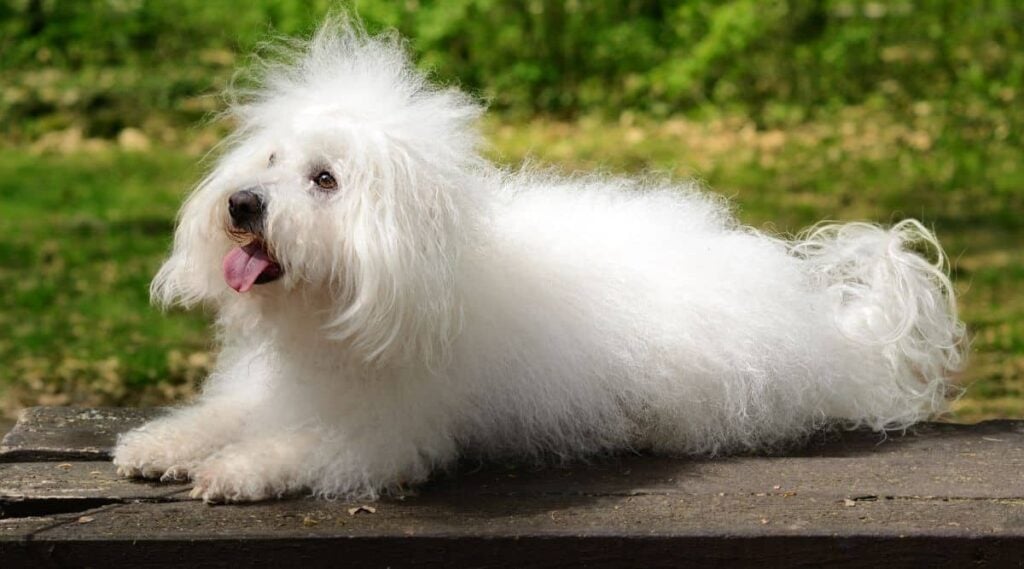
Their long, cotton-like coat sheds very little because loose hairs remain trapped instead of falling freely around the home. Regular brushing is essential to prevent knots and mats, especially if the coat is kept long.
These dogs have low-to-moderate energy and generally need daily walks and play rather than strenuous exercise. They bond closely with their families and do not usually enjoy being left alone for extended periods.
Best for: Quieter households seeking a healthy companion that is generally less vocal than many small breeds
8. Löwchen
The Löwchen, or “Little Lion Dog,” might not roar, but this friendly, outgoing companion will certainly steal hearts. Generally weighing around 15 pounds, Löwchens are sturdier and more playful than their toy-like appearance suggests.
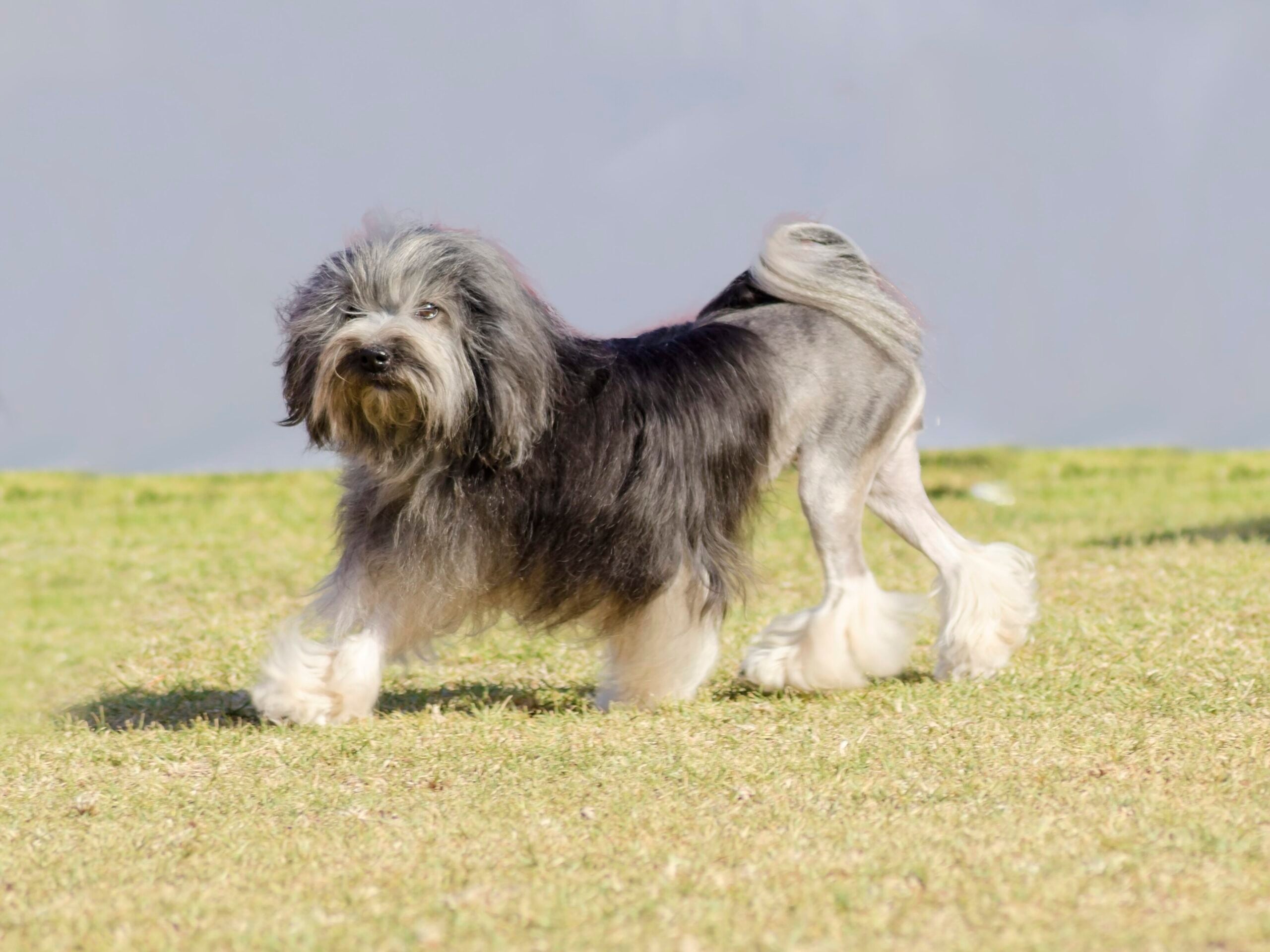
The breed’s long, flowing coat grow continuously and shed very little. They need brushing several times a week and professional grooming approximately every four to six weeks, especially when maintained in the traditional lion trim.
Löwchens have moderate energy and enjoy daily walks, play, and training. They adapt to both active and quieter homes but thrive when included in everyday family life.
Best for: Families and engaged owners seeking a cheerful, trainable small dog that enjoys being included in daily life.
5 Curly-Coated Alternatives To The Poodle
Love the Poodle’s curls but want to explore other breeds? These low-shedding dogs have dense, curly coats that retain loose hair, but their exercise needs, grooming requirements, and working instincts can differ considerably from those of a Poodle.
1. Portuguese Water Dog
Originally bred to assist fishermen along the coast of Portugal, the Portuguese Water Dog is an athletic, water-loving worker with a low-shedding, curly or wavy coat. These loyal dogs stand 17 to 23 inches tall and weigh 35 to 60 pounds.
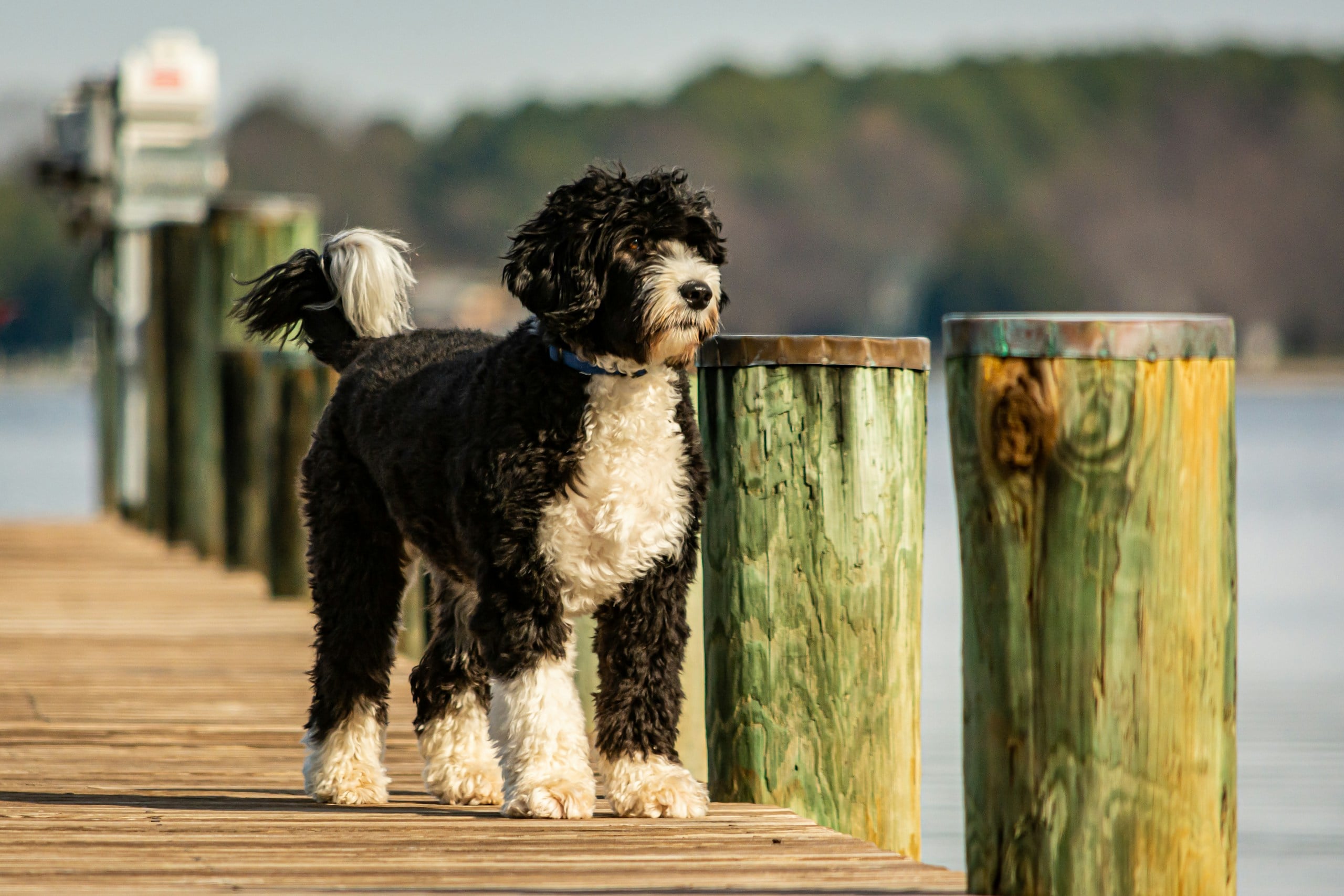
Though their coats don’t shed much, they do need regular grooming to prevent matting. Expect brushing several times a week and professional trimming approximately every four to eight weeks.
These high-energy dogs need vigorous daily exercise, mental stimulation, and opportunities to swim, retrieve, or train. Without enough activity and attention, their intelligence and working drive can turn into unwanted behavior.
Best for: Active families and experienced owners seeking an athletic, highly trainable dog that loves swimming and outdoor adventures.
2. Lagotto Romagnolo
With woolly curls and a teddy-bear appearance, the Lagotto Romagnolo can resemble a smaller Poodle mix, but this is an established Italian breed famous for using its exceptional nose to hunt truffles. Lagotti stand approximately 16 to 19 inches tall and weigh 24 to 35 pounds.
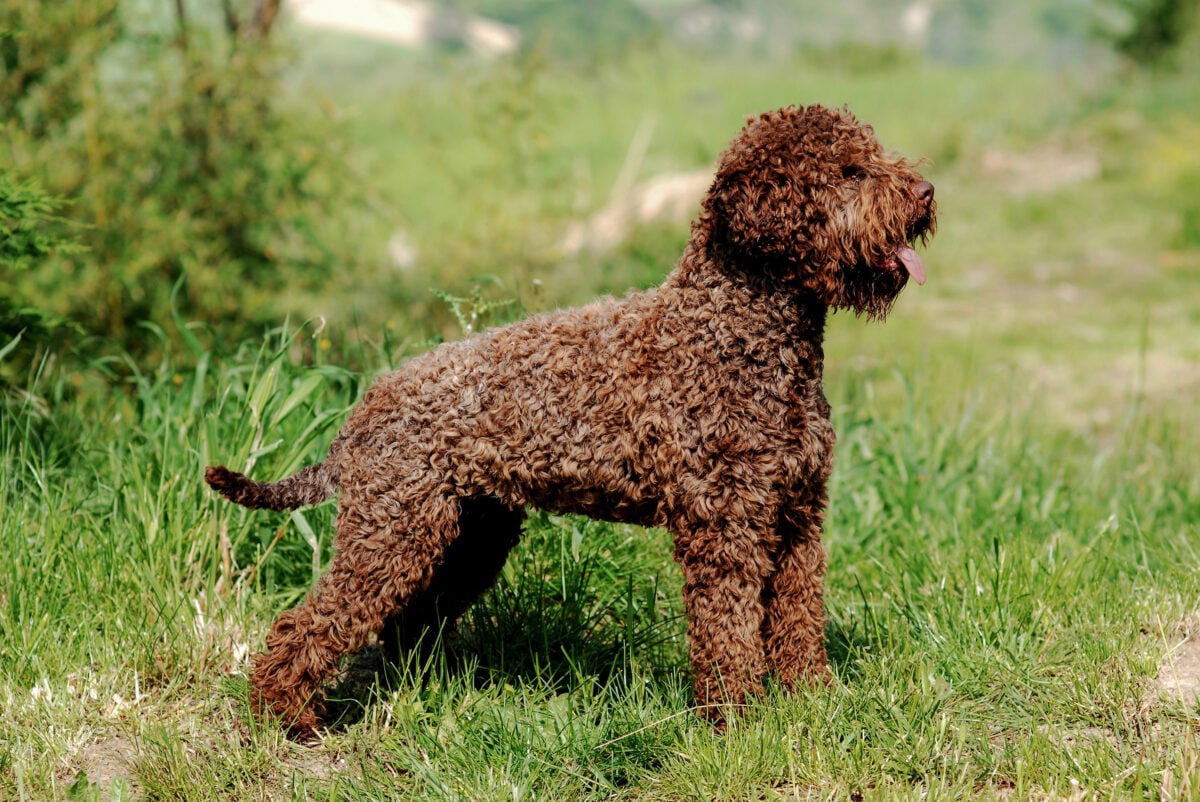
Lagotti have dense, curly double coats that shed very little, although loose hair can remain trapped inside the curls. Lagotti need thorough weekly combing, regular checks for mats and debris, and professional trimming every few months to keep the coat manageable.
Lagotti have high energy and need daily exercise combined with scent games, training, or other mentally challenging work. They are affectionate and eager to learn but may become bored without productive outlets for their working instincts.
Best for: Active owners seeking an intelligent working dog with a strong nose and natural hunting and retrieving instincts.
3. Pumi
The Pumi is a compact Hungarian herding dog with a lively personality and a curly-wavy coat that releases almost no loose hair around the home. Pumik generally stand 15 to 18.5 inches tall, weigh 22 to 29 pounds, and are intelligent, agile, and highly alert.
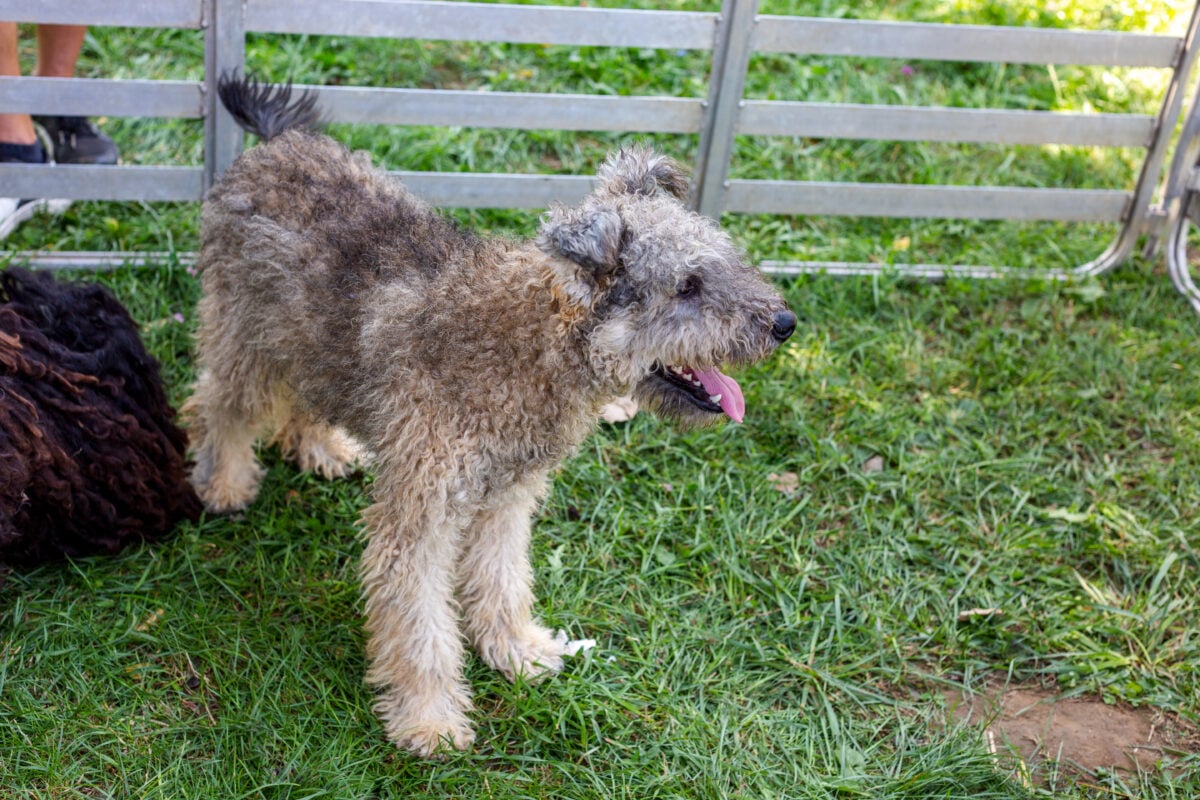
The Pumi’s coat should be thoroughly combed every few weeks and then dampened so its characteristic curls can reform, with occasional trimming to preserve its natural shape.
These dogs have very high energy and need vigorous daily exercise, challenging training, and mentally engaging activities. Their strong herding instincts and tendency to bark make them better suited to experienced owners than quiet or sedentary households.
Best for: Experienced, highly active owners seeking a lively herding dog that excels at training and dog sports.
4. Barbet
Pronounced “bar-BAY,” the Barbet is a rare French water dog with a long history of swimming, retrieving, and working alongside hunters. These dogs are friendly, intelligent, and deeply attached to their families.
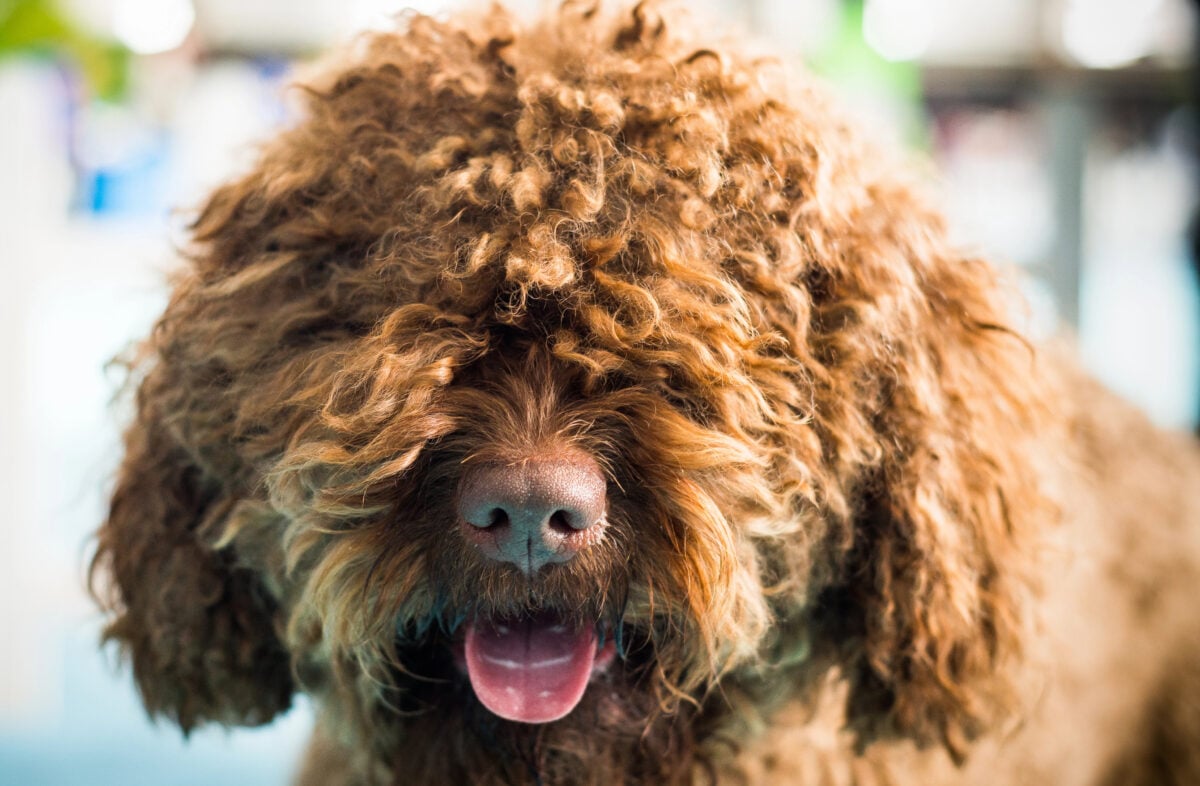
The Barbet’s dense, curly coat sheds very little because loose hair remains trapped within it. Thorough brushing and combing several times a week, regular trimming, and careful drying after swimming are essential to prevent tangles and mats.
Barbets have high energy and need substantial daily exercise, preferably with opportunities to swim, retrieve, hike, or train. Their affectionate temperaments suit engaged families that can provide both activity and companionship.
Best for: Active families seeking an affectionate water dog that is both highly intelligent and strongly attached to its people.
5. Irish Water Spaniel
The Irish Water Spaniel is the tallest spaniel breed and one of the most distinctive, with liver-colored curls, a fluffy topknot, smooth face, and nearly hairless “rat tail.” These powerful water retrievers are playful, intelligent, and sometimes reserved with strangers.
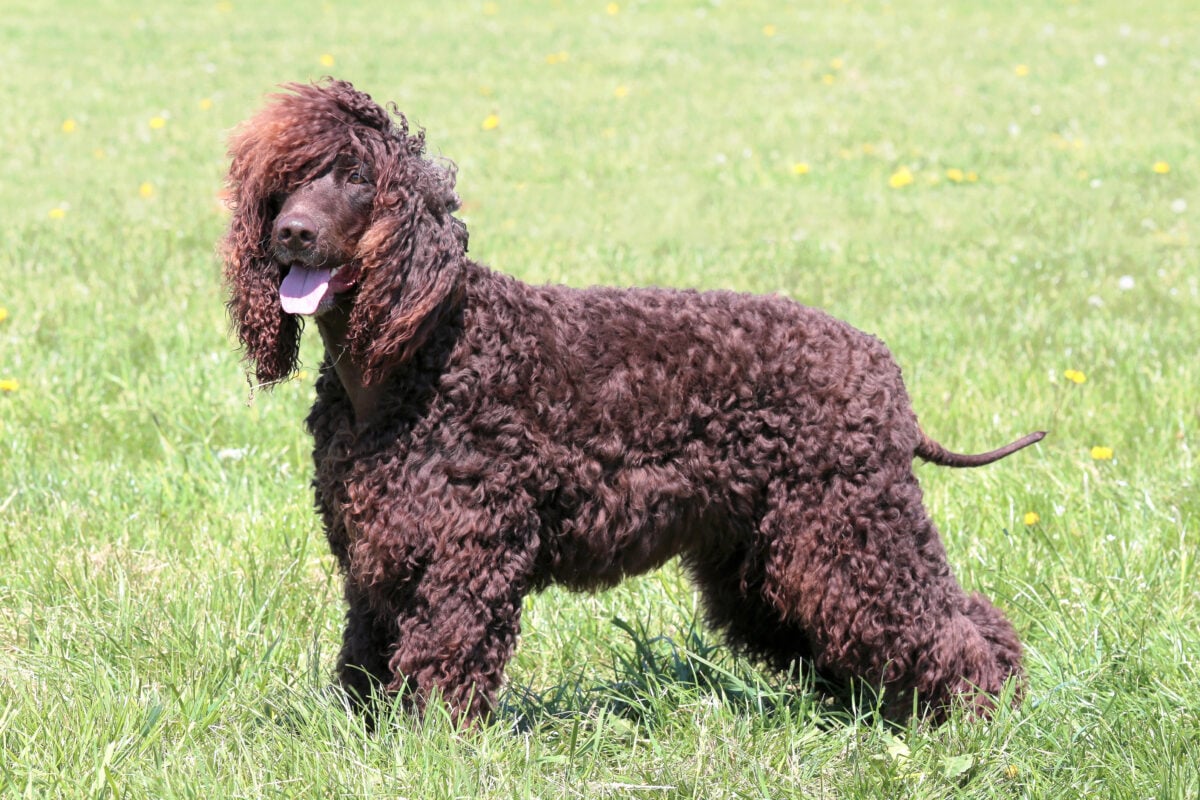
Irish Water Spaniels need thorough weekly brushing, regular coat checks, periodic professional trimming, and careful drying after swimming. Their curly, water-resistant double coats shed relatively little but retain debris and loose hair.
These high-energy dogs need vigorous daily exercise and thrive when given opportunities to swim, retrieve, train, or participate in dog sports. Their strength, working drive, and independent streak make consistent training important.
Best for: Active, experienced owners seeking an energetic swimming and retrieving companion with an independent streak.
6 Low-Shedding Terriers
Terriers can be a great fit for people who want less loose hair but more confidence, energy, and personality. Many of these breeds have wiry or continuously growing coats that shed minimally, although maintaining the traditional texture may require clipping or hand stripping.
1. Scottish Terrier
Dignified, independent, and unmistakably iconic, the Scottish Terrier — or “Scottie” — brings old-school charm and a bold personality to a compact frame. These dogs often form an especially strong bond with one person.
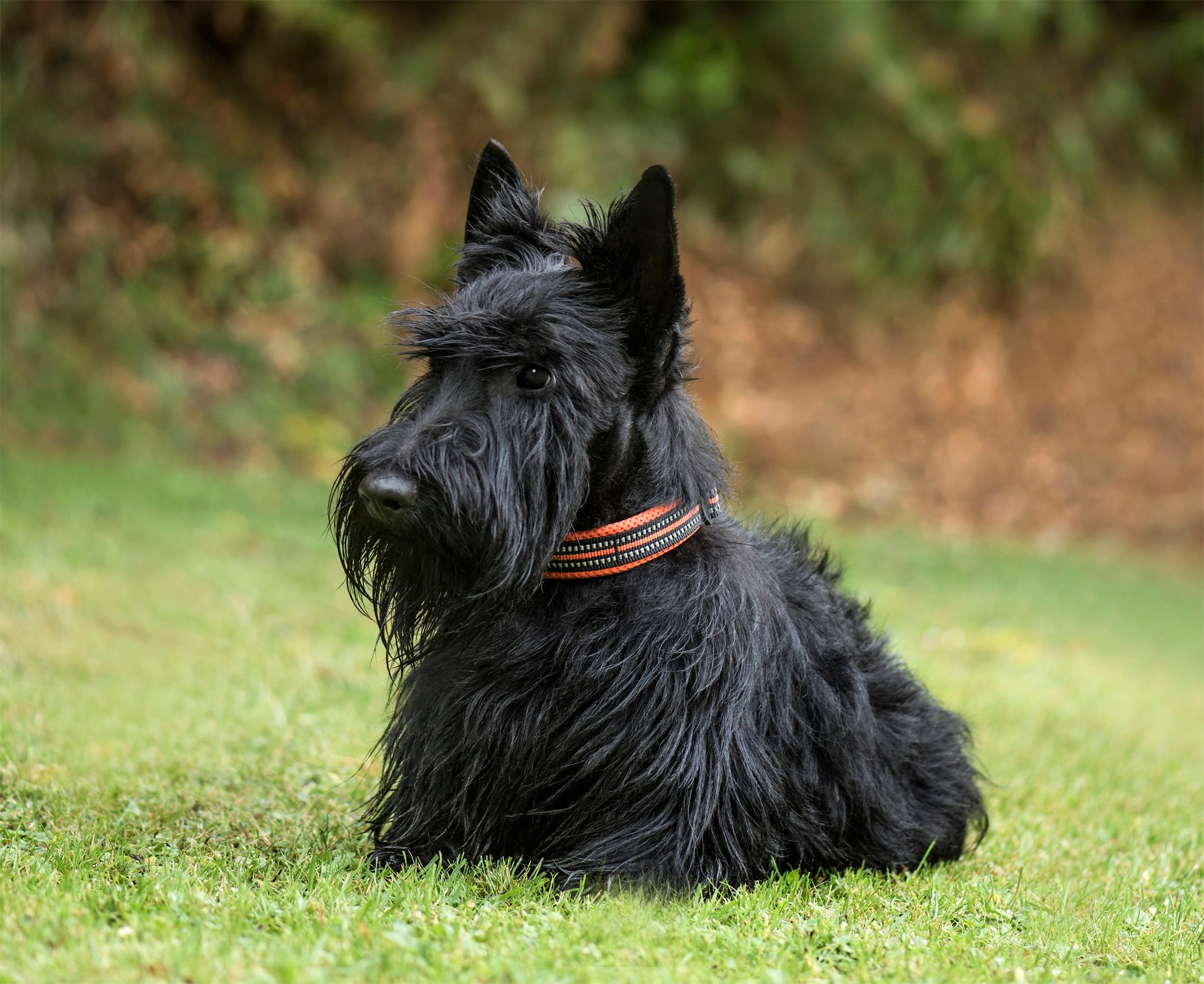
The Scottie’s wiry outer coat and dense undercoat retain loose hairs until grooming removes them. They need weekly brushing and professional clipping or hand stripping approximately every six to eight weeks, with additional attention around the beard and furnishings.
While they’re independent thinkers, Scottish Terriers respond well to calm, consistent training. They also thriveon routine and enjoy short bursts of play or walks, then they’re back to their favorite perch, watching the world with quiet intensity.
Best for: Experienced owners who appreciate an independent, dignified terrier with a surprisingly catlike personality.
2. Soft‑Coated Wheaten Terrier
With a tousled, wave-like coat that never stops growing, the Wheaten Terrier is an affectionate family dog that typically stands 17 to 19 inches tall and weighs 30 to 40 pounds. Wheatens are friendly, playful, and usually happiest when included in family activities.
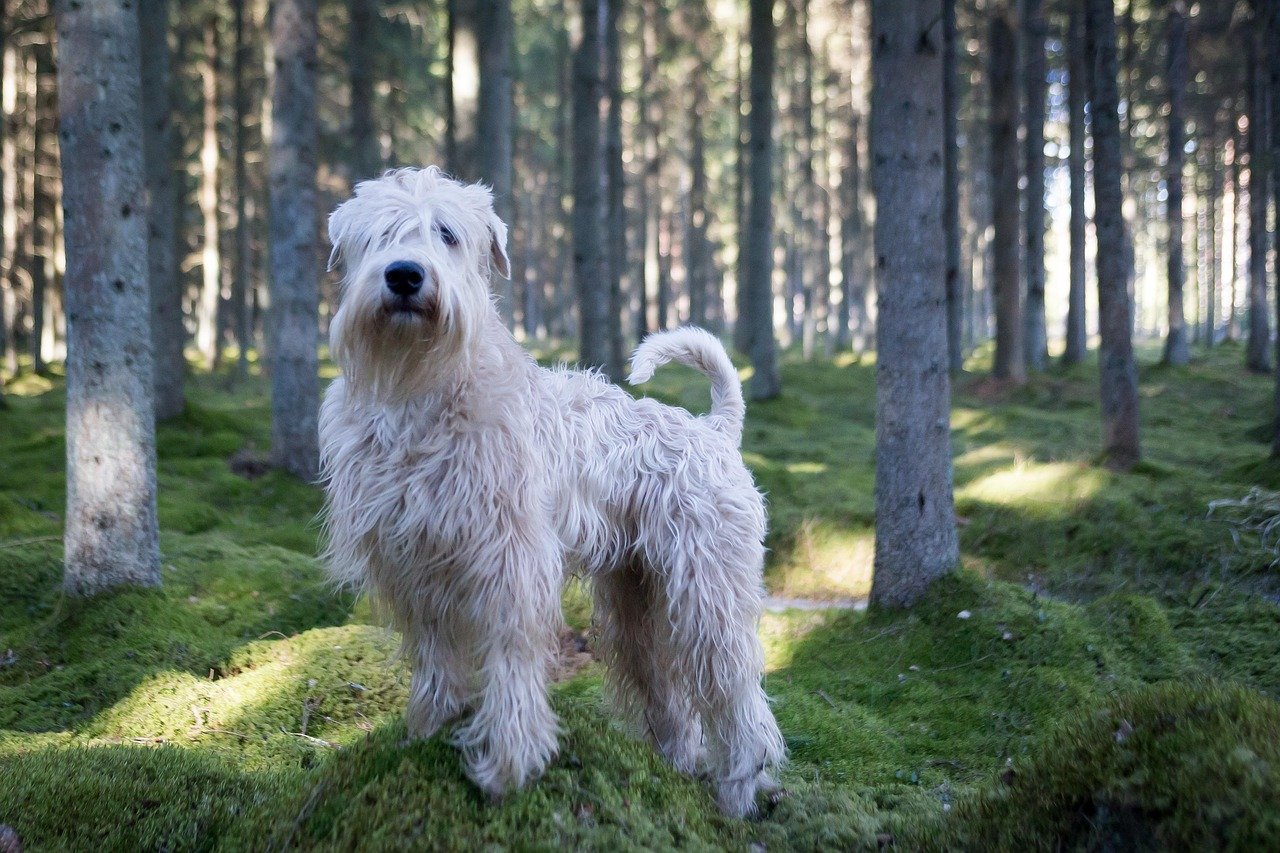
Their soft, continuously growing coats shed very little but tangle easily. Wheatens need daily brushing and combing, along with professional trimming approximately every four to six weeks.
These high-energy terriers need substantial daily exercise, interactive play, and consistent training. They can adapt to different living environments as long as they receive enough activity and attention.
Best for: Active families seeking an exuberant terrier with a remarkably soft coat and less barking than your average pup.
3. Bedlington Terrier
At first glance, you might mistake the Bedlington Terrier for a lamb, but don’t let the soft curls and arched back fool you. Under that fleece-like coat is a spirited, athletic terrier with serious grit and surprising speed.
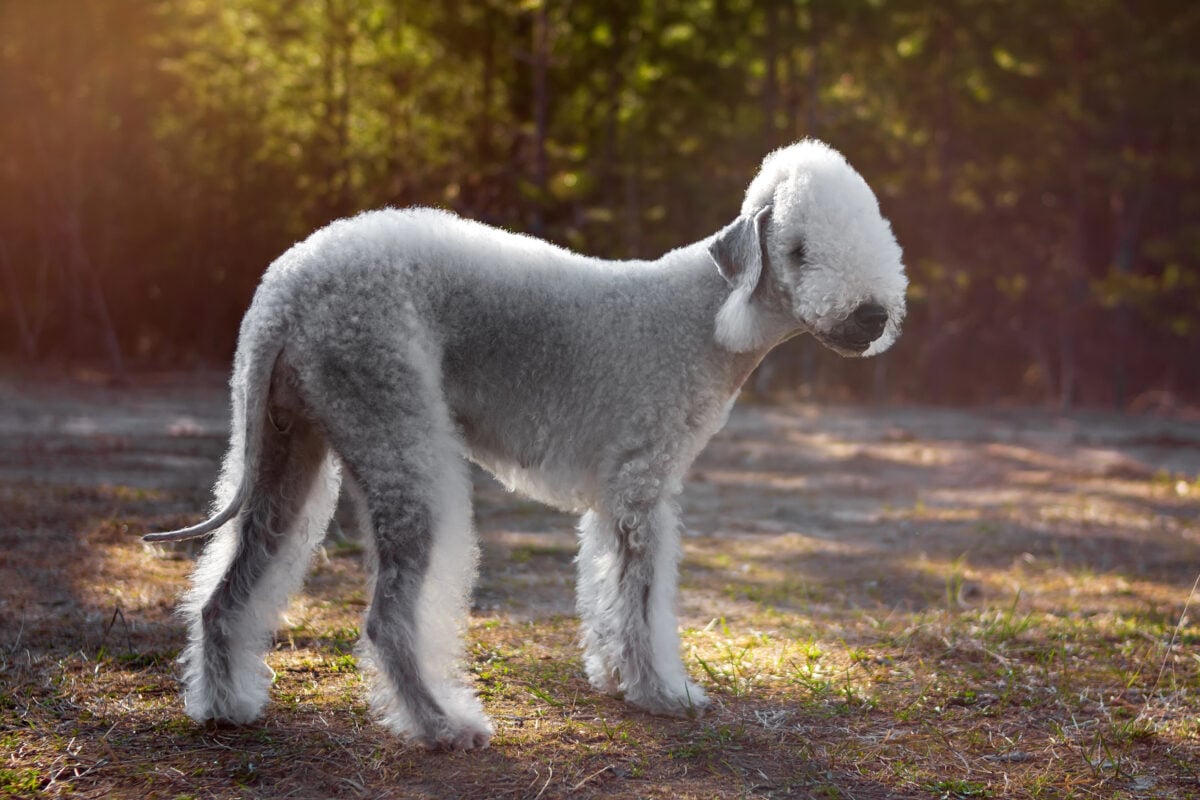
The Bedlington’s distinctive coats contain a mixture of soft and harsh hair that sheds very little. They need brushing once or twice a week and professional clipping approximately every six to eight weeks to prevent mats and preserve their characteristic shape.
Despite their elegant appearance, Bedlingtons are tenacious, lively, and love to play. They’re affectionate with family, friendly with kids, and bold enough to chase anything that moves, making early training and socialization a must.
Best for: Active owners seeking an athletic terrier with a distinctive appearance and one of the softest coats in the terrier group.
4. Kerry Blue Terrier
Originally bred in Ireland as a jack-of-all-trades farm dog, the Kerry Blue Terrier is known for its striking blue-gray coat and spirited personality.
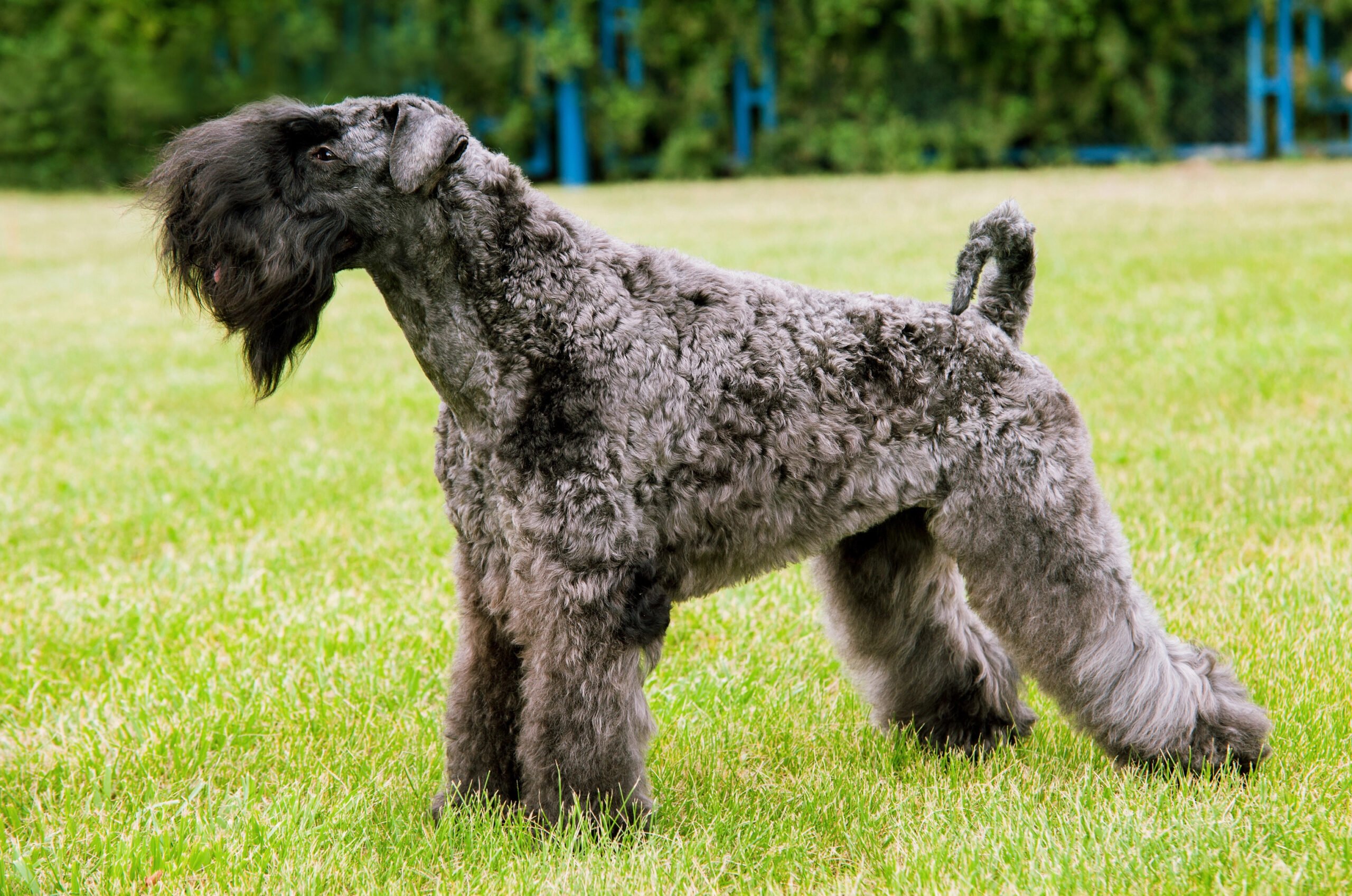
Their dense, soft, wavy coat sheds very little, making them a solid pick for allergy-sensitive homes, but they do need regular trimming and maintenance. Expect weekly brushing and professional trimming approximately every six to eight weeks, with regular attention to their beards.
These high-energy terriers need substantial daily exercise, mental stimulation, and firm but positive training. Early socialization is important because the breed can be strong-willed and selective around other dogs.
Best for: Experienced, active owners seeking a versatile terrier with a soft, low-shedding coat and strong watchdog instincts.
5. Irish Terrier
Fiery in coat and in spirit, the Irish Terrier is as bold as it is beautiful. These compact adventurers stand approximately 18 inches tall and weigh 25 to 27 pounds.
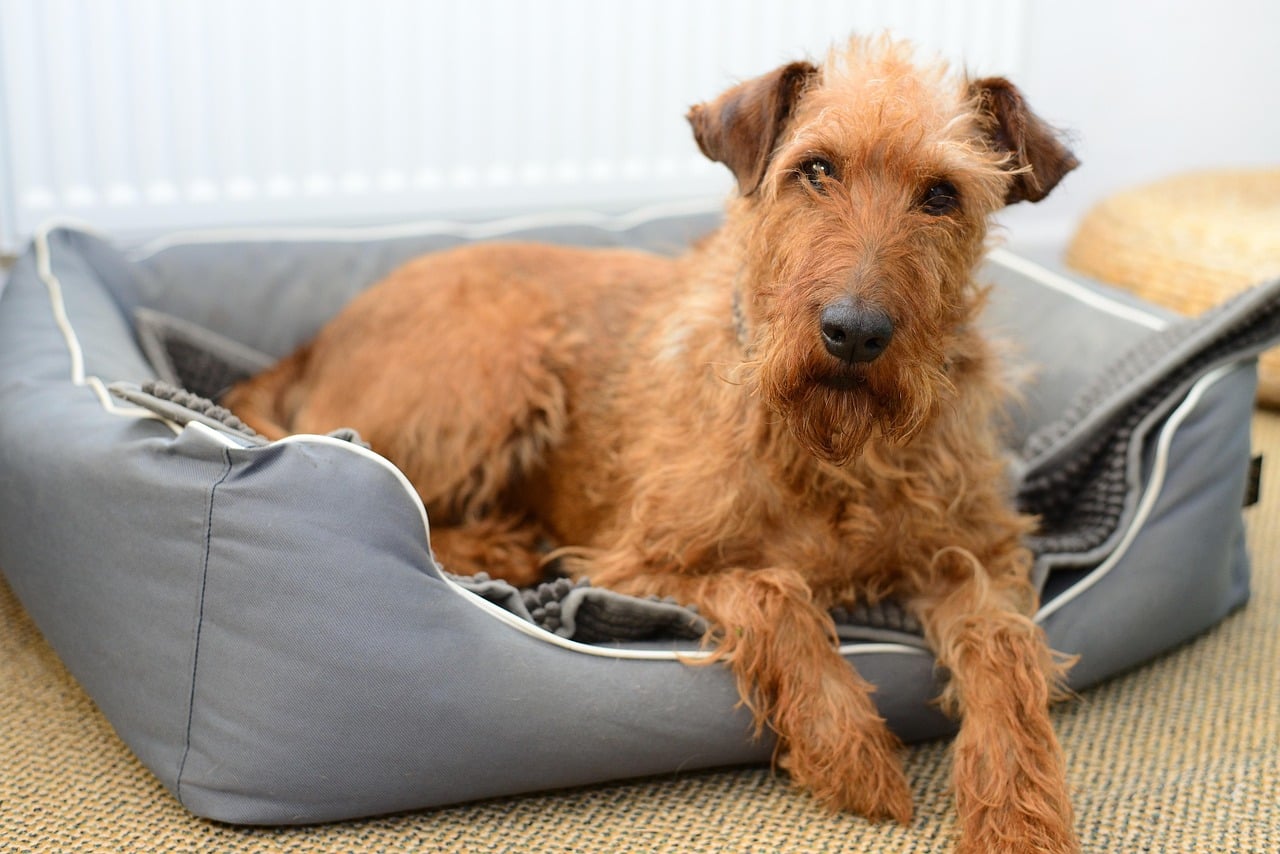
The breed’s dense, harsh outer coats and softer undercoats release minimal loose hair. Irish Terriers need weekly brushing and periodic hand stripping or clipping, with additional cleaning and combing around the beard.
Brave, intelligent, and deeply devoted to family, the Irish Terrier thrives under clear leadership. They do best with confident owners who can match their energy and don’t mind a little terrier stubbornness now and then.
Best for: Active, experienced owners seeking a bold, affectionate terrier for outdoor adventures.
6. Lakeland Terrier
Feisty, fearless, and compact, the Lakeland Terrier is an adventurous little athlete originally developed to pursue foxes across rugged terrain. Lakelands stand approximately 14.5 inches tall and generally weigh 15 to 17 pounds.
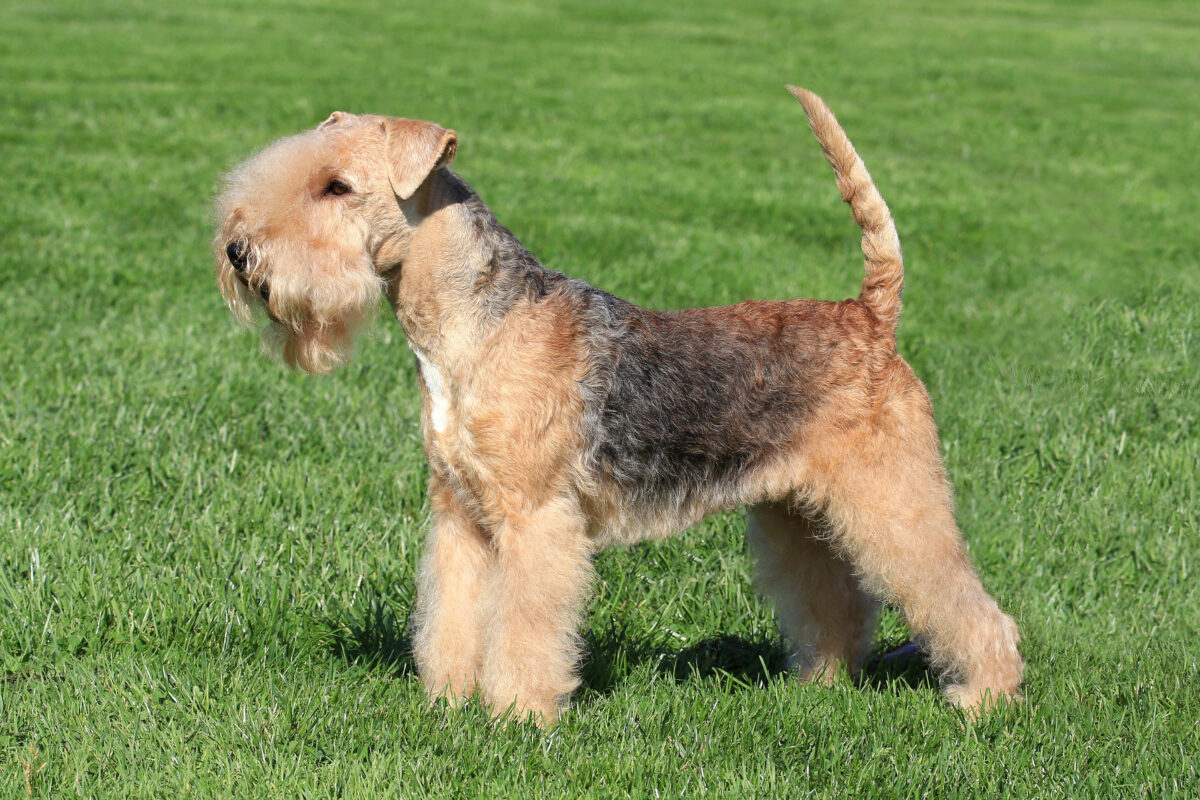
Lakelands need weekly brushing and periodic clipping or hand stripping to control mats and maintain their traditional coat texture. Their durable double coats have soft undercoats and wiry outer coats that retain loose hair.
These high-energy terriers need vigorous daily walks, active play, and mental stimulation. Their independence and strong prey drive require consistent training and caution around small animals.
Best for: Experienced terrier owners seeking a compact, energetic companion from a breed recognized for its robust health.
5 Low-Shedding Dogs With Standout Coats
These distinctive coats release very little loose hair around the home, but their care can range from frequent detangling to specialized washing, separation, and drying.
1. Afghan Hound
The glamorous Afghan Hound proves that a low-shedding coat does not have to be curly, wiry, or corded. Its long, fine hair releases relatively little loose hair around the home, but strands remain in the coat until brushing removes them.
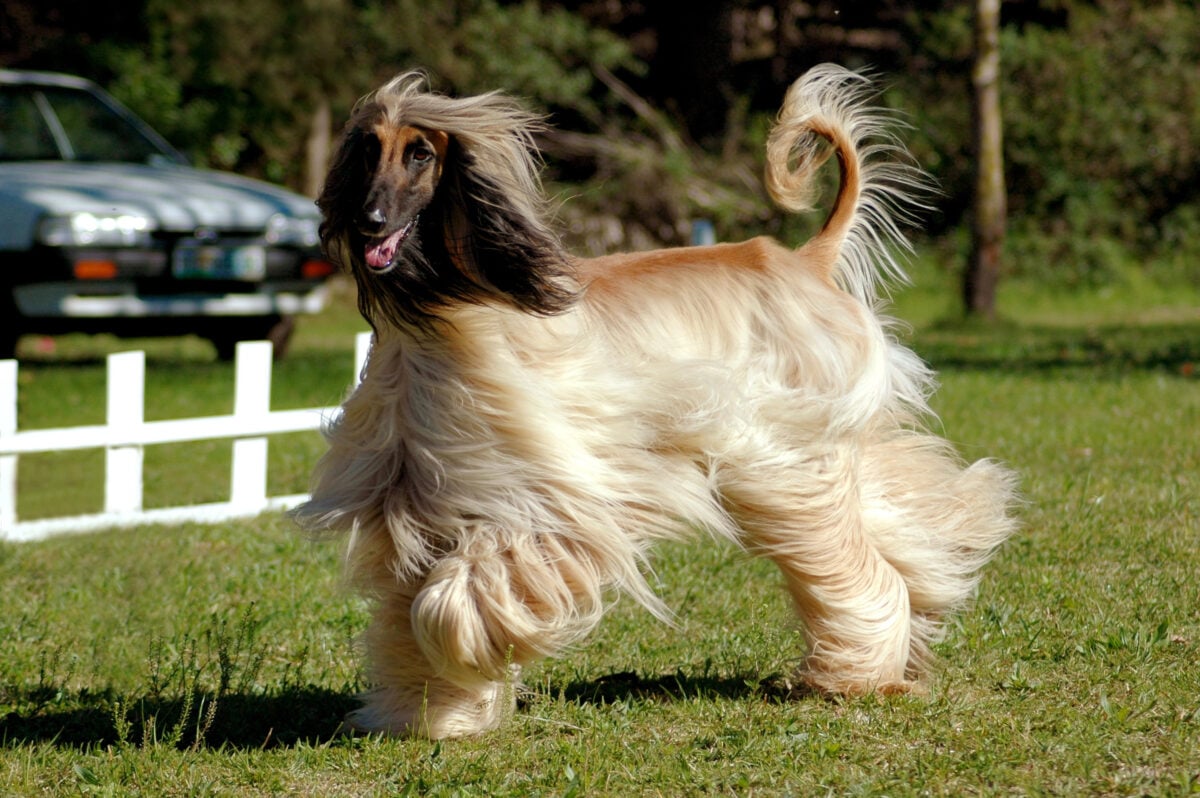
Afghan Hounds generally stand 25 to 27 inches tall and weigh 50 to 60 pounds. Beneath that flowing coat is a powerful sighthound originally developed to pursue prey across the mountains of Afghanistan. They are athletic, sensitive, dignified, and famously independent.
Maintaining the Afghan’s silky coat requires brushing and bathing several times a week, particularly when it is kept long. Mats can develop quickly behind the ears, beneath the legs, and anywhere the coat experiences friction.
Best for: Experienced, active owners who appreciate independent dog breeds and are prepared for intensive coat care.
2. Bergamasco Sheepdog
The Bergamasco Sheepdog has one of the most unusual low-shedding coats in the dog world. Rather than forming rope-like cords, its hair weaves together into broad, flat mats called flocks.
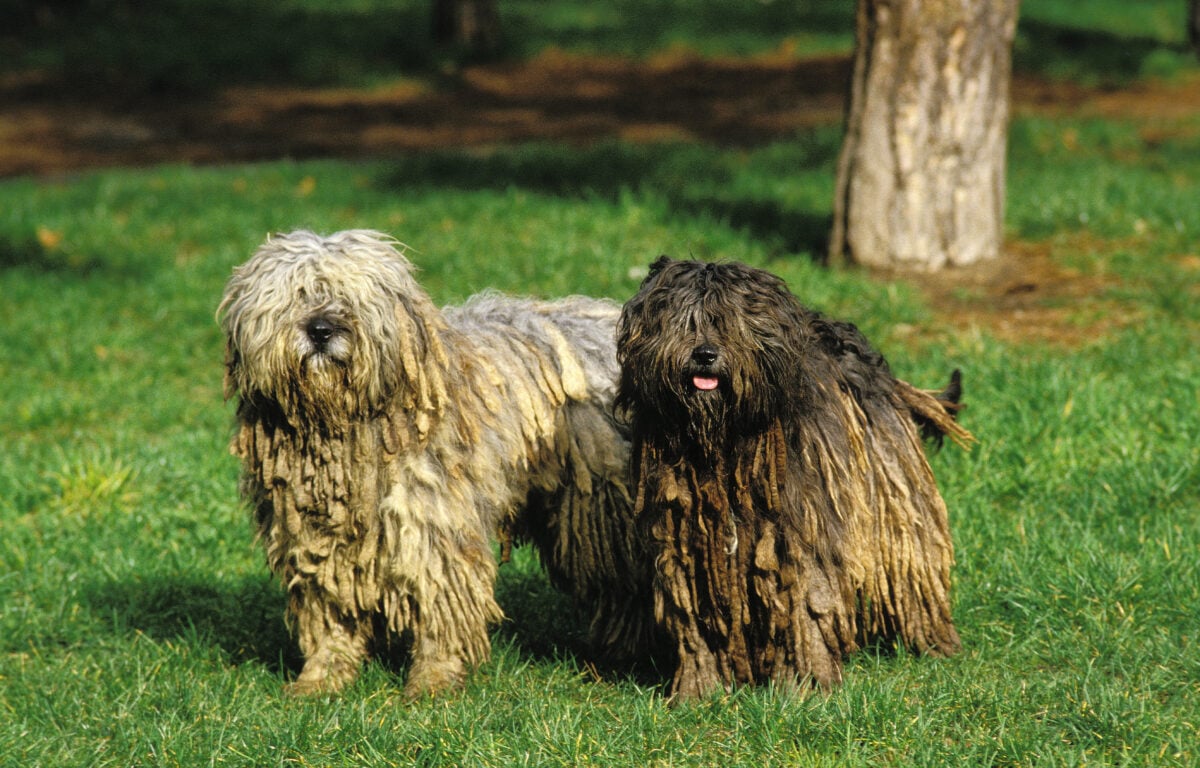
Developed to herd sheep in the Italian Alps, Bergamascos generally stand 22 to 23.5 inches tall and weigh 57 to 84 pounds. They are patient, intelligent, observant, and deeply devoted to their families, although their independent working instincts require thoughtful training and socialization.
The Bergamasco coat contains three types of hair: a fine, oily undercoat; coarse goat-like hair; and soft, woolly hair. As the adult coat develops around the first birthday, owners must separate the forming clumps by hand to establish healthy flocks. Once properly formed, the flocks require no traditional brushing and release very little loose hair around the home.
The mature coat may need only a few baths per year, but it must be washed carefully and dried completely. Its dense flocks can retain moisture close to the skin if they are not thoroughly dried.
Best for: Experienced families seeking an intelligent herding dog with a distinctive coat featured among dogs that look like mops.
3. Spanish Water Dog
Dense, curly, and built for water, the Spanish Water Dog’s coat that sheds very little. Their fleece-like coat forms corkscrew curls and may develop distinctive corded plugs when left natural. Both textures trap loose hair before it falls around the home.
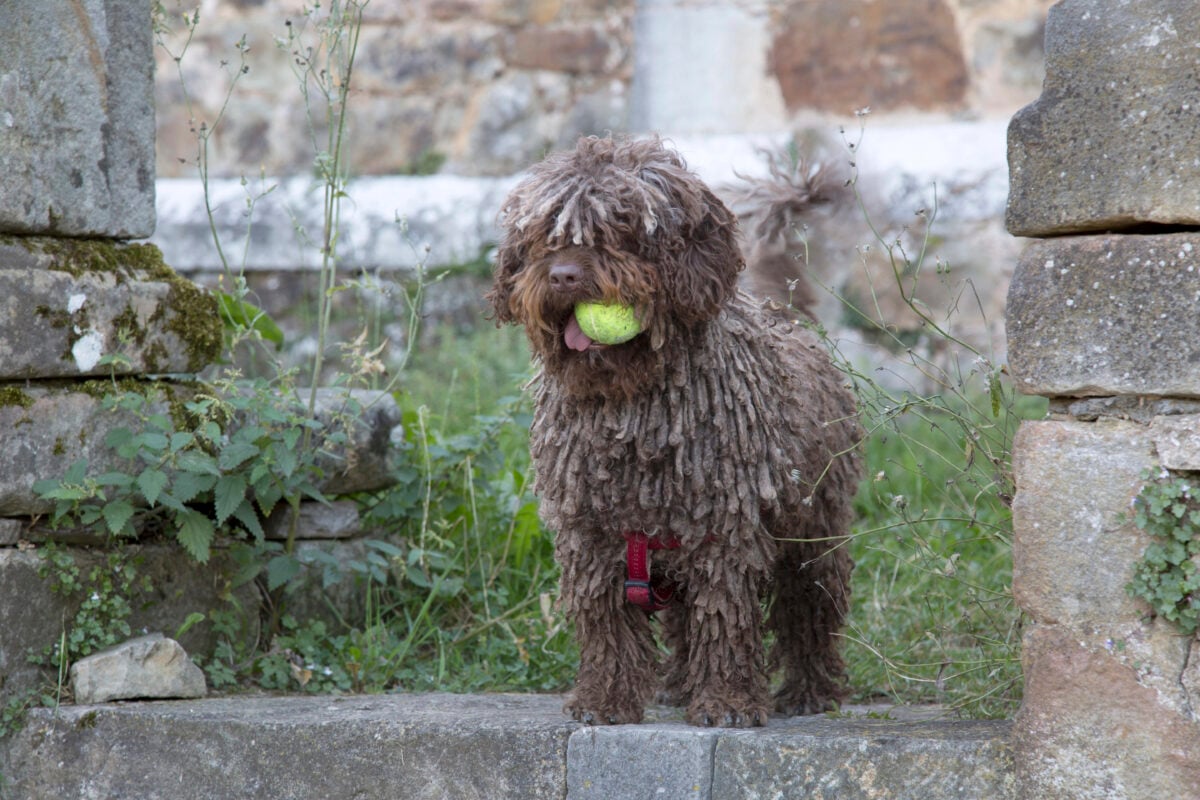
These dogs are typically 16 to 20 inches tall and weigh 30 to 49 pounds. They are intelligent, confident, and versatile, excelling at retrieving, herding, search tasks, and activities around water.
Unlike most curly coats, the Spanish Water Dog’s coat is not traditionally brushed or combed. It is usually sheared to an even length, while developing cords must be carefully separated and checked to prevent painful matting.
Best for: Active, experienced owners seeking a versatile working dog with a curly coat that may naturally form distinctive cords.
4. Komondor
The Komondor isn’t just a dog, it’s a walking mop with a mission. Known for its iconic corded coat, this Hungarian breed was developed to guard livestock, and its thick white cords offer both camouflage and protection from the elements.
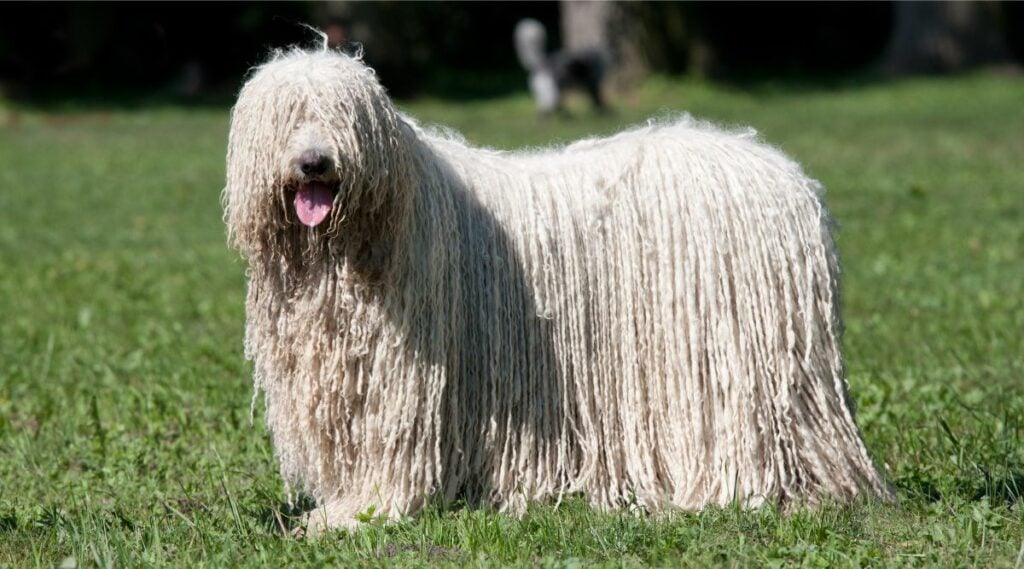
Despite their massive size, standing over 25.5 inches tall and weighing up to 125 pounds, Komondors shed very little. Their cords trap hair and dander, but that also means grooming is essential to prevent matting.
Strong-willed and protective, Komondors are calm indoors but natural guardians outdoors. Early socialization and firm leadership are a must for a well-adjusted companion.
Best for: Experienced owners with plenty of space who need an independent livestock guardian suited to cold weather.
5. Puli
The Puli isn’t just a dog, it’s a woolly wonder. This Hungarian herding breed is known for its naturally corded coat that looks like dreadlocks. And while it might seem high-maintenance, the good news is it sheds very little. In fact, most hair stays locked in the cords, making this breed an excellent choice for allergy-conscious homes.
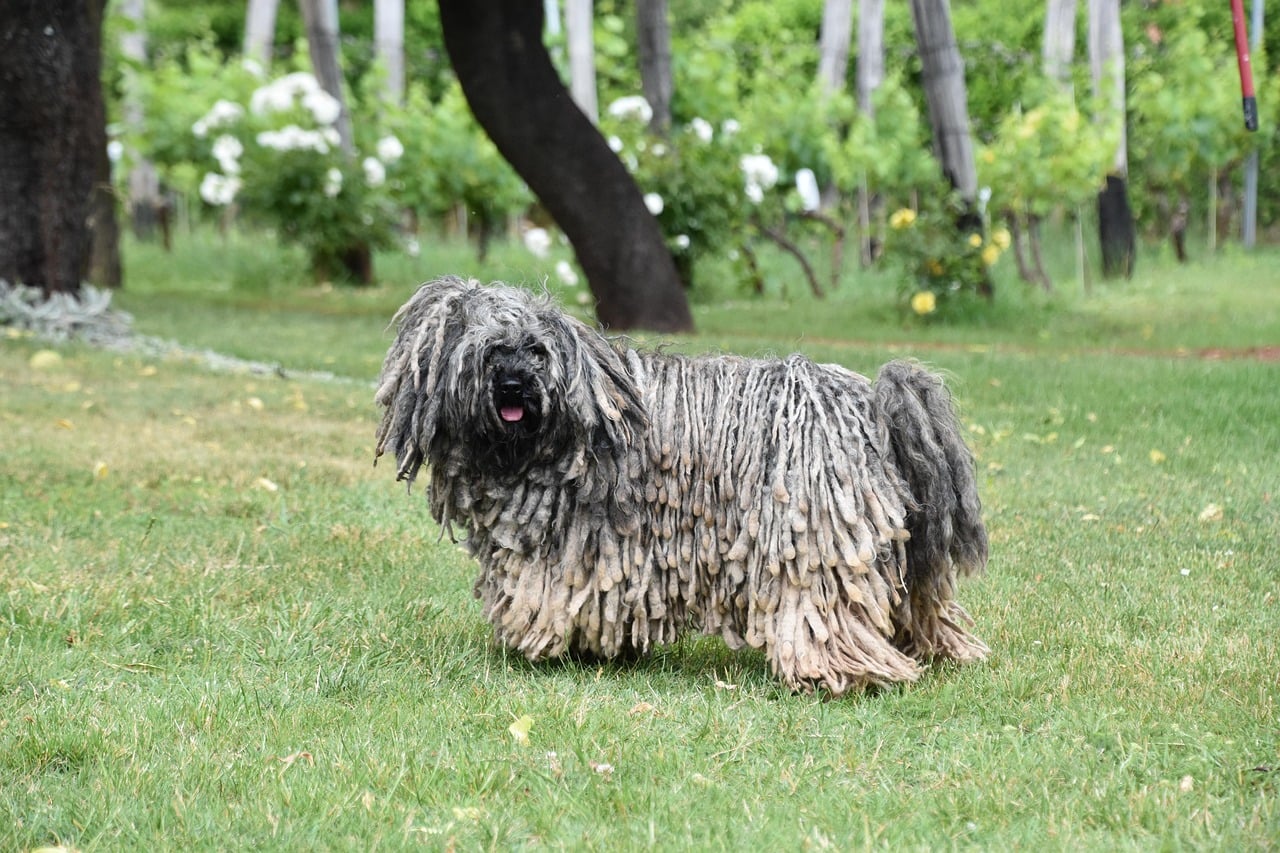
Pulis typically stand 14.5 to 17.5 inches tall and weigh 20 to 35 pounds. Agile and quick on their feet, they were bred for herding sheep, and they still have the energy and intelligence to match. They’re independent but loyal, and they thrive in environments where they can stay active, mentally and physically.
Their iconic cords begin forming around six months of age and require occasional separation to avoid matting. While they don’t need traditional brushing, their unique coat calls for commitment and regular upkeep.
Best for: Active, experienced owners seeking an exceptionally agile and intelligent dog with an unmistakable corded coat.
Which Low-Shedding Dog Is Right For You?
Shedding is only one part of choosing a dog. Use your household, schedule, priorities, and budget to narrow down the breeds that may fit your life.
You Want A Family Dog
- Poodle: Intelligent, playful, and available in three sizes, Poodles adapt to many family lifestyles and are generally eager to participate in everyday activities.
- Miniature Schnauzer: Sturdy, outgoing, and trainable, the Miniature Schnauzer offers plenty of personality in a manageable size.
- Bichon Frise: Cheerful and affectionate, Bichons typically enjoy play, attention, and being included in family life.
- Havanese: Social and eager to please, Havanese dogs tend to form close relationships with multiple members of the household.
You Want A Larger Low-Shedding Dog
- Standard Poodle: Standards offer the Poodle’s dependable low-shedding coat in an athletic dog weighing up to 70 pounds.
- Giant Schnauzer: This powerful working breed offers minimal loose hair but requires extensive exercise, training, and experienced handling.
- Afghan Hound: Tall, athletic, and striking, the Afghan combines a low-shedding coat with the independent temperament of a sighthound.
- Bergamasco Sheepdog: Weighing up to 84 pounds, the Bergamasco offers substantial size, moderate energy, and a low-shedding flocked coat.
- Komondor: This massive livestock guardian sheds very little, but its specialized cords, independence, and protective instincts make it a highly demanding choice.
You Want Manageable Exercise Needs
- Chinese Crested: Short walks and play sessions usually meet this small companion’s moderate exercise needs.
- Maltese: A couple of short walks and several indoor play sessions can keep this tiny but playful breed active.
- Brussels Griffon: Griffs enjoy daily walks and play, but their small size makes their moderate exercise needs relatively easy to manage.
You Want An Active Outdoor Partner
- Portuguese Water Dog: Athletic and water-loving, this breed thrives on swimming, hiking, retrieving, and vigorous daily exercise.
- Lagotto Romagnolo: Energetic and scent-driven, the Lagotto makes an engaging partner for hiking, training, and outdoor nose work.
- Irish Water Spaniel: This powerful swimmer has the stamina for active families interested in retrieving, hiking, and water activities.
- Pumi: Agile and intensely energetic, the Pumi excels with experienced owners who enjoy running, training, or dog sports.
- Spanish Water Dog: Versatile and hardworking, this breed suits active owners who can provide vigorous exercise and mentally challenging activities.
You Value Trainability
- Poodle: Exceptionally intelligent and responsive, the Poodle is one of the most dependable choices for owners who prioritize training.
- Portuguese Water Dog: Eager to work and closely connected to its family, this athletic breed excels with consistent, engaging instruction.
- Lagotto Romagnolo: Intelligent and driven by scent, the Lagotto responds particularly well to training that gives its nose and brain a job.
- Miniature Schnauzer: Bright and food-motivated, the Miniature Schnauzer generally learns quickly when training stays positive and interesting.
- Pumi: Agile and highly responsive, the Pumi excels in advanced training and dog sports.
You Want A Watchful Or Protective Dog
- Standard Schnauzer: Alert, intelligent, and naturally watchful, the Standard Schnauzer makes an attentive household companion without the Giant’s imposing size.
- Giant Schnauzer: Strong guarding instincts and deep family loyalty make the Giant an effective protector for experienced owners.
- Xoloitzcuintli: Typically attentive and reserved with strangers, the Xolo can be a vigilant watchdog while remaining affectionate with family.
- Komondor: Developed to guard livestock independently, the Komondor is naturally protective but requires secure space, early socialization, and confident handling.
- Peruvian Inca Orchid: Loyal and cautious around unfamiliar people, this sensitive sighthound can be naturally watchful without being as imposing as a traditional guardian breed.
You Travel Regularly
- Toy Poodle: Small, highly trainable, and adaptable, the Toy Poodle is easier to transport than most larger low-shedding breeds.
- Yorkshire Terrier: The Yorkie’s tiny size makes transportation and pet-friendly accommodations easier to manage.
- Maltese: Portable and adaptable, the Maltese can be a convenient travel companion when accustomed to new environments early.
- Biewer Terrier: Weighing only 4 to 8 pounds, the Biewer Terrier is compact enough to accompany an owner on many trips.
- Chinese Crested: Small and strongly attached to its owner, the Chinese Crested may prefer traveling with its person to being left behind, although weather protection is essential.
You Don’t Want To Spend Thousands On Grooming
- American Hairless Terrier: The hairless variety does not need brushing, clipping, or professional haircuts, although regular bathing and weather protection are essential.
- Hairless Xoloitzcuintli: Hairless Xolos avoid recurring haircut expenses but still need appropriate skin care and protection from intense sun and cold.
- Hairless Peruvian Inca Orchid: This variety requires no professional coat trimming, although owners must budget for gentle skin care and weather protection.
- Hairless Chinese Crested: The Hairless variety needs skin care and some brushing around its crest, feet, and tail but usually avoids full-coat grooming appointments.
If allergies are part of your decision, spend time indoors with the individual dog before committing. Temperament, shedding, allergen response, and compatibility can vary even among dogs of the same breed.
6 Grooming Tips For Low-Shedding Non-Shedding Dogs
Low shedding does not mean low maintenance. In many of these breeds, released hairs remain inside the coat until brushing removes them.
Without consistent care, that trapped hair can contribute to tangles, painful mats, skin irritation, and moisture buildup.
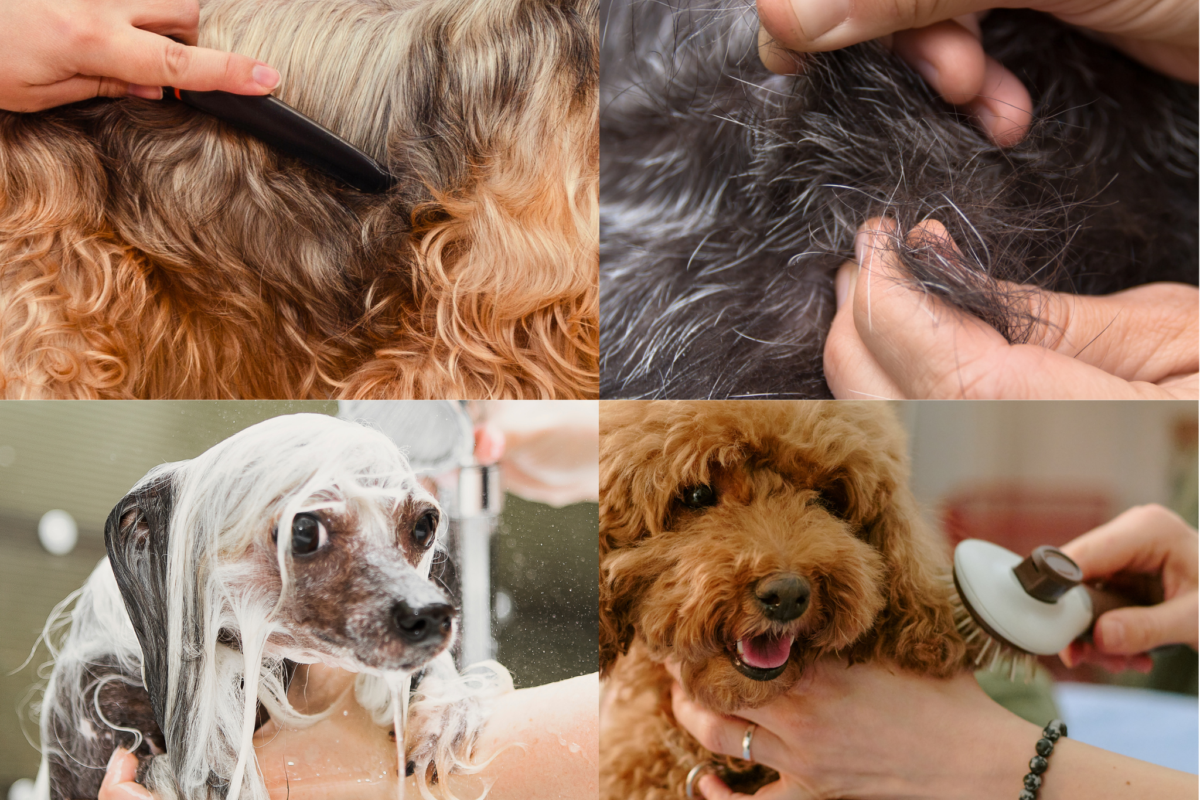
1. Follow The Schedule For Your Dog’s Coat
Silky coats may need daily brushing, while curly coats generally need brushing several times a week. Wiry coats may require hand stripping or clipping, and corded coats need specialized separation rather than traditional brushing.
There is no single grooming schedule that works for every low-shedding dog.
2. Brush All The Way To The Skin
Running a brush across the coat’s surface can leave tangles hidden underneath.
Instead, work in small sections with tools suited to your dog’s coat, paying particular attention behind the ears, beneath the legs, around the collar, and anywhere friction encourages mats.
3. Bathe According To Coat & Skin Needs
Bathing frequency depends on the breed, hairstyle, activity level, and skin health. Use dog-formulated products, brush out tangles before bathing, and rinse and dry the coat thoroughly.
Important: Bathing a matted dog can tighten tangles further.
Hairless dogs need a different routine. Bathe them gently as required, monitor for clogged pores or irritation, and ask your veterinarian which moisturizers and sun-protection products are appropriate.
4. Plan For Trimming, Hand Stripping, Or Cord Care
Continuously growing coats usually require professional trimming every four to eight weeks. Wiry terriers may be clipped or hand stripped, while corded and flocked breeds need careful separation, washing, and complete drying.
Before choosing a breed, consider whether its traditional coat care fits your available time and grooming budget.
5. Check The Ears, Paws & Nails
Inspect your dog’s ears weekly for redness, odor, discharge, or excess debris, but avoid inserting swabs or routinely plucking hair from the ear canals unless your vet recommends it.
Check between the paw pads for mats and overgrown hair, and trim the nails often enough that they do not interfere with normal movement.
6. Know When To Call A Professional
A professional groomer can handle difficult trims, cord maintenance, hand stripping, nails, and sensitive areas. Groomers may also notice lumps, irritated skin, parasites, or coat changes you missed.
Choose grooming tools based on coat type. For example, a deshedding brush may help dogs with loose undercoats, but it may damage silky, curly, corded, or hand-stripped coats.
Normal Shedding Vs. Concerning Hair Loss
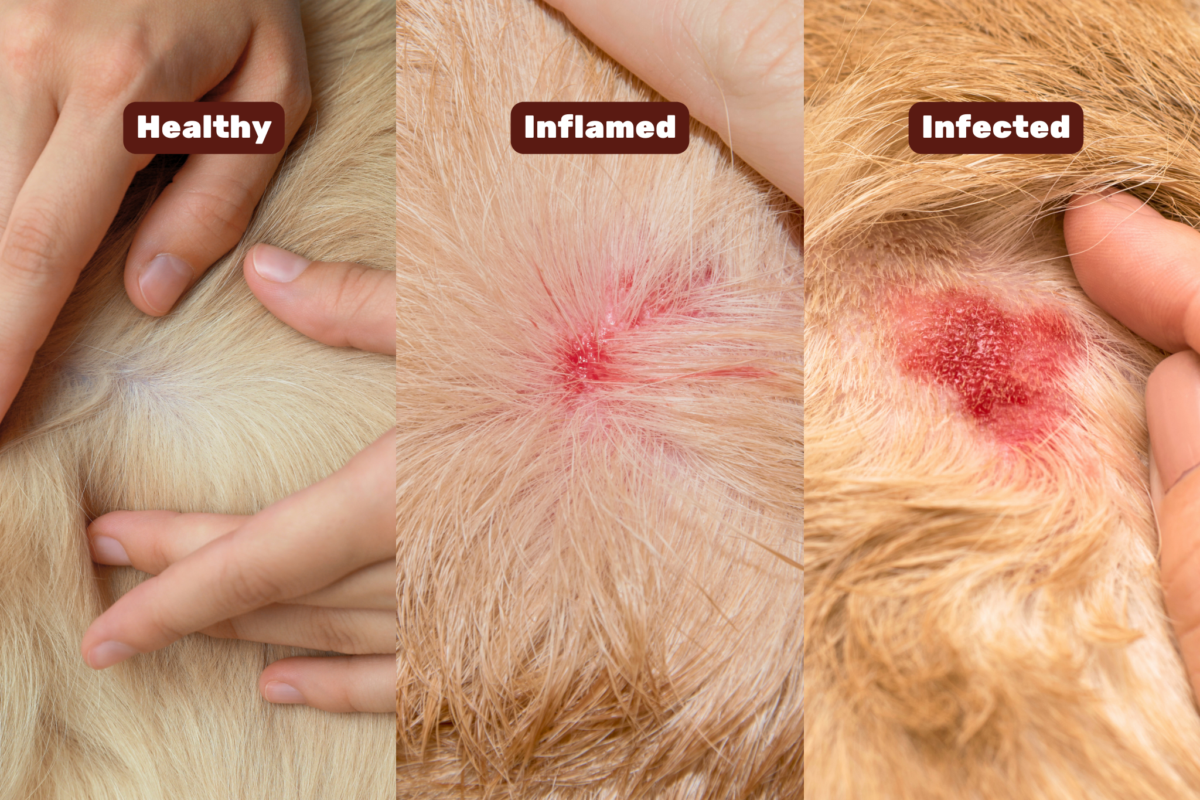
All coated dogs lose some hair as individual strands complete their growth cycles, but normal shedding is generally distributed across the coat and does not leave bald patches, sores, or inflamed skin.
When Hair Loss May Signal A Problem
Contact your veterinarian if you notice:
- Sudden or dramatic increases in shedding
- Patchy, thinning, or symmetrical hair loss
- Persistent scratching, licking, chewing, or rubbing
- Redness, swelling, sores, scabs, or crusting
- Flaking, greasy skin, unusual odor, or discharge
- Darkened, thickened, or unusually fragile skin
- Hair that does not regrow after clipping
- Coat changes accompanied by fatigue, weight changes, appetite changes, or other signs of illness
7 Reasons Dogs Suddenly Shed More Or Lose Hair
A dog can shed more during a normal seasonal coat change without anything being wrong. However, visible thinning, bald patches, broken hair, or shedding accompanied by itching and skin changes can indicate an underlying problem.
1. Fleas, Mites, Or Other Parasites
Parasites can irritate the skin and cause dogs to scratch, bite, or rub away their hair. Flea allergy dermatitis can produce intense itching from only a few flea bites, while mites responsible for mange may cause patchy hair loss, redness, scaling, or crusted sores.
What you might notice: Scratching, flea dirt, scabs, red skin, thinning around the tail base, or bald patches on the face, ears, elbows, belly, or legs.
2. Environmental Or Food Allergies
Dogs can react to pollen, mold, dust mites, flea saliva, or ingredients in their diet. Allergies don’t usually make hair fall out directly; instead, inflammation and repeated scratching, licking, and chewing damage the coat and skin.
What you might notice: Itchy paws, recurring ear problems, face rubbing, red skin, frequent licking, or hair loss around the feet, belly, armpits, and face.
3. Bacterial, Yeast, Or Fungal Infections
Skin infections can begin independently or develop after allergies, parasites, or scratching damage the skin barrier. Bacterial infections may cause small bald patches and scabs, yeast often produces greasy or odorous skin, and fungal infections such as ringworm may create circular areas of hair loss.
What you might notice: Redness, scaling, pimples, crusts, odor, discharge, greasy skin, or circular bald patches.
4. Hormonal Or Internal Health Conditions
Conditions such as hypothyroidism and Cushing’s disease can disrupt normal hair growth. Unlike allergies and parasites, hormonal hair loss may cause little or no itching unless a secondary infection develops.
What you might notice: Symmetrical thinning along the body or tail, slow coat regrowth, darkened skin, weight changes, low energy, increased thirst, or other changes in your dog’s general health.
5. Stress, Pain, Or Compulsive Licking
Stressful changes can temporarily increase shedding, while anxiety, boredom, or pain may lead a dog to repeatedly lick or chew one area. Over time, that repetitive behavior can break hairs, create bald patches, and damage the skin.
What you might notice: Hair loss limited to areas your dog can easily lick, frequent licking without an obvious rash, or increased shedding following boarding, moving, travel, or another stressful event.
6. Nutritional Problems
Nutrition plays a critical role in your dog’s coat health. If your dog’s diet lacks key nutrients or cannot absorb them, their fur and skin can suffer.
Common causes of poor nutrition include:
- Feeding low-quality commercial food
- Unbalanced homemade diets
- Food allergies or intolerances
- Underfeeding or feeding human food
- Insufficient protein, healthy fats, or essential vitamins
What you might notice: A dull, dry, brittle coat; generalized thinning; flaky skin; weight loss; diarrhea; or poor overall condition.
7. Friction, Grooming Damage, Or Medication
Poorly fitted collars, harnesses, clothing, and repeated contact with hard surfaces can wear away hair in specific locations. Harsh grooming tools, tight mats, chemical irritation, and some medications may also contribute to coat breakage or hair loss.
What you might notice: Thinning beneath a collar or harness, broken hairs rather than hairs released from the root, irritated skin after using a new product, or coat changes that began after starting medication.
When Shedding Signals Something Bigger
Excessive or sudden hair loss isn’t just a cosmetic issue. Conditions like mange, allergies, hormonal disorders, thyroid imbalance, and skin infections often require exams, diagnostic testing, prescription medications, or ongoing treatment.
Those costs can escalate quickly, especially if your dog needs lab work, skin scrapings, allergy testing, or long-term medication management.
Pet insurance can help cover unexpected illnesses, diagnostic tests, and treatment for new conditions, giving you peace of mind if shedding turns out to be more than seasonal fluff.
Learn more about the best pet insurance for dogs and get a free quote using the form below.

Frequently Asked Questions
Still weighing shedding, allergies, and grooming demands? Here are quick answers to the questions prospective owners most often ask when choosing a low-shedding dog.
Don’t see your question? Respond in the comments, and we’ll get back to you!
What Dog Sheds The Least?
Hairless breeds shed the least because they have little or no coat to lose. Among coated dogs, Poodles are one of the most dependable low-shedding choices because their dense curls hold onto loose hair until brushing removes it.
Are Non-Shedding Dogs Really Hypoallergenic?
No dog is guaranteed to be hypoallergenic. Allergens are found in dander, saliva, and urine — not only in fur. Low shedding may reduce the amount of allergen-carrying hair distributed around the home, but it does not eliminate exposure.
What Is The Best Low-Shedding Dog For Families?
Poodles, Bichon Frises, Havanese, and Miniature Schnauzers can all suit families, but the best choice depends on the children’s ages, the household’s activity level, and the time available for grooming and training.
Always evaluate the individual dog rather than choosing solely by coat type.
Do Low-Shedding Dogs Need More Grooming?
Many do. Because loose hair remains trapped inside curly, silky, or corded coats, it must be removed or managed through brushing, trimming, hand stripping, or cord separation.
Less hair on your furniture often means more time spent maintaining the dog.
Can A Dog Suddenly Start Shedding More Than Normal?
Yes. Stress, seasonal coat changes, hormonal changes, parasites, allergies, infections, nutritional problems, and internal illness can all affect the coat.
Contact your veterinarian if the change is sudden, persistent, patchy, or accompanied by itching, redness, sores, odor, or other symptoms.
Ready To Find The Right Fit?
Need help choosing the best dog breed for your family? Start with our breakdown of the best dog breeds for allergy sufferers. And if you’ve already got a furry companion, our expert dog grooming guide can help keep them (and your home) looking their best.