When you purchase through links on our site, we may earn a commission. Here’s how it works.
You’re about to fall in love with a blocky-headed “bully” dog… but choose the wrong one, and your life can get a lot harder, from higher vet bills to landlords saying no.
Table of Contents
The American Pit Bull Terrier and the American Bully look shockingly similar in photos, and both are labeled as “Pitbull-type” dogs. But one is usually leaner and go-go-go, while the other can be heavier, pricier, and sometimes trickier to train. Pick the wrong match, and you’ll feel it every day in your home, your wallet, and your routine.
In the next few minutes, you’ll see exactly how these two breeds really differ in energy, temperament, health, and costs, and which one quietly fits the way you actually live.
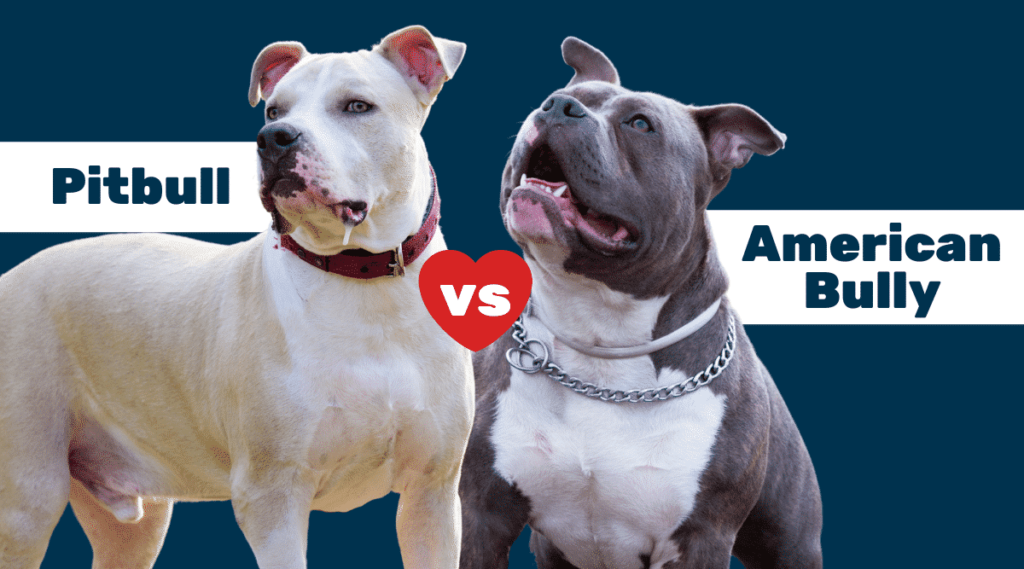
Breed Comparison: Pitbull vs American Bully
- Height17 – 21 inches (F & M)
- Height13 – 23 inches
- Weight30 – 65 pounds
- Weight25 – 120 pounds
- TemperamentAffectionate, energetic, loyal
- TemperamentFriendly, loyal, jolly
- EnergyIntense
- EnergyIntense
- HealthAbove average
- HealthAverage
- Lifespan12 – 16 years
- Lifespan9 – 13 years
- Puppy Prices$1,000 and up
- Puppy Prices$1,200 and up
At a Glance: The Biggest Differences Most People Miss
Before we dive into history, temperament, and training, it helps to zoom out for a moment. On paper, these two dogs have a lot in common. In day-to-day life, the way they feel in your home can be surprisingly different.
Think about where you see yourself in each of these. The details will start to click as you read the sections that follow.
- Energy and pace: One dog tends to move through the day with a lighter, constant buzz of energy, while the other often prefers short bursts of activity followed by serious downtime.
- Size and presence: Both are solid, muscular dogs, but one usually feels more “medium and athletic,” and the other can feel like a lot of dog in a smaller space.
- Attitude toward training: Both are smart and capable, yet one is usually quicker to say “yes, let us work,” and the other sometimes wants a little extra convincing.
- Impact on your budget: Each breed can be affordable or expensive, but one tends to be easier on food and vet costs over time, while the other can push those costs further than new owners expect.
- Everyday vibe in your home: One often fits best with people who like to stay active and busy, and the other often suits owners who picture more slow evenings with a heavy, warm dog pressed close.
How Did These Bully Breeds Start, And Why Does That Still Matter?
Most people choose a dog for how it looks or how it acts today, but every breed carries a story that shapes its behavior. Pitbulls and American Bullies did not appear out of nowhere. They were built for specific jobs, then slowly moved into family homes and therapy work.
When you understand what they were bred to do, their energy, focus, and quirks suddenly make a lot more sense.
- Breeding history explains why some dogs are obsessed with work or play.
- Past jobs still show up in how a dog uses its body and brain.
- Knowing the story behind a breed helps you avoid painful mismatches at home.
Pitbull History and Original Purpose
The American Pit Bull Terrier began its story in the 1800s in England, where breeders mixed Bulldogs with Terriers to create a powerful, agile dog that could grip hard and stay focused under pressure. Those early dogs were used in cruel blood sports that involved fighting other dogs and killing rats in crowded rings.
When those sports were banned, many of these dogs traveled with their owners to America, where the biggest and strongest lines were bred, and the modern Pitbull was born.
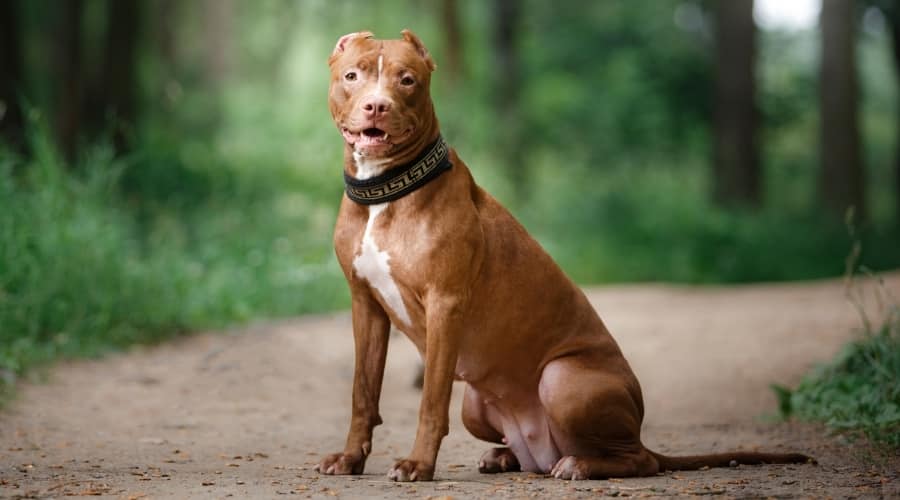
Over time, people started to notice that behind the muscle was a soft, people-loving companion. In the United States, Pitbulls began working as farm helpers, family dogs, and even therapy dogs.
The American Kennel Club (AKC) still does not recognize the breed, but the United Kennel Club (UKC) does, and describes a dog that is confident, gentle with people, and eager to please.
Pitbull history at a glance:
- Originated from Bulldog and Terrier crosses in 1800s England.
- Bred for strength, tenacity, and focus in the blood sports of the time.
- Brought to America and developed into a larger, stronger working dog.
- Later embraced as a farm helper, family companion, and therapy dog.
- Recognized by the UKC, but not by the AKC, as a separate breed.
American Bully History and How It Split Off
The American Bully is the younger cousin in the bully family. This breed grew out of the American Pit Bull Terrier and other bully-type dogs in the United States, where breeders wanted a dog with a broader, heavier frame and an even more companion-focused personality.
It is believed that American Bulldog, English Bulldog, and Olde English Bulldog lines were also mixed in to create the stocky, wide-bodied Bully people recognize today.
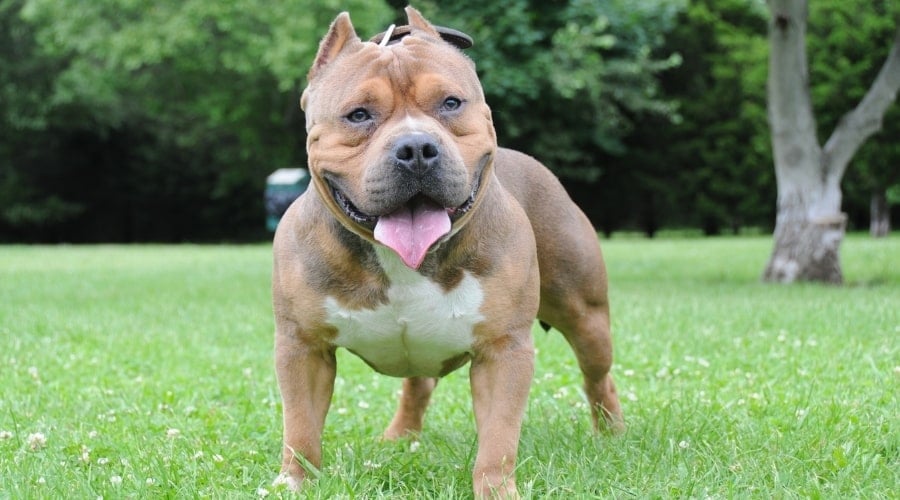
Unlike the working style of Pitbull, the American Bully was designed mainly as a companion. It still has power and athletic ability, but most lines focus on a friendly, people-oriented temperament.
The United Kennel Club recognized the American Bully as its own breed in 2013, and within the bully world, it has become a star.
Some famous studs have sold for huge sums, and puppies from those lines can command premium prices. This dog shares the same misunderstood reputation as American Pitbull Terriers and is also subject to Breed-Specific Legislation (BSL).
American Bully history at a glance:
- Developed in the United States from Pitbull and other bully-type dogs.
- Created to be shorter, wider, and more muscular than a traditional Pitbull.
- Bred mainly as a companion dog with a friendly, social temperament.
- Influenced by breeds like the American Bulldog and English Bulldog.
- Recognized as a distinct breed by the UKC in 2013.
They Look The Same Online: How To Tell a Pitbull From an American Bully
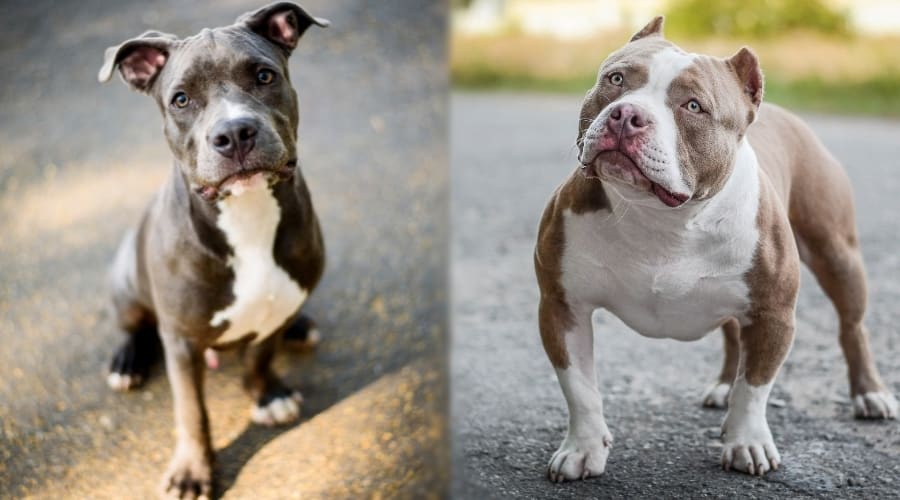
When you scroll past photos on social media, a Pitbull and an American Bully can look almost identical. Strong bodies, big heads, wide smiles.
In person, the differences are much easier to spot. The way they fill out their frame, the way they move, and even how they fit on your sofa can give you clear clues about which dog you are looking at.
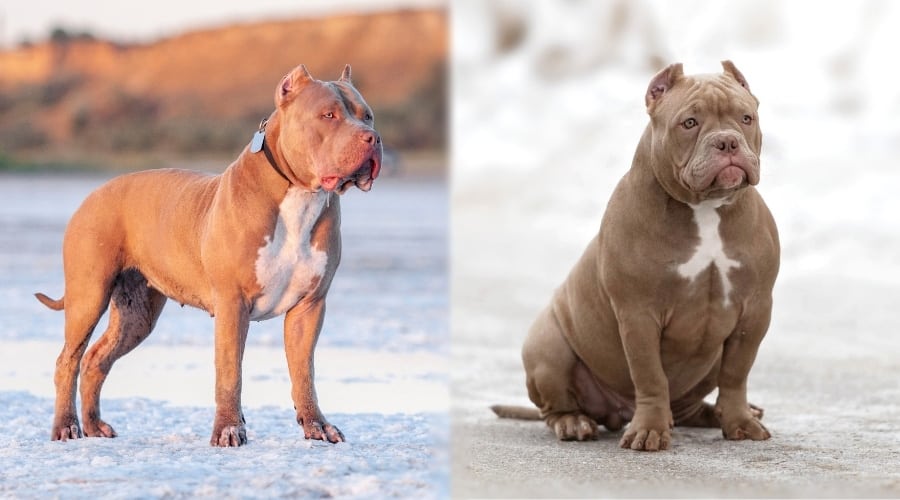
Size and Body Type: Lean Athlete vs Blocky Powerhouse
Pitbulls usually look like natural athletes, with a frame that is more balanced and evenly proportioned. American Bullies often look like powerlifters, with extra width, heavier muscle, and a deeper chest that makes them feel like a lot of dog in a small space.
The Pitbull usually measures between 17 and 21 inches tall, from paw to shoulder. And he weighs between 30 and 65 pounds, making him a medium- to sometimes large-sized dog. His average size makes the Pittie suitable for most family homes.
According to the American Bully Kennel Club, there are four distinct American Bully sizes. The smallest size is the Pocket, leading onto the Standard, Classic, and XL. Depending on which Bully size you choose, Bullies tend to weigh anywhere between 25 and 120 pounds.
With this remarkable weight range in mind, you need to know which size Bully you are inviting into your home. Their height ranges from 13 to 23 inches.
Size and body type at a glance:
- Pitbulls tend to be taller in relation to their weight, with a leaner and more streamlined build.
- American Bullies often carry more muscle and bone, especially through the shoulders and chest.
- A Pitbull usually looks ready to sprint or jump, while a Bully often looks like it could push a heavy object without trying.
- In tight spaces, a Pitbull feels like a medium dog, and a large American Bully can feel like a living, breathing ottoman.
It is their scary-dog appearance combined with their history that makes many people unduly frightened. You’ve only got to look at their ear-to-ear smiles to know they are big softies!
Heads, Faces, and Ears: The Details That Give Them Away
The head is one of the fastest ways to tell these breeds apart. Pitbulls usually have a broad head that still feels in proportion to the rest of the body.
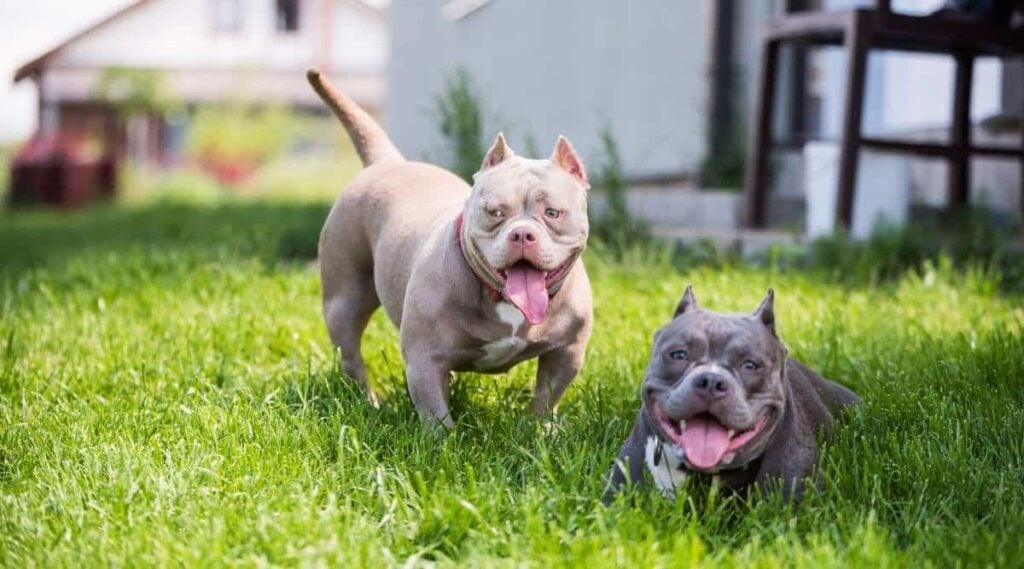
American Bullies often have a larger, blockier skull, heavier cheeks, and a shorter, more pronounced muzzle, making the whole face look extra chunky.
Head and face differences:
- Pitbull heads are broad but more refined, with a clear stop and a strong muzzle that is neither overly short nor overly long.
- American Bully heads often look wider and deeper from the front, with fuller cheeks and a thicker neck.
- Pitbull ears, whether natural or cropped, tend to sit on a head that matches a lighter, athletic neck.
- Bully ears sit on a heavier, thicker neck that flows into a wide chest, which can make the head look even more massive.
Coat, Color, and The Truth About “Rare” Bully Colors
Both breeds have short, smooth coats that are easy to keep clean and comfortable to touch. They come in many of the same colors and patterns, which is one reason people mix them up. Anything is accepted except for merle and albinism. The most popular Pitbull colors are white, red-nosed, and blue-nosed.
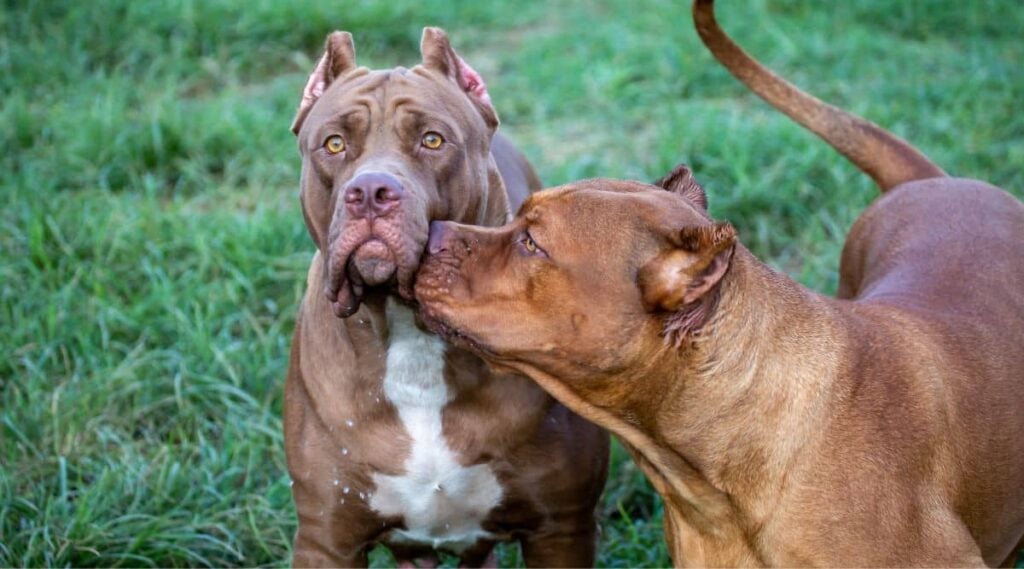
The real difference is not usually the color itself, but how it is marketed and whether the breeder is honest about what is truly rare and what is simply a sales pitch.
Coat and color notes:
- Pitbulls and American Bullies both have short, straight coats that lie close to the body, showing off their muscles.
- You will see common colors in both breeds, such as fawn, blue, black, and brindle, as well as various white markings.
- Terms like “rare” or “exotic” color often say more about the price a breeder wants to charge than about quality or health.
- Healthy skin and a shiny coat matter more than unusual color, especially in breeds that can be prone to allergies and skin issues.
Who Is The Cuddler, Who Is The Live Wire: Real Life Temperament
Most bully lovers fall for the look first, then discover the personality at home. Both Pitbulls and American Bullies are people-focused dogs that want to be wherever you are.
The difference is how they carry that love through the day. One feels more like a live wire, always ready to move. The other often feels like a heavy, happy shadow that just wants to stay glued to your side.
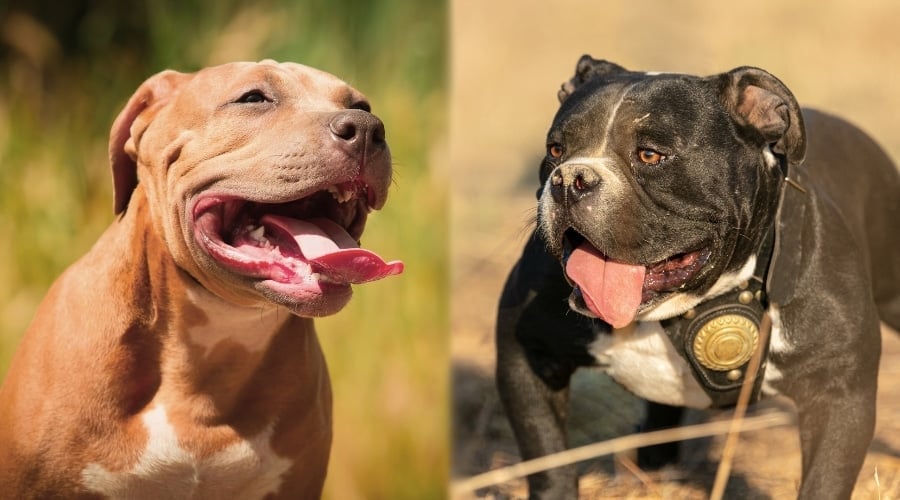
In the right home, both breeds can be wonderful family companions. They usually want to be in the middle of the action, checking on each family member and soaking up attention. Many owners describe them as dogs that think they are part of the human crowd, not watching from the sidelines.
They are both as loyal to each other as they are to their family and will defend their family in the face of danger. However, the reality is that these guys are naturally friendly and do not make great guard dogs unless trained to do so.
Around family and visitors:
- Both breeds tend to bond strongly with their core family and often follow one person from room to room.
- Many Pitbulls show their love with constant movement and play, which can be a lot around very small children if you do not set clear rules.
- Many American Bullies are more likely to plant themselves close and soak up contact, which can feel calmer but heavier on laps and feet.
- With good socialization, both can learn to greet guests politely, although their natural enthusiasm can knock over small kids if you let it.
With other animals:
- Some Pitbulls can bring more intensity to play and may need extra management with other dogs.
- Many Bullies feel a bit more relaxed in day-to-day interactions, but individuals vary.
- Early, positive socialization is important for both breeds if you want them to live with other pets.
Are Pitbulls and American Bullies Aggressive, Really
These bully breeds are not inherently aggressive or on alert like the naturally protective Doberman Pinscher or German Shepherd. They will defend themselves in a fight, but they do not tend to be the ones starting them.
According to veterinary experts at the American Veterinary Medical Association and the CDC, breed is only one small part of bite risk, and responsible ownership, training, and supervision play a much bigger role in how safe a dog is in real life.
This is contrary to some people’s opinions and a widespread misconception. Sadly, you will experience people crossing the sidewalk to avoid you and your bully-type breed due to misinformation and misunderstanding about Bullies and Pitbull-type dogs.
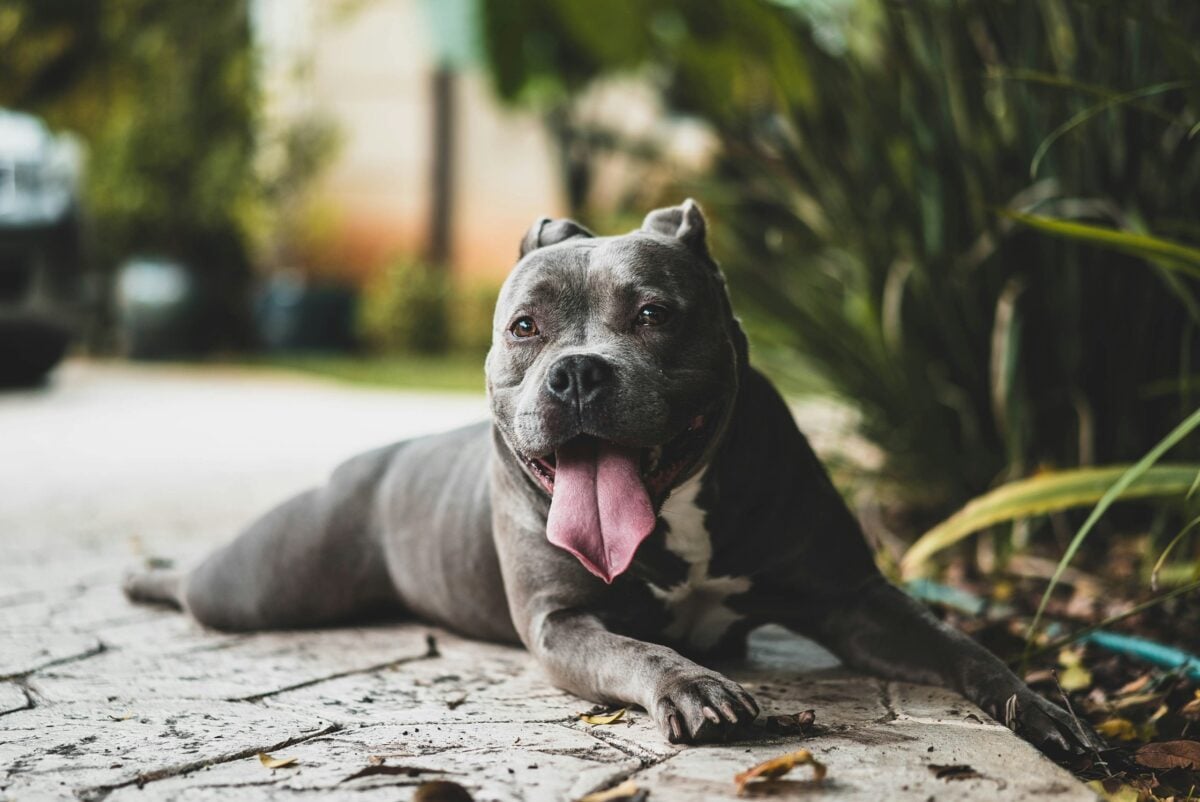
What to remember about aggression:
- Most well-bred and well-raised Pitbulls and American Bullies are friendly with people and enjoy attention from visitors.
- Poor breeding, neglect, fear, pain, and lack of training can increase the risk of any dog reacting badly, especially powerful breeds.
- Good owners focus on prevention. That means socialization, training, clear rules, and never putting their dog in situations it is not ready for.
- If you want one of these dogs, you should be comfortable learning body language, managing introductions, and seeking help early if you see red flags.
My Real Life Experience With Bully Breeds
I have lived with Pitbull-type dogs for more than 20 years, and my kids grew up right beside them. I know their blocky heads and muscular bodies can look intense and even a little scary at first glance.
In my home, though, every bully breed I have raised has been the opposite of the stereotype. They have been gentle with people, patient with my children, and some of the most loving companions I could have asked for. Below is a pic of my sweet girl, Daisy, a Pitbull mix.
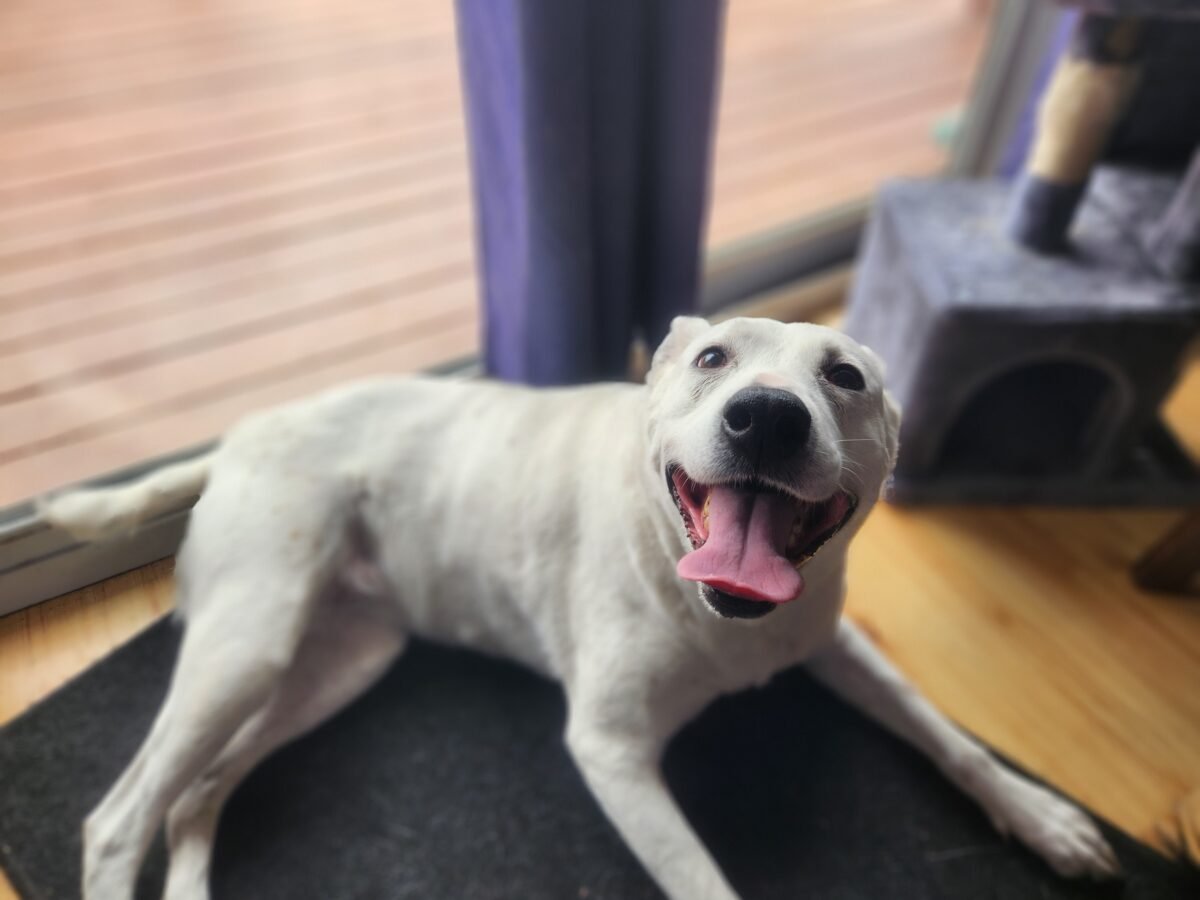
From what I have seen, what truly shapes a dog’s behavior is not the breed label on paper, but the environment they live in, the training they receive, and how committed their owner is to doing things right.
Which Dog Will Keep Up With You: Energy and Exercise Needs
Both breeds need real daily exercise, not just a quick walk to the mailbox. The difference is how hard they like to go and how long they stay “on” once you get home.
Both require 60 minutes of exercise per day to be happy and healthy. Neither of these guys is a couch potato. Even the chunky American Bully!
If we had to choose one breed that was more active than the other, it would have to be the Pitbull. The Pitbull is more agile and athletic and needs more mental stimulation throughout the day. The Bully, with his English Bulldog blood, is partial to lazing around in between exercise sessions.
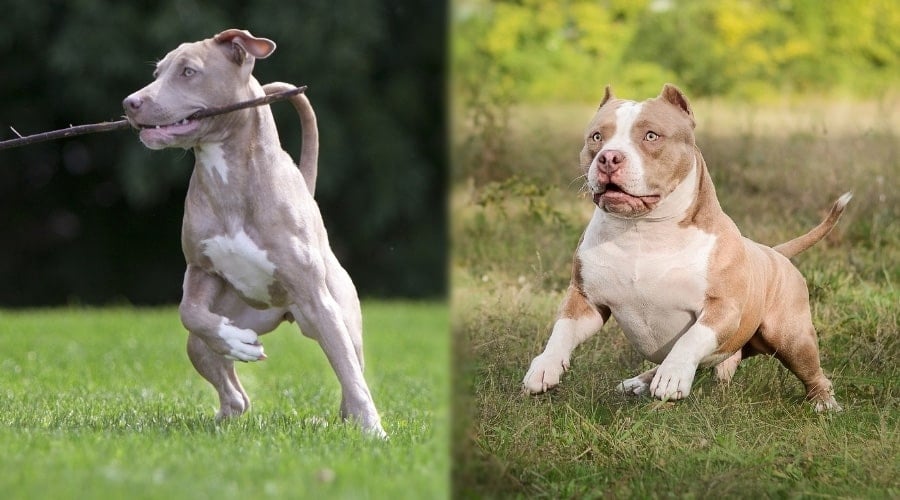
Daily exercise:
- Most adult Pitbulls do best with at least 60 minutes of active exercise and often have energy left for play or training later.
- Many American Bullies also need around 60 minutes, but are more satisfied with a mix of walks and shorter bursts of play.
- If you skip exercise for either breed, you will usually see it show up as chewing, whining, or restless pacing
- A Pitbull usually suits people who like to move: regular walks, hikes, runs, or training sessions.
- An American Bully often fits best with owners who are consistent about daily walks, but picture more relaxed time on the couch afterward.
Both are tenacious and tough in play, so be sure to pick a tough toy that can withstand their constant play. Pitbulls are perceived as slightly more intelligent than the Bully, so be sure to invest in a few puzzle toys to keep them entertained. Keep their exercise varied and provide them with interactive play, and you shouldn’t find a bored pup on your hands.
Mental stimulation:
- Pitbulls often crave jobs. They tend to shine with puzzle toys, trick training, and games that make them think.
- Bullies enjoy mental work too, but many are happiest when that work is followed by a long nap close to you.
- For both, a tired brain plus a tired body is the best recipe for a calm evening.
Because of their feared reputation, it is advised to keep them both on a leash when out in public. Although they aren’t the ones likely to be causing trouble, all dogs have an element of unpredictability.
Whichever dog you choose, you should check out your local BSL laws too. Some states require bully-type dogs to be muzzled in public, and some do not permit entrance to doggy parks.
Training: First-Time Owner Or Experienced Handler
Pitbulls and American Bullies both want to work with you, but they do not always show it in the same way. The difference is usually how quickly they say “sure, let us do it” and how often they test the rules.
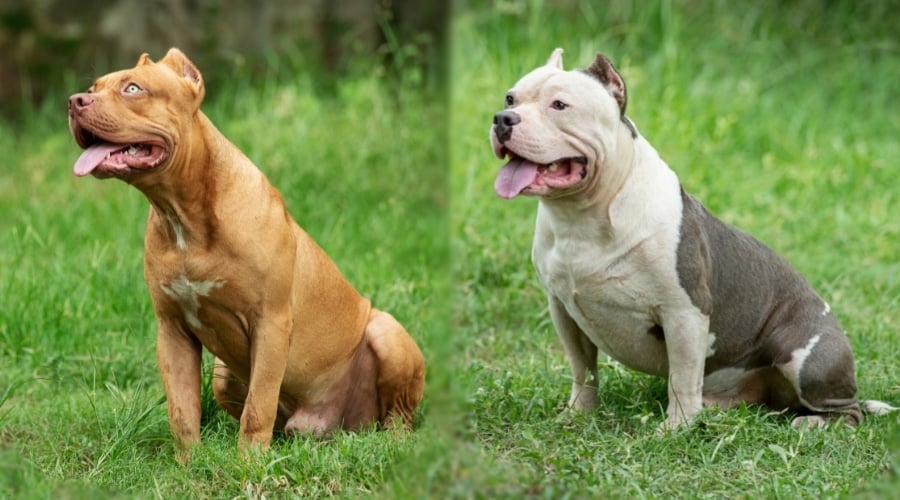
Both dogs are slightly different when it comes to their training needs and abilities. Pitbulls are very trainable dogs who are both eager to please and intelligent. With a little doggy training research, he is suitable for first-time dog owners.
Again, the Bully, thanks to his English Bulldog genes, can be a little more stubborn and headstrong. He requires a more experienced dog owner who can get the best out of him and his independent ways.
Trainability:
- Most Pitbulls are eager to please, pick up new cues quickly, and enjoy short, frequent training sessions.
- Many American Bullies are just as smart, but some have a stronger “what is in it for me” streak and need more patience.
- For first-time owners, a well-bred Pitbull can feel more straightforward. A Bullly often suits someone who is comfortable being calm and consistent.
Both of these dogs must be socialized well from day one. A quality breeder will start training before you get them home. Then it’ll be your job to continue it.
Mix them both with as many dogs and humans as you can. And expose them to different sounds, sights, and smells too. Because of the Pitbull’s dogfighting past, he might display fear-aggression tendencies more than the Bully if he is not socialized properly.
Socialization basics:
- Both breeds should start socialization early with dogs, people, sounds, and places.
- Pitbulls with poor socialization are more likely to show tense or reactive behavior toward other dogs.
- Bullies also need careful introductions, especially if they will live with other large dogs.
Both dogs respond best to positive reinforcement training, so be sure to research and utilize it. No dog should be exposed to harsh treatment or training techniques. This is especially true for powerful dogs such as these because mixing the two can create dangerous dogs.
Find out what motivates your pooch the best. The Bully is likely to be motivated by treats, and Pitbulls will be motivated by most things, including toys.
Both dogs crave human companionship. As much as they deserve it, and we would love to, it is not possible to spend 24/7 with them. It’s advised to crate train all dogs, but especially those prone to suffering from separation anxiety.
Find the right Pitbull-sized dog crate, as all dogs crave shelter.
Health and Lifespan: Which Breed Usually Lives Longer
Both breeds are generally sturdy dogs, but they do not age in exactly the same way. Pitbulls tend to live a bit longer on average, while American Bullies can be more prone to certain joint and structural issues, especially in heavier lines.
Both of these dogs enjoy good canine health, especially Pitbulls. The Pitbull enjoys an average lifespan of 12 to 16 years, compared to the Bully, which enjoys 9 to 13 years.
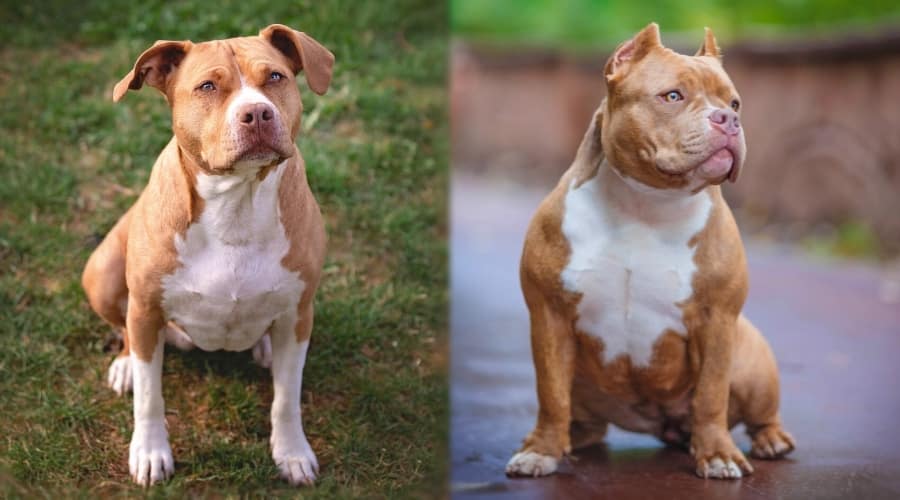
Like all dogs, both of these guys are prone to certain health conditions more than others.
Feeding your pup the best quality food, keeping them fit, and attending regular health check-ups will extend their lifespan and increase their quality of life.
Big picture:
- Pitbull average lifespan: usually around 12 to 16 years when well cared for.
- American Bully average lifespan: usually around 9 to 13 years, with bigger, heavier dogs often at the lower end.
- Good food, regular vet checks, and smart exercise habits can add quality years for both.
Quick Comparison: Common Health Issues
| Health Aspect | Pitbull | American Bully |
|---|---|---|
| Typical lifespan | About 12 to 16 years | About 9 to 13 years |
| Build and impact on health | Leaner, athletic frame, usually easier on joints | Heavier, wider frame, more load on joints and heart |
| Joint issues | Hip dysplasia and general wear in very active dogs | Hip and other joint problems are more common, especially in larger sizes |
| Skin and allergies | Skin allergies, mange, and other irritations are fairly common | Can also have skin and allergy issues, often linked to folds and overall build |
| Eye problems | Possible, but not usually the main concern | Higher risk for issues like cherry eye, PRA, and cataracts in some lines |
| Heart concerns | Some risk, especially in poorly bred dogs | Heart problems may be a bigger concern because of the Bulldog influence |
| Heat tolerance | Generally copes better with heat, still needs care | Often struggles more in hot weather, needs extra shade and rest |
Like many other dogs, Pitbulls are predisposed to hip dysplasia. This is a congenital condition that occurs when the hip socket and the upper thigh bone do not sit as they should. This can cause the hip to dislocate and heighten the chance of painful arthritis in later life.
Another health issue to look out for is skin conditions. The most common are ichthyosis, demodectic mange, zinc-responsive dermatosis, and irritations caused by allergens. These are not usually serious but need investigating to improve a dog’s quality of life.
Similarly, American Bullies also suffer from hip dysplasia. A variety of eye conditions affect the Bully, such as progressive retinal atrophy (PRA), cataracts, and cherry eye. Good-quality breeders will test for cardiac irregularities, which is something picked up from the English Bulldog genetics.
Although the Bully is not a brachycephalic breed, its muzzle is slightly shorter. Meaning he does not tolerate warm weather as much as the Pitbull.
A Quick Note On Pet Health Insurance
Bully breeds can be tough, athletic dogs, but they’re also prone to issues that can get expensive fast, especially skin allergies, joint problems, and eye conditions in some lines. And when accidents happen, diagnostics like bloodwork, X-rays, and medications can turn “we’ll just get them checked” into a serious bill.
That’s why many owners choose pet health insurance early, while their dog is still healthy. The right policy can help cover the cost of vet visits, diagnostics, medications, and treatment for new injuries or illnesses, so you’re less likely to delay care when something feels off.
Learn more in our guide to the best pet insurance for dogs and pitbulls specifically, and get a free quote using the form below.

Nutrition: How Much These Breeds Really Need To Eat
It’s difficult to compare these two regarding nutrition simply because of the American Bully’s vastly ranging weight and nutritional needs. The average Pitbull will consume between two and three cups of food a day.
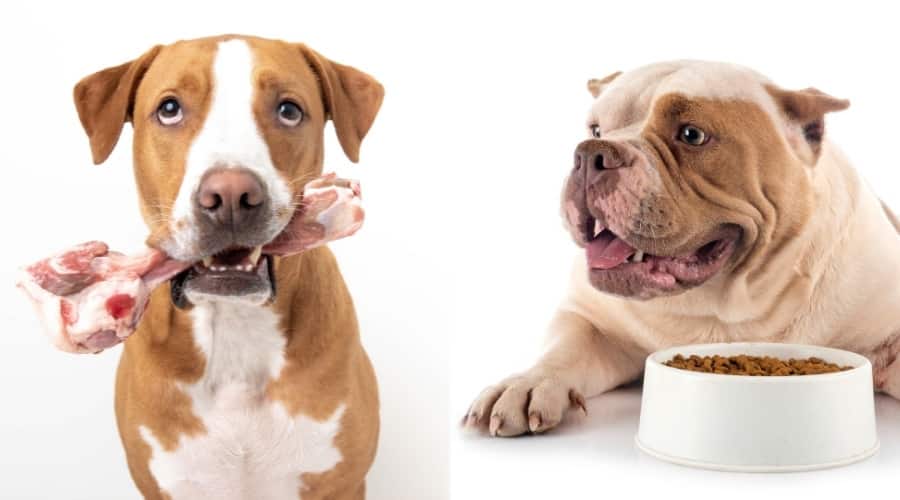
But the Bully can consume anywhere between one and a half to five cups of food a day. Meaning the monthly food bill could be completely different or almost the same. Ultimately, you should follow the food packaging and feeding instructions for tailored advice.
American Bullies should eat a kibble suggested for the Bully. Pitbulls will do best on a kibble recommended specifically for them, as well. Like all dogs, feed them the best food that you can afford because diet can make a real difference to canine health.
Be sure to feed them both age-appropriate food. Especially during puppyhood because it lays the foundations for a healthy body. Many Pitbull-type dog owners state that Bully gas is the worst of all, so be ready for some smelly evenings.
What To Look For In A Healthy Dog Food
- Named animal protein listed first
- Labeled as complete and balanced for your dog’s life stage
- Appropriate protein and fat levels for age and activity
- Limited use of vague fillers and by-products
- Recognizable, real-food ingredients near the top of the list
- Includes sources of omega fatty acids
- Consistent formula with a good safety and recall history
Grooming and Day-to-Day Care
Thankfully, both of these pups have easy-to-care-for coats. Their short and straight hair only needs brushing once a week to keep it looking healthy and shiny.
It will remove dead hair and dirt and spread natural coat oils, and it is a relaxing time to bond with your pup.
A great brushing tool for both of these guys is a simple bristle brush. Pitbulls are average shedders, and so are Bullies. Neither blows their coats seasonally, which is a big appeal for many owners.
Both dogs should be bathed once every two to three months. Or if they get super muddy on their walkies, as and when they need it. Just never more than once a month.
When shampooing either of these pups, it’s recommended to use a shampoo designed for dogs with sensitive skin. Their teeth should be brushed at least twice a week. More if you have a small Bully due to their heightened risk of periodontal diseases.
At a glance:
- Brush once or twice a week to remove loose hair and dust and to keep the coat shiny.
- Bathe about every two to three months, or when your dog gets muddy, using a gentle dog shampoo for sensitive skin.
- Expect light, steady shedding all year and manage it with quick weekly brushing and a lint roller.
- Trim nails every three to four weeks and check paw pads regularly for cracks, cuts, or stuck debris.
- Check ears once a week for redness or odor and wipe gently if needed to help prevent infections.
- Brush teeth a few times per week and offer safe chews to help control tartar and keep breath fresher.
Puppy Prices and Budget Tips
Bringing home a Pitbull or an American Bully is not just an emotional decision; it is a financial one, too. The price tag on the puppy is only the start. Between food, vet care, training, and gear, these strong, medium to large dogs can shape your budget for the next decade or more.
Knowing what is normal, what is a red flag, and what the long-term costs look like will help you choose with a clear head rather than a soft heart.
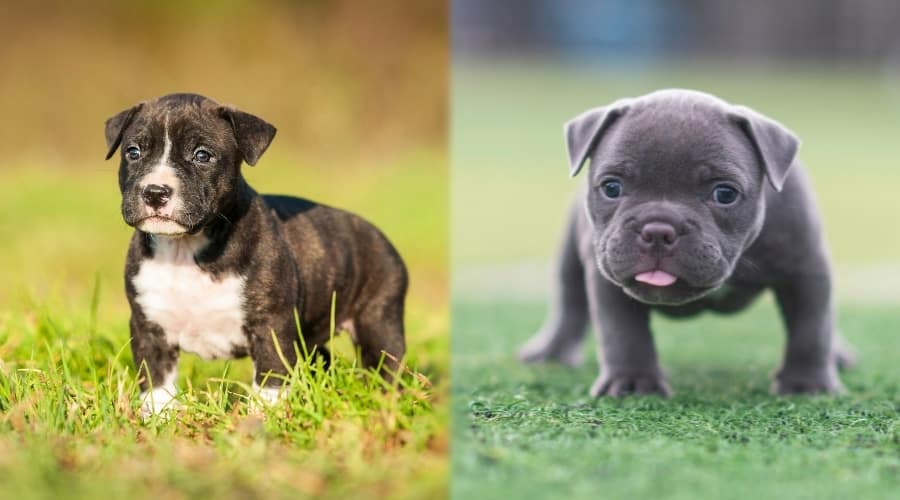
An American Bully puppy is, on average, pricier than a Pitbull pup. The price of a Pitbull from a reputable breeder starts at around $1,000. Compared to $1,200 for a Bully puppy. There are so many Pitbulls in shelters across America, and this drives the price down.
Depending on the Bully’s size and shape, the birthing process can be more involved than other dogs. You can expect to pay much more if you want to work with a popular or ‘canine celebrity’ breeder.
When it comes to bully breeds, rescuing should always be part of the family discussion. If you choose to buy a puppy, you must work with a reputable breeder. Sadly, many people out there still fight their dogs, and both of these dogs are prime targets for these cruel sports.
- Expect well-bred Pitbull puppies from reputable breeders to start around four figures and increase with health testing and proven lines.
- Expect American Bully puppies, especially from popular bloodlines or XL types, to cost more than most Pitbulls.
- Very cheap puppies are often a red flag for poor breeding, lack of health testing, or ties to backyard breeders and fighting lines.
- Adoption fees for rescue Pitbulls and Bullies are usually much lower than breeder prices and often include basic vet care and spay or neuter.
- Plan for ongoing monthly costs such as food, flea and tick prevention, heartworm prevention, toys, and basic grooming supplies.
- Add room in your budget for training classes, unexpected vet visits, and optional pet insurance.
There are also ongoing lifetime costs to consider, not just the initial puppy price. All puppies need new beds, crates, and toys. Plus, medical bills, pet insurance, food, and much more.
In some places, both dogs will require specific ‘dangerous’ dog insurance or licenses. These are additional financial commitments that need to be considered as well.
Rescuing Pitbulls and American Bullies
There is no shortage of bully-type dogs looking for homes. Shelters and rescues across the country are full of Pitbulls, American Bullies, and mixes that lost their homes for reasons that often have nothing to do with behavior.
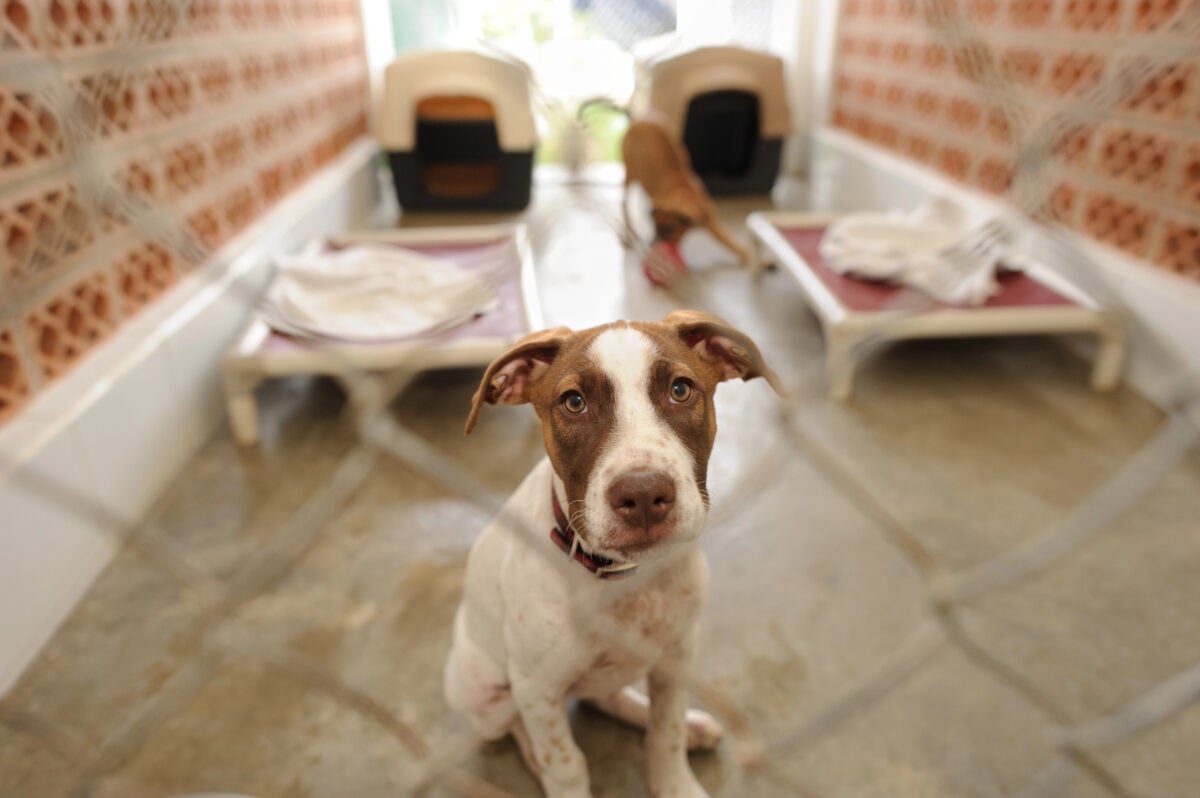
If you are open to rescue, you can change a dog’s whole life and often get a better sense of its adult temperament before you commit.
- Work with a reputable rescue that temperament tests and is honest about history.
- Ask how the dog does with children, other dogs, and cats based on real observations.
- Be ready for a decompression period while your new dog settles into your home.
- Plan on training and structure from day one, even with a very sweet dog.
- Expect that many wonderful dogs are labeled “Pitbull mix” simply because of how they look.
Legal, Insurance, and Housing Rules For Bully Type Dogs
Pitbulls and American Bullies can be sweet, steady family dogs, but on paper, they are often treated as “higher risk.” That can affect whether they are allowed in your city, which homes you can rent, and what you pay for insurance. It is not the fun part of choosing a dog, but it is one of the most important.
Some places completely ban Pitbull-type dogs, while others allow them but add extra rules such as special permits, stronger fencing, or muzzles in public.
These laws often use broad language, such as “Pitbull type,” or blanket “aggressive breed” bans, so both registered breeds and mixed-bully-type dogs can be affected.
- BSL can mean full bans, limits, or extra rules for bully-type dogs.
- The law may care more about how your dog looks than what breed is on paper.
- Penalties can include fines or being forced to remove the dog if the rules are broken.
Insurance, Landlords, and HOA Rules For Pitbull-type Dogs
Even if your city allows Pitbulls and American Bullies, private companies and property owners can still create their own policies. Some home and renters insurance providers either charge more or refuse coverage if you own a bully-type dog.
Before you bring a dog home, it helps to:
- Ask your home or renters insurance company about any breed limits or higher premiums.
- Read your lease and HOA rules carefully for pet and breed restrictions.
- Get any approval for your dog in writing, not just as a verbal “that should be fine.”
Which Breed Is Right For You?
Both breeds can be amazing, but they are not the same flavor of dog. Think about how you spend a normal day, how active you are, and how much structure you want to give your dog. That usually tells you more than any photo.
Choose a Pitbull If This Sounds Like You
You want a dog that wants to do things with you. A Pitbull is a better fit if you enjoy regular walks or hikes, short training sessions, and a dog that learns quickly and looks to you for direction.
You are comfortable putting real effort into early socialization and manners, especially around other dogs, and you like the idea of a lean, athletic dog that fits well in most homes and often lives a little longer.
Choose an American Bully If This Sounds Like You
You want a heavier, more “couch plus cuddle” dog that still enjoys daily walks and play. An American Bully suits owners who are happy to handle a strong, stocky body and who like long, relaxed evenings with a dog pressed against them.
You are okay being calm and consistent with a dog that may test the rules now and then, and you are prepared for the possibility of higher food and vet costs, especially with larger Bully types.

Quick Red Flag Checklist For Both Breeds
If any of these feel very true right now, it is worth pausing before you choose either breed:
- Your landlord, HOA, or insurance is strict about bully-type dogs.
- You do not have time or interest in daily exercise and basic training.
- You feel nervous handling a strong dog in public or around other dogs.
- You need a very low effort pet that can be left alone most of the day.
If you read this section and still feel excited, that is a good sign. It usually means you are thinking like a committed owner, not just someone who likes the bully breed look.
Are You Really Ready For A Bully Breed?
Whether you choose a Pitbull or an American Bully, the real difference comes from the life you create together. A good match between your lifestyle and your dog, regular vet care with someone you trust (learn what makes a good vet), and positive, engaging activities such as dog agility training will matter far more than the name on the breed label.
If you are still deciding whether now is the right time, start with our article: Am I Ready for a Dog? Then, think about how you will build a strong bond every day using simple ideas from How to Show Your Dog You Love Them. If you have a family, you can also involve your kids in safe, age-matched ways using age-appropriate dog duties. Choose the bully breed that fits your real life, then focus on being the kind of owner any dog would be lucky to come home to.
Now we want to hear from you. Have you lived with a Pitbull, an American Bully, or both? Tell us in the comments what daily life is really like, what surprised you the most, and what you wish you had known before you brought your dog home. Your story might be the one that helps another reader choose the bully breed that truly fits their life.