When you purchase through links on our site, we may earn a commission at no extra cost to you. Learn more.
One minute, your dog seems completely fine. The next, you’re outside at 2 a.m. wondering how one animal can possibly produce that much waste.
Table of Contents
The good news is that mild diarrhea in dogs is incredibly common and often caused by something simple, like eating table scraps, getting into the trash, stress, or a sudden change in diet. In many cases, a few safe home remedies, a bland diet, and some time are enough to help your dog’s stomach settle down.
But not every case should be treated at home. Some symptoms can signal dehydration, parasites, poisoning, pancreatitis, or other serious health problems that need veterinary care fast. In this guide, we’ll cover the home remedies that may actually help dog diarrhea, what to avoid, when to call your vet, and the red flags you should never ignore.

Start Here: Is Your Dog’s Diarrhea An Emergency Or Not?
Finding diarrhea in your dog is stressful, but not every upset stomach is a medical emergency. Many mild cases are caused by things like eating rich food, getting into the trash, stress, sudden diet changes, or the canine equivalent of “I absolutely should not have eaten that.”
If your dog has mild diarrhea but is otherwise acting fairly normal, still drinking water, and not vomiting repeatedly, you can often monitor them at home while trying safe remedies like fasting, bland foods, hydration support, and probiotics.
That said, some symptoms should never be ignored, as diarrhea can quickly become dangerous, especially in puppies, senior dogs, and small breeds that dehydrate more quickly.
Monitor At Home
You can usually monitor your dog at home if they:
- Have one or two loose stools but otherwise seem normal
- Still want to eat and drink
- Have normal energy levels
- Are not vomiting repeatedly
- Do not have blood in their stool
- Recently ate something unusual or switched foods
Call Your Vet Soon
Contact your veterinarian if your dog:
- Has diarrhea lasting longer than 24 to 48 hours
- Seems lethargic or unusually tired
- Starts vomiting
- Refuses food or water
- Has mucus-filled stool
- Has diarrhea that keeps returning
- Is very young, elderly, or has existing health conditions
Go To The Emergency Vet Immediately If Your Dog Has:
Some symptoms can signal poisoning, pancreatitis, severe dehydration, internal bleeding, or dangerous infections.
Seek emergency veterinary care if your dog has:
- Large amounts of blood in the stool
- Black, tarry stool
- Severe vomiting alongside diarrhea
- Pale gums
- Weakness or collapse
- A swollen or painful abdomen
- Signs of dehydration
- Suspected toxin ingestion
- Continuous watery diarrhea that will not stop
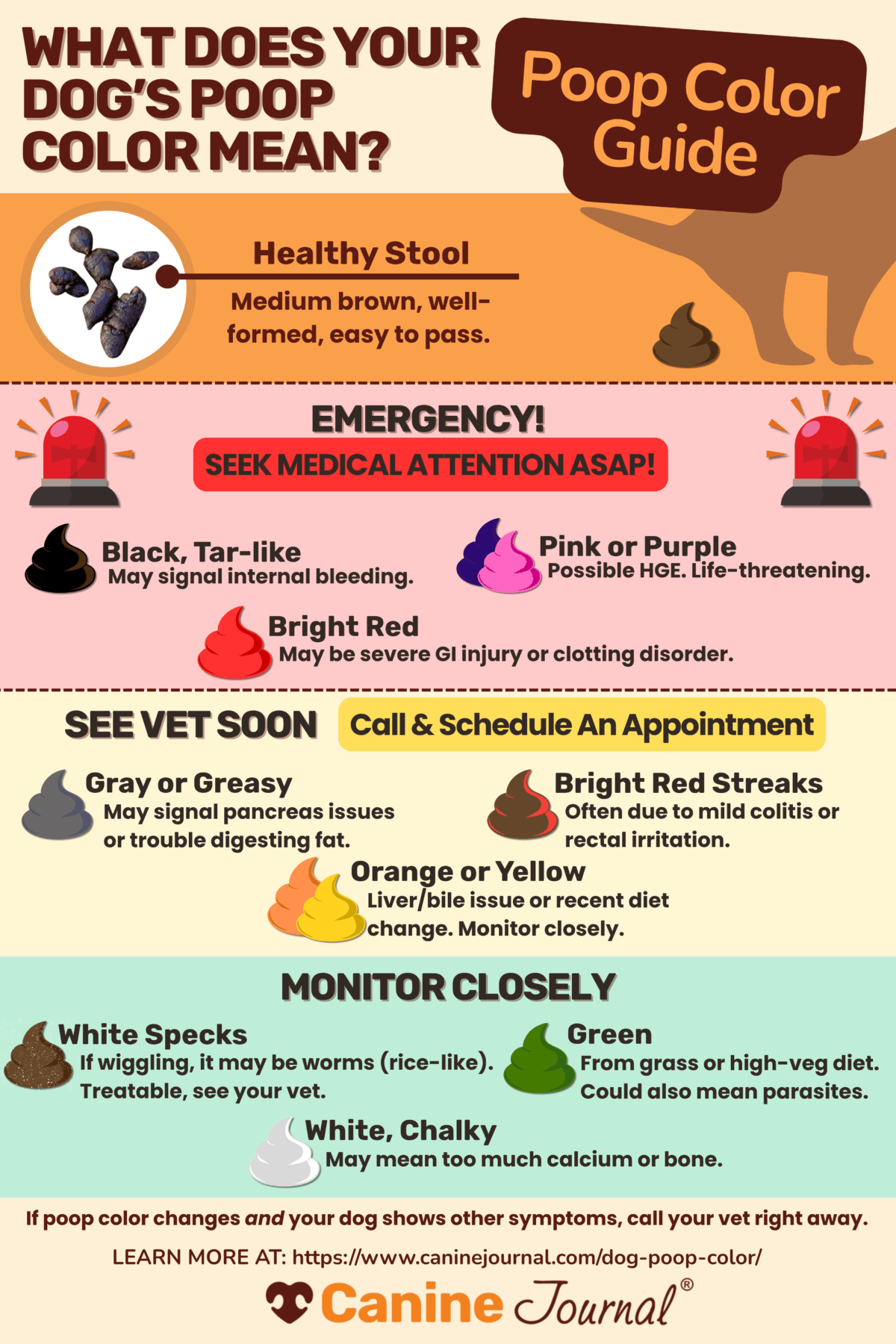
Pro Tip: Stool color can sometimes tell you a lot about how serious your dog’s digestive upset may be. While not every strange poop color means an emergency, some changes should never be ignored. Learn more about what your dog’s poop color means.
The 3 Biggest Mistakes Owners Make After Their Dog Gets Diarrhea
When your dog suddenly gets diarrhea, it’s easy to panic and start trying everything at once. Unfortunately, some of the most common “helpful” reactions can actually make things worse or delay treatment when something serious is going on.
1. Feeding Too Much Too Fast
Many owners immediately offer extra food, treats, or rich “comfort meals” because they assume their dog needs to keep their strength up. In reality, an already irritated digestive tract often needs a short break and a very bland, controlled diet.
Too much food too quickly can restart the cycle of diarrhea all over again, even if your dog initially seemed to improve.
2. Giving Random Human Medications
One of the biggest mistakes owners make is reaching into the medicine cabinet without calling their vet first.
Some over-the-counter medications that are commonly used for human diarrhea can be dangerous for dogs, especially certain breeds, puppies, dogs with underlying conditions, or dogs who may have eaten something toxic. Even medications that are sometimes used in dogs can be risky when given at the wrong dose.
When in doubt, always check with your veterinarian before giving any human medication.
3. Waiting Too Long To Get Help
Many mild stomach upsets resolve within a day or so. But when diarrhea continues, becomes severe, or is paired with vomiting, lethargy, blood, or dehydration, waiting too long can become dangerous fast.
Dogs can deteriorate more quickly than many owners realize, particularly puppies, toy breeds, and seniors. If your gut tells you something feels “off,” it’s always better to call your vet sooner rather than later.
What To Give A Dog With Diarrhea At Home
Seeing your dog wake you up in the middle of the night with diarrhea is never fun, but many mild cases can be managed at home with rest, hydration, and a temporary bland diet. The key is not overreacting, overfeeding, or trying too many remedies at once.
These vet-recommended home remedies may help mild digestive upset while your dog’s GI tract recovers. However, if symptoms worsen, persist longer than 24 to 48 hours, or your dog develops vomiting, lethargy, dehydration, or blood in the stool, contact your veterinarian.
Should You Fast Your Dog?
Many veterinarians recommend temporarily withholding food for 6 to 12 hours to give your dog’s gastrointestinal (GI) tract time to rest and settle down. In some mild cases, this short fasting period may help stop the cycle of irritation and frequent diarrhea.
However, fasting is not appropriate for every dog. Puppies, senior dogs, toy breeds, diabetic dogs, and dogs with underlying medical conditions can become weak or dehydrated more quickly. Unless your veterinarian specifically advises otherwise, never fast a dog for more than 24 hours.
If you are unsure whether fasting is safe for your dog, check with your vet first.
How To Keep Your Dog Hydrated
Diarrhea can cause dehydration surprisingly fast, especially in puppies and small dogs. Even if your dog is not eating much, keeping them hydrated is extremely important.
Make sure your dog always has access to fresh, clean water. Some dogs may drink better if you offer ice cubes, multiple water bowls, or small amounts of water more frequently throughout the day.
If your veterinarian approves, you can also offer an unflavored electrolyte solution. Bone broth or rice water may also encourage reluctant dogs to drink while providing a little nutrition at the same time.
Signs of dehydration in dogs may include:
- Dry or sticky gums
- Sunken eyes
- Lethargy
- Panting
- Loss of skin elasticity
- Weakness
If your dog cannot keep water down or appears dehydrated, contact your veterinarian.
When To Start Feeding Again
After the fasting period, it’s important to reintroduce food slowly and carefully. Jumping straight back into large meals or rich foods can irritate your dog’s digestive system all over again.
Start with small portions of bland, low-fat foods and feed several small meals throughout the day instead of one large meal. If your dog tolerates the food well and diarrhea improves, you can gradually increase portions over the next day or two.
8 Home Remedies That May Help Dog Diarrhea
Many of the following remedies are gentle on the stomach and commonly recommended for mild digestive upset in dogs.
1. Rice Water
Rice water is the starchy liquid left behind after boiling white rice. It’s easy to digest and may help soothe the digestive tract while providing hydration.
To make it, boil 1 cup of plain white rice in water until the liquid becomes cloudy and creamy white. Strain the rice, let the liquid cool, and serve in small portions.
2. Bone Broth
Bone broth is packed with nutrients and moisture while remaining relatively gentle on sensitive stomachs. Many dogs also find it highly appealing when they do not feel well.
Choose a low-sodium broth with no onions, garlic, or added seasonings. You can also make your own at home. See our reviews of the best bone broth for dogs and a recipe to make your own.
3. Plain Canned Pumpkin
Plain canned pumpkin is one of the most popular home remedies for dog diarrhea because it contains soluble fiber that may help regulate digestion. Be sure to use plain pumpkin puree, not pumpkin pie filling.
General serving guidelines:
- Small to medium dogs: 1 to 3 teaspoons
- Large dogs: 1 to 3 tablespoons
4. Plain White Rice
Plain cooked white rice is bland, low in fiber, and easy for many dogs to digest during GI upset. It’s often paired with lean protein during recovery. Avoid adding butter, oils, or seasonings.
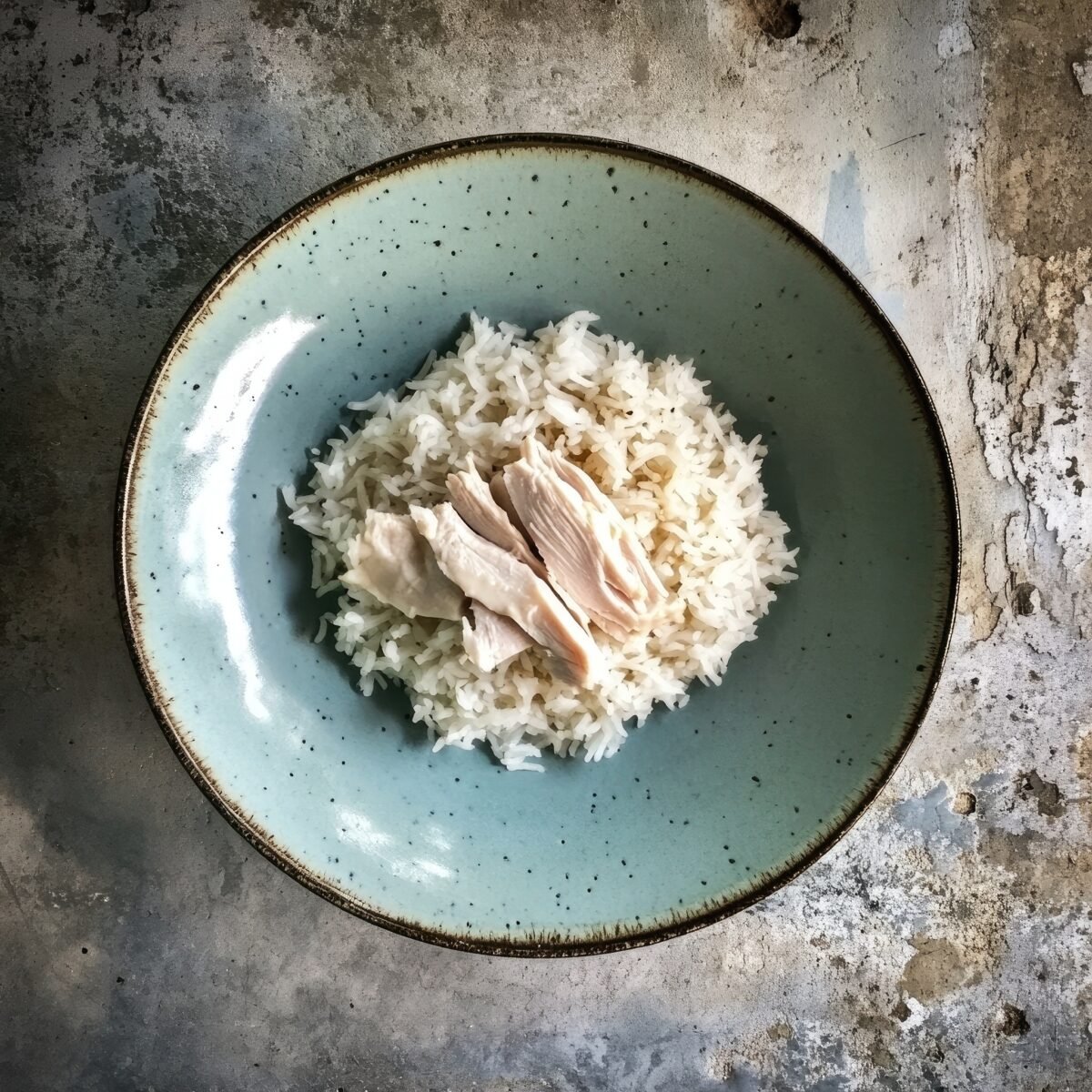
5. Unseasoned Chicken Breast
Plain boiled chicken breast provides easily digestible protein without excess fat or seasoning. Stick with skinless, boneless chicken and avoid oils, garlic, onion powder, or heavy seasoning blends.
See our recipe for homemade chicken and rice.
6. Plain Scrambled Eggs
Plain scrambled eggs may be gentle enough for some dogs recovering from mild diarrhea because they provide digestible protein and nutrients. Cook them plain without butter, milk, oils, or seasonings.
7. Low-Fat Cottage Cheese
Some dogs tolerate plain, low-fat cottage cheese well in small amounts during recovery because it’s relatively bland and protein-rich. However, avoid this remedy if your dog is sensitive to dairy.
8. Plain Greek Yogurt
Plain Greek yogurt with live cultures may help support healthy gut bacteria in dogs that tolerate dairy well. Choose unsweetened yogurt with no artificial sweeteners or flavorings.
Avoid giving yogurt to dogs with known lactose intolerance or dairy sensitivity.
“Diarrhea in dogs is a problem that we see very often in our practice,” says Dr. Rebecca MacMillan, BVetMed, BSAVA, PGCertSAM, a companion animal veterinarian in Gloucester, United Kingdom. “This is why the exact treatment I recommend depends on how sick a dog is. For dogs who have a mild upset tummy and diarrhea, I often suggest feeding them bland, easy-to-digest food for a few days such as a gastrointestinal/sensitivity diet or cooked chicken and boiled rice.”
The Best Way To Feed A Dog Recovering From Diarrhea
Even after your dog starts improving, their digestive system may still be irritated for a day or two. One of the biggest mistakes owners make is feeding too much too quickly the moment their dog seems hungry again.
Instead of offering large meals, stick with small portions of bland, low-fat food several times throughout the day. This is usually easier on the digestive tract and may help prevent another round of diarrhea.
During recovery:
- Feed smaller meals more frequently
- Avoid greasy foods and table scraps
- Skip rich treats and chews
- Avoid sudden diet changes
- Monitor stool closely during refeeding
Many dogs improve gradually over 24 to 48 hours with rest, hydration, and a temporary bland diet. However, if diarrhea continues, worsens, or returns repeatedly, it’s time to contact your veterinarian.
Going Back To Regular Dog Food
Once your dog’s stool returns to normal, transition back to their regular diet gradually over two to three days.
Start by mixing about 25% regular dog food with 75% bland food. If your dog continues to improve, move to a 50/50 mix, then to 75/25, before returning fully to their normal diet.
If diarrhea returns during the transition, slow the process down and contact your veterinarian if symptoms continue.
When Should You Call Your Vet?
Many mild cases of dog diarrhea improve within 24 to 48 hours with rest, hydration, and a bland diet. However, if symptoms persist or worsen, or if your dog starts acting sick overall, it’s time to contact your veterinarian.
Even if diarrhea seems mild at first, ongoing digestive upset can lead to dehydration and may signal underlying problems like parasites, infections, pancreatitis, food intolerance, toxin exposure, or other medical conditions.
Your veterinarian may recommend an exam, fecal testing, blood work, X-rays, or other diagnostics depending on your dog’s symptoms and overall health.
According to Dr. MacMillan, signs that your dog needs urgent veterinary attention include:
- Large amounts of watery diarrhea
- Bloody diarrhea
- Vomiting
- Abdominal pain
- Loss of appetite
- Lethargy
- Weight loss
- Symptoms lasting longer than 48 hours
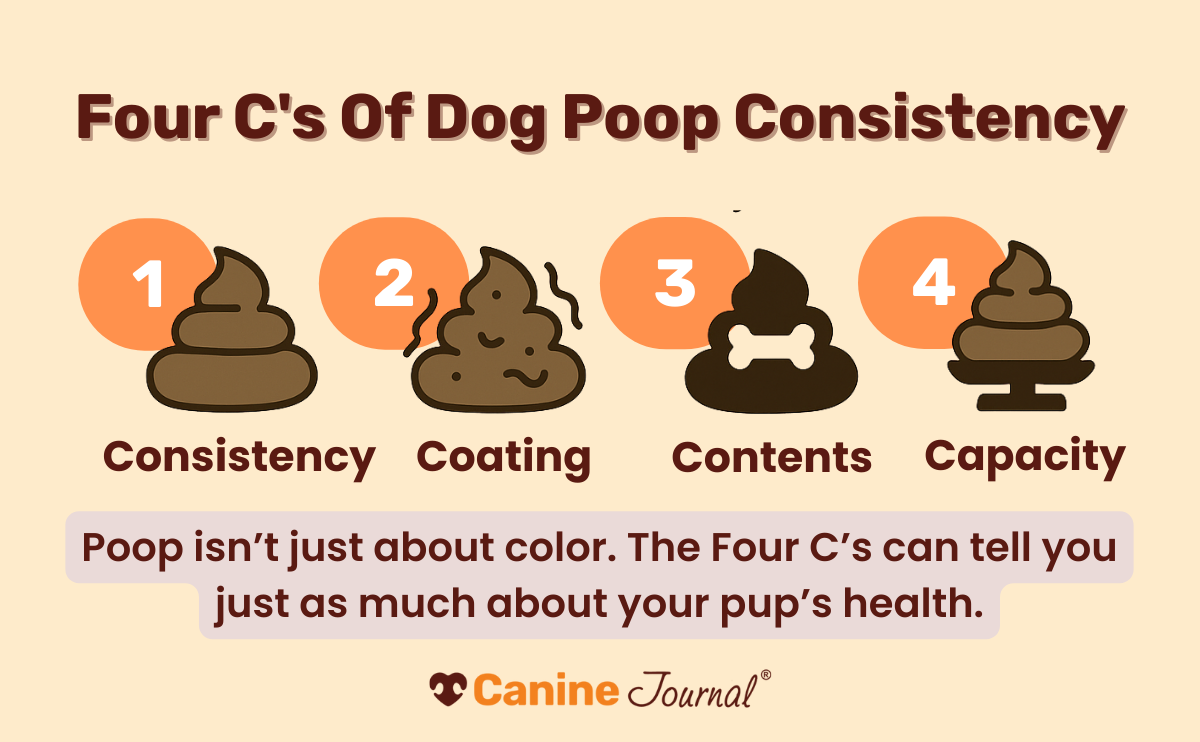
Pro Tip: One helpful way to monitor your dog’s recovery is to pay attention to the “4 C’s” of stool: color, consistency, contents, and coating. Changes in any of these can help your vet determine whether your dog has a mild upset stomach or something more serious going on.
Why Dogs Get Diarrhea In The First Place
Most cases of diarrhea in dogs are mild and short-lived, often clearing up within a couple of days. But sometimes diarrhea lasts longer, keeps returning, or signals a more serious underlying problem.
While some dogs get diarrhea after eating something questionable off the sidewalk, others may develop digestive upset from stress, infections, parasites, food sensitivities, or medical conditions that require veterinary treatment.
Common Causes Of Mild Dog Diarrhea
Many mild cases can improve with rest, hydration, and temporary diet changes.
- Dietary indiscretion: As we owners know, dogs will eat almost anything or eat too much dog food if given the chance. Overindulging in dog food, treats, and table scraps can cause acute diarrhea, as can eating garbage, spoiled food, grass, etc.
- Diet change: Switching your pup’s food is a frequent culprit because many dogs’ digestive systems are sensitive to new ingredients. Take it slow and follow our advice on how to change your dog’s food to minimize gastrointestinal problems.
- Anxiety and stress: A sudden life change, like moving or getting a new pet, can cause mild diarrhea. The same goes for a stressful trip to the vet, traveling, and other unsettling events.
- Use of antibiotics or other medications: Antibiotics are a common cause of diarrhea in dogs. Many owners find success in giving their pups a dog-specific probiotic simultaneously with antibiotic use because it helps balance out the good and bad gut bacteria.
Causes Of Dog Diarrhea That Require Veterinary Attention
Some of the following causes require emergency vet treatment, while others need vet attention as soon as possible.
- Ingesting something toxic (learn which foods and plants are toxic to dogs)
- Ingestion of foreign objects
- Parasites, such as hookworms, roundworms, or Giardia
- Viral infections, such as parvovirus or distemper
- Bacterial infections
- Food allergies
- Pancreatitis
- Colitis or inflammatory bowel disease
- Liver, kidney, or heart disease
- Intestinal cancer
Puppies With Diarrhea: When To Worry Faster
Diarrhea can become dangerous much more quickly in puppies than in healthy adult dogs. Because puppies are smaller and still developing, they can dehydrate rapidly and may be more vulnerable to serious infections and parasites.
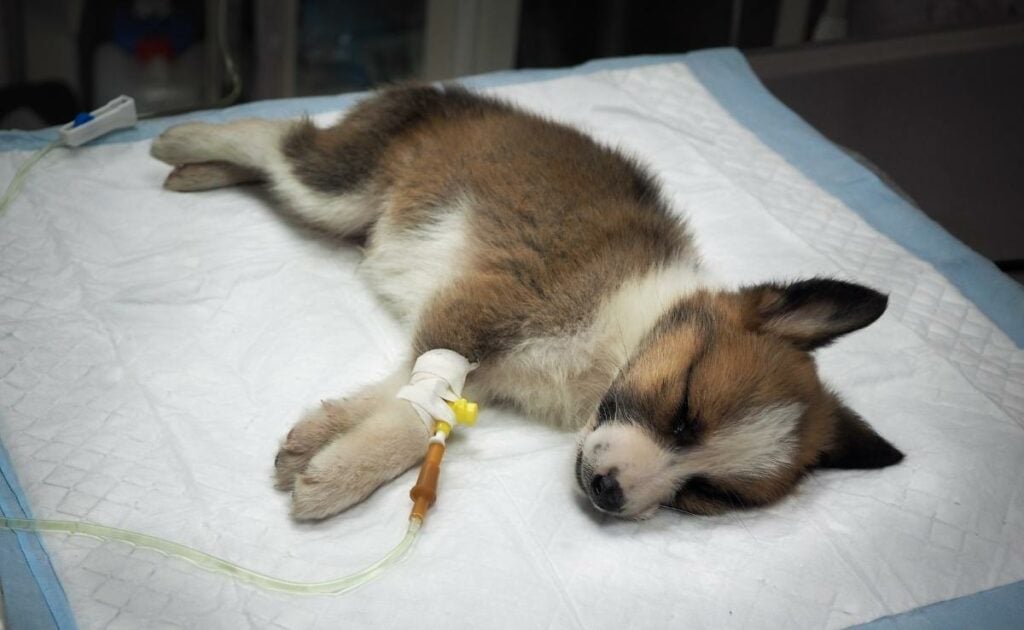
While one mild loose stool is not always an emergency, frequent diarrhea in puppies should never be ignored, especially if they are very young, recently adopted, unvaccinated, or acting sick overall.
Contact your veterinarian promptly if your puppy has:
- Repeated diarrhea
- Vomiting
- Low energy or weakness
- Refusal to eat or drink
- Blood in the stool
- Weight loss
- Pale gums
- Signs of dehydration
Parasites such as roundworms, hookworms, and Giardia are common causes of diarrhea in puppies. Viral illnesses like parvovirus can also cause severe, life-threatening diarrhea, especially in unvaccinated puppies.
Because puppies can deteriorate quickly, it’s always safest to contact your veterinarian sooner rather than later if you are unsure whether symptoms are serious.
Quick Things To Avoid When Your Dog Has Diarrhea
While your dog recovers, avoid making digestive upset worse with common feeding mistakes or risky remedies.
Try to avoid:
- Human anti-diarrheal medications unless your vet approves them
- Greasy or fatty foods like bacon, sausage, pizza, or fried foods
- Large meals too soon after diarrhea starts
- Too many treats, chews, or table scraps
- Sudden food changes
- Dairy products if your dog is lactose intolerant
- Rich snacks or high-fat “comfort foods”
If your dog’s symptoms suddenly worsen after trying a home remedy, stop the remedy and contact your veterinarian.
Our Personal Experience With Home Remedies For Dog Diarrhea
“My dog Daisy, a 12-year-old Pitbull Labrador mix, periodically gets diarrhea. It can be caused by a few different things, but as a big dog (about 80 pounds), when she gets diarrhea, it can be a very messy problem. I have found that taking a direct approach to her diet proves to be very effective in these situations.
I add a few tablespoons of plain pumpkin puree to her wet food, which helps calm down her stomach and balance her digestion. If it is a severe case, I will put her on a very bland diet made up of white rice, a mild protein, and pumpkin puree. Boiled skinless chicken or turkey is my top choice when she needs this diet. Usually, Daisy needs this bland diet for several days to be sure everything has cleared up.”
– Danielle DeGroot, mixed breed owner; writer & researcher for Canine Journal
Did You Know?
Most active pet insurance policies cover treatment for diarrhea and other GI issues. In most cases, diarrhea is also considered curable, meaning some insurers cover diarrhea treatment even if your dog has been diagnosed with previous bouts before the policy’s effective date. If your dog suffers from chronic diarrhea, pet insurance may be an excellent way to help cover the treatment cost as well as other health conditions that may arise. Read our best pet insurance reviews to find a company that fits your needs.

What Supplements May Help Dog Diarrhea?
These all-natural remedies are top-rated by pup parents, who find them quite effective for relieving mild acute diarrhea.
Purina Fortiflora Probiotic

For acute diarrhea, we recommend Purina Fortiflora, which gets amazing reviews from pup owners. However, other dog probiotics are helpful. Probiotics introduce billions of beneficial living bacteria into your dog’s gut to restore his tummy health, and you can also give them to your pup for preventative GI issues. See our reviews of the best probiotics for dogs to learn more.
Pet MD Stool-Fix

Pet MD Stool-Fix is an all-natural supplement that solely consists of 500mg of hydrated calcium aluminosilicate — a naturally occurring clay that absorbs toxins in the gastrointestinal tract which can cause diarrhea and discomfort. All you have to do is sprinkle the powder over your pup’s food.
Diggin’ Your Dog Firm Up Pumpkin

When your pup is ready for more solid food, you may want to consider Diggin’ Your Dog Firm Up Pumpkin supplements. These “treats” not only can help remedy your pup’s existing diarrhea, but they’re a great option for a preventative diarrhea solution (e.g., when switching to a new food, before traveling, etc.). The only ingredients are pumpkin and apple, which are grown (and treats made) in the U.S.
Frequently Asked Questions
Here are a few common questions pup parents have about diarrhea in dogs. Don’t see yours here? Respond in the comments, and we’ll get back to you!
What Can You Give Young Puppies With Diarrhea?
Young puppies can become dehydrated much faster than adult dogs, which is why diarrhea in puppies should always be taken seriously.
Unlike healthy adult dogs, fasting is usually not recommended for puppies under 3 months old because their blood sugar can drop dangerously low if they go too long without eating. Puppies are also more vulnerable to parasites, infections, and serious illnesses like parvovirus.
If your puppy has repeated diarrhea, vomiting, lethargy, loss of appetite, blood in the stool, or signs of dehydration, contact your veterinarian right away.
Can I Give My Dog Over-The-Counter Medication For Diarrhea?
If you’re tempted to give your pup a human over-the-counter (OTC) medication you have in your medicine cabinet, it’s extremely important to first get a green light from your vet. Pepto-Bismol (bismuth subsalicylate) or Imodium (loperamide) may be okay for your canine companion, but experts advise pup owners to always check with your vet first to make sure it’s healthy for your pup and to get appropriate dosing.
A canine-specific OTC medication may be a better option. Many pup owners find Vets Preferred Anti Diarrhea quite effective. The two active ingredients, kaolin and pectin, bind substances in the intestine, which helps produce firm stool.
Can Stress Cause Diarrhea In Dogs?
Yes. Stress and anxiety can absolutely trigger diarrhea in some dogs.
Common stress-related triggers include:
- Boarding
- Travel
- Vet visits
- Fireworks
- Moving
- Separation anxiety
- Major routine changes
- Introducing a new pet
Stress diarrhea is often temporary and improves once the stressful situation passes. However, if symptoms are severe or ongoing, it’s still important to rule out medical causes.
Is Pumpkin Really Good For Dog Diarrhea?
Plain canned pumpkin may help some dogs with mild diarrhea because it contains soluble fiber that can help regulate digestion.
However, it’s important to use plain pumpkin puree and not pumpkin pie filling, which often contains sugar, spices, and additives that are unsafe for dogs.
While pumpkin may help mild digestive upset, it’s not a cure-all and should not replace veterinary care when symptoms are severe or persistent.
Should I Still Feed My Dog If They Have Diarrhea?
In some mild cases, veterinarians may recommend temporarily withholding food for 6 to 12 hours to allow the digestive tract to rest. Afterward, small amounts of bland, low-fat food are usually reintroduced gradually.
However, fasting is not appropriate for every dog, especially puppies, seniors, toy breeds, diabetic dogs, or dogs with underlying medical conditions.
If you are unsure whether fasting is safe for your dog, contact your veterinarian before trying it.
Does Your Pup Need A Dog Food Change?
If your pup has chronic or recurring diarrhea, vomiting, and other digestive problems, your current dog food could be the culprit. Some pups suffer from food allergies or intolerances, so switching your canine companion to a higher-quality chow could help ease symptoms. See our reviews of the best dog food for allergies and the best non-prescription dog food for sensitive stomachs to see our top picks.