
When you purchase through links on our site, we may earn a commission at no extra cost to you. Learn more.
Sharing your bed with your dog can feel like one of the best parts of pet ownership. Their warmth, steady breathing, and reassuring presence may help you relax and feel less alone.
Table of Contents
Then come the midnight kicks, stolen blankets, snoring, fur, and the unexplained patch of damp bedding.
So, is sleeping with your dog a comforting habit or one that is quietly affecting your rest? For many healthy, well-behaved dogs and their owners, co-sleeping can work perfectly well. For others, it can worsen sleep, allergies, hygiene problems, or unwanted behavior.
Here’s how to decide whether your dog belongs under the covers, beside the bed, or in a sleep space of their own.

What Sleep Research Says About Dogs in Bed
Sleeping near a dog does not automatically mean getting a poor night’s rest. Many owners say their pets help them feel calmer, safer, and more relaxed at bedtime.
Where the dog sleeps may matter, however. Research suggests that having a dog in the bedroom may be less disruptive than having one directly on the mattress. Movement, scratching, snoring, and changes in position can cause brief disturbances, particularly for light sleepers.
Pay attention to how you feel rather than following a universal rule. If you regularly wake up tired, stiff, overheated, or pushed to the edge of the mattress, your sleeping arrangement may need an adjustment.
Recent co-sleeping with dogs research suggests the impact on sleep isn’t as black-and-white as social media makes it seem.
Before you banish your dog to the floor (or buy them a second pillow), here’s what sleep research suggests:
- About 46% of Americans sleep with a pet
- Only 19% say their sleep gets worse
- Many report feeling calmer and more secure with a pet nearby
- Research from the Mayo Clinic found that a dog in the room may not disrupt sleep much
- But a dog on the bed may slightly reduce sleep efficiency
- Light sleepers tend to notice disruptions more than heavy sleepers
Watch: The Reality of Sharing a Bed With Your Dog
Of course, statistics are one thing. Real life? That’s another story.
Because while research talks about “sleep efficiency,” it doesn’t account for blanket theft, 3 a.m. zoomies, or the slow, dramatic sprawl that somehow pushes you to the mattress edge.
If you’ve ever wondered what co-sleeping really looks like, this video pretty much sums it up.
Your Dog Sleeps in Your Bed, But Should They?
For a healthy dog with good manners, sleeping in bed is often a personal household choice rather than a clear right-or-wrong decision.
Potential benefits
- Physical closeness may help you feel calm and secure.
- Boosts bonding and can reduce separation anxiety.
- Bedtime can provide extra bonding time.
- Some owners find their dog’s presence emotionally comforting.
- A predictable nighttime routine may help certain dogs settle.
Possible drawbacks
- Movement, kicking, scratching, or [dog snoring] can disturb sleep.
- Fur can carry dirt, dander, pollen, and other outdoor allergens.
- Restless sleep from dog movement, snoring, or midnight zoomies
- Warm-bodied dogs may make the bed uncomfortable on hot nights.
- Unrestricted bed access can reinforce guarding or overly dependent behavior in some dogs.
If everyone sleeps well, your dog is healthy, and you can move them without resistance, co-sleeping may be fine. If you are waking up sweaty, sore, sneezy, or exhausted, placing a supportive dog bed beside yours may offer a better compromise.
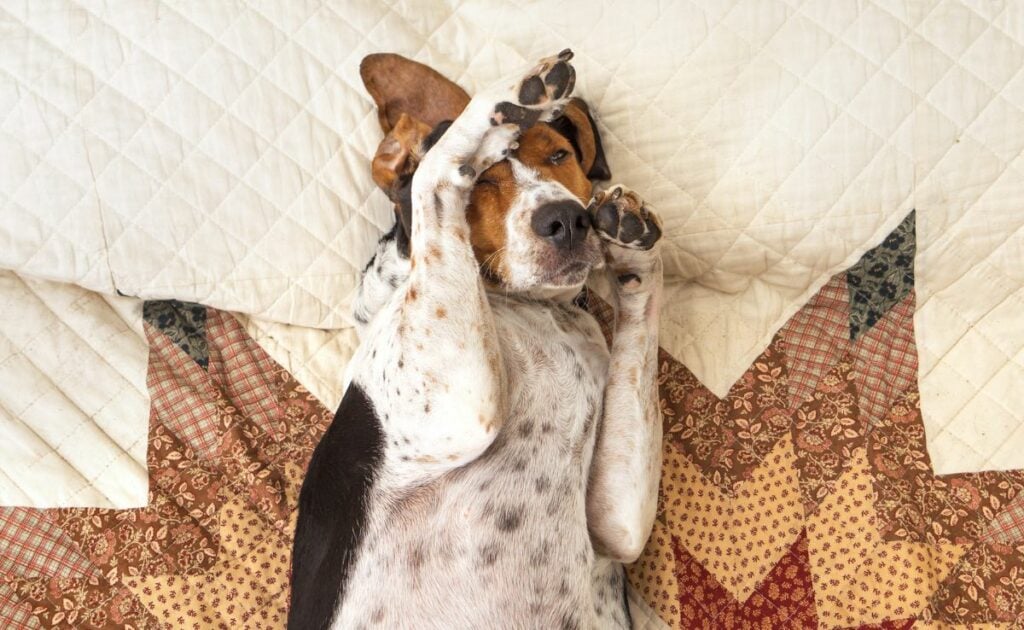
Sleep Tip: The “Room vs. Bed” Rule
Research from the Mayo Clinic suggests that having your dog in the bedroom may not significantly disrupt sleep, but having them on the bed can slightly reduce sleep efficiency.
In other words, you may not fully wake up, but your overall sleep efficiency (the percentage of time you’re actually asleep while in bed) can dip slightly when a dog shares the mattress.
If you’re waking up groggy, try moving your dog to a cozy bed next to yours. You’ll keep the closeness — without the midnight kicks.
Sometimes, a few feet make all the difference.
Next up: What exactly is lurking in your sheets? (You may want to wash them after this.)
What’s Lurking in Your Sheets?
You love your dog. But your dog has been… places.
Rolling in the grass. Digging in the yard. Sniffing things you definitely wouldn’t put on your pillow. And when they hop into bed, some of that world comes with them.
It’s not just fur.
During summer, dogs may bring more pollen, dirt, fleas, ticks, and outdoor allergens into bed, especially if they spend extra time outside. Warmer nights can also make co-sleeping less comfortable. Wipe paws and coats after outdoor activity, keep parasite prevention current, and increase brushing or bathing as needed without overbathing.

Here’s what you might be sharing your bed with when your dog hops up:
- Allergens – Pet dander, pollen, and dust stick to fur like Velcro
- Fleas or mites – Even indoor dogs can bring in bugs
- Bacteria – Think E. coli, Salmonella, or even Campylobacter
- Fur & oils – Triggers for anyone with allergies or asthma
- Outdoor grime – Mud, pesticides, road salt, mystery dirt, you name it
And yep, some dogs even bring in worms. Fleas can carry tapeworm eggs. You don’t want those on your sheets. Still feeling cozy?
The Centers for Disease Control (CDC) notes that certain zoonotic bacteria like Campylobacter and Salmonella can transfer from pets to humans, particularly if hygiene isn’t maintained. While the risk is low for healthy households, young children, older adults, and immunocompromised individuals should be cautious.
Fleas, Mites & The “Invisible” Hitchhikers
Even indoor dogs can pick up fleas. And here’s where it gets interesting:
Only about 5% of a flea population lives on your dog.
The other 95%? Eggs, larvae, and pupae hide in carpets, bedding, and upholstery.
If a single flea jumps into your bed, it can lay up to 40–50 eggs per day. Those eggs can roll into mattress seams and soft fabrics before you ever see a bite.
Mites (like those that cause mange) and certain intestinal parasites can also spread through close bedding contact, though this is far less common in well-vaccinated, regularly treated dogs.
If your dog is on monthly flea prevention and you wash bedding weekly, the health risks are dramatically reduced.
Skin & Allergy Triggers
Dermatologists often point out that it’s not just “dog hair” causing irritation — it’s:
- Dander (microscopic skin flakes)
- Saliva residue
- Outdoor pollen clinging to fur
- Natural skin oils
And if you already struggle with asthma or eczema, those irritants can accumulate quickly in pillows and sheets.
Quick Reality Check
For most healthy dogs and healthy adults, the risk of serious illness from co-sleeping is low.
But cleanliness and parasite prevention make all the difference.
- Wipe paws before bed.
- Staying consistent with flea prevention.
- Wash bedding weekly, and use washable, hypoallergenic bedding if you co-sleep.
That’s what keeps cozy from becoming itchy.
Co-Sleeping Hygiene Checklist
Good sleep hygiene isn’t just about screens and caffeine — it includes what (or who) is sharing your bed.
If your dog sleeps in your bed, these simple habits can help reduce allergens and keep things cleaner:
- Stay consistent with flea & parasite prevention — year-round protection helps prevent problems before they start.
- Wipe paws before bed — a damp cloth or pet wipe removes dirt and pollen picked up outside.
- Wash bedding weekly — hot water helps reduce allergens and buildup.
- Bathe your dog every 4–6 weeks — use a gentle, pH-balanced shampoo to cut down on dander and oils.
- Brush 2–3 times per week — removes loose fur before it ends up on your pillow.
- Use a washable dog blanket or a designated “dog zone” — keeps most debris contained in one area.
- Run an air purifier if you’re allergy-prone — especially helpful in bedrooms with carpeting.
Bottom line: Co-sleeping isn’t inherently dirty — neglecting hygiene is. A few small habits can keep your bed a safe cuddle space.
Up next: Which dogs probably shouldn’t be in your bed at all?
Which Dogs Shouldn’t Sleep With You?
Co-sleeping might be cozy, but it is not the right choice for every dog. In some cases, sharing a bed can worsen behavior problems, aggravate allergies, create hygiene concerns, or put a dog at risk of injury.
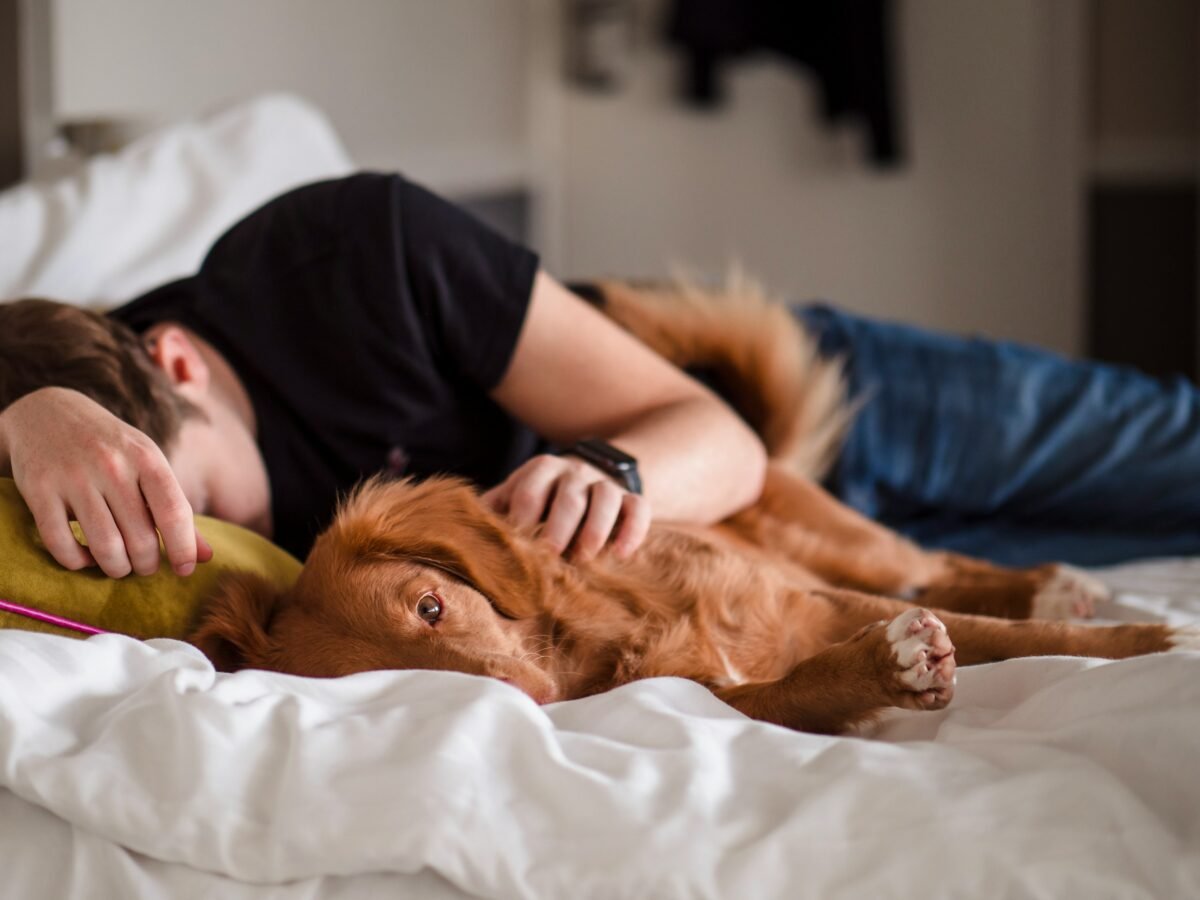
Here are the clearest signs that your dog should sleep somewhere else, at least temporarily:
- Puppies still potty training: If nighttime accidents are still common, use a crate or separate puppy bed nearby until potty training is reliable.
- Dogs having accidents or experiencing incontinence: Urine leakage or repeated accidents can damage bedding and may point to an underlying health issue. New incontinence in an adult or senior dog deserves a veterinary checkup.
- Dogs with fleas, ticks, worms, or skin infections: Parasites and some skin conditions can spread through bedding. Keep affected dogs off the bed until treatment is complete, and wash all bedding thoroughly.
- Dogs who guard the bed: Growling, stiffening, snapping, blocking access, or refusing to move can signal resource guarding. Do not dismiss these behaviors or physically force your dog off the bed. Remove bed privileges safely and seek help from a qualified trainer or veterinary behavior professional.
- Dogs with joint pain, arthritis, or mobility problems: Jumping onto or off a high mattress can worsen pain or cause a fall. Senior dogs that hesitate, slip, or struggle to climb should use pet stairs, a ramp, or a supportive orthopedic bed, licensed via the floor.
- Dogs that worsen your allergies: If you notice more sneezing, congestion, itchy eyes, coughing, or poor sleep, dander and outdoor allergens in the bedding may be contributing. Try moving your dog to their own bed or outside the bedroom and see whether symptoms improve.
- Dogs with severe separation anxiety: If your dog cannot settle without being pressed against you, bed-sharing may reinforce dependence rather than helping them feel secure alone.
Sudden changes such as accidents, pain, nighttime restlessness, skin problems, or new aggression should be discussed with your veterinarian.
6 Considerations When Letting Your Dog Sleep In Your Bed
Before you invite your pup under the covers (or kick them out for good), here are a few key things to think about, including your health, your habits, and how your dog really behaves at night.
1. Your Dog’s Health
If your dog has painful arthritis or major joint issues, their body may need more support than your mattress can provide, especially if you like a softer bed.
Some dogs with musculoskeletal issues need firm support to ease their aches and pains. If this is the case with your pup, you may want to consider an orthopedic dog bed, which you can place on the floor near your bed.
Another issue to consider for older dogs is incontinence. As dogs age, their bladders become weaker and could leak when they lie down on your bed. Of course, you could always put pee pads down on your bed to keep your sheets dry if you still want your buddy in bed with you.
2. Your Dog’s Behavior
If your dog is aggressive and extremely territorial about their space, you may not want to introduce them to your bed. Dogs with these issues may bark and growl to protect their spot on your bed.
However, most well-adjusted and well-behaved dogs likely won’t exhibit these behaviors and will share your bed happily.
3. Your Allergies
Even if you don’t have an allergy to dog dander, other sensitivities can be triggered by co-sleeping with your furry friend. When dogs go outside, dust, pollen, and other irritants cling to their fur, and these can end up in your bed.
However, if allergies are a concern, it would be a good idea to run an air purifier and wipe your dog down with a damp towel or a bath wipe before bed.
4. Your Sleeping Habits
Are you a light or heavy sleeper? Does your dog move around a lot when they slumber? Your quality of sleep is one of the biggest concerns to think about. If you’re a light snoozer, your dog could disrupt getting a good night’s rest.
Even small movements can cause subtle REM disruption, especially for light sleepers. You might not remember waking up, but fragmented REM cycles can leave you feeling less rested in the morning.
Many dogs want to lie very close to their pet parents, and their rolling over, kicking, or scratching could wake you up. And if your dog snores or dreams loudly, this could also pose a problem. Some owners train their dogs to sleep at their feet, so you could consider this option to help reduce disturbances.
5. A Sense Of Security
If you live alone, having your dog in bed with you can help you feel more secure. Many dog owners feel safer and rest better when snuggled up with their pups. Co-sleeping with your dog can ease anxiety because dogs are always on the alert if something goes bump in the night.
The close physical contact can also help relieve stress and even lower blood pressure levels. Dogs also make warm, cozy bedfellows.

Photo by Emma Braby for Canine Journal, © Cover Story Media, Inc. 2024.
I only let my two dogs, Bonkers and Chips, sleep in bed when my husband’s away, as it just makes me feel more secure. Knowing they’d alert me if something was wrong helps me relax.
But restful sleep? That’s another story. They take turns burrowing under the blanket, then flopping on top of it, every 30 minutes. One minute I’m roasting under fur, the next I’m blanket-less and wide awake. It’s not exactly a peaceful night, but honestly… it still feels worth it.
6. Bonding
If you’re not home most of the day for work or other reasons, spending quality time bonding with your dog is challenging, for sure. Sleeping together can be a great way for you and your dog to form a stronger bond.
Up next: the surprising emotional and scientific benefits of bedtime snuggles.
The Science Behind Why It Feels So Good
Okay, I’ve talked germs and growls, but here’s why co-sleeping can be amazing (and why your dog loves it just as much as you do).
Cuddling with your dog triggers the release of oxytocin, the same feel-good hormone released when parents bond with babies. This isn’t just emotional fluff: studies show that dog–owner co-sleeping can:
- Lower heart rate and blood pressure
- Reduce cortisol (stress hormone) levels
- Create stronger emotional bonds between you and your pet
In one study, owners who co-slept with their dogs reported increased feelings of security, relaxation, and emotional support, especially those who lived alone.
And yes, your dog benefits too. Dogs are pack animals at heart, and sleeping close to you reinforces their trust and sense of safety. That’s why they often curl up near your chest or feet. They want to stay connected.
Fun fact: The University of Jyväskylä found that dogs who sleep with their owners have been shown to synchronize their sleep cycles and heart rate with their humans. Basically, they’re mirroring your bedtime routine, like the world’s cutest sleep buddy.
Up next: The one co-sleeping mistake almost everyone makes (and how to fix it before it becomes a problem).
The #1 Co-Sleeping Mistake Dog Owners Make
You’ve got the cuddles. The routine. The shared pillow. Everything seems perfect, until your dog starts growling when you roll over… or refuses to get off the bed when you ask.
Here’s the deal: the biggest co-sleeping mistake most dog parents make is not setting boundaries. Letting your dog sleep in your bed isn’t the problem, but treating it like their bed quickly becomes one.
Here are a few signs you’re crossing into problem territory:
- Your dog growls, stiffens, or resists being moved
- They jump up uninvited and refuse to get down
- They show signs of resource guarding (the bed = their territory)
- Your dog gets overly anxious when they don’t sleep in your bed

According to the American Kennel Club (AKC), when your dog sees the bed as theirs, not yours, it can feed into dominant or anxious behavior patterns.
Here are some easy fixes:
- Teach a release command like “off” or “place”
- Only allow them to come up by invitation, not by default
- Use a dog bed next to your bed for nights you need space
- Reinforce crate training or designated rest zones if needed
Dogs thrive on structure. Sharing your bed is fine, as long as it’s your bed, and they know it. Structure and routine matter more than location. A consistent bedtime routine reduces anxiety and protects sleep quality for both of you.
5 Common Mistakes Owners Make
Even when bed-sharing works well, a few common habits can create sleep, hygiene, or behavior problems.
1. Letting Your Dog Choose the Whole Bed
Give your dog a defined sleeping area, such as a washable blanket at the foot or side of the bed. This helps protect your space and makes boundaries easier to maintain.
2. Not Washing Bedding Often Enough
Dog hair, dander, saliva, dirt, and pollen can build up quickly. Wash sheets and your dog’s blanket at least weekly, or more often during heavy shedding or after frequent outdoor activity.
3. Ignoring Resource Guarding
Growling, stiffening, staring, snapping, or refusing to move should not be treated as harmless bedtime behavior. Remove bed access safely and speak with a qualified trainer or behavior professional.
4. Letting Puppies Sleep in Bed Too Soon
Puppies are usually better off in a crate or separate bed near you until nighttime potty training is reliable. This reduces accidents and helps establish a consistent routine.
5. Skipping Flea and Tick Prevention
Dogs can bring fleas and ticks into bedding even when parasites are difficult to spot. Keep prevention current and check your dog after time in tall grass, wooded areas, or other high-risk environments.
Next up: How to make co-sleeping more peaceful (for both of you).
6 Co-Sleeping Tips With Dogs
Love sleeping with your dog but hate waking up sweaty, squished, or sneezy? You’re not alone. The key isn’t kicking them out; it’s co-sleeping smarter. A predictable dog bedtime routine can make co-sleeping smoother — and prevent 3 a.m. chaos.
Here’s how to reclaim your sleep without giving up the snuggles:
1. Use a Washable Duvet or Pet Blanket
Cover the area where your dog sleeps with a machine-washable throw or pet-specific blanket. It traps fur, drool, dirt, and mystery stains so your nice bedding stays fresh.
Wash it weekly, and keep a second on rotation.
2. Teach a Bedtime Command
Don’t let your dog make the rules. Training a consistent “up” and “off” command gives you control over when they’re allowed on the bed, and helps prevent behavioral issues like guarding.
Even cuddly dogs need boundaries to feel safe.
3. Switch to Allergy-Friendly Bedding
Dog dander + cotton sheets = sneeze city. Swap to hypoallergenic pillowcases, duvet covers, and mattress protectors to reduce allergen buildup. Look for tightly woven fabrics and breathable materials.
4. Create a “Dog Zone” on the Bed
Fold a small blanket or place a flat dog mat in a corner of the bed. This gives your pup a defined space, so they aren’t sprawled out sideways across your chest at 3 am.
Dogs love structure. And so does your spine.
5. Add Pet Ramps or Stairs
If your dog is small, aging, or has joint issues, jumping off a high bed can cause injury. Install soft-sided pet stairs or a bed ramp to make getting up and down safe and easy.
Plus, no more 2 am whining to get back up.
6. Try a Calming Bed Beside Yours
If your dog is extra clingy or you need a break, place a cozy orthopedic or calming dog bed next to your bed. It gives them the closeness they crave, without the snoring in your ear.
Many dogs will naturally transition to their own bed if it’s nearby.
Watch this TikTok of a Frenchie snoozing in a baby bassinet next to their mom’s bed, a hilarious (and genius) co-sleeping setup that keeps everyone comfy.
Quick Takeaway: You don’t have to choose between sleep and your dog. A few smart swaps can turn chaotic nights into comfy cuddles, with less fur in your mouth.
Quick Decision Guide: Should Your Dog Sleep in Your Bed?
If you’re still unsure, use this quick scan to find your best next step.
| If This Is True… | You Might Consider… |
|---|---|
| You have severe allergies or asthma | Keeping your dog out of the bed (and possibly the bedroom) |
| Your dog is reactive or shows guarding behavior | Working on training and boundaries before allowing bed access |
| You consistently wake up tired or sore | Moving your dog to a cozy bed right beside yours |
| Your dog struggles with separation anxiety | Gradual co-sleeping with clear rules or a bed next to yours |
| You’re a light sleeper | Creating a designated “dog zone” or using a nearby dog bed |
| Your dog is older or has joint pain | Using pet stairs or a supportive orthopedic bed |
Bottom line: There’s no one-size-fits-all rule — but there is a right setup for your household.
Should You Kick Them Out? Here’s the Middle Ground
So… should your dog sleep in your bed?
Here’s the truth: you don’t have to go all or nothing. There’s a middle ground that gives you the snuggles and the sleep, and it starts with setting smart boundaries and giving your dog their own cozy space.
Here are a few co-sleeping compromise ideas:
- Dog bed next to your bed: Perfect for dogs who just want to be close. You get space, they get comfort. Look for calming or orthopedic options that mimic the warmth of a bed.
- Co-sleeping on weekends only: Let your dog sleep with you as a treat, like a Saturday morning cuddle tradition. This keeps the novelty while preventing dependency.
- Crate in the bedroom: For dogs with anxiety or behavioral issues, a crate can offer structure and safety. Place their crate with a crate bed nearby so they still feel like part of the “pack.”
- Dog-friendly furniture alternative: Some owners use low futons, sofa beds, or even bassinets as dog sleep stations next to the main bed. It’s cute, and it works.
- Upgrade their bedding: If your dog still refuses to stay off your bed, try leveling up their setup. A plush, warm bed in a quiet, safe spot can be surprisingly effective, especially when paired with positive reinforcement.
Final word? If co-sleeping works for you and your dog, awesome. If it doesn’t, you’re not a bad pet parent for kicking them out. You’re just protecting your sleep, and theirs.
Our Team Weighs In on the Dog-in-Bed Debate
We asked our team a simple question: Does your dog sleep in your bed… and how’s that working out for you?

Photo by Danielle deGroot for Canine Journal, © Cover Story Media, Inc. 2024.
In my house only small dogs are welcome on the bed. I have both large Lab mixes and smaller breed dogs. The big dogs are too hard on the furniture, but the little dogs love nothing more than cuddling up with us, wherever we are.
My small dogs are allowed to cuddle on the bed during the day, and sometimes even at night. However, they don’t sleep in human beds regularly.
Somehow these small dogs know how to take up all the space. It’s just not comfortable long term and I also worry about rolling over on the dogs. I’ve had dogs as small as 5 pounds, and have never been able to sleep well for fear they might get crushed.
– Danielle DeGroot, Dog Mom & Writer for Canine Journal
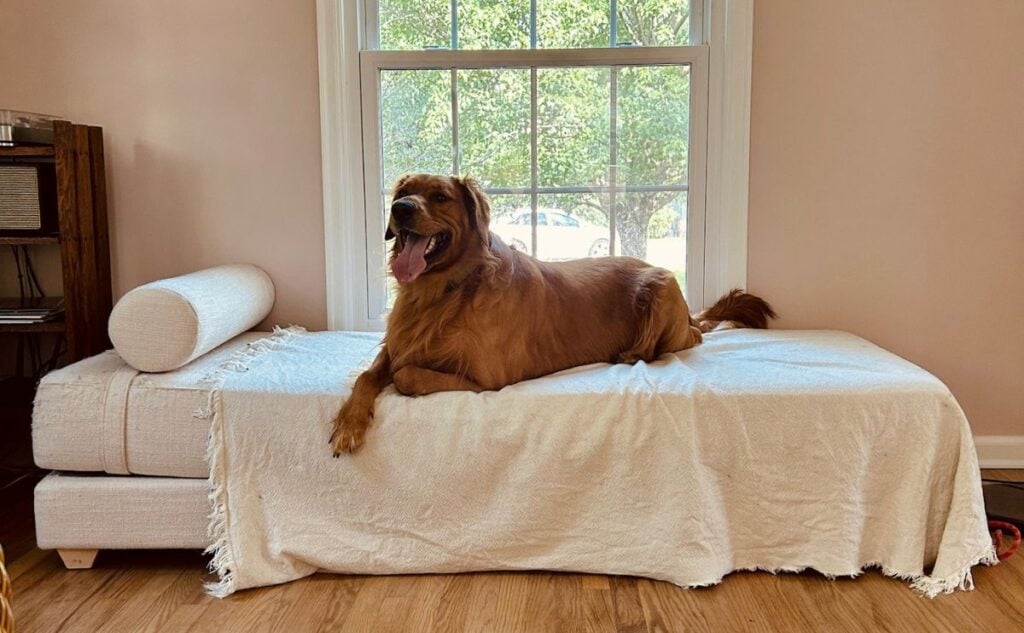
Photo by Tara Maurer for Canine Journal, © Cover Story Media, Inc. 2025.
When we first adopted Rio, he slept in the bedroom with us, and sometimes in the bed. That didn’t last long. He’s a total bed hog and has a habit of waking up too early, which meant none of us were sleeping well.
That said, the bed isn’t totally off limits. He’ll hop up during the day for a nap or to hang out while I’m reading or folding laundry.
As for keeping things clean, I wipe his paws after every walk using either paw wipes or a no-rinse foam cleanser. I wash the bedding weekly and run an air purifier in the bedroom to help with allergens and floating dog hair. Between that and regular vacuuming, it’s manageable.
– Tara Maurer, Dog Parent, Canine Journal Writer & Occasional Bed Space Negotiator

I think it should ultimately be up to the household. I don’t let my dog, Sally, in my bed. I don’t want to sleep in a bunch of dog hair, and there’s not enough room for her in it! However, if it were up to my husband, she’d be curled up in bed with us each night.
Instead, she has her own bed in our bedroom that she loves to curl up on. When she has sleepovers at my in-law’s home, they let her sleep in the bed with them, and she loves it.
The stories they have the next morning are always funny. She likes to sprawl out completely and press her paws up against their backs. I’m not sure how they sleep with her like that!
– Kimberly Alt, Dog Mom and Writer & Pet Insurance Expert for Canine Journal

Photo by Sadie Cornelius for Canine Journal, © Cover Story Media, Inc. 2024.
Our pup sleeps in bed with us, snuggled between the pillows and the headboard. She sleeps hard and doesn’t take up much space, so we don’t mind that she’s sharing the bed (except for the occasional, accidental kick in the face in the middle of the night when she’s chasing squirrels in her dreams).
Surprisingly, her snoring is soothing, and having her warmth and presence helps me sleep. We bathe her and clean our sheets regularly to minimize germs, spritz the bed with linen spray at night to keep them fresh, and we usually use a roller brush to pick up hair and debris from the pillows in the morning before making the bed.
She rarely needs to go out in the middle of the night (we take her right before bed and first thing in the morning, which helps).
– Sadie Cornelius, Dog Parent & Long-Time Friend of Canine Journal
Dog Sleeping In Bed FAQs
Here are some of the top questions our readers ask about sleeping with dogs. If you have one I haven’t listed below, ask us in the comments, and we’ll find the answer for you.
Does Co-Sleeping Create Dominance Issues?
Co-sleeping doesn’t create dominance issues. There is an old-school belief that dogs sleeping in human beds increases dominance problems. However, it sometimes reinforces the dominant behavior that is already there.
Modern behaviorists generally agree that sleeping in your bed does not create dominance — but it can reinforce existing behavioral issues if boundaries aren’t set. But if you’re both lying together on the same level, your dog can get confused about who’s the alpha.
Why Does My Dog Sleep So Close To Me (Or On Top Of Me)?
Canines are pack animals, and your dog considers you part of their pack. From birth, puppies have the instinct to feel comfort and security by being physically close to their littermates. This is why they pile on top of each other. And this packing instinct stays for life.
It’s not only a need for closeness and connection, but it’s also a sign of affection. Your dog staying so close to you is their way of telling you that they feel safe with you. Most dogs need this consistent closeness to feel happy and cared for.
How Do I Stop My Dog From Hogging The Bed?
Train your dog to sleep in a designated “bed zone” (corner, blanket, or mat), and use commands like “place.” If they sprawl or push, calmly guide them back. Don’t argue with a 60-pound blanket thief at 3 am, just redirect.
Can I Re-Train My Dog To Stop Sleeping In My Bed?
Yes, but consistency is key. Start by inviting them less often, introducing a comfy alternative (like a calming bed), and rewarding them for using it. Crate training or bedroom dog beds are great transitional options.
Is It Safe For Kids To Co-Sleep With Dogs?
In general, kids should not sleep with dogs. There’s a small risk of injury, even with friendly dogs, due to size, movement, or accidental aggression while startled. Pediatricians and veterinarians generally advise supervision, especially with large breeds or very young children.
How Do I Kick My Dog Out Of My Bed Without Feeling Guilty?
Start by upgrading their alternative — not just removing access.
Instead of simply shutting the door, make their new sleep space just as inviting:
- Choose a high-quality orthopedic or calming dog bed
- Place it next to your bed at first, then gradually move it if needed
- Add a worn T-shirt so it smells like you
- Reward and praise them consistently for using their new spot
Transition gradually rather than overnight. Invite them up less often, reinforce the new routine, and stay consistent with boundaries. Most dogs adjust quickly when the new setup feels safe and predictable.
And remember: setting sleep boundaries isn’t rejection — it’s structure. Protecting your sleep helps both of you.
What Does Your Dog’s Sleeping Position Reveal?
Your dog’s sleep position can say a lot about how they’re feeling. If they curl up like a donut, they’re likely seeking warmth and security. Sprawled on their side usually means they’re relaxed and feel safe. Belly-up with legs in the air? That’s a sign of total trust, and a clever way to cool down.
Dogs who sleep belly-down with legs stretched out (a “sploot”) are often playful and ready to pop up. And if your dog sleeps on top of you? That’s pure affection and bonding. Their body language is basically bedtime psychology.
Does Daylight Saving Time Affect Dogs’ Sleep?
Yes. Dogs rely on routine and light cues. A one-hour clock shift can temporarily disrupt feeding times, potty schedules, and sleep patterns. Gradual schedule adjustments can ease the transition.
Keep Your Dog Clean (Without Losing Your Mind)
Brushing your dog a few times a week helps reduce shedding and keeps their coat healthy. Most dogs only need a bath every 4 to 6 weeks, as any more than that can dry out their skin.
Look for a natural and gentle, pH-balanced dog shampoo that soothes the skin without harsh chemicals. And for in-between cleanups, a good dry shampoo can freshen them up without the mess of a full bath.
Quick Poll: Dog in Your Bed — Dreamy or Disruptive?
Be honest. Are you sleeping better with your dog… or slowly surrendering the mattress? Tell us what really happens after lights out. Drop your funniest, weirdest, or sweetest co-sleeping moments in the comments. We might feature our favorites in an upcoming post!