When you purchase through links on our site, we may earn a commission at no extra cost to you. Learn more.
Poodles and Labradoodles look almost alike, act friendly, and both promise to be “great family dogs.” So why do so many owners say they’d choose differently the second time around? On the surface, it feels like splitting hairs; both are smart, curly-coated, and wildly popular. But once you live with one, the differences become impossible to ignore.
Table of Contents
From shedding myths and grooming costs to energy levels and temperament quirks, this comparison goes beyond appearances to help you decide which dog will actually make your life easier, not harder.
Breed Comparison
- Height10-22 Inches
- Height22-24 Inches
- Weight6-70 Pounds
- Weight30-60 Pounds
- TemperamentEasy Going, Intelligent, Friendly
- TemperamentAffectionate, Intelligent, Friendly
- EnergyHigh Energy
- EnergyIntense
- HealthAbove Average
- HealthAbove Average
- Lifespan12-15 Years
- Lifespan12-16 Years
- Puppy Prices$1,000 and Up
- Puppy Prices$1,000 and Up
What Most People Get Wrong About Poodles and Labradoodles
Most people assume Poodles and Labradoodles are basically the same dog in different packaging. Both are smart, curly-coated, and marketed as great family pets, so how different can they really be?
The reality is that daily life with each breed can feel very different. Grooming time, shedding expectations, energy levels, and emotional needs don’t line up as neatly as most people expect. Understanding those differences up front can save you years of frustration and help you choose the dog that actually fits your lifestyle.
Poodle vs Labradoodle: At a Glance
At first glance, Poodles and Labradoodles may seem similar, but their daily needs, personalities, and maintenance requirements differ in important ways.
Poodle
Poodles are intelligent, focused dogs that do best with structure and mental stimulation. They’re eager to learn, highly trainable, and often happiest when they have a job to do.
- Thrives on training and routine
- Very low shedding
- High grooming commitment
- Often, a better option for allergy-sensitive homes
Labradoodle
Labradoodles are affectionate, social dogs bred to be friendly companions. They’re playful, people-oriented, and tend to bond closely with their families.
- Loves constant companionship
- Very high energy and play-driven
- Coat type and shedding can vary
- Not guaranteed to be hypoallergenic
Breed Origins & Purpose
A dog’s history isn’t just interesting; it helps explain why a breed behaves the way it does today. Understanding what a dog was originally bred for can reveal a lot about its energy level, intelligence, and compatibility with your lifestyle.
Poodle Breed History
Despite their strong association with France, Poodles actually originated in Germany, where they were bred as skilled water retrievers. The breed’s name comes from the German word pudel, meaning “to splash,” a nod to their original role retrieving waterfowl.

Poodles are widely regarded as one of the smartest dog breeds in the world and excel in obedience, agility, and performance sports. Today, they come in three sizes, Standard, Miniature, and Toy—each sharing the same intelligence and trainability. Miniature Poodles have become especially popular with families due to their manageable size and playful nature.
Labradoodle Breed History
The Labradoodle has a much more recent origin. The breed was first developed in Australia in 1989 through a guide dog program with the goal of creating a service dog suitable for a visually impaired woman whose husband had dog allergies.
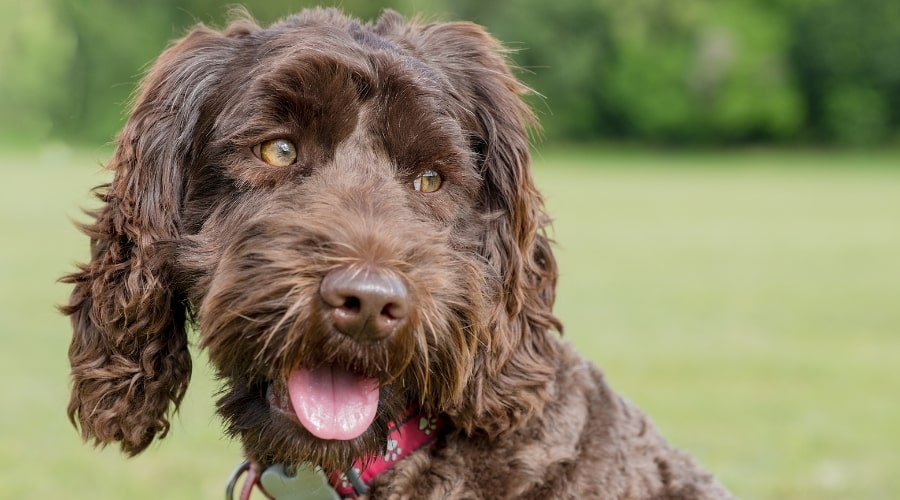
By crossing a Labrador Retriever, long favored as a guide dog, with a Poodle, known for its intelligence and low-shedding coat, breeders hoped to combine trainability, temperament, and allergy-friendly traits. The result was the Labradoodle, a friendly, social, and people-oriented hybrid that quickly gained popularity beyond service work.
Labradoodles are commonly classified into generations based on their lineage:
- F1: 50% Labrador Retriever and 50% Poodle
- F1B: 75% Poodle and 25% Labrador (bred back to a Poodle)
- F2: Offspring of two Labradoodles, with more genetic variability
It’s important to note that Labradoodles are not recognized as a standardized breed by major kennel organizations. Because of this, traits such as coat type, shedding, and temperament can vary more widely than in purebred dogs.
Size, Appearance & Coat Types
While Poodles and Labradoodles often look similar at first glance, their size range, coat texture, and grooming predictability can differ more than many people expect. These differences play a major role in daily care, shedding, and long-term maintenance.
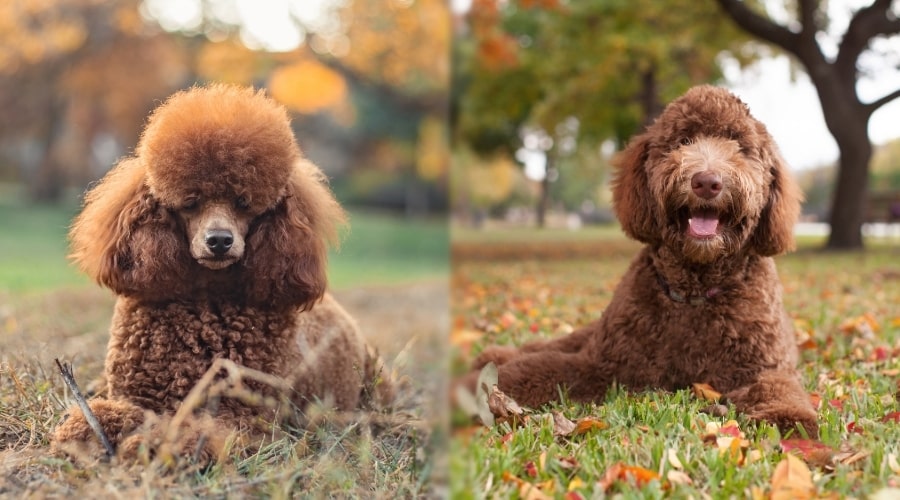
Height & Weight Differences
One of the biggest structural differences between these two breeds is size predictability. Poodles are officially recognized in three size categories, which gives prospective owners a clearer idea of how large their dog will be as an adult. Labradoodles, as a hybrid, tend to have a wider range of variation.
Poodle size ranges:
- Toy Poodle: Under 10 inches tall; typically 4–6 pounds
- Miniature Poodle: 10–15 inches tall; typically 10–15 pounds
- Standard Poodle: Over 15 inches tall; typically 40–70 pounds
Labradoodles are most commonly bred in Standard and Miniature sizes, depending on the size of the Poodle parent. However, because they are mixed-breed dogs, adult height and weight can vary more noticeably, even among puppies from the same litter. They are often compared to the Goldendoodle by potential dog owners due to their common appearances.
If size is a major deciding factor, Poodles generally offer more consistency, while Labradoodles require a bit more flexibility in expectations.
Coat Textures Explained: Curly, Wavy, and Flat
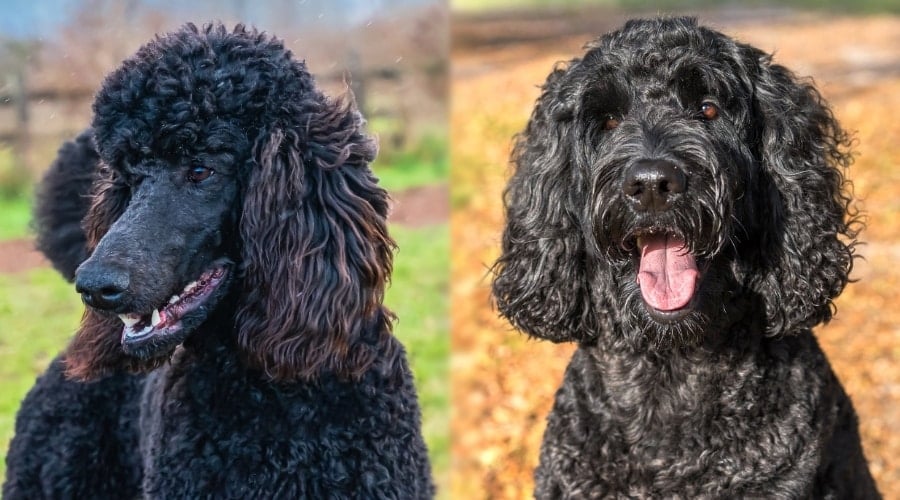
Both breeds can have curly or wavy coats, but the texture and maintenance level can vary significantly.
- Curly coats are tight and dense, similar to a traditional Poodle coat. These shed very little but require frequent brushing and regular professional grooming to prevent matting.
- Wavy coats have a looser texture and are common in Labradoodles. They tend to be easier to manage than curly coats but still require routine grooming.
- Flat coats are more common in Labradoodles with stronger Labrador traits. These coats shed more and are typically not suitable for allergy-sensitive households.
Coat Predictability in Labradoodles
One of the biggest misconceptions about Labradoodles is that their coats are predictable. In reality, coat type can vary widely—even among puppies from the same parents. A Labradoodle puppy with a soft, wavy coat may develop a thicker or more shedding-prone coat as it matures.
While multigenerational Labradoodles (such as F1B) are often bred to increase the likelihood of low-shedding coats, no Labradoodle is guaranteed to be hypoallergenic. This unpredictability is one of the key differences between Labradoodles and purebred Poodles.
Color Variations
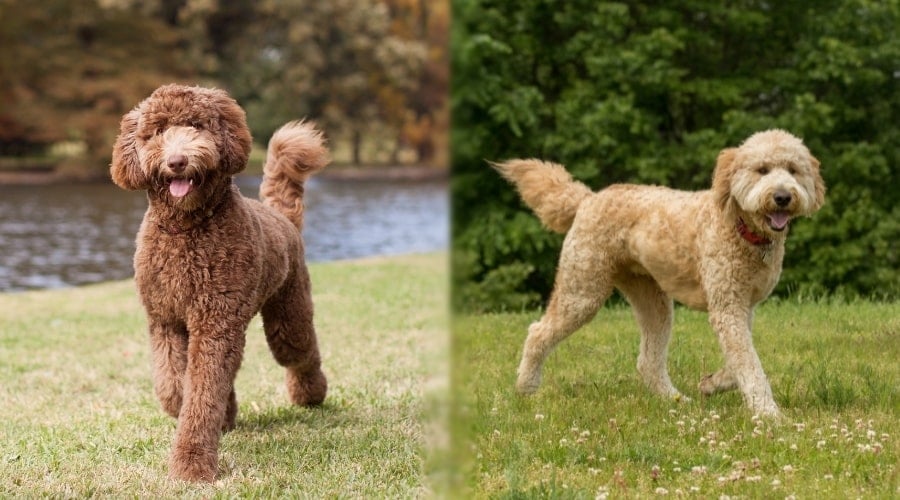
Labradoodles are commonly seen in colors such as cream, apricot, chocolate, black, and charcoal. Poodles share many of these shades but also come in a wider range of recognized colors, including white, silver, blue, gray, brown, and café-au-lait.
Color has no impact on temperament or health, but lighter-colored coats may show dirt more easily, while darker coats can require more frequent brushing to keep their appearance polished.
Temperament & Personality Differences
Temperament plays a major role in how well a dog fits into your daily life. While both Poodles and Labradoodles are intelligent and family-friendly, they express those traits in noticeably different ways.
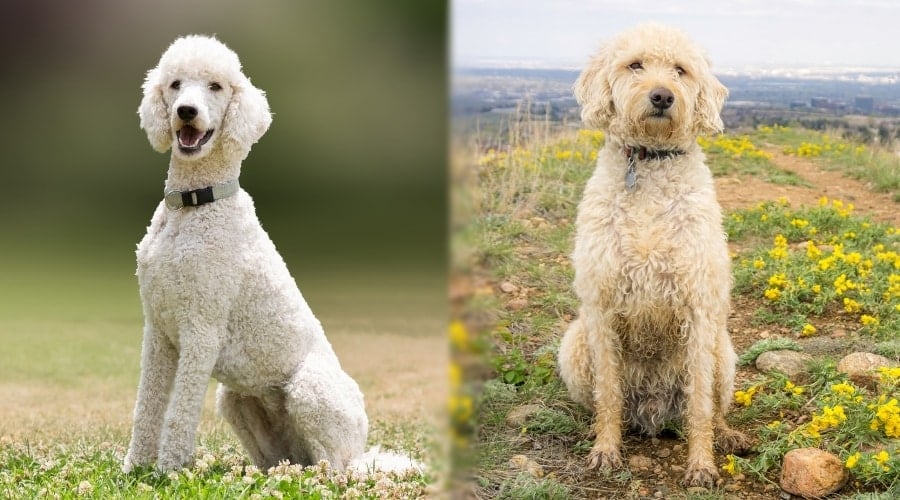
Poodle Temperament Traits
Poodles are known for their intelligence, focus, and strong responsiveness to their owners. They tend to be observant dogs that thrive when given structure, consistency, and mental challenges.
Common Poodle temperament traits include:
- Highly intelligent and quick to learn
- Focused and attentive, especially during training
- Loyal and affectionate with family members
- More reserved or cautious around strangers
- Sensitive to tone and training methods
Poodles often do best in homes that enjoy routine and engagement. When their mental and physical needs are met, they’re playful, confident, and deeply bonded companions.
Labradoodle Temperament Traits
Labradoodles are typically outgoing, affectionate, and strongly people-oriented. They tend to bond closely with their families and enjoy being involved in everyday activities.
Common Labradoodle temperament traits include:
- Friendly and social with people and other dogs
- Affectionate and eager for attention
- Playful, energetic, and enthusiastic
- More emotionally dependent on companionship
- Can be prone to separation anxiety if left alone too long
Labradoodles thrive in households where interaction and play are part of daily life. With proper training and exercise, they make loving, adaptable family companions.
Independence vs. Attachment Levels
While both breeds form strong bonds with their owners, they differ in how much independence they’re comfortable with.
Poodles tend to be more self-sufficient. They enjoy companionship but are often content entertaining themselves once their physical and mental needs are met. This makes them a better fit for owners who work outside the home or prefer a dog that doesn’t require constant attention.
Labradoodles, on the other hand, are typically more attachment-driven. They thrive on interaction and prefer being near their people as much as possible. Because of this, they may struggle more with being left alone for long periods and can be more prone to separation anxiety without proper training and enrichment.
Family, Kids & Lifestyle Compatibility
Both Poodles and Labradoodles can make great companions, but they tend to fit different household rhythms.
- Labradoodles are often an easier match for busy, high-interaction homes because they’re typically playful, social, and tolerant of activity—especially with young kids and frequent visitors.
- Poodles can be excellent family dogs too (particularly Standard and Miniature), but they often do best with calmer routines or slightly older children who respect boundaries, since many Poodles are more sensitive to constant stimulation.

For singles and seniors, the best choice usually comes down to schedule.
- Poodles often suit owners who enjoy structure, training, and one-on-one companionship, and they’re typically more comfortable with short periods of independence once their needs are met.
- Labradoodles tend to be more attachment-driven and thrive when someone is home often, which can make them a better fit for people who want an affectionate “shadow” dog—but not ideal for households where the dog is frequently left alone.
Living space matters less than daily outlets. Toy and Miniature Poodles can adapt well to apartment life with regular exercise and mental stimulation, while Standard Labradoodles often do best with more space or frequent outings due to their higher energy and play needs.
- Best fit for young, active families: Labradoodle
- Best fit for calmer routines or older kids: Poodle
- Best fit if you’re away often: Poodle (generally more independent)
- Best fit if you’re home most of the day: Labradoodle (typically more people-focused)
Exercise & Mental Stimulation Needs
Both Poodles and Labradoodles are active, intelligent dogs. Meeting their exercise and enrichment needs isn’t just about preventing restlessness—it’s also key for healthy behavior, confidence, and overall well-being.
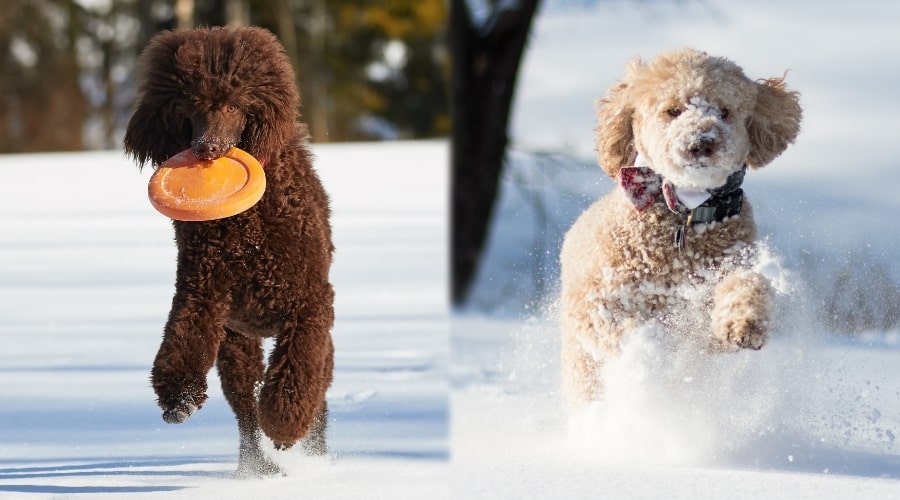
Daily Physical Exercise Requirements
Poodles typically do best with regular daily exercise plus activities that challenge their brains. Many Poodles enjoy structured outlets such as brisk walks, fetch, swimming, agility-style games, or obedience practice.
Labradoodles are often more “go-go-go” and tend to need longer or more vigorous physical activity to feel satisfied. They usually thrive with a mix of walks, off-leash play (where safe and permitted), and interactive games.
- Poodle: Plan for about 60 minutes of combined activity daily (more for younger dogs), split into multiple sessions if needed.
- Labradoodle: Plan for about 60–90 minutes daily (often more for young adults), especially if they have strong Labrador energy traits.
Age, size, and health matter. A Toy Poodle and a Standard Poodle won’t have identical exercise needs, and Labradoodles can vary widely depending on their lineage.
Mental Enrichment & Boredom Prevention
For both breeds, mental exercise can be just as important as physical exercise. Intelligent dogs without enough stimulation often create their own “jobs,” which usually means trouble.
- Training refreshers: Short daily sessions (5–10 minutes) practicing cues or learning a new trick
- Food puzzles: Puzzle feeders, snuffle mats, or scatter-feeding to slow down meals
- Scent work: Hide-and-seek games with treats or toys
- Interactive play: Tug, fetch, or structured games with rules and breaks
Poodles often prefer “thinking games” and skill-building, while Labradoodles frequently love interactive play and social engagement. Both benefit from variety.
Consequences of Under-Exercise
When either breed doesn’t get enough activity or enrichment, the results are usually predictable—and avoidable.
- Destructive chewing or digging
- Excessive barking or attention-seeking behavior
- Restlessness, pacing, or difficulty settling indoors
- Jumping, mouthing, or “wild” behavior during greetings
- Anxiety-related behaviors, including separation issues (more common in Labradoodles)
If you’re choosing between these two breeds, it helps to be realistic: both need daily movement and mental outlets, but Labradoodles often require more sustained physical activity and social interaction to stay content.
Trainability & Intelligence
Both Poodles and Labradoodles are highly intelligent dogs, but intelligence doesn’t always translate to ease of training in the same way. How each breed learns, stays motivated, and responds to structure can feel very different in day-to-day training.
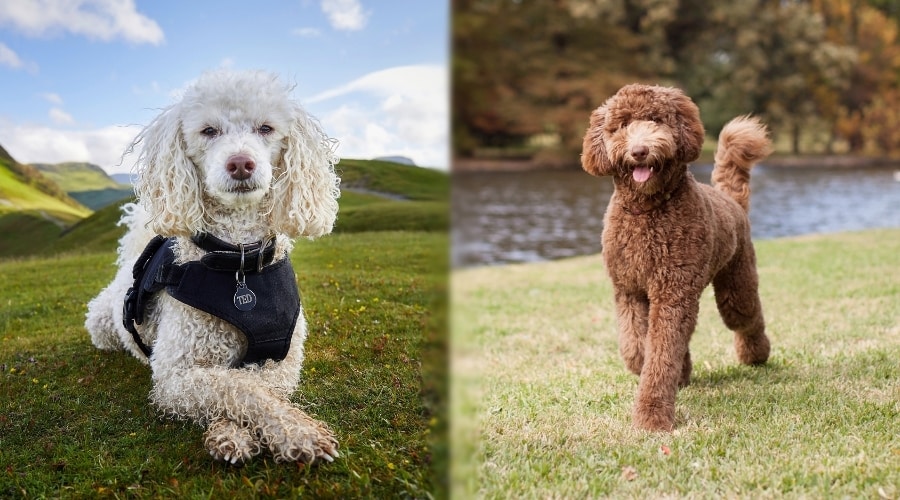
Ease of Training Comparison
Poodles are often considered one of the easiest breeds to train. They pick up commands quickly, retain information well, and tend to enjoy learning for its own sake. However, their intelligence can work against them if training becomes repetitive or unengaging.
Labradoodles are also very trainable, but their enthusiasm and high energy can sometimes slow progress. They may understand commands quickly but struggle with impulse control, especially during adolescence.
Best Training Methods for Each Breed
Both breeds respond best to positive reinforcement, but the emphasis differs slightly.
- Poodles: Thrive with structured sessions, consistency, and mental challenges. Short, varied training sessions help prevent boredom and stubborn behavior.
- Labradoodles: Benefit from upbeat, reward-based training with plenty of praise and play. Consistency and clear boundaries are key to managing excitement.
Harsh corrections can backfire with both breeds, leading to anxiety or resistance rather than progress.
Socialization Needs
Early and ongoing socialization is important for both breeds, but for different reasons.
- Poodles can be naturally reserved, so positive exposure to new people, environments, and dogs helps prevent shyness or aloofness.
- Labradoodles are usually eager to socialize but may become overly excitable without guidance. Teaching calm greetings and polite behavior early helps prevent jumping and overstimulation.
Crate Training Considerations
Crate training can be useful for both breeds when introduced properly.
- Poodles generally adapt well to crate training once they understand it as a safe, predictable space. Their preference for routine can make the process smoother.
- Labradoodles may need a slower introduction, especially if they’re highly attached to their owners. Gradual crate training paired with mental enrichment can help reduce anxiety and build comfort with alone time.
Be sure to pick an appropriately sized crate for your pup; too small can be uncomfortable, and too large can add to anxiety and encourage behavior like peeing in the crate.
Health, Lifespan & Genetic Risks
Health should be a major consideration when choosing any dog. While both Poodles and Labradoodles are generally considered healthy, their long-term well-being depends heavily on genetics, breeding practices, and ongoing veterinary care.
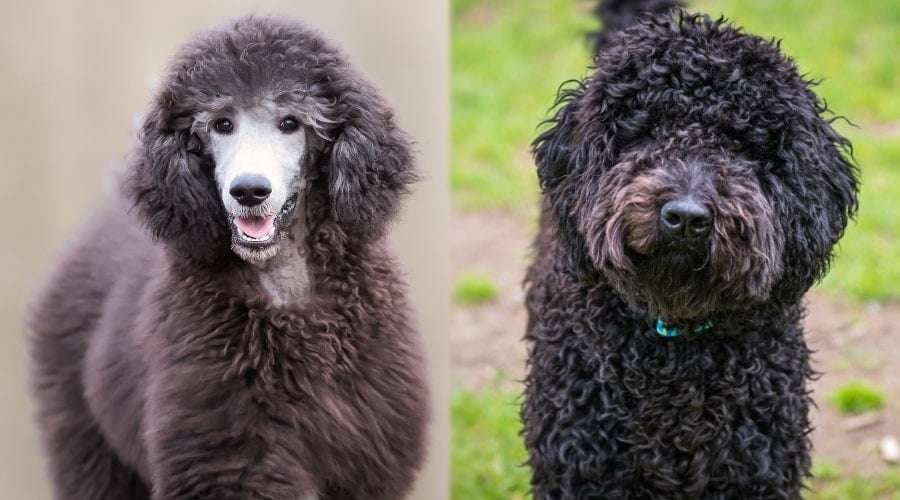
Common Health Issues in Poodles
Poodles are a long-lived breed, but like all purebred dogs, they can be prone to certain inherited health conditions. Many of these risks can be reduced through responsible breeding and early health screening.
- Hip dysplasia (more common in Standard Poodles)
- Progressive retinal atrophy (PRA)
- Epilepsy
- Thyroid disorders
- Addison’s disease
- Bloat (gastric dilatation-volvulus)
With proper nutrition, exercise, and regular veterinary care, many Poodles live healthy lives well into their teens.
Common Health Issues in Labradoodles
Labradoodles can inherit health conditions from both parent breeds, meaning they are not immune to genetic disease simply because they are mixed-breed dogs.
- Hip and elbow dysplasia
- Ear infections (due to floppy ears and hair growth)
- Progressive retinal atrophy (PRA)
- Allergies and skin conditions
- Epilepsy
- Hypothyroidism
Lifespan for Labradoodles typically ranges from 12 to 16 years, though this varies based on size, genetics, and overall care.
Hybrid Vigor: Myth vs. Reality
Many people assume Labradoodles are automatically healthier due to “hybrid vigor.” While genetic diversity can reduce the risk of some inherited conditions, it is not a guarantee of better health.
Labradoodles can still inherit the same genetic disorders found in Poodles and Labrador Retrievers—especially if breeders do not perform appropriate health testing. Health outcomes depend far more on responsible breeding practices than on whether a dog is purebred or mixed.
Pet Insurance Considerations
Even with responsible breeding and excellent care, unexpected health issues can arise. Many owners choose pet insurance to help manage the cost of accidents, hereditary conditions, and long-term care, especially for active breeds like Poodles and Labradoodles.
Enrolling early, before health issues develop, can provide broader coverage options and help reduce financial stress over your dog’s lifetime.
Allergies, Shedding & Hypoallergenic Claims
Allergies are one of the most common reasons people compare Poodles and Labradoodles. Unfortunately, this is also where misinformation is most widespread. Understanding what “hypoallergenic” really means can help set realistic expectations and prevent disappointment.
Are Poodles Hypoallergenic?
Poodles are often considered one of the best options for allergy-sensitive households, but it’s important to clarify what that means.
Poodles have a tightly curled coat that sheds very little. Because shedding spreads dander (the primary trigger for most dog allergies), low-shedding breeds like Poodles tend to release fewer allergens into the environment.
However, no dog is truly 100% hypoallergenic. Individual reactions can vary depending on the person, the dog, the grooming habits, and the overall cleanliness of the home.
Are Labradoodles Hypoallergenic?
Labradoodles are frequently marketed as hypoallergenic, but this claim is not guaranteed.
Because Labradoodles are a mixed breed, their coat type can vary widely. Some Labradoodles inherit more Poodle-like coats that shed very little, while others inherit flatter or wavier coats that shed more and produce higher levels of allergens.
Even puppies from the same litter can have different coat textures and shedding tendencies. For this reason, Labradoodles should be considered potentially low-shedding, not reliably hypoallergenic.
What Allergy Sufferers Should Know Before Choosing
If allergies are a major concern, breed alone should not be the only deciding factor.
- No dog is completely hypoallergenic.
- Lower shedding often means fewer allergens, but results vary by individual dog.
- Regular grooming and bathing can significantly reduce allergen buildup.
- Spending time with the specific dog before adoption is essential.
- Adult dogs may be easier to evaluate than puppies, whose coats can change as they mature.
For allergy-sensitive owners who want the most predictability, a well-groomed Poodle is usually a safer choice than a Labradoodle. Labradoodles can still work for some allergy sufferers, but they come with more uncertainty.
Nutrition & Feeding Requirements
Proper nutrition plays a major role in a dog’s long-term health, energy level, and digestion. While Poodles and Labradoodles have similar nutritional needs overall, differences in size, activity level, and sensitivity can influence how and what they should be fed.
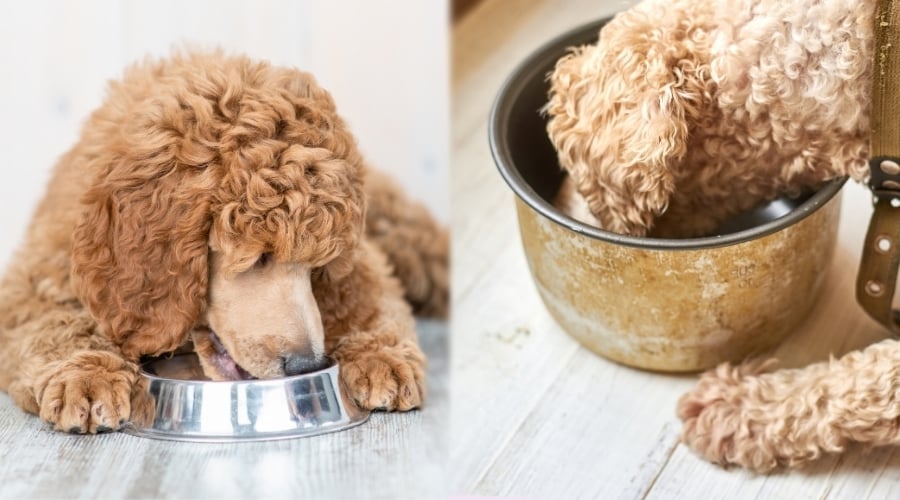
Daily Calorie & Portion Needs
Because both breeds vary widely in size, there is no single feeding amount that works for all dogs. Standard Poodles and Labradoodles typically require more calories than their smaller counterparts, while highly active dogs burn more energy than sedentary ones.
Rather than focusing strictly on cup measurements, owners should use feeding guidelines as a starting point and adjust based on body condition, activity level, age, and veterinary advice.
Sensitive Stomachs & Food Allergies
Both Poodles and Labradoodles can be prone to digestive sensitivity. Symptoms such as loose stools, excessive gas, itching, or ear infections may indicate a food intolerance rather than a true allergy.
Dogs with sensitive stomachs often do better on high-quality diets with clearly identified protein sources and limited fillers. Some owners find success with limited-ingredient formulas or foods designed for sensitive digestion.
Feeding Tips for Each Breed
- Poodles: May benefit from diets that support skin and coat health, especially given their grooming needs and sensitive skin.
- Labradoodles: Often require higher-calorie intake due to their energy levels, but portion control is important to prevent excess weight gain.
Grooming, Shedding & Maintenance Costs
Grooming is one of the most overlooked differences between Poodles and Labradoodles—and one of the most expensive over a dog’s lifetime. While both breeds are often described as low-shedding, their coats require regular care to stay healthy and mat-free.
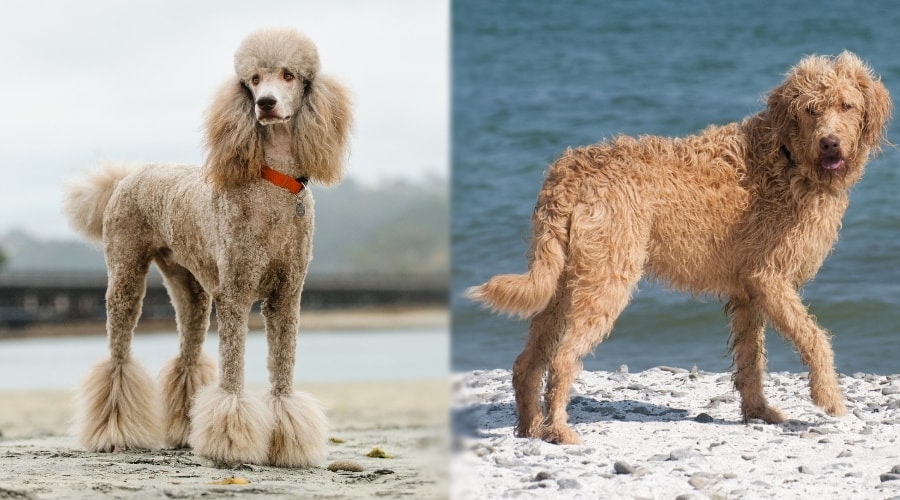
Grooming Frequency Comparison
Poodles have a dense, curly coat that continues to grow and sheds very little. This coat type requires frequent brushing and routine trimming to prevent painful matting and skin issues.
Labradoodles vary more widely in coat type. Some have Poodle-like curls that require similar upkeep, while others have looser or flatter coats that shed more but may be slightly easier to manage.
- Poodles: Brushing several times per week (often daily) and professional grooming every 3–6 weeks
- Labradoodles: Brushing at least weekly and professional grooming every 6–8 weeks, depending on coat type
At-Home vs. Professional Grooming
Many owners handle basic grooming at home, including brushing, bathing, ear cleaning, and nail trimming. However, professional grooming is often necessary—especially for Poodles and curlier-coated Labradoodles.
- Professional grooming typically includes bathing, drying, trimming, clipping, and coat shaping. Poodles often require experienced groomers familiar with their coat texture and styling needs.
- At-home grooming can reduce costs but requires time, consistency, and the right tools. Skipping regular brushing or delaying professional grooming can quickly lead to matting, which may require a full shave-down.
- Because both breeds can have sensitive skin, using a gentle, dog-specific shampoo—such as an oatmeal-based or hypoallergenic formula—can help reduce dryness and irritation.
Annual Grooming Cost Expectations
Grooming costs vary by location, coat condition, and dog size, but long-term expenses can add up quickly.
- Poodles: Often range from $800 to $1,500+ per year for professional grooming
- Labradoodles: Typically range from $600 to $1,200+ per year, depending on coat type and grooming frequency
These estimates do not include grooming tools, shampoos, or additional services such as de-matting or specialty cuts.
What This Means for You
- Both breeds are low-shedding but high-maintenance compared to many other dogs.
- Poodles generally require more frequent and consistent grooming.
- Labradoodle grooming needs vary widely based on coat type.
- Professional grooming is a recurring, long-term cost to plan for.
- Regular grooming supports skin health, comfort, and overall well-being.
Puppy Prices & Lifetime Cost Comparison
The upfront price of a puppy is only one part of the financial commitment. Long-term costs such as food, grooming, veterinary care, and training often matter far more over a dog’s lifetime.
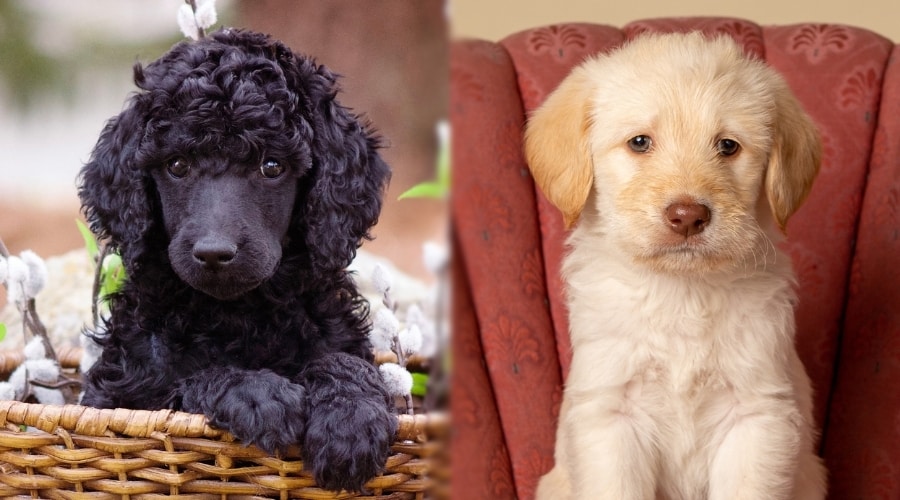
Upfront Puppy Costs
Poodles, particularly those from reputable breeders or champion bloodlines, tend to have higher purchase prices. Depending on size, lineage, and location, Poodle puppies often range from $1,000 to $5,000+, with show-quality dogs costing more.
Labradoodles are typically priced between $1,000 and $3,000. While often less expensive upfront, prices can vary widely depending on breeder reputation, generation, and demand.
Monthly & Annual Ownership Costs
Ongoing expenses can differ significantly between these two breeds, especially when grooming is factored in.
- Food: Larger dogs and highly active Labradoodles often cost more to feed.
- Grooming: Poodles generally have higher and more frequent grooming costs.
- Veterinary care: Routine care is similar for both, but unexpected health issues can add up.
- Training & enrichment: Both breeds benefit from training classes, toys, and mental stimulation.
On average, owners should expect to spend $1,500–$3,000 per year, depending on size, lifestyle, grooming frequency, and healthcare needs.
Adoption & Rescue Alternatives
Adopting rather than purchasing can significantly reduce upfront costs while giving a dog a second chance.
- Breed-specific Poodle rescues are common and well-established.
- Labradoodles and other doodle mixes frequently appear in shelters and rescues.
- Adoption fees are typically far lower and often include vaccinations and spay/neuter services.
Adoption may also allow you to evaluate an adult dog’s size, coat type, and temperament more accurately.
Poodle vs Labradoodle: Quick Decision Guide
If you’re deciding between these two breeds, the comparison below highlights the most important differences at a glance.
| Best If You Want… | Choose a Poodle | Choose a Labradoodle |
|---|---|---|
| Predictable coat & shedding | ✔ | — |
| Highly social, family-focused dog | — | ✔ |
| Strong trainability & focus | ✔ | ✔ |
| Lower grooming commitment | — | ✔ (varies) |
| Better option for allergies | ✔ | — |
Bottom line: Choose a Poodle if you value predictability, training, and structure. Choose a Labradoodle if you want an affectionate, social companion and are comfortable with some variability in coat and care needs.
Before You Decide
Bringing home a dog is a long-term commitment that goes far beyond choosing the right breed. Before taking the next step, it’s worth taking a moment to reflect on your readiness, expectations, and the kind of relationship you want to build.
If you’re still weighing the decision, this guide on whether you’re truly ready for a dog can help you assess the time, energy, and responsibility involved. Once you’ve made your choice, learning how to show your dog you love them and recognizing the signs your dog has bonded closely with you can help strengthen that connection. A thoughtful decision now sets the stage for a healthier, happier partnership for years to come.
Your Turn: Poodle or Labradoodle?
Are you firmly team Poodle, team Labradoodle, or still on the fence? Every dog and every household is different, and real-life experiences can be incredibly helpful. Share your experience, tips, or questions in the comments below. Your insight could help other readers make a more confident decision.