When you purchase through links on our site, we may earn a commission at no extra cost to you. Learn more.
Some dogs are perfectly happy melting into the couch all afternoon. Others wake up looking for an assignment.
Table of Contents
They herd the kids, patrol the yard, carry objects nobody asked for, or stare at you with the unmistakable expression of a dog who cannot believe this household has no plan for the day.
For generations, many breeds were developed to retrieve, herd, hunt, guard, pull, search, and work alongside people. Modern life may have eliminated the livestock and dramatically improved the sofa situation, but those instincts didn’t disappear.
These 20 breeds don’t just enjoy staying busy. They seem happiest when they have something to accomplish.
Want our human-written content to rank above AI-generated garbage? Help us out by clicking this button!
What Does It Mean When A Dog “Needs A Job”?
First, working drive isn’t necessarily the same thing as high energy.
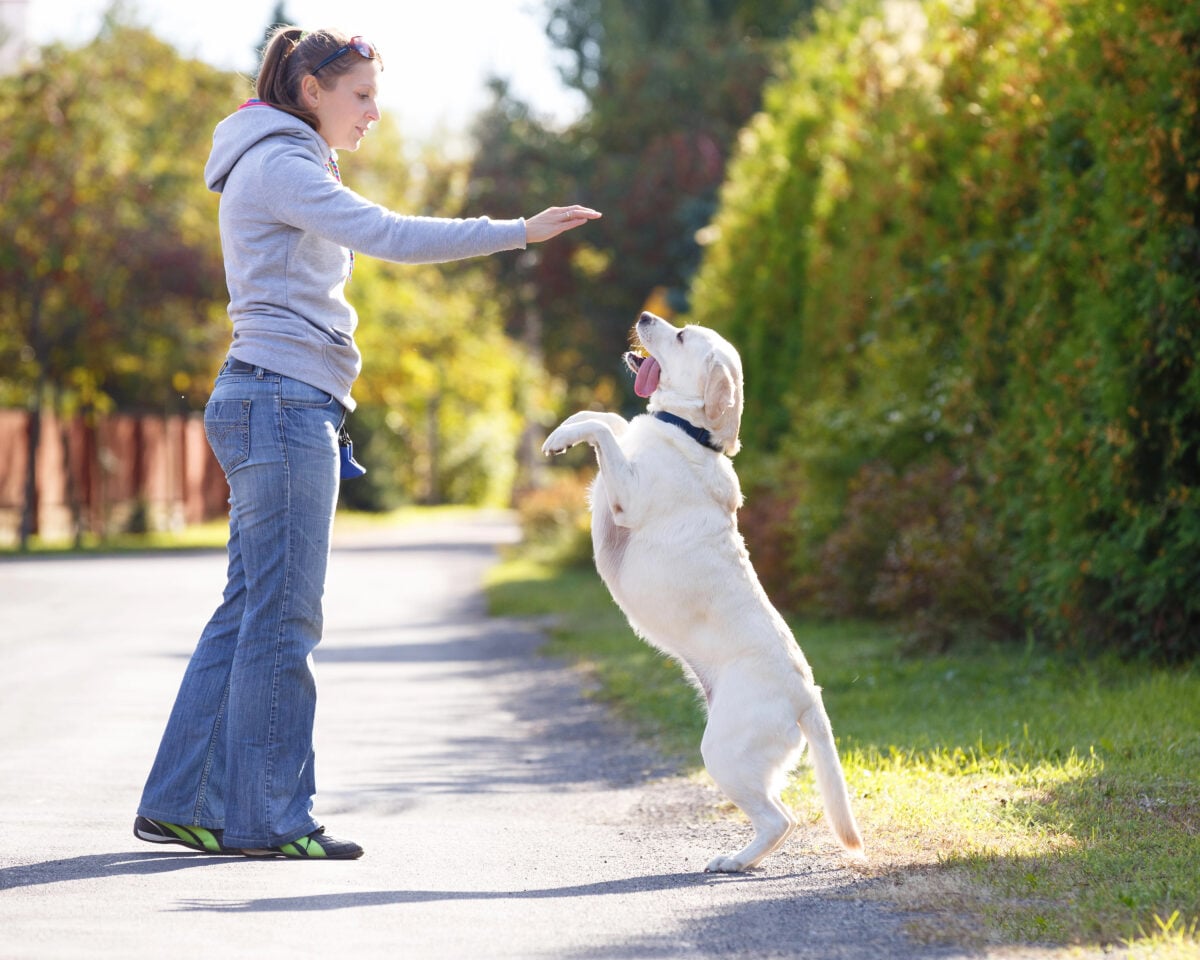
Some dogs mainly need plenty of physical activity. A dog with a strong working drive often wants something more specific: a problem to solve, an instinct to use, or an outcome to accomplish.
That’s why an hour-long walk may leave one dog sprawled happily across the floor while another comes home, drinks some water, and looks at you like, “Great. What are we doing now?”
The right “job” depends on what the dog finds rewarding. It might involve:
- Searching: Following scents or finding hidden objects
- Retrieving: Fetching, carrying, or delivering something
- Problem-solving: Learning tricks, puzzles, or multi-step tasks
- Movement: Running, pulling, chasing, or controlled herding activities
- Working with you: Obedience, agility, training, or household tasks
And no, you don’t need 40 sheep and a sudden interest in farming. A dog’s job can be entirely invented. What matters is that it gives their brain and natural instincts somewhere productive to go.
20 Dog Breeds That Love Having A Job
Not every dog on this list wants the same kind of assignment. Some were built to follow human direction, while others would rather chase, search, retrieve, pull, or make their own decisions.
What they share is a tendency to come alive when there’s something worth doing. For some, that’s an actual dog sport or working role. For others, a ball, hidden toy, or suspicious smell under the fence will do nicely.
1. Border Collie
If any dog is likely to look at a leisurely Saturday morning and wonder why productivity has collapsed, it’s the Border Collie.
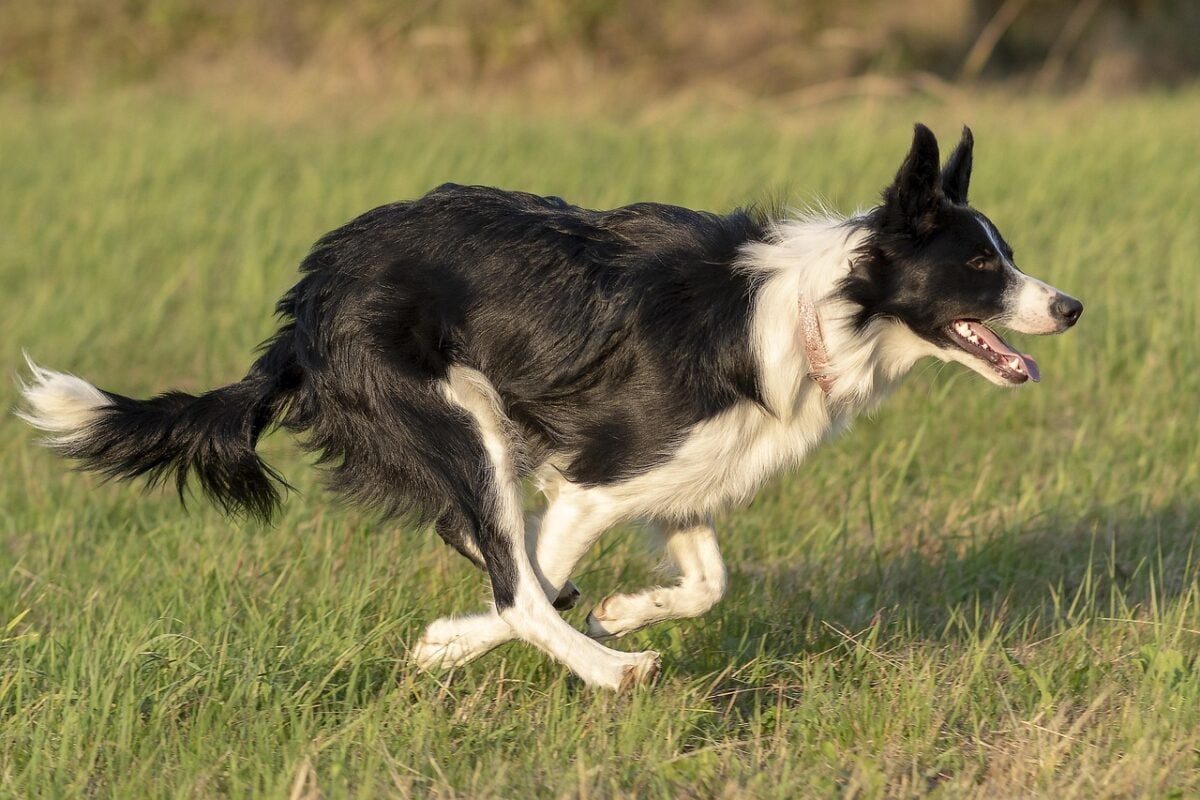
Bred to gather and move sheep, Border Collies combine intense handler focus with an impressive ability to make fast decisions on their own.
They don’t simply have energy to burn; many seem happiest when there’s a problem to solve, and somebody expects something from them.
Without sheep, those instincts can find creative substitutes. Your Border Collie may stalk the family cat, circle running children, fixate on a bouncing ball, or become deeply concerned that everyone at the barbecue has wandered out of formation.
The best outlets engage brain and body together, whether that’s herding, agility, disc sports, advanced trick training, obedience, or multi-step games. A long walk is valuable exercise, but for many Border Collies, it’s just not much of an assignment.
At A Glance
- Personality: Intensely focused, brilliant, responsive, observant, and always watching for what happens next
- Energy/Exercise Needs: Very high; substantial daily activity plus challenging mental work
- Résumé: Herding, precision work, problem-solving, and close coordination with a handler
- Watch For: Anxiety, obsessive or repetitive behaviors, and fixation on movement when their physical and mental needs aren’t being met
2. Labrador Retriever
The Labrador Retriever may have perfected the art of looking like a lovable goofball, but underneath all that enthusiasm is a dog developed to retrieve game and work closely with people. Modern Labs haven’t necessarily forgotten the arrangement. We’ve just changed what counts as cargo.
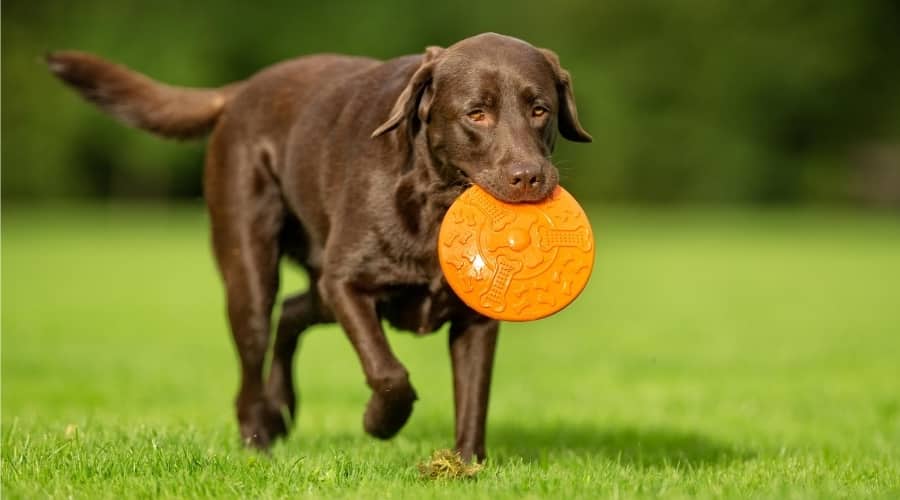
Many Labs seem happiest when they’re fetching, carrying, finding, or delivering something. Balls are obvious. Shoes are excellent. Socks have tremendous potential. Your underwear arriving during a Zoom call is apparently eligible for same-day delivery.
That instinct makes retrieving games a natural fit, but Labs can handle far more complexity than endless rounds of fetch.
Named-object retrieval, scent work, obedience, swimming, toy cleanup, and multi-step tasks give them an actual goal instead of simply burning energy. There’s a reason Labs have also excelled in roles ranging from assistance work to detection and search and rescue.
At A Glance
- Personality: Outgoing, enthusiastic, affectionate, eager, and generally convinced participation is mandatory
- Energy/Exercise Needs: High; regular vigorous activity works best when paired with training or purposeful games
- Résumé: Retrieving, carrying, searching, and cooperative work with people
- Watch For: Boredom, destructive chewing, overeating, and turning forbidden household objects into unauthorized retrieval practice
3. Australian Shepherd
An Australian Shepherd doesn’t need actual livestock to start keeping tabs on everyone. Give them a family, another dog, and perhaps a Roomba with poor decision-making skills, and they have plenty to work with.
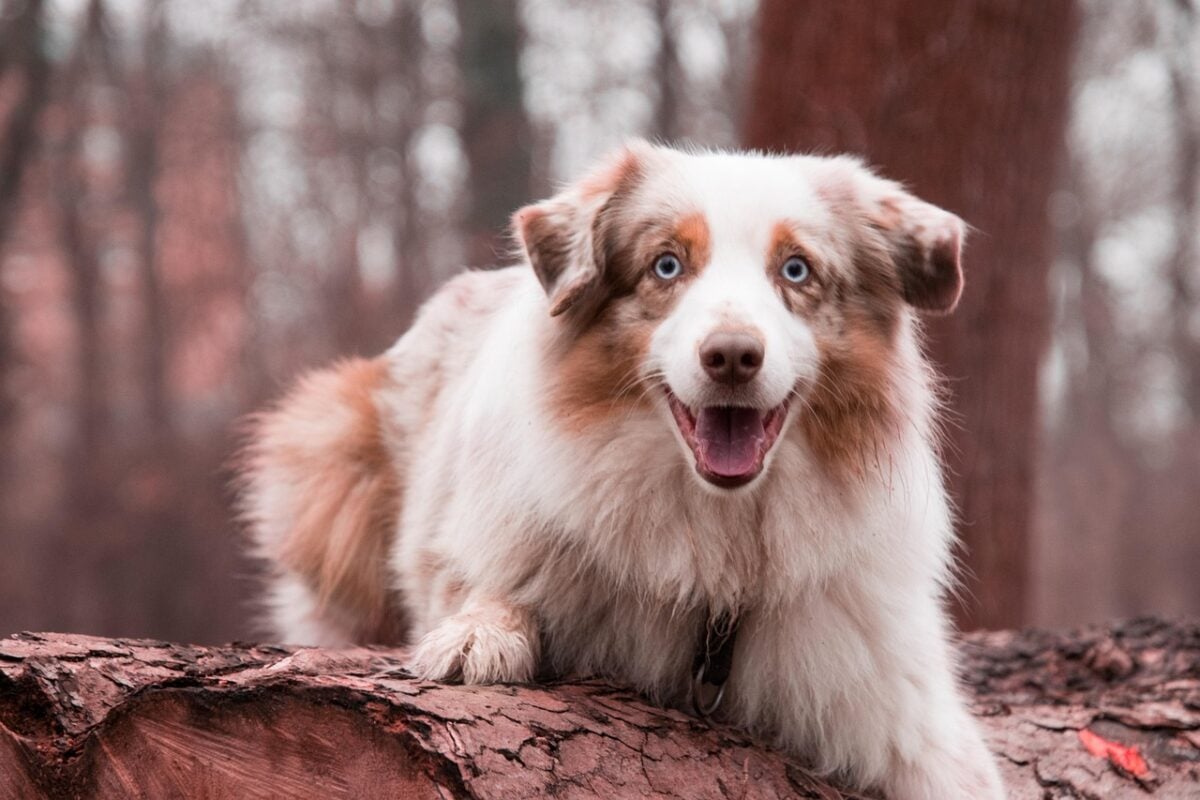
Where Border Collies are famous for precision and intense control of movement, Aussies developed as versatile ranch dogs expected to handle livestock and adapt to whatever the day’s work required.
Many bring that same bold, hands-on enthusiasm to family life. They don’t merely notice what’s happening. They would very much like to be involved.
That versatility makes Aussies terrific candidates for herding, agility, disc sports, advanced training, and challenging outdoor adventures. Activities that combine movement, decisions, and interaction tend to suit them particularly well.
Without enough direction, an Aussie may start making decisions on everyone’s behalf. The children didn’t ask to be moved toward the kitchen, but apparently that’s where we’re going.
At A Glance
- Personality: Clever, animated, devoted, confident, and deeply invested in whatever everyone else is doing
- Energy/Exercise Needs: Very high; thrives on substantial daily activity that combines movement and mental challenge
- Résumé: Versatile ranch work, livestock herding, agility, and fast-paced cooperative tasks
- Watch For: Boredom, anxiety, excessive barking, and an assertive herding instinct that may get redirected toward children or pets
4. Jack Russell Terrier
The Jack Russell Terrier doesn’t necessarily need you to invent a job. That’s the problem. They have several ideas of their own, and excavation may already be underway.
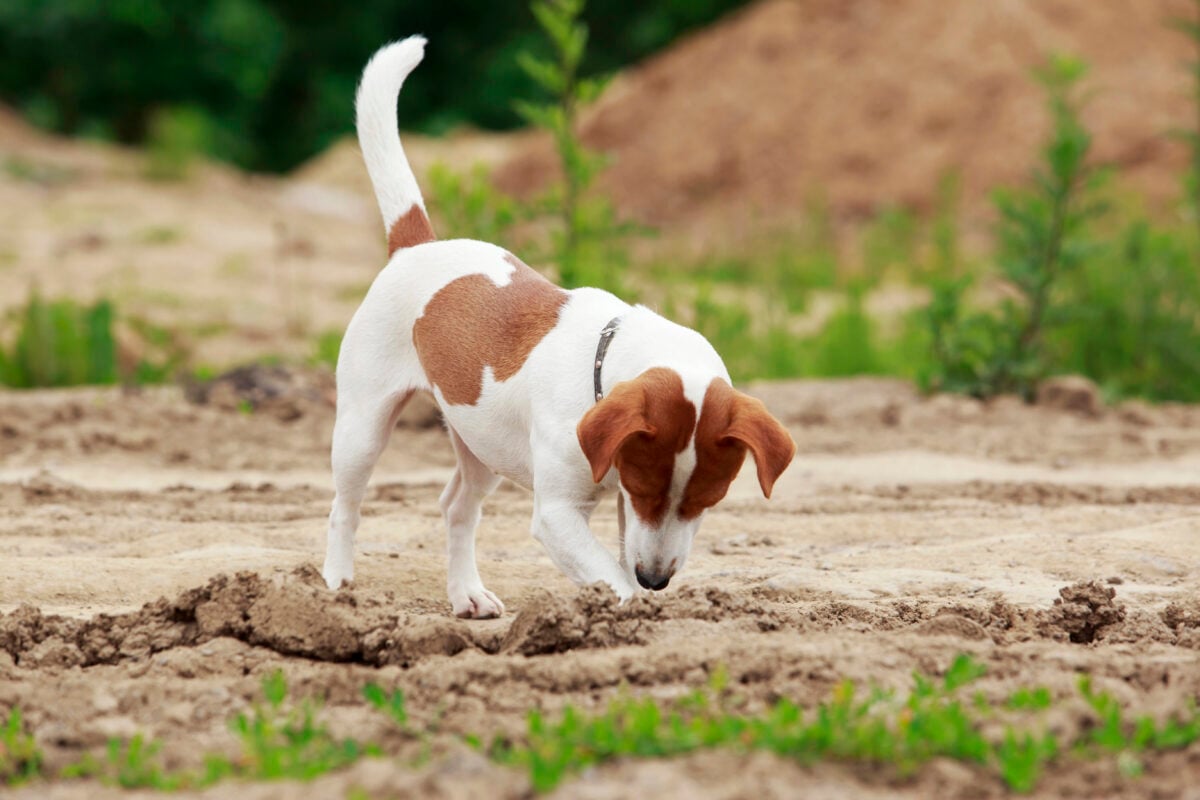
Developed to pursue foxes and other quarry, these compact terriers needed the courage, persistence, and independence to follow prey underground and keep working without constant human direction. Those qualities remain remarkably intact in a dog that now lives somewhere with throw pillows.
Jack Russells tend to love activities that let them chase, search, dig, investigate, and solve problems. Scent games, barn hunt, trick training, agility, hide-and-seek, and even an approved digging area can put those instincts to considerably better use than asking them to simply behave themselves in the backyard.
And don’t let the size fool you. A Jack Russell can fit an astonishing amount of ambition into 15 pounds of dog.
At A Glance
- Personality: Bold, tenacious, curious, fearless, and approximately 40% larger in their own estimation
- Energy/Exercise Needs: High; needs far more physical and mental activity than their small size suggests
- Résumé: Hunting, chasing, digging, scenting, and independent problem-solving
- Watch For: Yard digging, escaping, destructive boredom, intense prey drive, and creative projects you did not authorize
5. German Shepherd
Few breeds have assembled a more impressive list of occupations than the German Shepherd. Herding sheep was only the beginning. These dogs have since excelled in police work, military roles, search and rescue, detection, service work, and protection — apparently choosing a specialty was never necessary.
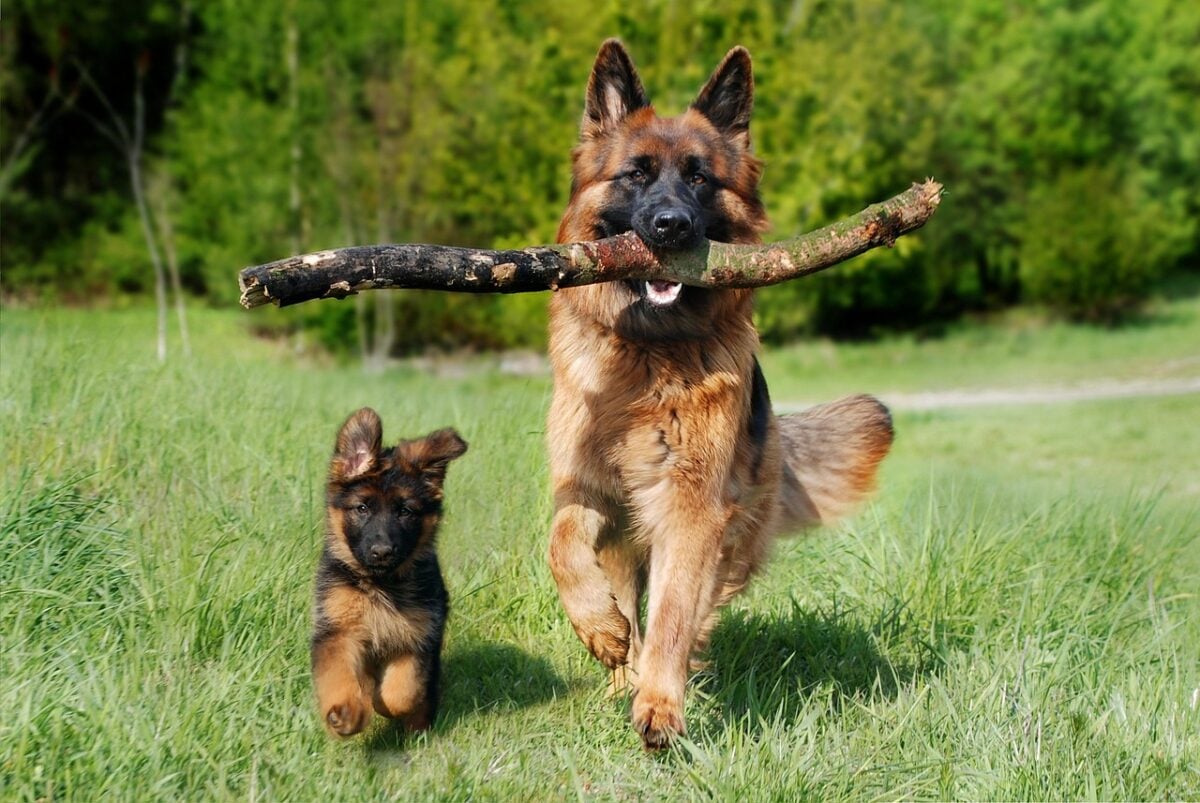
What stands out is their versatility. German Shepherds tend to be highly trainable, observant, and deeply tuned in to their people, making them well suited to jobs that require both independent judgment and close cooperation.
At home, that can translate into a dog who watches everything, learns routines quickly, and takes household activity seriously. Tracking, nose work, advanced obedience, structured games, and challenging training can give all that attentiveness somewhere useful to go.
Otherwise, don’t be surprised if your Shepherd finds an assignment. The delivery driver has been observed, evaluated, and added to the file.
At A Glance
- Personality: Loyal, confident, observant, versatile, and naturally serious about keeping tabs on things
- Energy/Exercise Needs: High; needs substantial daily exercise plus regular training and mental work
- Résumé: Herding, detection, protection, search and rescue, service work, and advanced obedience
- Watch For: Anxiety, reactivity, excessive vigilance, barking, and destructive behavior when their physical or mental needs go unmet
6. Golden Retriever
The Golden Retriever has become so famous for being friendly, patient, and generally delighted to see you that it’s easy to forget there’s a serious working dog underneath all that charm.
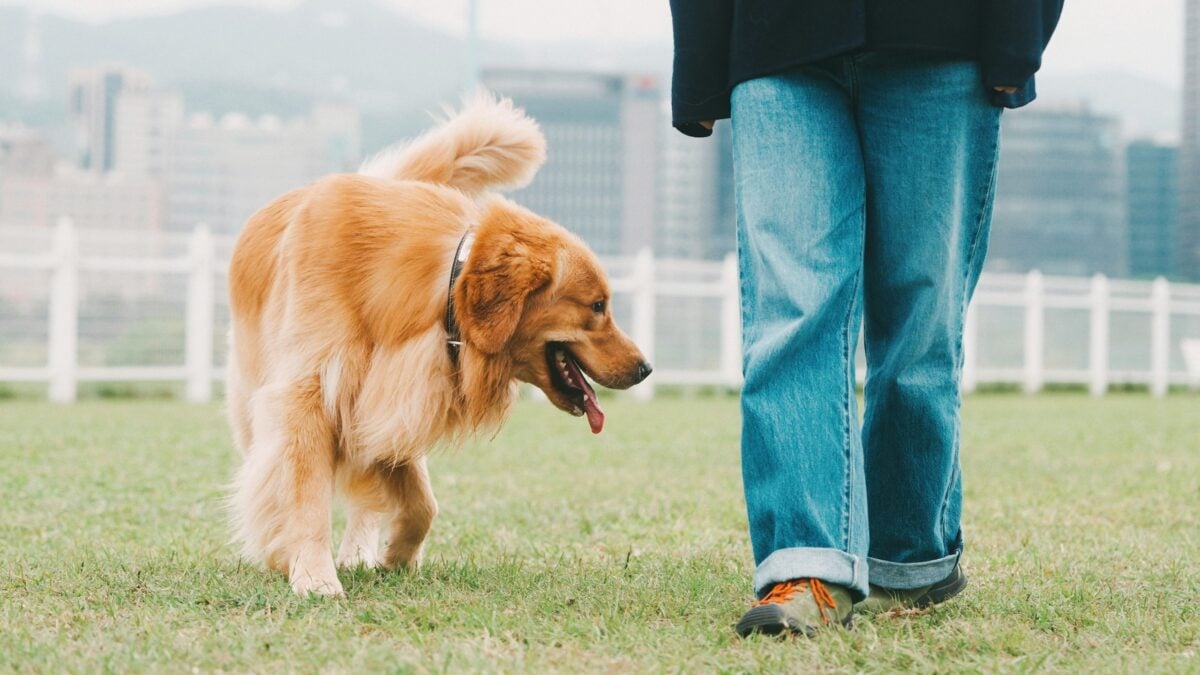
Goldens were developed to retrieve game carefully over land and water, bringing birds back without damaging them. That required more than athleticism. They needed to be responsive, dependable, and willing to work in close partnership with a person.
Those qualities help explain why Goldens have become standouts in service work, therapy settings, search and rescue, and other jobs where temperament matters as much as intelligence. Many seem especially fulfilled when their task involves interacting with or helping someone.
At home, that can be much simpler: advanced training, scent work, retrieving specific objects, swimming, or learning useful household tasks. Give a Golden something meaningful to do with you, and there’s a good chance they’ll treat the assignment like you personally invented happiness.
At A Glance
- Personality: Friendly, affectionate, eager to please, dependable, and happiest when included
- Energy/Exercise Needs: High; needs regular active exercise but often thrives on interactive training and purposeful games
- Résumé: Retrieving, assistance work, therapy work, search and rescue, and people-centered tasks
- Watch For: Boredom, chewing, attention-seeking, and frustration when they lack enough activity or interaction
7. Belgian Malinois
The Belgian Malinois is what happens when intelligence, athleticism, speed, and working drive all show up to the same dog without agreeing to take turns.
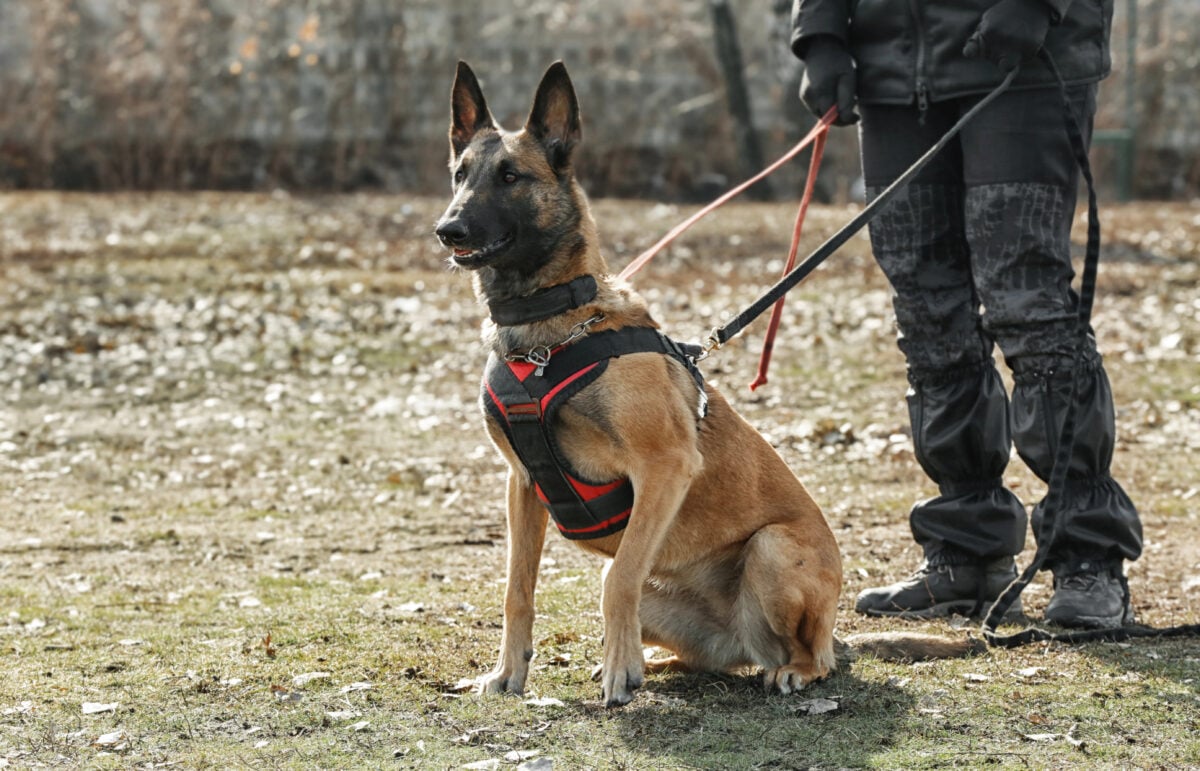
Originally developed as herding dogs, Malinois are now famous for demanding work in police, military, protection, and detection roles. They’re exceptionally responsive to training and can perform complex tasks under intense conditions, often with a level of focus that makes ordinary backyard entertainment look a little underqualified.
For the right owner, that drive can be channeled into advanced obedience, scent work, tracking, agility, protection sports, and other structured training.
But this is an important distinction: a Malinois typically needs more than being physically tired or handed increasingly difficult puzzle toys.
If your enrichment plan ends at “we’ll take really long walks,” there may have been a misunderstanding.
At A Glance
- Personality: Intense, driven, alert, athletic, and extraordinarily responsive
- Energy/Exercise Needs: Extremely high; requires substantial physical activity paired with challenging, structured mental work
- Résumé: Herding, detection, police and military work, protection, tracking, and complex handler-directed tasks
- Watch For: Anxiety, reactivity, destructive behavior, intense fixation, and difficulty settling when their considerable needs aren’t appropriately met
8. Pembroke Welsh Corgi
It’s easy to look at a Pembroke Welsh Corgi and assume their primary historical responsibility was being photogenic. The cattle would disagree.
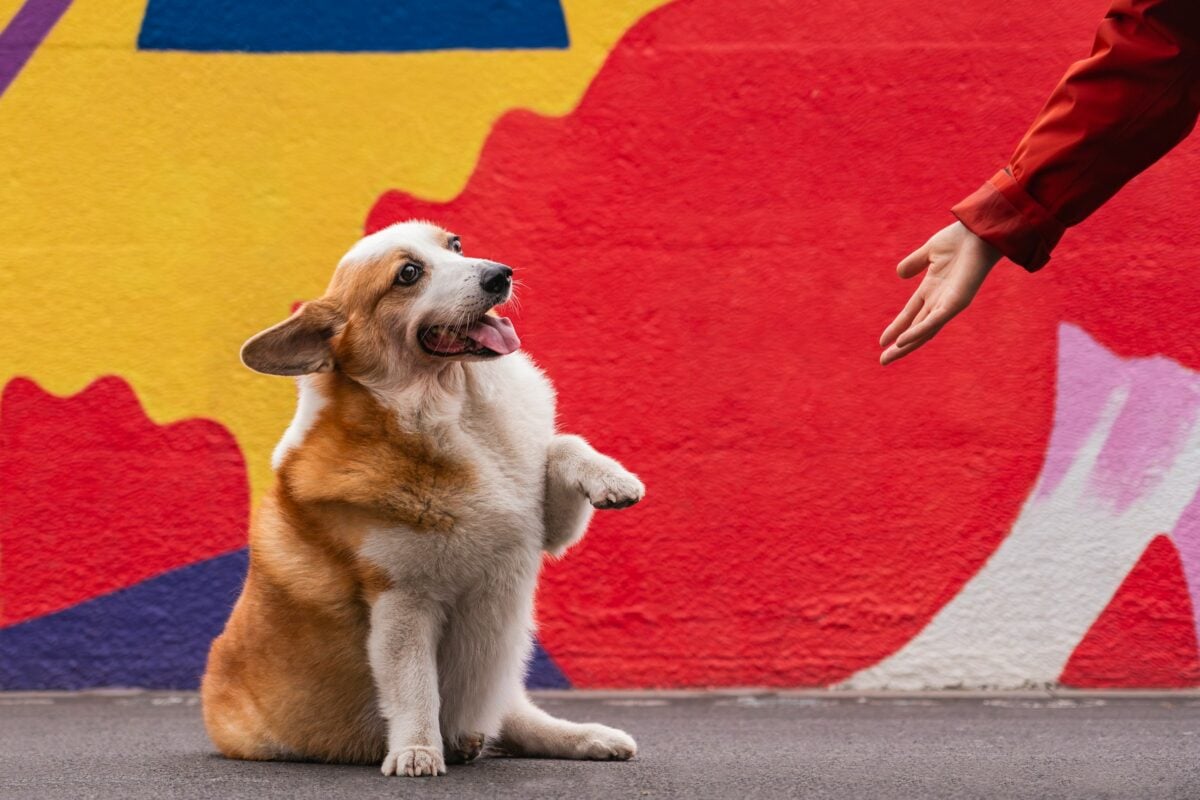
Corgis were developed to herd livestock, using their low build to work around animals dramatically larger than themselves. That required confidence, quick reactions, persistence, and a willingness to tell a cow where to go despite an obvious disagreement in weight class.
Those instincts can still show up at home as barking, heel nipping, chasing, and an intense interest in where everyone is headed. Herding activities, Treibball, agility, obedience, scent games, and trick training can give that busy brain something more constructive to manage.
Don’t mistake short legs for low ambition. A Corgi may be approximately coffee-table height, but that has never prevented one from having opinions about how the entire household should be arranged.
At A Glance
- Personality: Outgoing, clever, confident, vocal, and remarkably opinionated for something that short
- Energy/Exercise Needs: Moderate-high; needs consistent daily exercise and mental activity despite their compact build
- Résumé: Cattle herding, movement control, problem-solving, and responsive teamwork
- Watch For: Barking, heel nipping, chasing, weight gain, and attempts to herd children or other pets
9. Newfoundland
A Newfoundland can look like an enormous shag rug who would prefer not to be disturbed. Put one near water, though, and the résumé gets considerably more impressive.
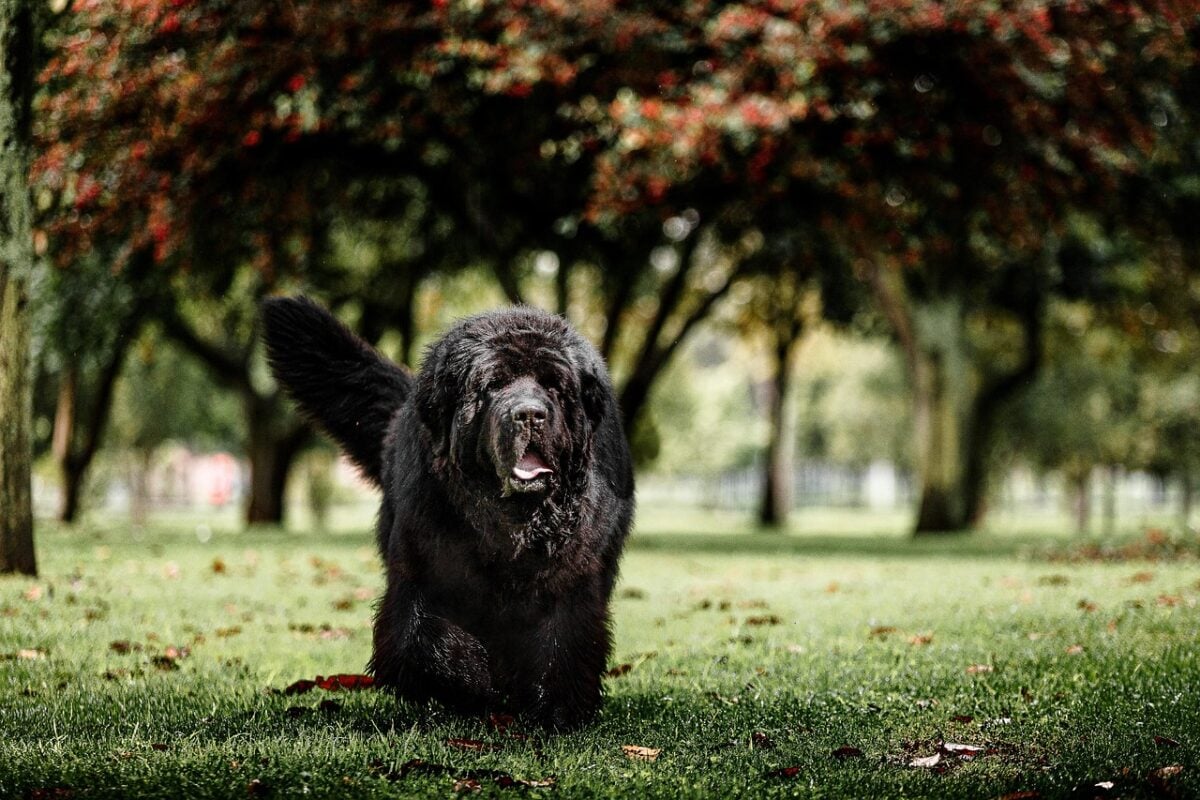
Newfoundlands have a long history as working companions to fishermen, where their strength, swimming ability, thick water-resistant coat, and steady temperament made them valuable around boats and in the water. They’re especially famous for water rescue, and many still possess strong swimming and retrieving instincts.
Unlike the perpetual-motion breeds on this list, Newfies tend to bring a calmer, more deliberate attitude to work. Swimming, water retrieval, drafting, carting, obedience, and other purposeful activities can engage them without requiring the recreational schedule of a Border Collie.
They’re also famously devoted to their people. A Newfoundland may not demand 14 separate projects before lunch, but when 120 pounds of dog decides they’re coming along to help, the staffing decision has largely been made.
At A Glance
- Personality: Sweet-natured, patient, devoted, steady, and remarkably gentle for such an enormous roommate
- Energy/Exercise Needs: Moderate; benefits from consistent daily activity, with swimming and lower-impact exercise especially well suited to their massive build
- Résumé: Water work, rescue, retrieving, hauling, drafting, and working alongside people
- Watch For: Heat sensitivity, weight gain, joint stress, and boredom when a bright, social dog is given too little interaction or purpose
Your Dog May Not Be “Bad.” They May Just Be Underemployed.
Sometimes the first sign that a dog needs more to do is that they’ve already found something. Unfortunately, their choices aren’t always compatible with homeownership.
The Border Collie reorganizes the children. The Lab establishes a sock-delivery service. The terrier begins an excavation project. The guardian breed launches neighborhood surveillance. And somewhere, a Husky is reviewing the fence for structural weaknesses.
The behavior your dog repeatedly chooses can offer clues about the kind of activity they’ll find satisfying. Which is worth remembering before assuming you simply own a tiny, furry criminal mastermind.
Sometimes you just have an unemployed working dog with unrestricted access to your belongings.
10. Australian Cattle Dog (Blue Heeler)
Living with an Australian Cattle Dog can feel a little like having a dog who is always three steps ahead and mildly concerned that you’re falling behind. They’re intensely loyal, alert, tough, and often deeply attached to their chosen people.
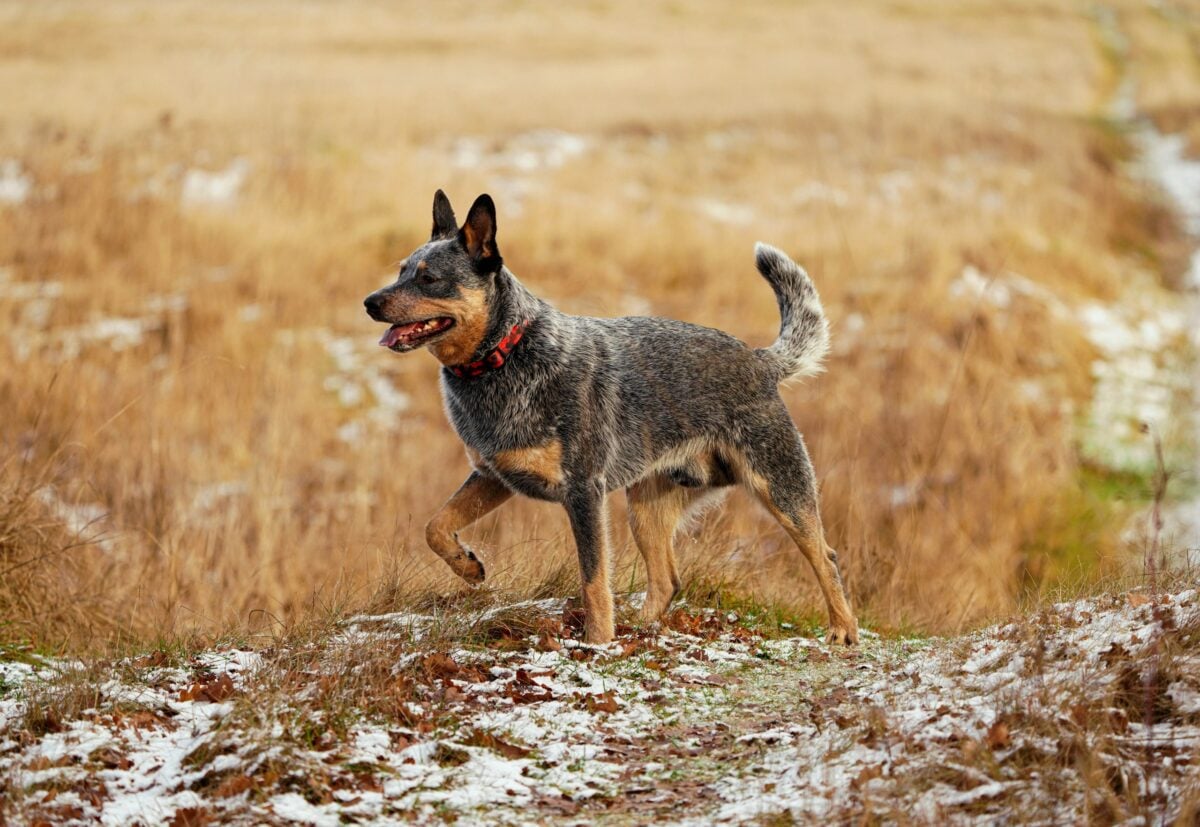
Those traits made sense for a breed developed to move stubborn cattle across vast Australian terrain. Cattle Dogs needed the stamina to work all day, the confidence to stand their ground around animals many times their size, and enough independence to make decisions without waiting for instructions every few seconds.
That combination still produces a dog that likes to watch, think, move, and participate. Herding, agility, tracking, advanced obedience, challenging training, and long outdoor adventures can all provide satisfying outlets.
They also have opinions. If you decide the game is finished before your Cattle Dog does, your position has been noted. It has not necessarily been accepted.
At A Glance
- Personality: Intensely loyal, tough, alert, clever, and rarely short on opinions
- Energy/Exercise Needs: Very high; needs vigorous daily activity plus challenging mental work and structured outlets
- Résumé: Cattle driving, herding, endurance work, independent decision-making, and physically demanding tasks
- Watch For: Heel nipping, chasing, territorial behavior, boredom, reactivity, and becoming overly intense without appropriate direction
11. Doberman Pinscher
The Doberman Pinscher wasn’t designed to go off and find something interesting to do alone. This is a breed developed to work alongside a person, and many modern Dobermans remain extremely invested in that arrangement.
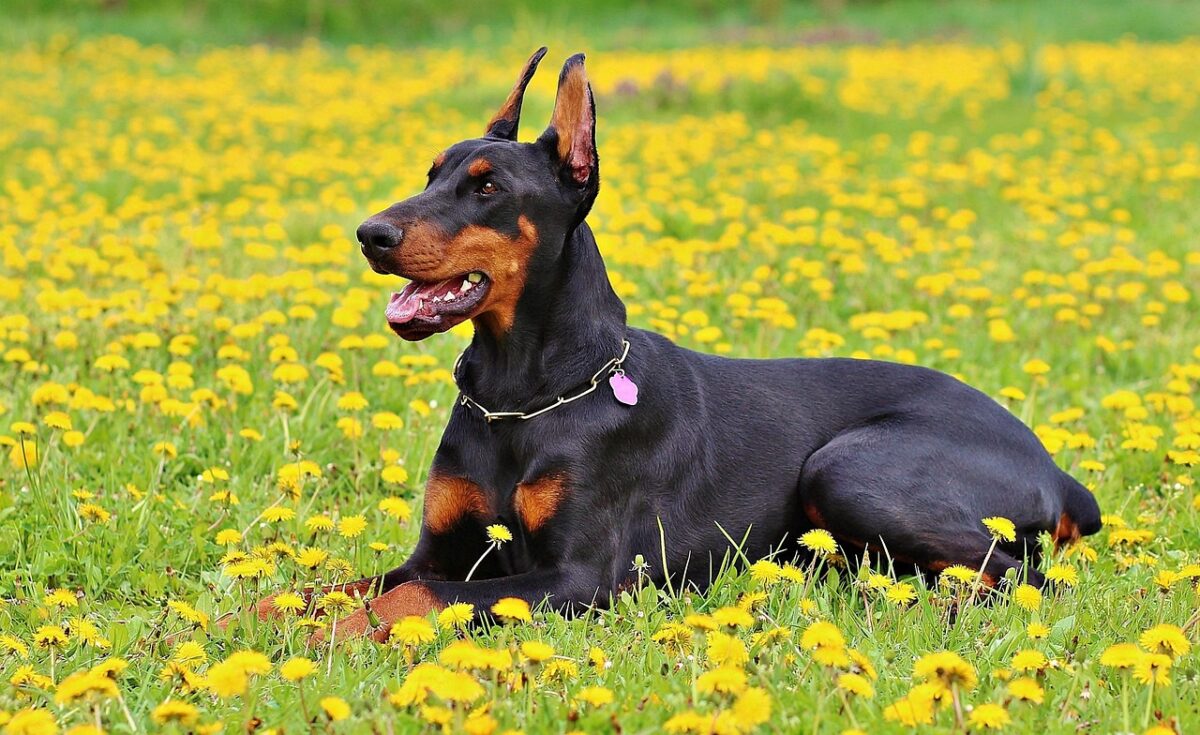
Originally created as personal protection dogs, Dobermans combine athleticism, intelligence, vigilance, and a strong responsiveness to their handler. They often thrive when a task requires watching, listening, learning, and doing something with you, whether that’s advanced obedience, tracking, scent work, agility, or structured training.
That desire to participate doesn’t necessarily end when training does. Many Dobermans prefer to stay remarkably close to their people, monitoring household activity and volunteering themselves for situations that did not appear to require additional personnel.
At A Glance
- Personality: Devoted, watchful, sensitive, athletic, and far more interested in your whereabouts than personal space
- Energy/Exercise Needs: High; needs substantial daily exercise along with consistent training and mental engagement
- Résumé: Personal protection, obedience, tracking, scent work, and close handler-directed tasks
- Watch For: Separation anxiety, boredom, reactivity, and difficulty thriving when left without enough interaction or structure
12. Bloodhound
A Bloodhound can appear wonderfully laid-back right up until their nose receives information. At that point, the rest of the dog has apparently been notified that plans have changed.
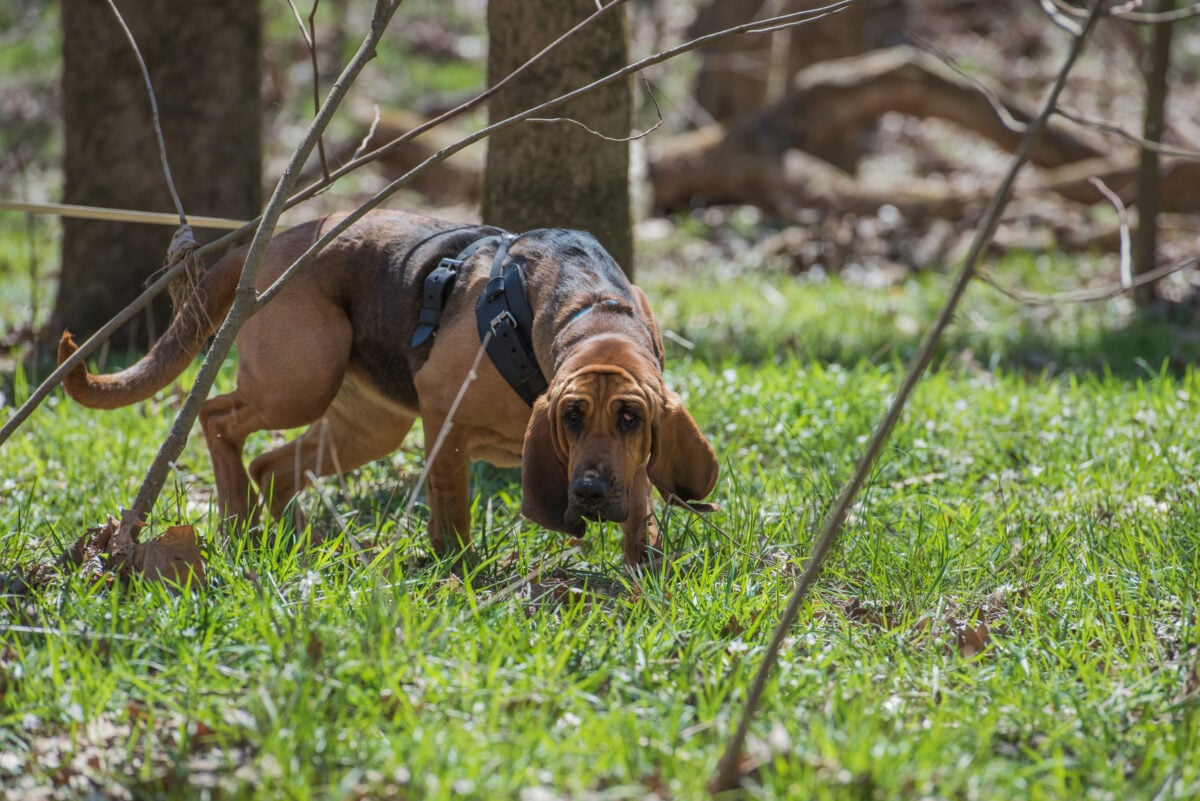
Bloodhounds were developed to follow scent trails over long distances, and their extraordinary tracking ability has made them famous for finding missing people and following trails that may be hours or even days old.
This isn’t the same work style as a Border Collie waiting for direction. Once a Bloodhound locks onto an interesting scent, independent persistence is very much part of the package.
That makes tracking, scent work, hide-and-seek, and searching games particularly satisfying. Even letting them thoroughly investigate smells on walks can engage the part of their brain that was built to follow information one molecule at a time.
Just remember: you may know where you’re going. Your Bloodhound has received compelling new evidence.
At A Glance
- Personality: Affectionate, mellow, determined, independent, and transformed entirely when the nose finds something
- Energy/Exercise Needs: Moderate; needs regular exercise, but opportunities to sniff, track, and search are especially valuable
- Résumé: Scent tracking, trailing people over long distances, search work, and independent investigation
- Watch For: Wandering after scents, selective hearing when tracking, pulling, stubbornness, and escape attempts if an interesting trail leads elsewhere
13. Rottweiler
The Rottweiler is often reduced to one word: guardian. That’s understandable, but it leaves out a surprisingly versatile working history involving cattle, carts, and some serious heavy lifting.
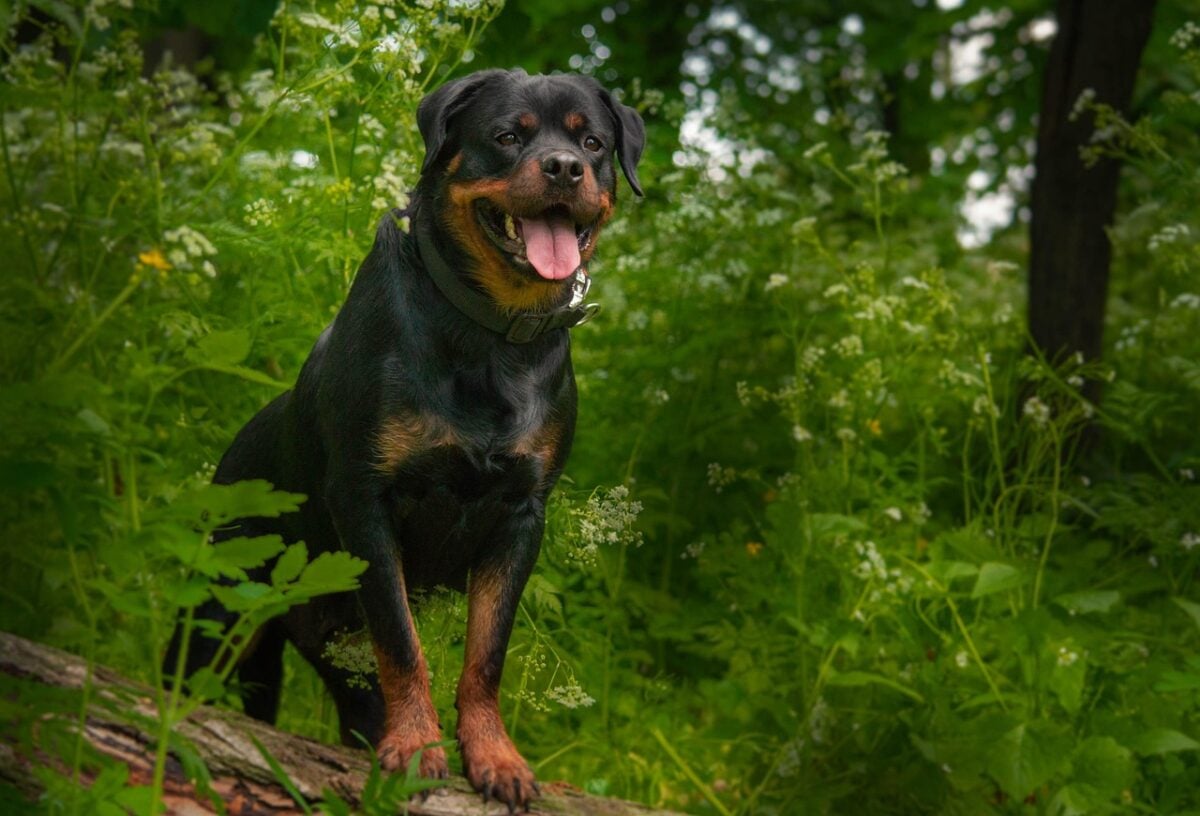
Rottweilers descended from dogs used to drive and protect livestock, and later became known for pulling carts for butchers and other tradespeople. That background helps explain their combination of strength, confidence, intelligence, and a tendency to approach work with more deliberation than frenzy.
Many Rotties enjoy obedience, tracking, scent work, drafting or carting, and structured training that gives them something concrete to accomplish. They often don’t need the frantic pace of some breeds on this list, but they do benefit from regular physical activity and a reason to engage that substantial brain.
Think less perpetual motion, more “I understand the assignment. Please move the furniture.”
At A Glance
- Personality: Confident, devoted, steady, intelligent, and often more thoughtful than their imposing appearance suggests
- Energy/Exercise Needs: Moderate-high; needs consistent daily exercise and mental work but generally not nonstop high-intensity activity
- Résumé: Cattle driving, guarding, cart pulling, tracking, obedience, and strength-based work
- Watch For: Boredom, territorial or guarding behavior, reactivity, and problems that can become harder to manage simply because this is a very powerful dog
14. Vizsla
Some hunting dogs specialize. The Vizsla apparently looked at the available assignments and said, “I’ll take all of them.”
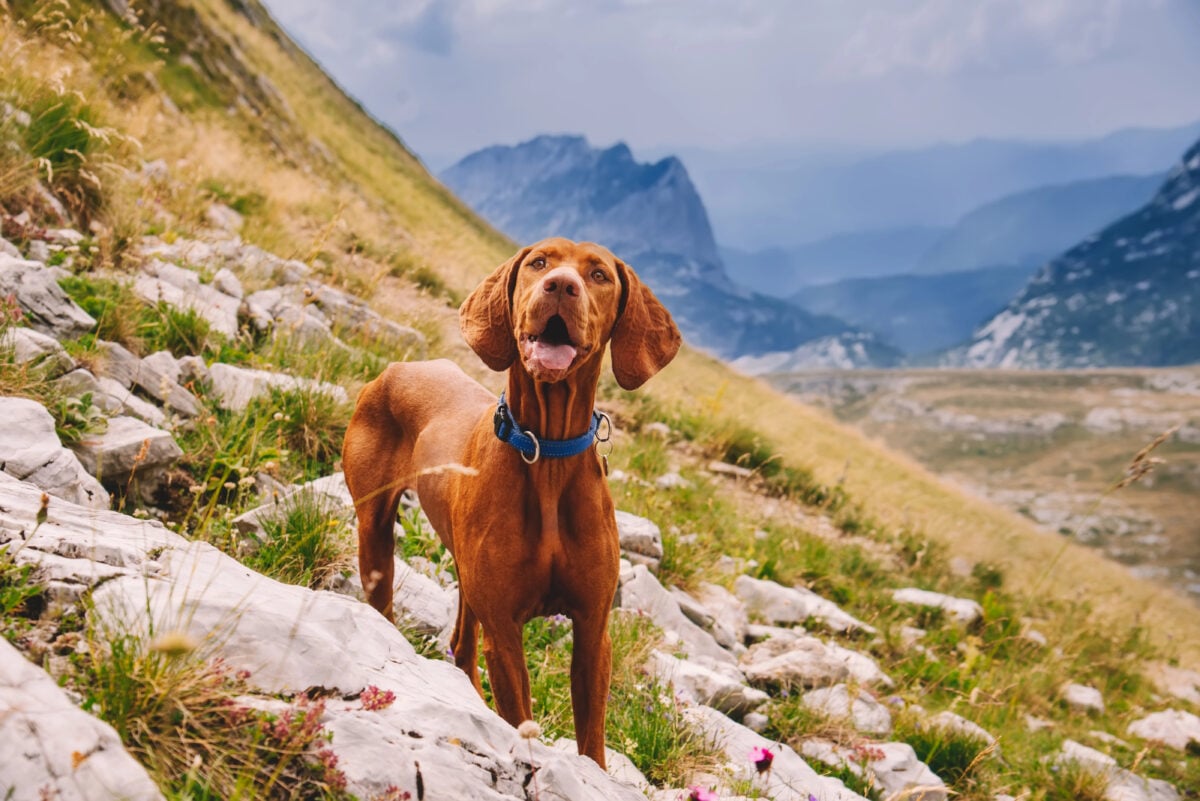
Developed in Hungary as versatile hunting companions, Vizslas were bred to search for game, point out its location, and retrieve it, often while covering substantial ground. They’re fast, athletic, and energetic, but what makes that drive particularly interesting is how closely they tend to work with their person.
That partnership often carries straight into family life. Vizslas are famously affectionate, sensitive, and intensely people-oriented, so activities such as running, field work, scent games, retrieving, agility, and advanced training satisfy two needs at once: something challenging to do and someone to do it with.
Then the day’s work ends, and the famous “velcro dog” reappears. Apparently several miles of running have earned your Vizsla the right to become a lap dog, regardless of whether your lap has sufficient capacity.
At A Glance
- Personality: Affectionate, sensitive, exuberant, athletic, and deeply committed to being wherever you are
- Energy/Exercise Needs: Very high; needs vigorous daily exercise along with regular mental engagement and interactive activity
- Résumé: Pointing, retrieving, searching, field work, scent work, and close cooperation with a handler
- Watch For: Separation anxiety, destructive boredom, overexcitement, and sensitivity to harsh or heavy-handed training
15. Siberian Husky
The Siberian Husky was bred to pull a sled across enormous distances in brutal conditions. This provides useful context when yours returns from a neighborhood walk and appears concerned that you gave up after 37 minutes.
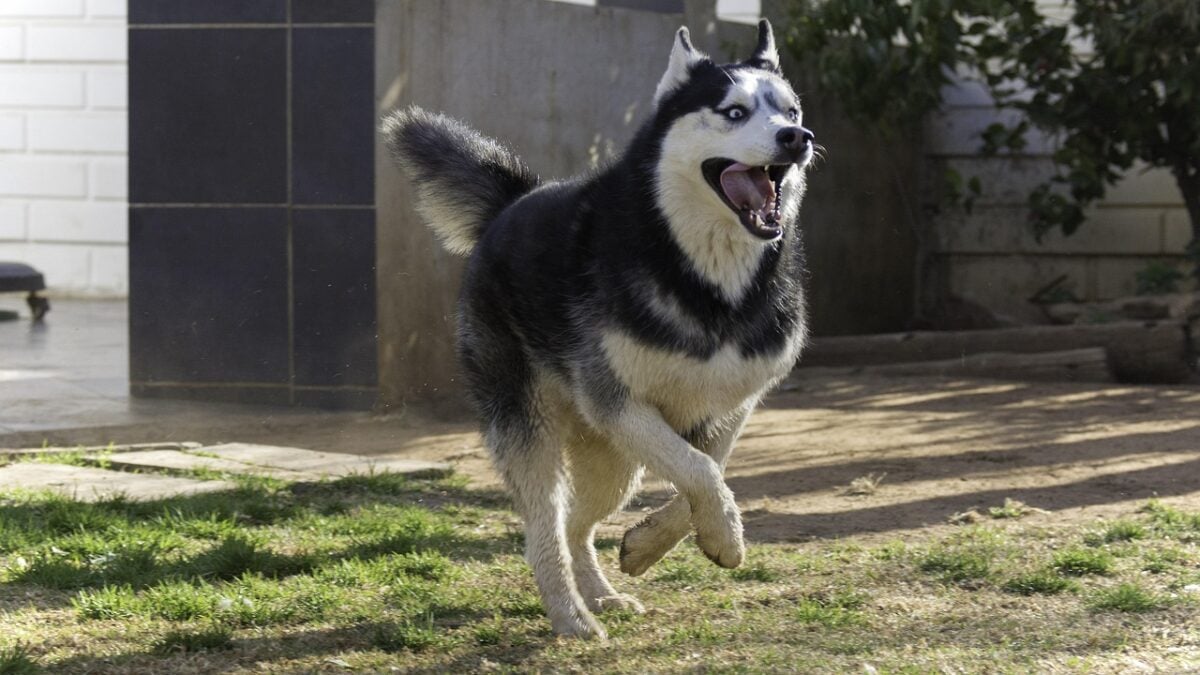
Developed by the Chukchi people of Siberia, Huskies worked in teams to pull relatively light loads efficiently over long distances. That history produced dogs with tremendous endurance, athleticism, independence, and a very different relationship with human direction than some of our eager-to-please breeds.
Huskies can learn remarkably quickly. Convincing them that performing the thing they learned is currently worth doing can be the more interesting part. Training tends to go better when it’s engaging, rewarding, and varied rather than built around endless repetition.
Running, hiking, canicross, skijoring, and appropriate pulling sports let them move with purpose while tapping into what they were actually built to do. Sometimes the assignment really is “go that way for a very long time.” Your Husky has been preparing for this opportunity.
At A Glance
- Personality: Social, mischievous, independent, athletic, and fully prepared to negotiate the terms of your request
- Energy/Exercise Needs: Very high; sustained movement and vigorous daily exercise are particularly important for this endurance breed
- Résumé: Sled pulling, endurance travel, teamwork, running, and cold-weather work
- Watch For: Difficulty in training, escaping, roaming, digging, destructive boredom, strong prey drive, unreliable off-leash behavior, and selective cooperation when something more interesting appears
16. Anatolian Shepherd
Most dogs on this list want you involved in the assignment. The Anatolian Shepherd was developed for work that required something very different: good judgment when nobody was standing there giving directions.
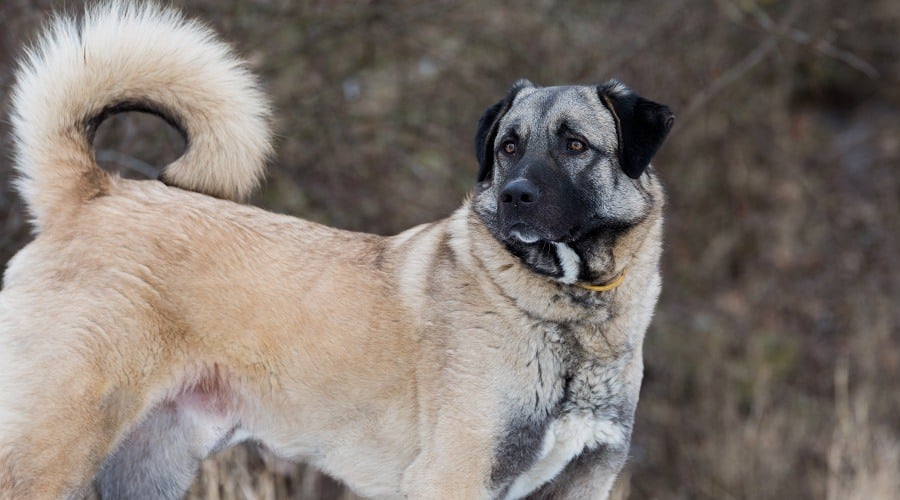
For centuries, these powerful livestock guardians worked alongside shepherds in Turkey, living with and protecting flocks from predators. They needed to notice potential threats, decide what deserved a response, and act independently. That history still shows up in their watchful, confident, territorial nature.
An Anatolian’s idea of satisfying work may therefore look surprisingly uneventful. Watching property, surveying their surroundings, and deciding that everything is currently acceptable can be the job. Training, long walks, scent activities, and plenty of secure outdoor space can provide additional outlets, but endless repetitive drills aren’t likely to impress them.
If your Anatolian appears to be doing nothing, there’s a reasonable chance they’re actually monitoring everything.
At A Glance
- Personality: Calm, watchful, confident, independent, and accustomed to forming their own conclusions
- Energy/Exercise Needs: Moderate; needs regular exercise and room to move, but purposeful monitoring matters more than nonstop high-intensity activity
- Résumé: Livestock guarding, predator deterrence, property monitoring, and independent decision-making
- Watch For: Territorial behavior, barking, roaming, wariness of strangers, and an independent streak that makes early training and socialization especially important
17. English Springer Spaniel
An English Springer Spaniel can be affectionate, cheerful, and wonderfully devoted indoors, then step outside and immediately become a nose with four legs and several urgent appointments.
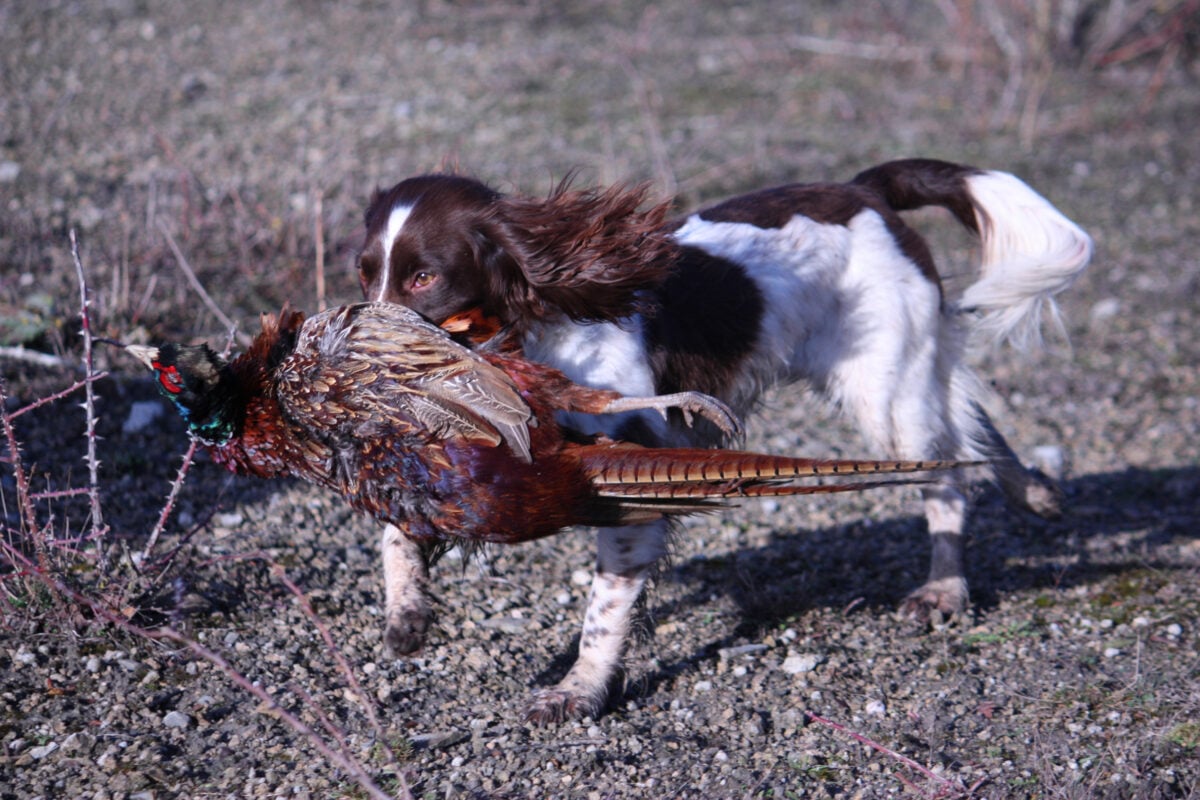
Springers tend to bring tremendous enthusiasm to whatever is happening. They’re typically people-oriented, eager to participate, and not especially interested in being left out, whether you’re heading for a hike or simply walking toward a door that might lead somewhere exciting.
That personality fits their history. Springers were developed to search through cover, flush game birds, and work cooperatively with hunters. Many still light up when they can move, sniff, search, and check back in with their person along the way.
Scent work, tracking, retrieving, field activities, hide-and-seek, and search games can put that enthusiasm to excellent use. You may have hidden one tennis ball in the backyard. Your Springer has accepted this as a full-scale search operation.
At A Glance
- Personality: Cheerful, affectionate, curious, enthusiastic, and perpetually ready to investigate
- Energy/Exercise Needs: High; needs plenty of daily movement and particularly benefits from opportunities to sniff and search
- Résumé: Flushing game, searching, retrieving, scent work, and close cooperative field work
- Watch For: Overexcitement, pulling or wandering after scents, boredom, and difficulty coping with too much time alone
18. Beagle
A Beagle doesn’t necessarily ignore you on walks. It’s just difficult to compete with breaking news being delivered directly through the ground.
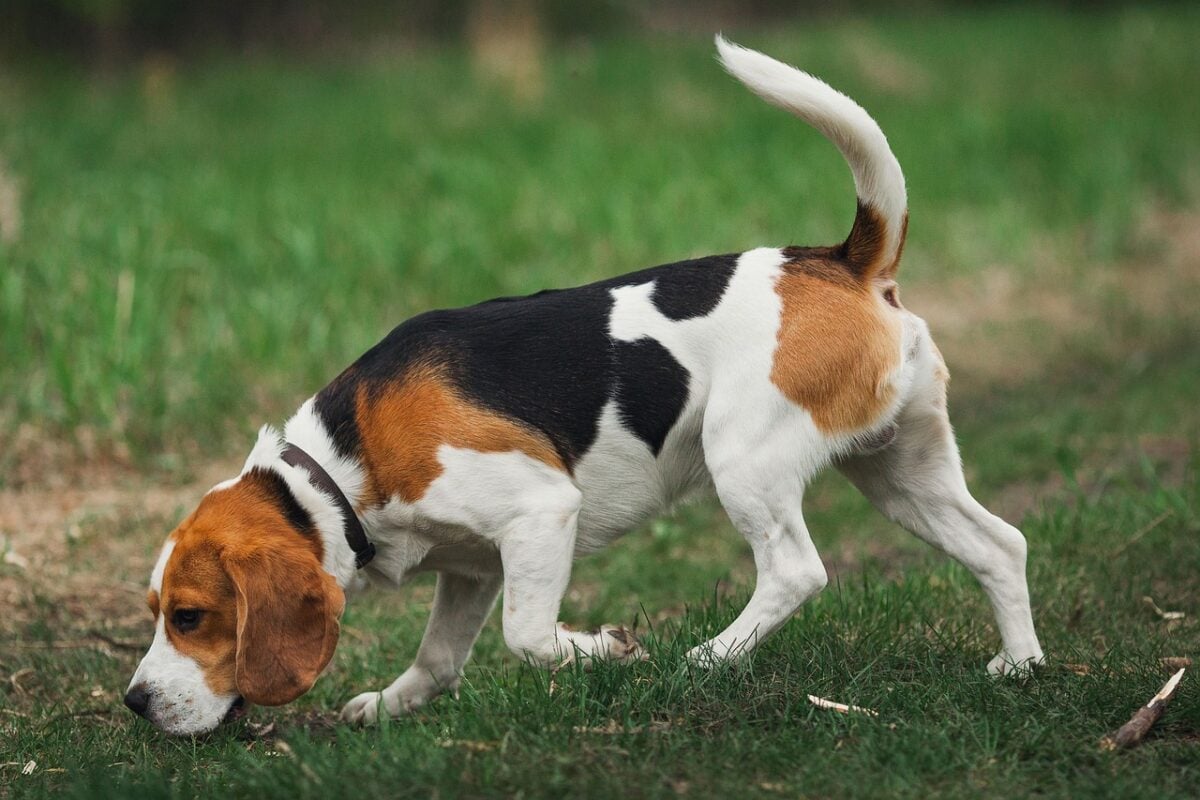
Developed as scent hounds, Beagles traditionally worked in packs to track small game such as rabbits and hares. That helps explain the determination, curiosity, sociability, and remarkable commitment many bring to investigating a smell that you cannot detect whatsoever.
Give that nose an actual assignment, and things get interesting. Scent work, tracking games, hidden treats, “find it,” and food puzzles can be enormously satisfying. Beagles also tend to enjoy activities that let them investigate and make choices rather than simply repeat commands.
Their noses can override other considerations, though. You may be going home. The Beagle has just discovered Chapter Two.
At A Glance
- Personality: Merry, curious, social, determined, and gloriously nose-led
- Energy/Exercise Needs: Moderate-high; needs regular active exercise plus plenty of opportunities to sniff, search, and explore
- Résumé: Scent tracking, pack hunting, searching, trailing, and persistent investigation
- Watch For: Following scents, roaming, escape attempts, vocalizing, food obsession, and selective hearing when the nose has found something better
19. Giant Schnauzer
A Giant Schnauzer is smart enough to learn what you want remarkably quickly. Whether learning it means the discussion is now over is a separate matter.
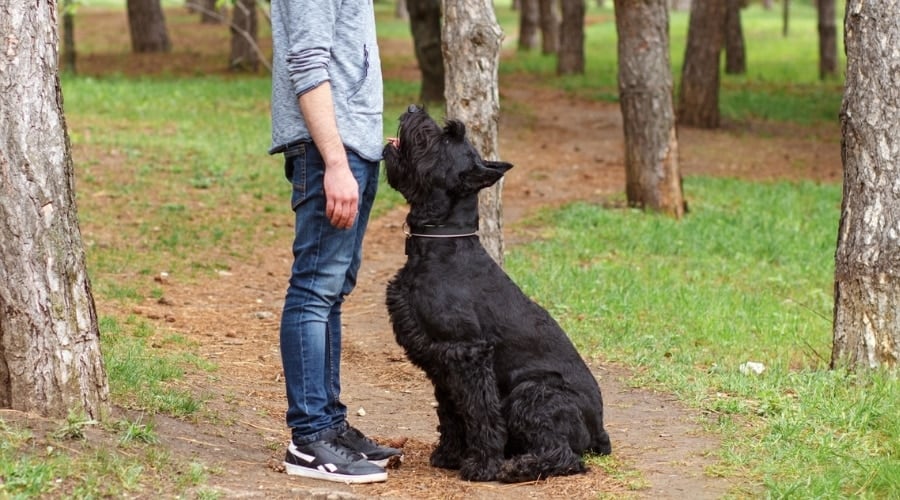
Originally developed in Germany as versatile farm dogs, Giant Schnauzers drove cattle, guarded property, and protected livestock and people. Later, their intelligence, strength, and trainability led to police and other working roles. They’re bold, watchful dogs that tend to take both activity and their surroundings seriously.
That substantial brain needs more than a few laps around the neighborhood. Advanced obedience, tracking, scent work, agility, structured games, and challenging training can give them the combination of physical and mental work they crave.
Giant Schnauzers also bring plenty of confidence to the arrangement. Repetition without a compelling reason may eventually be treated as your hobby rather than theirs.
At A Glance
- Personality: Bold, intelligent, vigilant, energetic, and equipped with both confidence and opinions
- Energy/Exercise Needs: High; needs substantial daily exercise paired with challenging mental work and consistent training
- Résumé: Cattle driving, farm work, guarding, police work, tracking, and advanced training
- Watch For: Territorial behavior, reactivity, boredom, destructiveness, and strong-willed behavior without early training and socialization
20. Bernese Mountain Dog
The Bernese Mountain Dog is proof that a dog can take work seriously without behaving as though every assignment is an emergency.
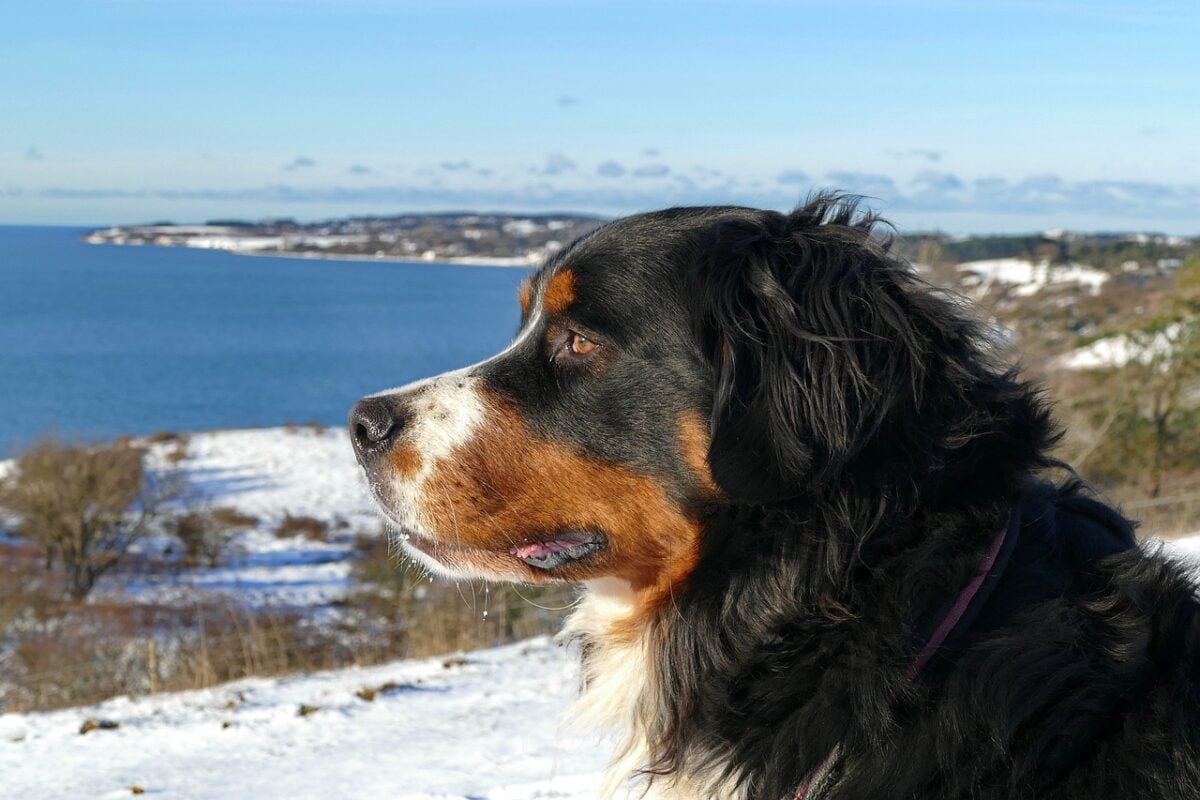
Developed as all-purpose farm dogs in Switzerland, Berners helped drive cattle, guard farms, and pull carts loaded with goods. Their combination of strength, steadiness, and willingness to work alongside people made them useful for jobs where brute enthusiasm wasn’t nearly as valuable as dependable muscle.
Modern Berners can still enjoy drafting and carting, obedience, tracking, hiking, and purposeful household tasks. Many are affectionate, people-oriented dogs that like being included, but they generally don’t require the relentless high-intensity schedule of some breeds earlier on this list.
They’re built more for steady effort than endless cardio, particularly in warm weather. Give a Berner something worthwhile to do, and they’ll often join enthusiastically — just don’t mistake 100 pounds of thoughtful participation for a need to hurry.
At A Glance
- Personality: Affectionate, steady, good-natured, devoted, and generally more interested in helping than hurrying
- Energy/Exercise Needs: Moderate; needs consistent daily activity but is better suited to steady, purposeful exercise than prolonged high-intensity work
- Résumé: Drafting, cart pulling, cattle driving, farm work, guarding, and cooperative tasks
- Watch For: Heat sensitivity, joint stress, weight gain, and boredom when they don’t get enough activity or involvement
Your Mixed-Breed Dog May Want A Job, Too
Working instincts don’t require a pedigree. If you have a mixed-breed dog, pay attention to what they repeatedly choose to do. Those behaviors can point you toward activities they’ll find genuinely satisfying.
- Carries everything: Try retrieving or toy cleanup
- Follows every smell: Explore nose work and “find it” games
- Chases movement: Try controlled movement-based activities
- Digs and searches: Provide appropriate digging or searching games
- Loves learning: Build up to advanced tricks or multi-step tasks
- Always wants to run: Explore structured athletic activities
You don’t need a DNA test to start enriching the dog in front of you. Their favorite activities are already giving you some pretty useful clues.
You Don’t Need Sheep: 10 Jobs Your Dog Can Do At Home
Fortunately, satisfying a dog’s working instincts doesn’t require livestock, a search-and-rescue team, or a sudden move to Montana. Some surprisingly ordinary activities can become a “job” once your dog has a goal to accomplish.
1. Play “Find It”
Hide treats or a favorite toy and send your dog searching. Start somewhere obvious, then gradually make the hiding places harder. Snuffle mats and scent games can work the same searching muscles when you need an indoor option.
2. Teach Them The Names Of Their Toys
Start with one favorite object and teach its name, then introduce others. Eventually, ask your dog to find one specific toy among several choices.
3. Put The Toys Away
Once your dog knows how to retrieve, teach them to drop each toy into a basket. You get enrichment, and someone else finally helps clean the living room.
4. Deliver Household Objects
Some dogs adore being useful. Teach safe assignments such as “Get your leash,” “Bring the rope,” or carrying an appropriate object to another family member.
5. Let Their Nose Do The Work
You don’t need formal scent-work equipment to start. Hide treats in boxes, create a simple scent trail, or teach your dog to locate a particular object.
6. Make Them Work For Dinner
Puzzle feeders, snuffle mats, and interactive toys turn something your dog already does every day into a problem worth solving. Rotate them so the challenge doesn’t become predictable.
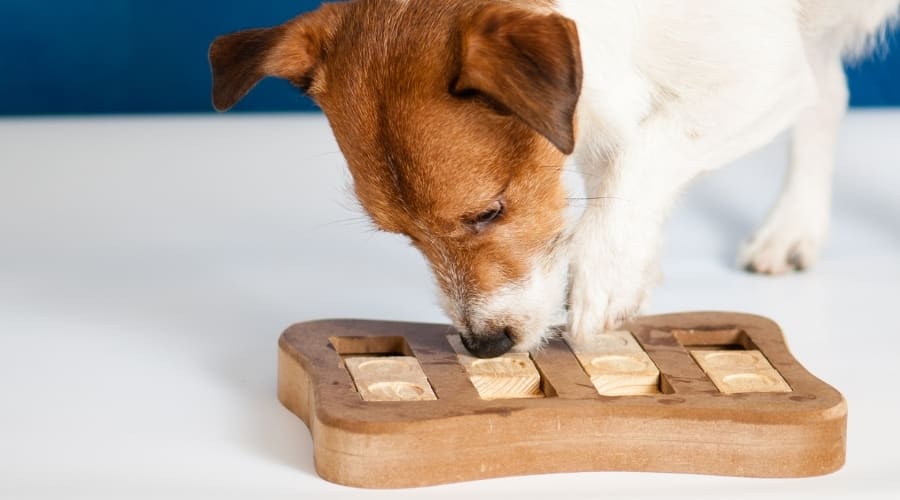
7. Build A Chain Of Tricks
Instead of practicing “sit” for the 4,000th time, combine familiar behaviors: fetch the ball → bring it to you → drop it in the basket. Multi-step tasks add complexity without requiring more space.
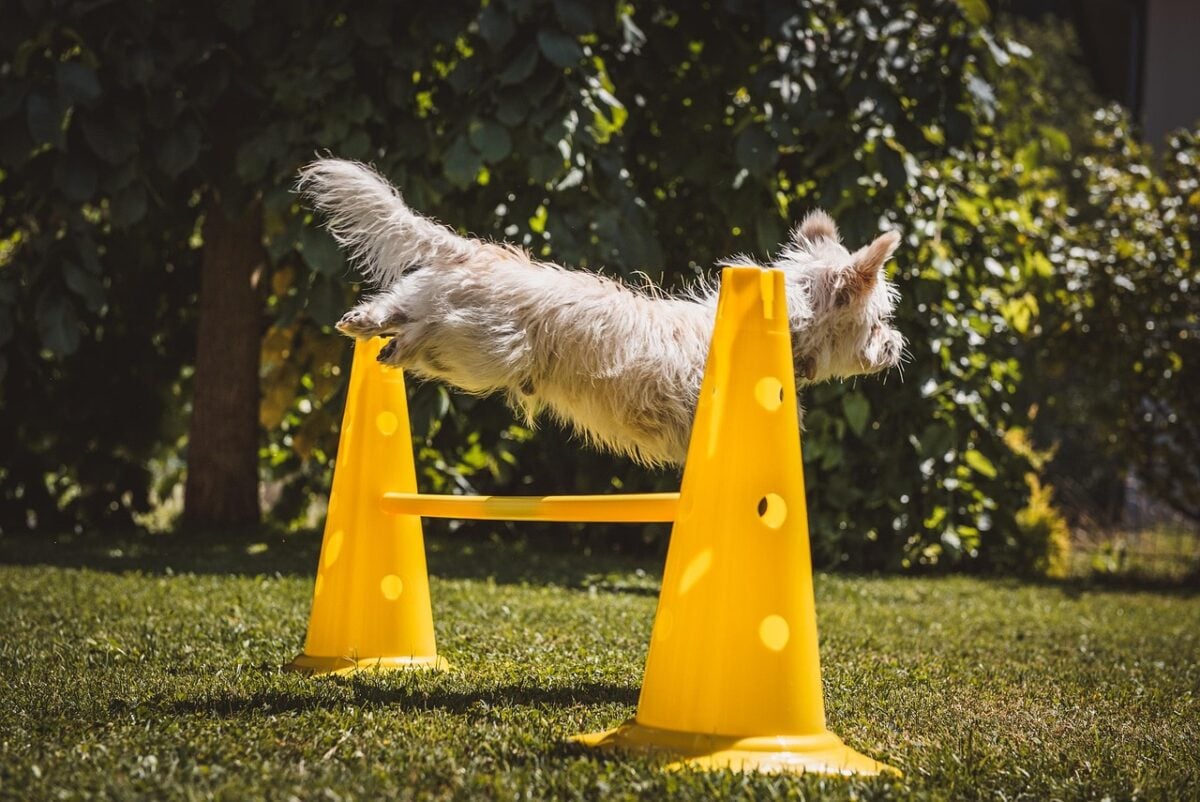
8. Build A Backyard Agility Course
Tunnels, weave poles, jumps, and other agility equipment can provide physical and mental work. Keep obstacles appropriate for your dog’s age, size, and physical condition.
9. Make Fetch More Interesting
Add direction changes, hide the toy before releasing your dog, alternate objects, or ask for another behavior before the throw. Same tennis ball. Much more complicated paperwork.
10. Give Walks A Purpose
Let scent-driven dogs stop and investigate. Practice cues with training treats, add short searching games, or vary the route. For suitable dogs, activities involving a properly fitted harness or dog backpack can add another dimension.
The best job isn’t necessarily the hardest one. It’s the activity your dog keeps asking to do again.
Match The Job To The Dog
You don’t need to recreate your dog’s ancestral occupation. Look at what they naturally enjoy, then find a modern version that scratches the same itch.
| If Your Dog Loves To… | Try… |
|---|---|
| Follow smells | Nose work, tracking, “find it” |
| Carry objects | Retrieving, toy cleanup, delivery tasks |
| Chase movement | Treibball or controlled herding activities |
| Run | Hiking, canicross, appropriate pulling sports |
| Learn commands | Advanced tricks, rally, obedience |
| Dig and search | Barn hunt, searching games, designated digging |
| Work beside you | Agility, training, household tasks |
When A Strong Work Drive Becomes Something More
A dog who drops a ball at your feet for the 14th time may be extremely enthusiastic about fetch. A dog who cannot disengage from the ball at all is telling you something different.
That’s an important distinction with high-drive dogs. Normal working drive has an off-switch: the dog can become intensely engaged in an activity and eventually disengage, rest, eat, sleep, explore something else, or move on with their day.
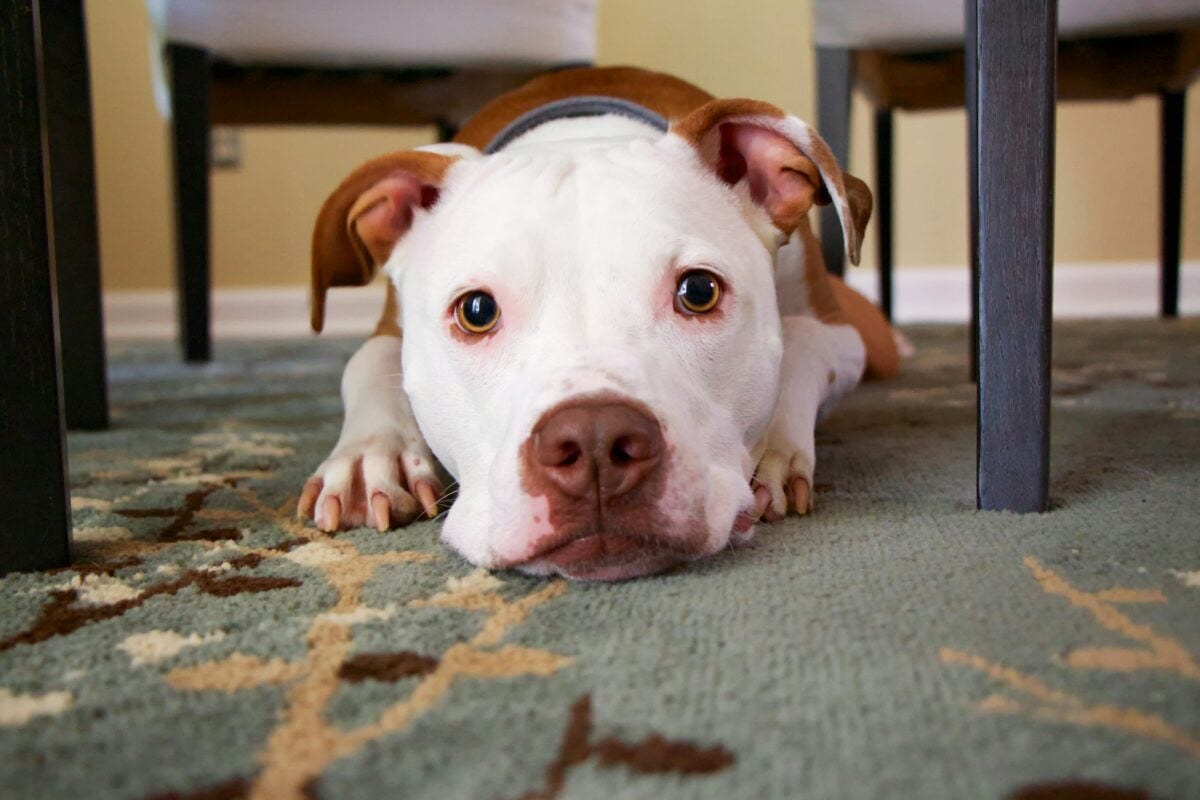
Pay closer attention when that flexibility starts disappearing. Red flags can include:
- Inability to settle even after appropriate physical and mental activity
- Persistent pacing or restlessness without an obvious reason
- Compulsive chasing, particularly lights, shadows, reflections, wheels, or repetitive movement
- Extreme fixation on balls, toys, windows, movement, or particular activities
- Severe frustration or distress when an activity ends or an object is removed
- Escalating destructive behavior despite appropriate outlets
- Increasing anxiety or reactivity that interferes with everyday life
The difference isn’t simply how much your dog loves an activity. It’s whether they still have control over stopping it.
And piling on more exercise isn’t necessarily the solution. In some cases, repeatedly feeding an obsessive behavior can make the pattern more entrenched rather than satisfy it.
If behavior becomes intense, sudden, worsening, difficult to interrupt, or disruptive to normal daily life, start with your veterinarian.
Pain and other medical problems can contribute to behavioral changes, while anxiety and compulsive behaviors may require help from an appropriately qualified canine behavior professional.
Frequently Asked Questions
Working drive can look very different from one dog to the next. These quick answers cover a few common questions about keeping busy dogs challenged without turning every day into an endurance event. If you don’t see your question here, ask us in the comments!
Which Dog Breeds Need The Most Mental Stimulation?
Border Collies and Belgian Malinois are among the breeds famous for intense mental and physical working drive, but breed alone doesn’t determine an individual dog’s needs. Australian Shepherds, German Shepherds, and many sporting and working breeds can also require substantial daily engagement.
How Much Mental Stimulation Does A Dog Need Every Day?
There’s no useful universal number. Quality matters as much as duration. Several short sessions of training, sniffing, searching, or problem-solving throughout the day may be more satisfying than one long activity your dog finds boring.
Watch your individual dog: they should be able to engage enthusiastically and settle afterward.
Do Working Breeds Make Good Family Dogs?
Absolutely, when the household fits the dog. A Labrador or Golden Retriever may slot comfortably into many active families, while a Belgian Malinois or Anatolian Shepherd can require considerably more specialized experience.
A good family dog and an easy family dog aren’t necessarily the same thing. Before choosing a breed, consider its exercise needs, trainability, independence, size, guarding or prey instincts, and how much time you realistically want to devote to training and activities.
Is Your Dog Bored, Overtired, Or Just Really High-Energy?
Once you start looking at your dog through the lens of what they naturally want to do, a lot of everyday behavior becomes more interesting. The dog carrying socks, scanning the yard, following every scent, or waiting for the next cue may already be showing you where to start.
From here, the goal isn’t to keep your dog busy every waking minute. It’s to find the right outlet, recognize when boredom is creeping in, and make sure their breed and energy level actually fit your lifestyle.
- Think your dog may already be inventing their own entertainment? See our guide to things dogs do when they’re bored.
- Living with a dog whose energy seems to have no bottom? Explore our roundup of high-energy dog breeds.
- Not sure whether your dog is bored, anxious, or simply overdue for a nap? Our guide to signs your dog is overtired breaks down the differences.
- Considering one of the more demanding breeds on this list? Take a look at these high-maintenance dog breeds before deciding what level of canine ambition you’re prepared to live with.
What completely unnecessary job has your dog appointed themselves to? Neighborhood squirrel surveillance? Sock transportation? Making sure nobody uses the bathroom unsupervised? Tell us in the comments — we’d love to see what’s currently on the canine payroll.