When you purchase through links on our site, we may earn a commission at no extra cost to you. Learn more.
Ever feel like you’re being stalked… by your own dog? If you’ve ever wondered why your dog follows you everywhere, the answer usually comes down to instinct, bonding, and behavior.
Table of Contents
Maybe they’re glued to your side while you cook dinner. Maybe they follow you from room to room like a furry bodyguard. Or maybe they insist on supervising every bathroom trip like it’s their official duty.
Many dog owners joke that they have a “furry shadow” who refuses to let them out of sight. But why does your dog follow you everywhere?
Sometimes it’s simple: dogs are social animals that form strong bonds with their humans. Staying close helps them feel safe, connected, and involved in whatever their favorite person is doing.
Other times, your dog might be following you because of curiosity, protective instincts, habit, or even anxiety.
In this guide, we’ll break down the eight most common reasons dogs follow their owners, when this behavior is completely normal, and when it might signal something that needs attention. If you’re hoping for a little more personal space, we’ll also share tips to help your dog become more confident and independent.
Why Some Dogs Act Like Your Shadow
Many dogs develop a habit of staying close to their owners throughout the day. Behaviorists often refer to this as “shadow behavior,” where a dog keeps track of where their person is and moves with them from place to place.
For some dogs, this simply reflects their social nature. Dogs evolved to live in groups, and many prefer staying near members of their household rather than wandering off on their own.
But shadow behavior can also develop for other reasons, including personality, early training, curiosity, or anxiety. Some dogs check in occasionally, while others prefer to stay within arm’s reach most of the time.
Understanding what motivates this behavior can help you tell the difference between normal companionship and something that may need a little training or support.
Below, we’ll break down the most common reasons dogs develop this habit.
Does This Look Familiar?
If your dog seems to appear wherever you go… the kitchen, the couch, even outside the bathroom door, you’re about to see a behavior many dog owners recognize.
Many dog owners are surprised to learn that several different instincts can cause this behavior.
Quiz: What Kind of “Shadow Dog” Do You Have?
If your dog follows you everywhere — from the kitchen to the bathroom — you might be living with what behaviorists sometimes call a “Velcro dog.”
But not all shadow dogs follow their humans for the same reason.
Some dogs are loyal companions, others are snack detectives, and a few might actually be struggling with anxiety.
Take this quick quiz to see what type of shadow your dog might be.
Question 1: When does your dog follow you most closely?
- A. All the time, no matter what I’m doing
- B. Mostly when I’m cooking or eating
- C. Whenever someone new enters the house
- D. Whenever I leave the room
Question 2: What does your dog usually do when you leave the house?
- A. Waits calmly or naps
- B. Searches the house for food opportunities
- C. Patrols the house or watches the door
- D. Whines, barks, or becomes upset
Question 3: What best describes your dog’s personality?
- A. Extremely loyal and attached
- B. Always interested in snacks
- C. Alert and protective
- D. Nervous when alone
Quiz Results: What Kind Of Shadow Dog Do You Have?
Now count how many times you chose each letter.
The letter you picked most often reveals the most likely reason your dog follows you everywhere.
Mostly A’s: The Loyal Shadow
Your dog follows you because they genuinely enjoy being near you. Dogs are social animals, and a strong attachment to their favorite human is completely normal.
This type of dog usually stays close simply for companionship and will often relax nearby when you stop moving.
Common traits include calm following, relaxed body language, and the ability to settle when you leave the room.
Mostly B’s: The Snack Inspector
Your dog may have learned that following humans often leads to food opportunities.
Dogs are incredibly good at recognizing patterns. If you’ve ever dropped food while cooking, shared snacks, or given treats in the kitchen, your dog may have learned that sticking close increases their chances of a reward.
These dogs tend to appear quickly whenever food is involved.
Mostly C’s: The Household Protector
Some dogs stay close because they naturally take on a protective role.
Many breeds were developed to guard or watch over people, so following their favorite human can be part of their instinct to monitor their surroundings.
These dogs are often alert, attentive, and quick to investigate unfamiliar sounds or visitors.
Mostly D’s: The Anxious Companion
If your dog becomes upset when you leave or constantly checks where you are, their shadow behavior may be connected to anxiety.
Dogs with separation-related stress often follow their owners closely because they feel more secure when they know where their person is.
If this behavior is paired with whining, pacing, or destructive behavior when you leave, it may be helpful to explore ways to build your dog’s confidence and independence.
Keep reading below to learn when following is normal and when it may signal separation anxiety.
When Dogs Take “Personal Space” Personally
Some of our Canine Journal team members were willing to share how their dogs invaded their personal space. Have any of these happened to you? Let us know in the comments.
Real-Life Shadow Dog Moment: Daisy
Daisy, an 80-pound Labrador–Pitbull mix, is convinced she and I are basically the same being. If I move, she moves. If I sit, she sits. Getting up for any reason instantly becomes a group activity.
Most of the time, I love having a constant companion, but Daisy does not understand the concept of privacy. The first time I bent down to grab my pants and suddenly felt a cold dog nose somewhere very personal, I nearly hit the ceiling.
Since then, Daisy has had one strict rule: no entering the room while I’m getting dressed.
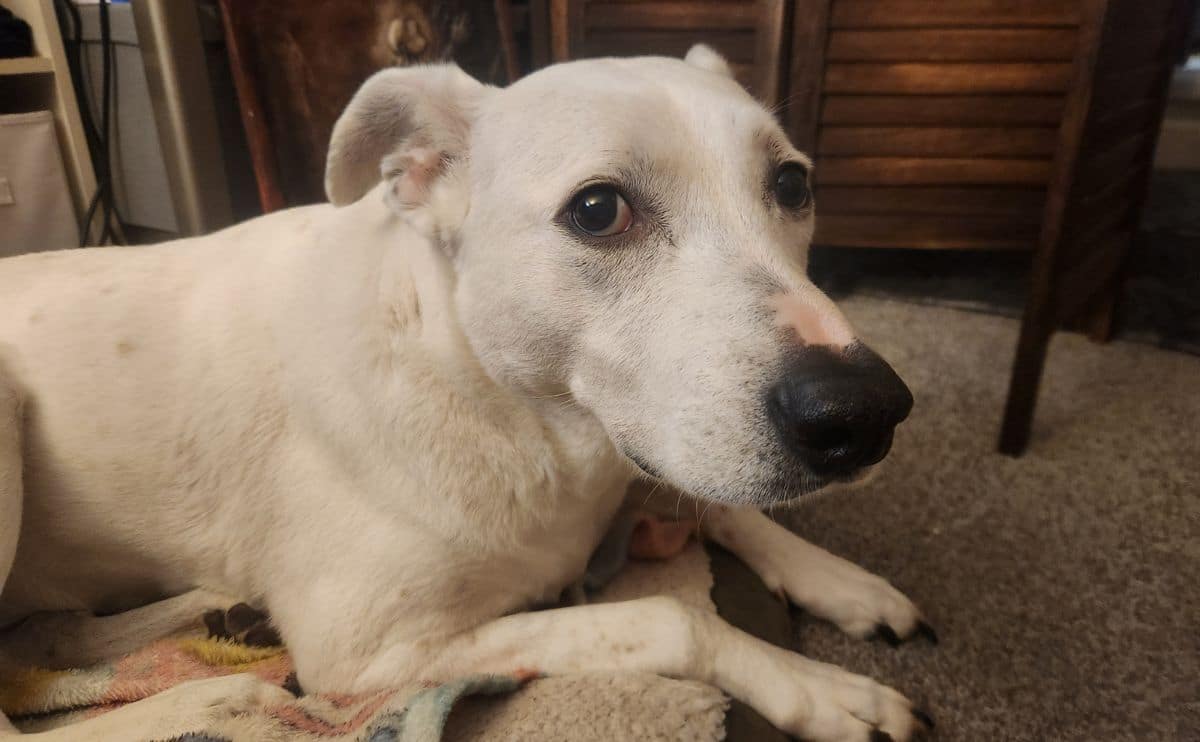
Tiny, the Bathroom Bodyguard
Tiny may be small, but his biggest job is guarding the bathroom door. The moment I head that way, he rushes to his post. As soon as the door closes, he plants himself outside, ears up and tail wagging, like he is standing watch over something very important.
If I take too long, he lets out a dramatic sigh. If I really test his patience, the whining starts. Showers are the worst. He presses his nose under the door like he is making sure I have not disappeared.
When I finally step out, he is sitting there with a look that says, “Took you long enough.”
I have tried sneaking in. I have tried distracting him with treats. Nothing works. Tiny is not just a dog. He is a bathroom bodyguard, a dedicated watchdog, and a firm believer that I should never, under any circumstances, be alone.
– Sally Jones, Dog Mom, Canine Journal Writing & Editor

As you can see, our team here at Canine Journal has plenty of clingy dogs who follow us everywhere, and we mean EVERYWHERE we go!
8 Reasons Your Dog Follows You Everywhere
If your dog follows you everywhere, it’s usually normal behavior. Many dogs simply enjoy staying close to their favorite person. However, in some cases, constant shadowing can signal anxiety or another underlying issue.
1. Strong Bond With Their Owner
To your dog, you are the center of their world.
Their day revolves around you… when you wake up, when you eat, when you go outside, and when you relax on the couch. So it makes sense that they want to be wherever you are.
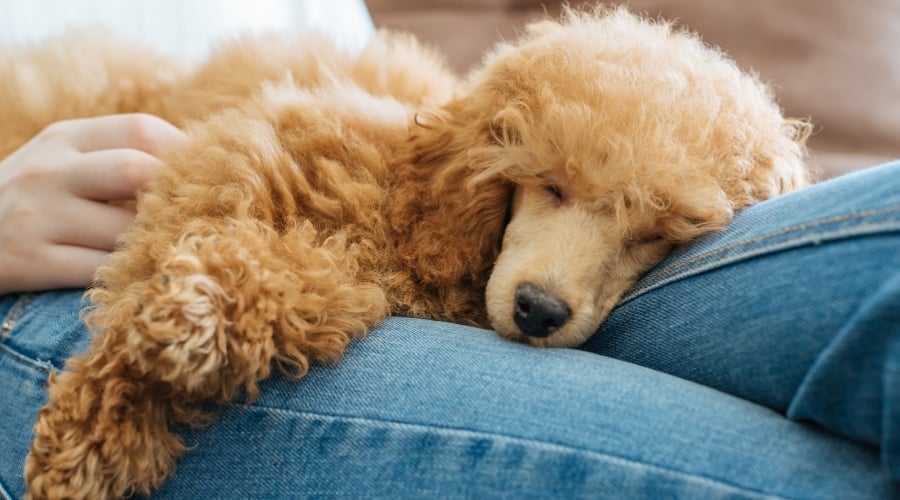
Dogs are highly social animals that form strong bonds with their humans. Following you from room to room is often their way of staying connected and sharing your space.
Research supports just how closely dogs pay attention to their humans. A review published in Frontiers in Psychology found that dogs are remarkably skilled at reading human emotions, facial expressions, and voices. They can even combine visual and sound cues to understand how their owners are feeling.
Because of this deep social awareness, many dogs constantly monitor their owners’ movements and reactions. Staying close helps them feel secure and connected to the person they rely on most.
In other words, your dog is not just being clingy.
They are responding to a bond that has been shaped by thousands of years of living alongside humans.
How Do I Know If My Dog Loves Me?
Learn more about how to show your dog you love them, and understand more about how our dogs show us love in our detailed guides. You can also meet some of the most affectionate dog breeds here.
2. Pack Instincts and Social Bonds
Even though dogs are domesticated, many of their instincts still come from their wild ancestors.
In the wild, dogs and wolves live in packs where members naturally follow the group leader. That instinct has not disappeared… it has simply shifted to their human family.
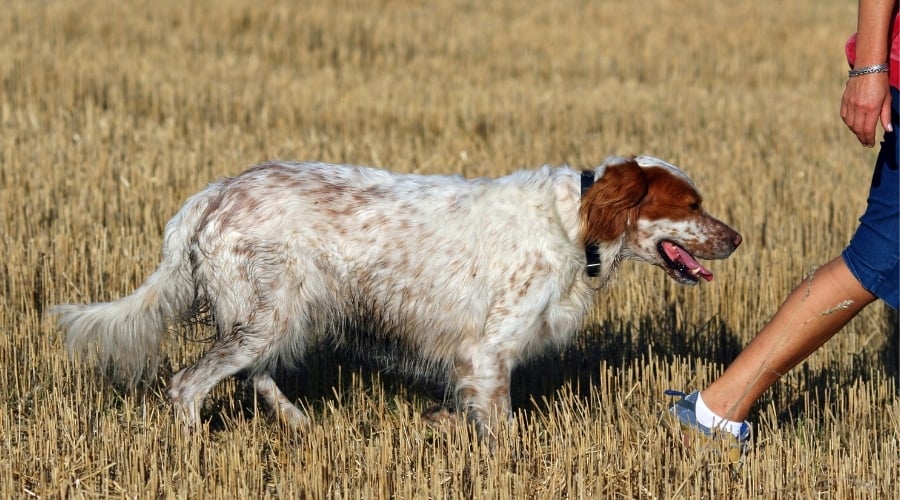
For many dogs, their owner becomes the central figure of the household. They watch your movements, take cues from your behavior, and often follow you from place to place.
Dogs that were raised closely with their owners, especially from puppyhood, may also develop strong attachment bonds that make them naturally want to stay nearby.
From your dog’s perspective, following you just means sticking close to the leader of the pack.
3. Protective Behavior
Some dogs stick close to their owners because they feel a natural instinct to watch over their person.
Dogs are observant animals that pay close attention to their environment. By staying near you, they can monitor what is happening and respond quickly if something seems unusual.
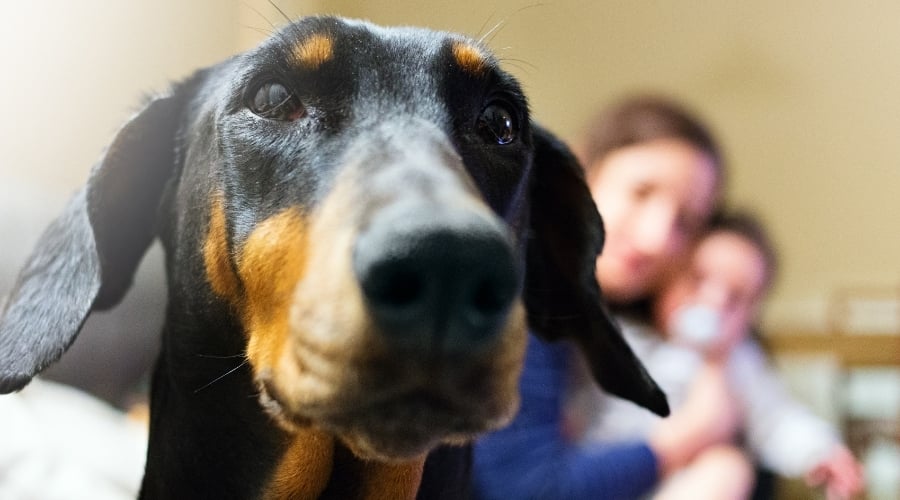
Protective breeds are especially likely to show this behavior, including:
Even if there is no real danger in your living room, your dog may still feel it is their job to stay alert.
When they follow you from room to room, they may simply be making sure everything is safe.
Some dogs do this out of instinct, others because they feel a deep bond with their person. Either way, their devotion runs deep. When they follow you from room to room, they are not just being clingy. They are standing watch, making sure nothing gets to you when they are on duty.
4. Separation Anxiety
Some dogs keep tabs on their owners constantly because they feel distressed when left alone.
Separation anxiety goes beyond the usual longing for attention. Dogs with this issue may bark incessantly, chew on furniture, scratch at doors, or even have accidents indoors when left alone. Some refuse to eat, while others pace anxiously until their person returns.
It’s not about bad behavior; it is about fear. To them, your absence feels like an unbearable loss, and they do not know how to cope.
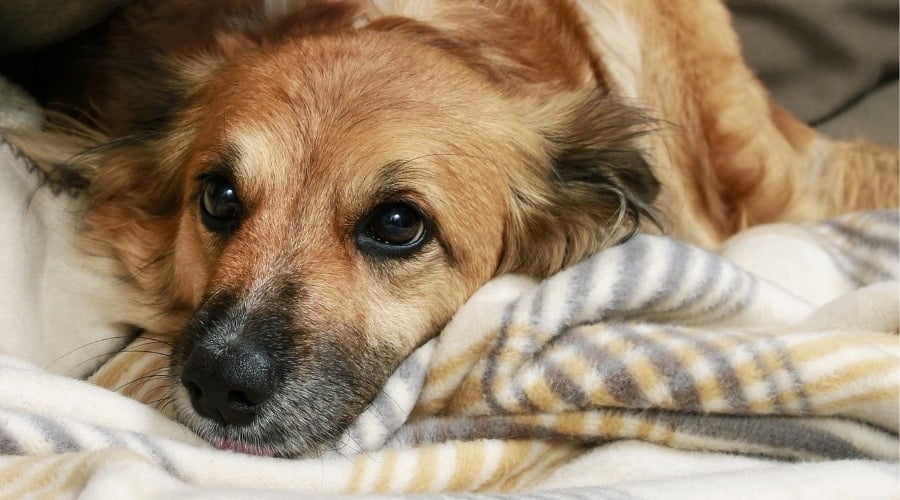
Dogs with separation anxiety may become anxious the moment they realize you are leaving. In addition to shadowing you around the house, they might also show behaviors like:
- whining or barking
- pacing
- scratching doors
- chewing furniture
- having accidents indoors
This behavior is not your dog being stubborn or disobedient. For these dogs, being separated from their owner can feel genuinely stressful.
Helping a dog with separation anxiety often involves building confidence and slowly teaching them that being alone is safe. Short departures, enrichment toys, and consistent routines can help them feel more secure over time.
Some dogs find comfort in background noise, like soft music or a calming TV show. In more severe cases, crate training or working with a professional trainer can make a huge difference.
5. Curiosity and Fear of Missing Out
In many cases, dogs follow their owners everywhere for one simple reason:
They’re curious.
If something is happening in the house, they want a front-row seat.
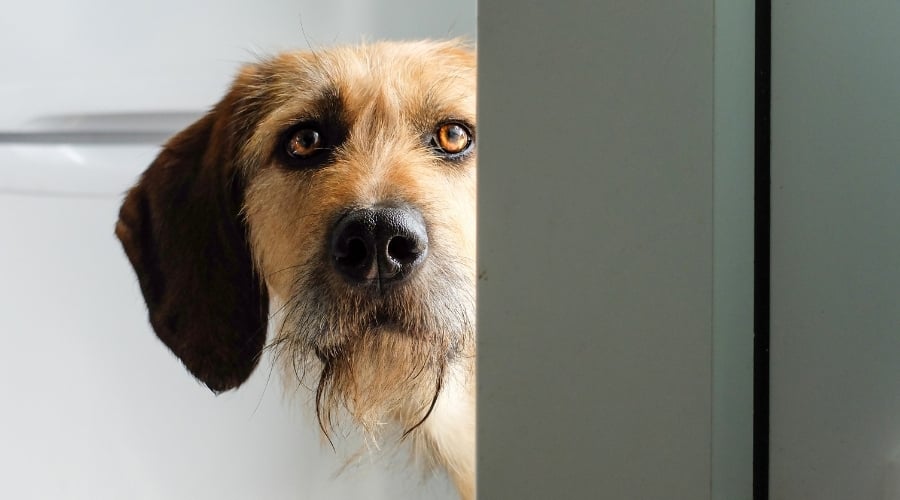
Dogs that follow closely are often keeping tabs on things like:
- Food preparation
- Visitors arriving
- Doors opening
- Outdoor activity
- Anything interesting happening
This “fear of missing out” can be especially strong in curious breeds like:
- Beagles
- Border Collies
- Terriers
From your dog’s perspective, following you isn’t clingy — it’s staying informed.
6. Feeling Insecure When Alone
Not all dogs follow their owners because of separation anxiety. Some just feel uneasy when they’re alone.
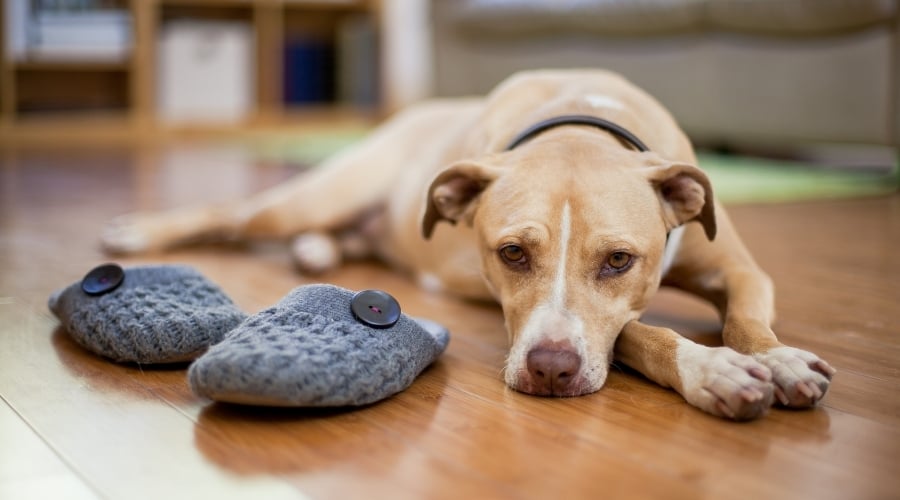
For these dogs, solitude can feel confusing or stressful, especially if they:
- Experienced past trauma
- Recently moved to a new home
- Lack confidence in unfamiliar environments
Rescue dogs sometimes struggle with this after experiencing unstable living situations.
Instead of attachment to one specific person, these dogs seek general reassurance from having someone nearby.
You might notice signs like:
- Checking on you frequently
- Pacing when left alone
- Difficulty settling in empty rooms
Helping these dogs build confidence takes patience. Gradual independence training, enrichment toys, and creating safe resting spaces can help them feel more comfortable on their own.
7. Personality or Breed Tendencies
Ever feel like your dog is keeping track of your every move?
Some dogs simply prefer staying close to their favorite person throughout the day, whether that means following you from room to room or settling nearby whenever you stop moving. For these dogs, being near their owner is just part of how they feel comfortable and connected
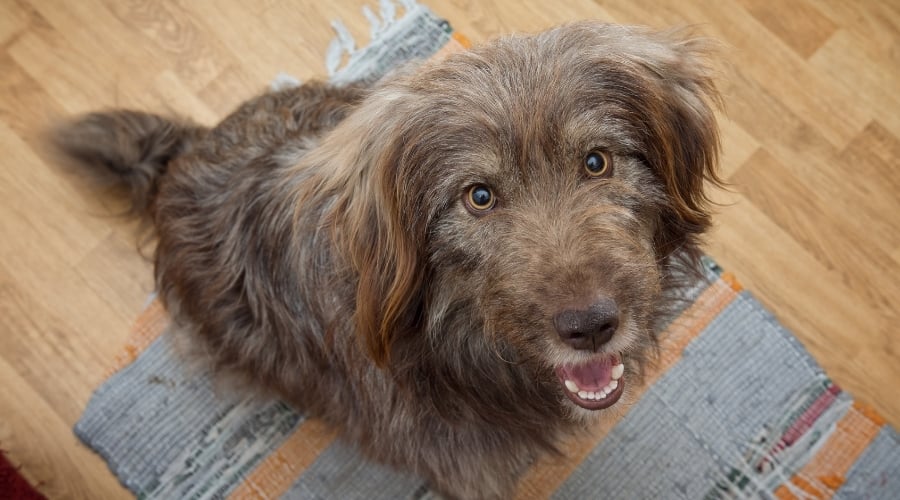
These dogs don’t just enjoy your company. They want to be involved in everything you do.
Cooking dinner? They’re under your feet.
Watching TV? They’re leaning against your leg.
Walking into another room? They’re already halfway there.
Some breeds are especially prone to this behavior, including:
- Chihuahuas
- Cavalier King Charles Spaniels
- Labrador Retrievers
- German Shepherds
- Dobermans
Many of these dogs were bred to work closely with humans or act as companions, which means staying near their person feels natural.
While it can feel a little overwhelming sometimes, it usually comes from a simple place: your dog feels happiest when they’re by your side.
8. Reinforced or Learned Behavior
Sometimes dogs follow their owners everywhere because we accidentally teach them to.
Dogs quickly learn patterns. If following you leads to attention, treats, or affection, they start associating the behavior with rewards.
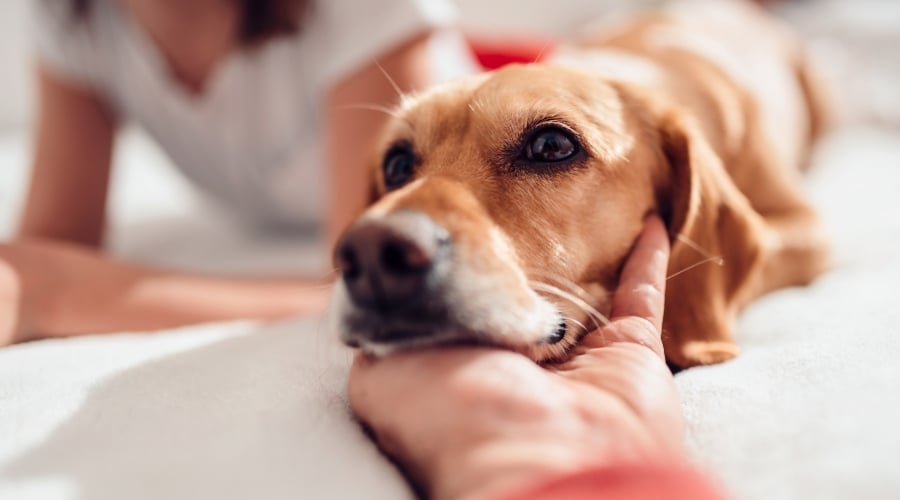
Think about your routine:
- Do you talk to your dog when they follow you?
- Give them a scratch behind the ears?
- Offer treats while cooking?
Even small interactions can reinforce the behavior.
Before long, your dog learns a simple equation:
Follow human = good things happen.
If you want to encourage more independence, try giving attention on your terms, rather than every time your dog appears beside you.
Is It Normal for Dogs to Follow Their Owners Everywhere?
In most cases, yes, it’s completely normal for dogs to follow their owners around the house.
Dogs are naturally social animals that form strong attachment bonds with their humans. Staying close helps them feel secure, connected, and aware of what’s happening in their environment.
Many dogs simply enjoy being near their favorite person and will naturally follow them from room to room throughout the day.
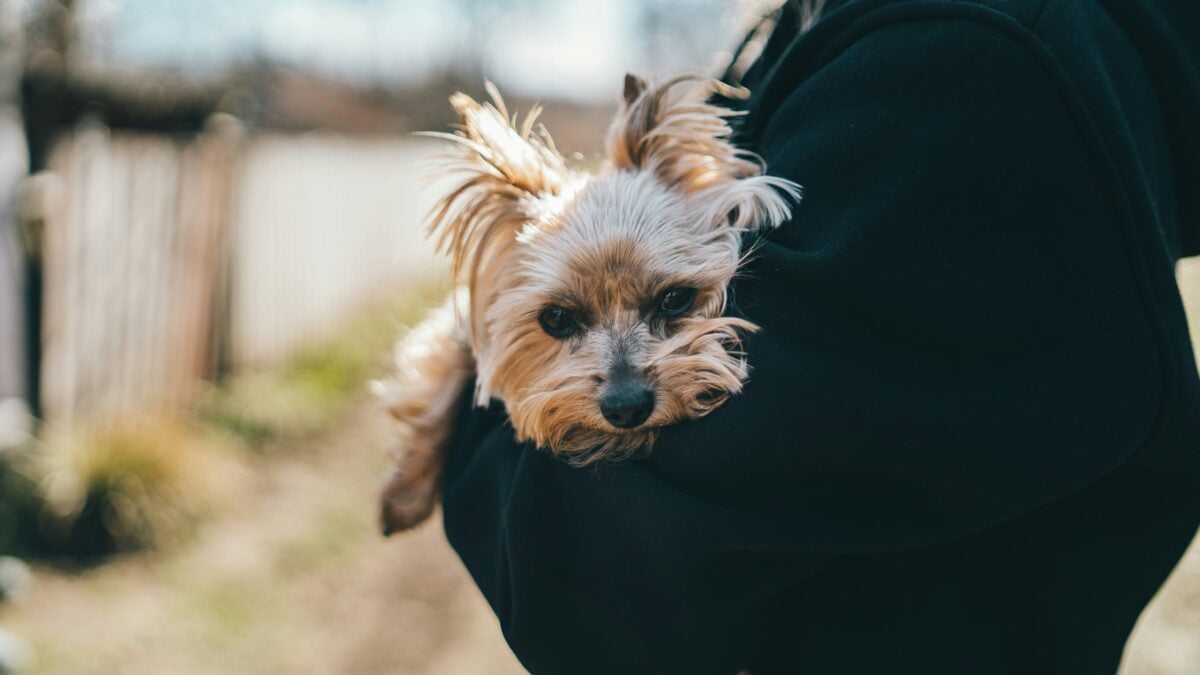
Common normal reasons dogs follow their owners include:
- Affection and bonding
- Pack instincts
- Curiosity
- Habit or learned behavior
- Protective instincts
For most dogs, this behavior is simply a sign that they feel comfortable and safe with you.
However, constant following can sometimes signal a behavioral issue if it’s paired with signs of distress.
Why Does My Dog Follow Me to the Bathroom?
If your dog insists on accompanying you to the bathroom, you’re not alone. Many dog owners joke that their pet is a full-time bathroom supervisor.
While it might feel a little awkward, this behavior is usually completely normal.
Dogs often follow their owners to the bathroom for a few simple reasons:
- Curiosity: Dogs are naturally curious animals. When you suddenly disappear behind a closed door, they want to know what’s happening.
- Attachment: If your dog enjoys being near you, they may simply want to stay close even during routine activities.
- Habit: If your dog has followed you into the bathroom before and received attention or interaction, they may have learned that it’s a rewarding place to be.
- Protection: Some dogs instinctively stay close to their owners to keep watch over them, even during everyday activities.
Most of the time, bathroom-following behavior is just another example of how closely dogs bond with their humans.
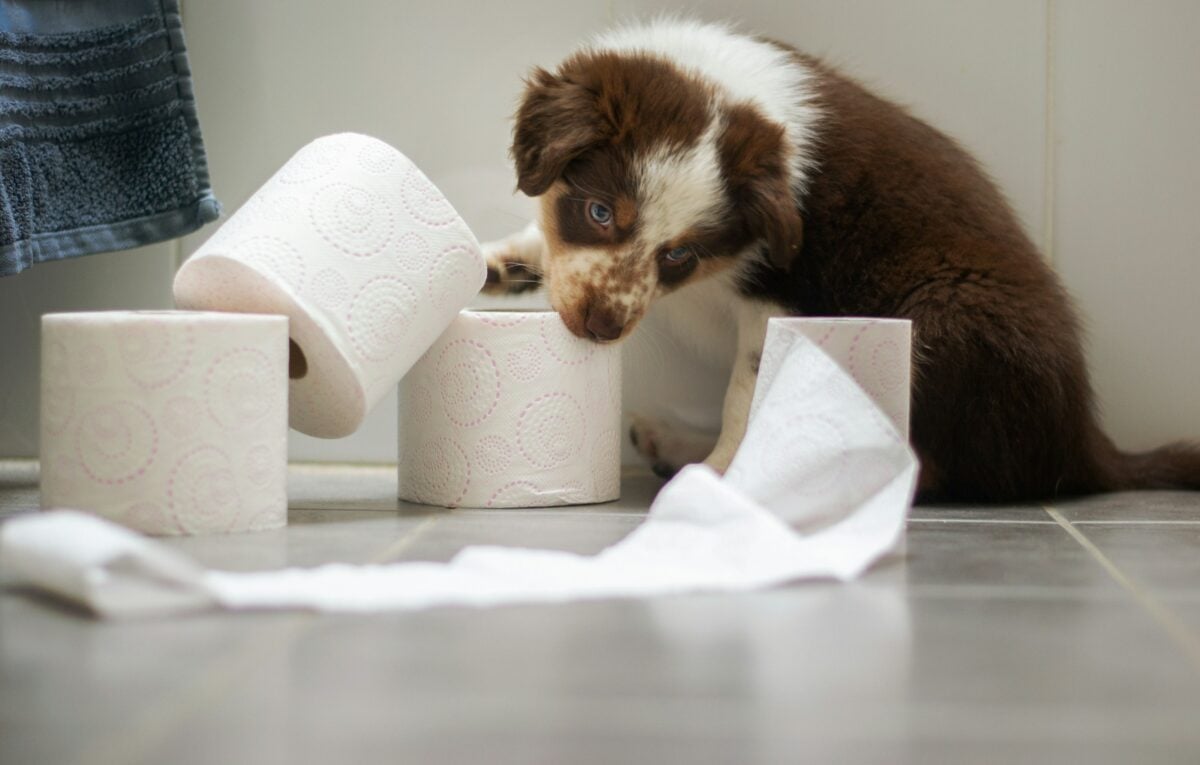
However, if your dog becomes distressed when separated from you or scratches at the door when you close it, it may be worth exploring whether separation anxiety could be involved.
When Following Becomes A Problem
Most of the time, a dog that follows you around the house is simply showing affection, curiosity, or a desire to stay close to their favorite person.
But sometimes clingy behavior can signal separation anxiety, a common behavioral issue in dogs.
According to the American Society for the Prevention of Cruelty to Animals (ASPCA), dogs with separation anxiety may show behaviors like excessive barking, pacing, destructive chewing, or accidents in the house when their owner leaves. These behaviors are not acts of disobedience but signs of stress.
Signs Of Separation Anxiety
If your pup seems distressed whenever you leave, watch for these warning signs.
1. Panic When You Leave
Dogs with separation anxiety often react as soon as they realize you’re about to head out the door.
This reaction often starts within minutes of your departure.
2. Destructive Behavior
Some anxious dogs cope with stress by chewing, digging, or damaging objects in the home.
You might notice damage to:
- Doors and door frames
- Furniture
- Pillows or bedding
This usually is not about disobedience. In many cases, it is a stress response.
3. Bathroom Accidents
Even well-trained dogs may have accidents if they experience separation anxiety.
If your dog only urinates or defecates indoors when you’re gone, anxiety may be part of the problem.
What Separation Anxiety Looks Like in Dogs
Some dogs follow their owners closely because they feel anxious when left alone. In the video below, dog behavior expert Cesar Millan explains how separation anxiety develops and how an owner’s behavior can influence a dog’s reactions when they’re apart.
When To Seek Help
If your dog shows several of these behaviors regularly, it may be time to talk with your veterinarian or a certified dog trainer.
With the right training strategies, enrichment activities, and sometimes calming aids, many dogs can learn to feel more comfortable being alone.
Clingy, Confident, or Cautious? How Age Affects Your Dog’s Need to Stay Close
Just like humans, dogs change their habits as they grow older, including how much they stick to you like a shadow. Whether they are tiny fluffballs or wise old companions, their reasons for following you around evolve as they age.
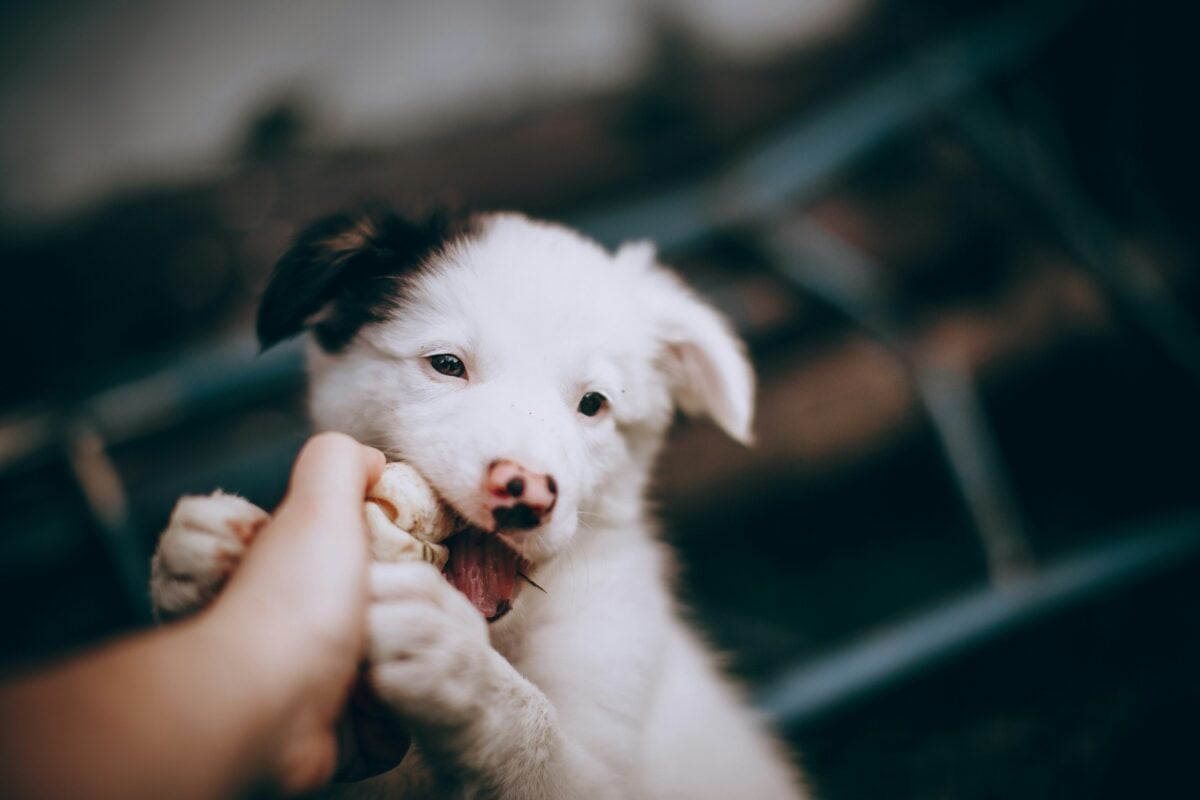
Puppies: The Tiny Velcro Squad
Ever feel like you have a furry little stalker? That is your puppy, and they have no shame about it. Puppies are basically adorable sponges, soaking up everything about the world through you. They stick close because you are their lifeline for food, safety, and all-important belly rubs.
Plus, let’s be honest, they have not quite figured out that they can survive in another room without you or that you will probably be back in five seconds.
Adult Dogs: The Independent or Not-So-Independent Stage
As your dog matures, they might flex their independence, some more than others. While some become content doing their own thing, others continue their faithful sidekick routine, especially if they were encouraged or spoiled with attention from an early age. Reinforce the habit enough, and congratulations, you now have a permanent shadow for life.
Senior Dogs: The Wise, Devoted Companions
As dogs age, they tend to become more dependent again. Vision fades, hearing gets iffy, and suddenly, they are back to being your tiny shadow. Not because they are clingy, but because they genuinely feel safer near you.
You are their trusted anchor in a world that is becoming a little harder to navigate. They have earned the right to demand unlimited snuggles and companionship at this stage.
No matter the age, if your dog follows you everywhere, it is really just their way of saying, you are my person, and I trust you with my whole heart. And honestly, what is better than that?
Dog Breeds Most Likely to Follow Their Owners Everywhere
Some dogs are simply more likely to become highly attached to their owners than others.
Breeds that were historically developed to work closely with humans or serve as companions often form especially strong attachment bonds with their owners.
These dogs tend to enjoy staying close and may follow their favorite person from room to room.
Some of the breeds most known for this behavior include:
- Labrador Retrievers: Labradors are extremely people-oriented dogs that thrive on companionship. Many Labs naturally stay close to their owners and want to be involved in daily activities.
- German Shepherds: These intelligent and loyal dogs are known for forming strong bonds with their families. They often follow their owners because they feel responsible for watching over them.
- Golden Retrievers: Golden Retrievers are affectionate and social. Their strong desire to be around people makes them frequent “shadow dogs.”
- Vizslas: Often called the ultimate Velcro dog, Vizslas are famous for their intense attachment to their owners and their desire to stay physically close.
- Chihuahuas: Small companion breeds like Chihuahuas were bred specifically to bond with their humans, which often leads to clingy behavior.
- Border Collies: Because of their strong working instincts, Border Collies frequently stay close to their owners and watch them carefully for cues.
While these breeds are especially known for shadow behavior, any dog can develop the habit if they form a strong attachment to their owner.
5 Ways to Help Your Dog Gain Independence
If your dog acts like your constant shadow, helping them build a little independence can boost their confidence and make time apart easier for both of you.
Here are five simple strategies that can help your dog build confidence and independence.
1. Give Your Dog Something to Do
A busy dog is less likely to shadow you. Offer a chew toy, puzzle feeder, or treat-hunting game before leaving the room so your dog focuses on something rewarding instead of following you.
2. Use a Baby or Dog Gate
A gate can create a gentle boundary while still allowing your dog to see you. This helps them get used to being in a different space without feeling isolated.
3. Practice the “Stay” Command
Teaching your dog to stay in one spot while you move away builds confidence and independence. Start with short distances and reward calm behavior, gradually increasing the time apart.
4. Look for Signs of Anxiety
If your dog seems unusually clingy, consider possible triggers. Changes in routine, lack of exercise, or unintentionally rewarding the behavior can all contribute to constant following.
5. Build Confidence
Activities like training sessions, agility courses, new environments, and positive social experiences can help your dog feel more secure. Confident dogs are less likely to rely on constant proximity.
Encouraging independence doesn’t mean pushing your dog away. It simply helps them learn that being alone for short periods is safe and normal.
Frequently Asked Questions
Still curious about your dog’s shadow behavior? Below are answers to some of the most common questions dog owners ask. If you don’t see your question here, feel free to leave it in the comments, and we may add it to the list.
Why does my dog follow me and not my spouse?
Dogs often form the strongest bond with the person who feeds them, trains them, walks them, or spends the most one-on-one time with them. In some cases, they may also feel more comfortable with one person’s routine, energy, or voice.
Why does my dog suddenly start following me everywhere?
A sudden change in behavior can happen for several reasons, including changes in routine, stress, aging, illness, or increased attachment. If the behavior appears suddenly and is paired with restlessness, discomfort, or other unusual symptoms, it’s a good idea to contact your veterinarian.
Do dogs pick a favorite person?
Yes, many dogs do. They often bond most strongly with the person who consistently meets their needs and provides positive experiences like play, training, affection, and daily care.
Why does my dog stare at me all the time?
Dogs often watch their owners to gather information. Your dog may be waiting for cues, hoping for attention, or simply keeping track of what you’re doing next.
Other Strange Dog Behaviors Explained
Dogs have plenty of quirks, and some of their habits can leave owners scratching their heads. Behaviors like rolling in foul smells, chasing their tails, barking endlessly, or staring at you while they poop often seem random, but many have roots in instinct, communication, or simple curiosity.
If you’ve ever wondered what’s behind these odd behaviors, we break them down in more detail in our guides on why dogs roll in poop, why dogs chase their tails, whether dogs get tired of barking, and why dogs stare at you while they poop. Understanding these quirky behaviors can give you a better sense of how dogs think, and why life with them is never boring.
Does Your Dog Do This Too?
Does your dog follow you everywhere or have another odd habit that makes you laugh? Share your story in the comments. We love hearing other dog owners’ stories.