When you purchase through links on our site, we may earn a commission at no extra cost to you. Learn more.
If your puppy is crying in the crate, you probably want to know one thing: How do I get them to stop? First, check that your puppy has gone potty, isn’t hungry or uncomfortable, and has had enough activity before crating. Then, use gradual crate training to teach your puppy that the crate is a safe, comfortable place—not a punishment.
Table of Contents
The right response also depends on why your puppy is crying. Brief whining may be normal as they adjust, while persistent or frantic crying can signal that they’re scared, uncomfortable, or struggling with being alone. Below, we’ll explain why puppies cry in their crates, how long you should let them cry, and what you can do to help them settle during the day and at night.
Will Your Puppy Ever Like His Crate?
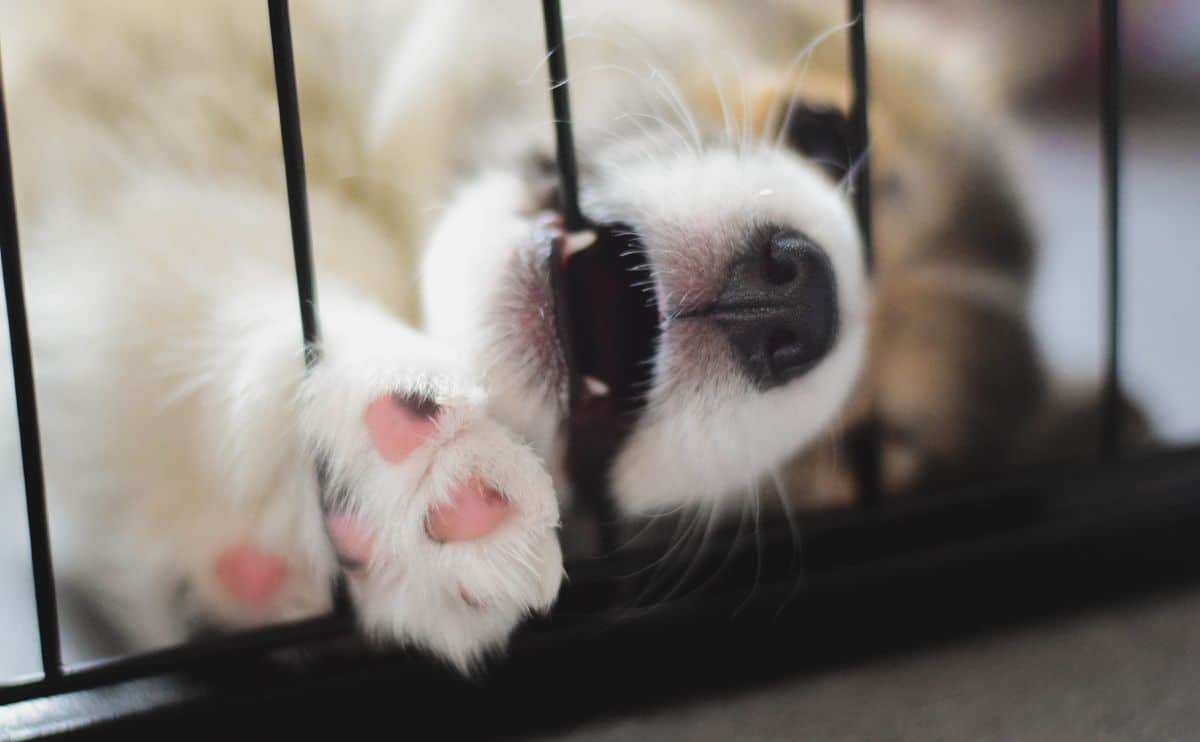
Is your puppy screaming in his crate for hours? With patience and practice, your dog should eventually “cave” in and learn to love his crate. However, it’s best if you ease him into it properly. Dogs are instinctively denning animals, and they find comfort in having a pad of their own.
Puppies cry in crates for many reasons. Often, they are scared, bored, lonely, or anxious. Puppies are not used to being confined to a small space, and they may be confused. Whining and crying are their way of expressing that they are unhappy with the situation.
Want our human-written content to rank above AI-generated garbage? Help us out by clicking this button!
But first, puppies need assurance that their new crate is a safe, inviting place — not a cage that serves as a long-term babysitter or a tool for punishment (it’s not a time-out chair). Easier said than done, right?
Crate Training Basics
If you take the lead and follow the steps in our crate training article, it can be relatively painless. The earlier you start crate training, the better. This guide walks you through the basics, including recommended crates. If you’ve read that article, tried those tactics, and still have trouble with whining, then read on for some additional tips.
Is This Normal Or A Problem?
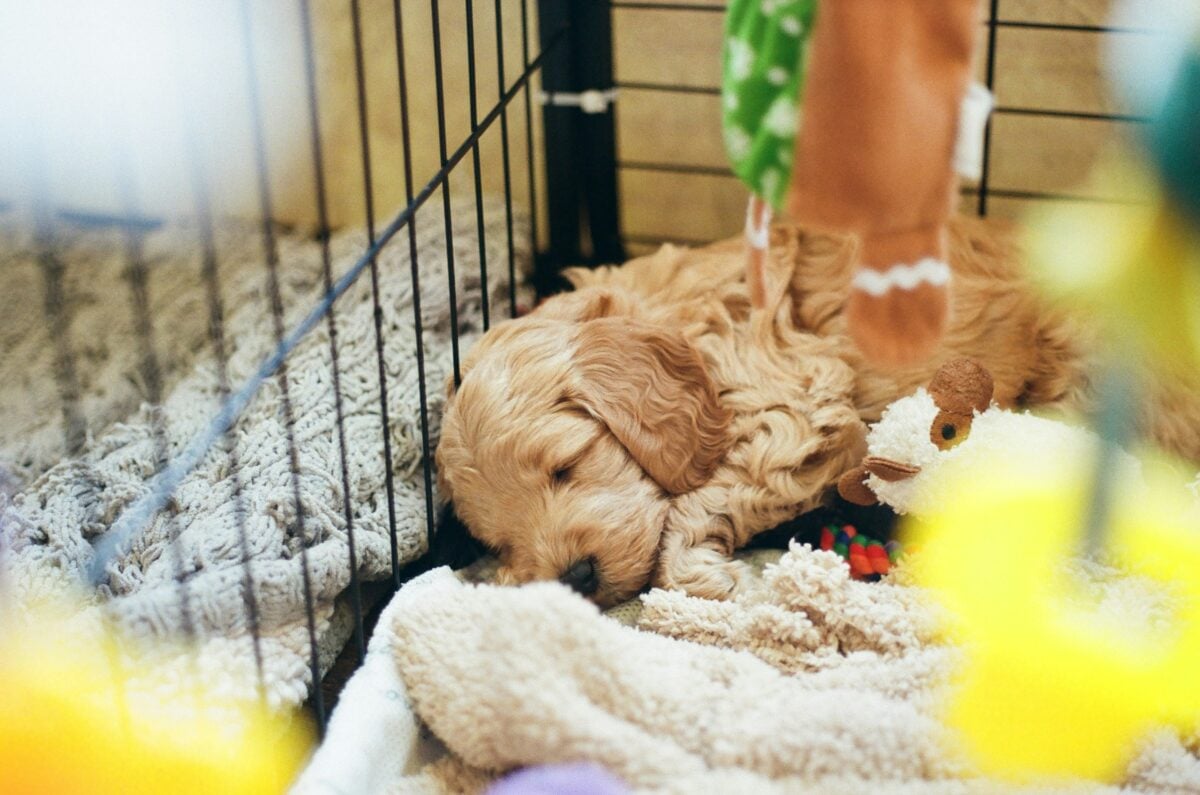
Some crying and whining is normal when a puppy is first getting used to a crate, especially during the first few nights. Brief fussing may simply mean your puppy is adjusting to being alone or learning that crate time is part of their routine.
However, persistent or frantic crying shouldn’t be ignored. If your puppy is panicking, trying to escape, hurting themselves, excessively drooling, vomiting, or showing other signs of severe distress, stop and reassess the crate-training approach. Your puppy may need shorter crate sessions, more gradual training, or help from your veterinarian or a qualified dog trainer.
8 Real-Life Scenarios: Your Puppy Won’t Stop Crying In the Crate At Night
Puppies cry in their crates for many reasons, and the cause can change as they adjust to crate training. You don’t have to lose sleep over a crying puppy, so before assuming your puppy is being difficult, consider what’s happening immediately before the crying starts and whether there are other signs of discomfort or distress.
1. Crying the First Night
The first night in a crate can be especially difficult. Your puppy has just left their mother and littermates and is suddenly sleeping alone in an unfamiliar environment. Some whining or crying is normal while they adjust. Keeping the crate near your bed, making it comfortable, and establishing a calm bedtime routine can help your puppy feel more secure.
2. Crying After a Potty Break
Bathroom breaks are critical, especially for puppies whose bladders can’t last long. Make sure your puppy does all his business outside as close to bedtime as possible. Don’t worry — the older your pup gets, the longer he’ll go without needing to go potty.
If your puppy cries after you take them outside to potty, they may simply be awake and ready to play rather than ready to go back to sleep. Keep nighttime potty trips quiet and boring: take your puppy out, give them an opportunity to potty, and return them to the crate without playtime or excitement. If they keep crying, make sure they aren’t still uncomfortable or need another bathroom break.
3. Crying For Hours
Hours of continuous crying can mean your puppy is struggling with the crate or being left alone rather than simply protesting bedtime. Check basic needs such as potty, hunger, temperature, and comfort, then consider whether you moved through crate training too quickly. If your puppy is frantic, attempting to escape, hurting themselves, or showing other signs of severe distress, don’t rely on prolonged “cry it out” as your training strategy.
4. Crying When Left Alone During The Day
If your puppy cries as soon as you leave during the day, they may not yet be comfortable being alone. Start with very short periods apart and gradually increase the time as your puppy learns that you leave and come back. Providing a safe chew or food-filled stimulating toy can also give your puppy something positive to focus on while they’re alone.
5. Barking vs. Whining
Whining is often a puppy’s way of expressing discomfort, uncertainty, frustration, or a desire for attention. Barking can have similar causes, but repeated or escalating barking may indicate that your puppy is becoming increasingly frustrated or distressed. Pay attention to your puppy’s body language and the situation, not just the sound they’re making.
6. Your Puppy Has Too Much Energy
A puppy who hasn’t had enough age-appropriate exercise, play, training, or mental stimulation may have a hard time settling down in a crate. Before crating, give your puppy an opportunity to use the bathroom and engage in appropriate activity. The goal isn’t to exhaust your puppy, but to meet their needs so they’re more prepared to relax. It can also help to take your dog on a long walk and play with him before bed to burn off that energy.
7. Suddenly Crying After Doing Fine
A puppy that was previously comfortable in their crate but suddenly starts crying deserves a little extra attention. A change in routine, a frightening experience, needing to potty more often, or physical discomfort could be responsible. If the change is sudden or your puppy also shows symptoms such as vomiting, diarrhea, lethargy, pain, or changes in appetite, contact your veterinarian to rule out an underlying health problem.
8. The Crate Is Too Much, Too Fast
Sometimes the problem isn’t the crate itself but the pace of training. If your puppy regularly cries as soon as the crate door closes, you may be asking for more than they’re ready to handle. Go back to shorter, easier sessions, reward calm behavior, and gradually increase the duration.
How To Get A Puppy Used To A Crate
If your puppy cries in his crate before bed (or anytime):
- Make sure you place good bedding and a few favorite toys in the crate.
- Also consider the room temperature. Puppies and smaller dog breeds can get chilly quickly, so place the crate in an area that’s not too cold (or too hot).
- If the crate is too large, your dog could feel intimidated, so choose the best crate for your dog’s size.
If you’ve done all you can to meet your pup’s basic needs, consider putting him to bed with a chewable treat or super-strong toy. This will distract your puppy and hopefully wear him out until he nods off.
Why Is Your Puppy Still Whining? What To Check First
If your puppy is still whining after you’ve started crate training, don’t assume they’re simply trying to get your attention. First, check their basic needs and consider whether the crate experience is moving faster than your puppy can comfortably handle. Here’s what to check first:
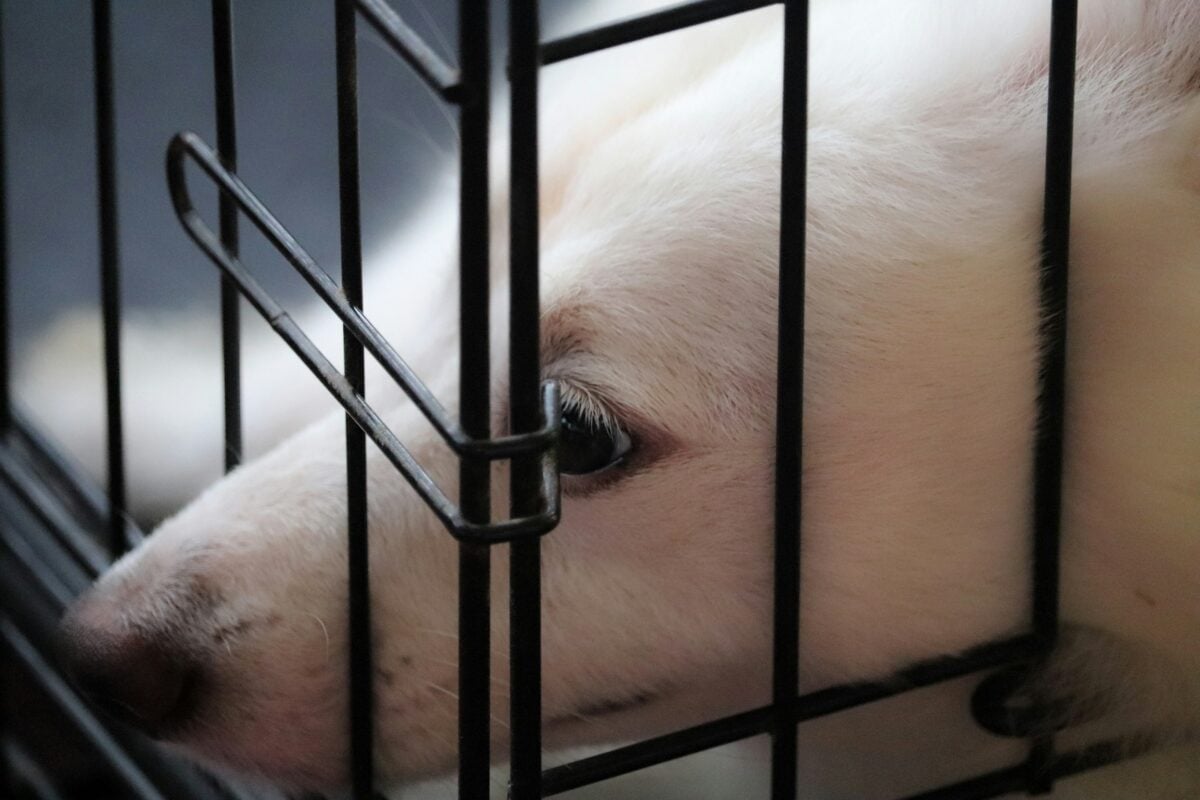
- Potty: Young puppies have small bladders and may genuinely need to go, particularly overnight. If it has been a while since their last potty break, take them out calmly and give them a chance to relieve themselves.
- Hunger or thirst: Make sure your puppy has been fed appropriately and has access to fresh water. Follow your veterinarian’s guidance about feeding and water schedules, particularly around bedtime.
- Temperature: Check that your puppy isn’t too hot, cold, or exposed to a draft.
- Crate size: Your puppy should have enough room to stand up, turn around, lie down, and stretch comfortably without too much extra space.
- Bedding: Make sure the bedding is comfortable, clean, and safe for your puppy. Some puppies may prefer less bedding, especially if they chew or become overheated.
- Fear or overstimulation: An overtired, frightened, or overwhelmed puppy may have trouble settling. Try lowering the noise and activity around the crate and giving your puppy time to calm down.
Give Your Puppy Time To Adjust
Once your puppy’s needs are met, avoid immediately letting them out every time they whine. Otherwise, your puppy may learn that crying consistently ends the crate session. When possible, wait for a brief moment of quiet before opening the crate or offering attention.
However, this doesn’t mean you should leave a distressed puppy to cry indefinitely. There’s an important difference between a puppy who fusses briefly because they would rather be out playing and one who is becoming increasingly frantic or frightened. If your puppy is panicking, trying to escape, hurting themselves, or unable to settle, take a step back and make crate training more gradual.
Try shorter crate sessions and reward your puppy for entering the crate and remaining calm. Gradually increase the time they spend inside as they become more comfortable. The goal isn’t simply to get your puppy to stop making noise—it’s to help them learn that the crate is a safe, predictable place to relax.
Crate time can help puppies develop confidence and independence when introduced positively and used appropriately. Just be careful not to overuse the crate or use it as punishment. If your puppy consistently becomes extremely distressed when separated from you, talk with your veterinarian or a qualified dog behavior professional for guidance.
How Long To Let Your Puppy Cry In His Crate
If you do have to crate your puppy more than you’d like (long workday, tons of errands to run, etc.), make sure you spend extra time playing with him or taking him on walks in between crate times. And don’t forget that a puppy’s bladder can’t go for long periods of time without relief — no more than a few hours at a time at first.
How Long Is Too Long To Leave A Puppy In A Crate?
Puppies shouldn’t be expected to spend an entire 8- to 10-hour workday in a crate. Young puppies need frequent opportunities to potty, move around, play, eat, drink, and interact with people. How long your puppy can comfortably stay crated depends on their age, bladder control, routine, and individual needs.
If you’ll be away longer than your puppy can comfortably manage, arrange for a family member, neighbor, dog walker, or pet sitter to provide a potty and activity break. For longer absences, a puppy-safe pen or gated area may also be more appropriate than extended crate confinement.
If your puppy consistently starts whining, barking, having accidents, or becoming distressed after a certain amount of time, that may be a sign you’re asking them to stay crated for too long. Rather than waiting for them to “get used to it,” shorten the sessions and gradually build up their comfort with being alone.
Don’t Leave Your Puppy In The Crate All Day
According to the Animal Humane Society, leaving a puppy in a crate for an 8-10 hour workday is “not an appropriate way” to crate train. If you have times when you can’t be there, ask a neighbor or hire a pet sitter to give your pup a break. The more attention they have while outside of the crate, the less time they spend whining and crying once back in the crate.
What If My Puppy Won’t Stop Barking In His Crate?
If your puppy is still barking or crying in the crate after a few weeks, first consider why he’s struggling rather than assuming he simply needs more time.
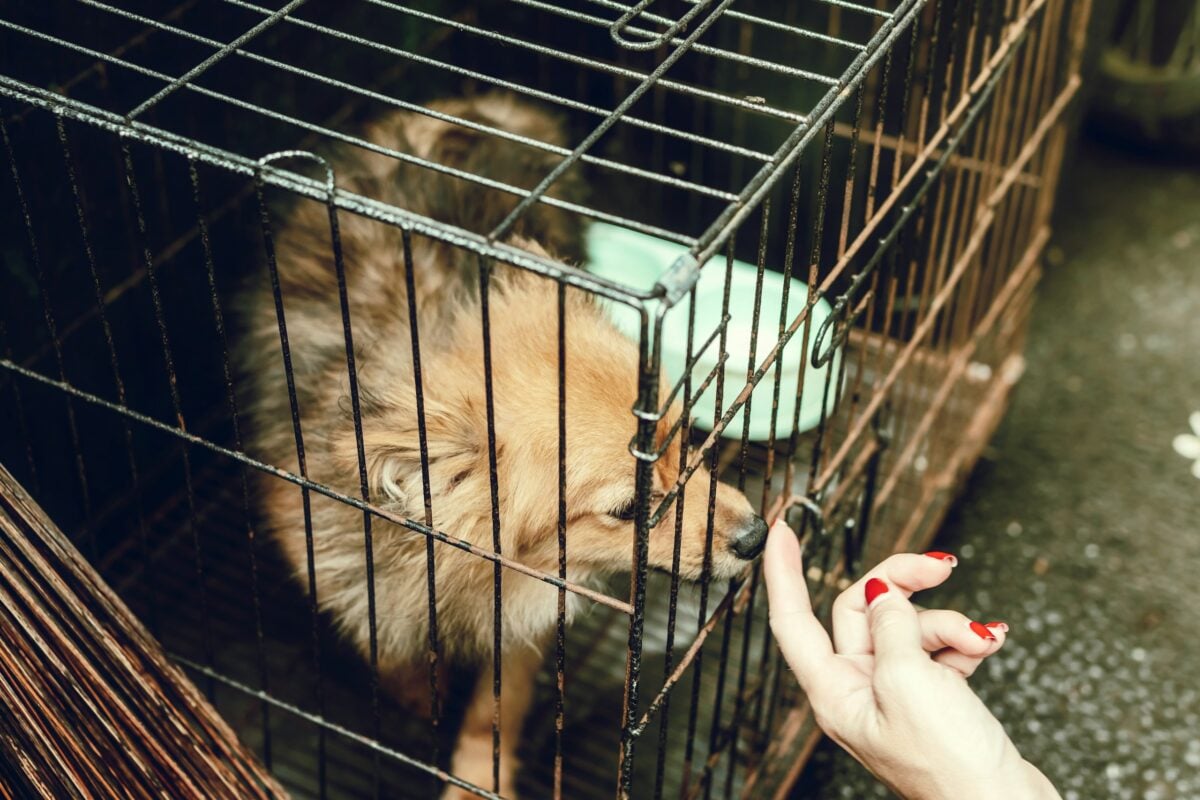
Make sure his basic needs are met: he’s had a potty break, appropriate exercise and mental stimulation, and the crate is comfortable and the right size. Some puppies also settle more easily with part of the crate covered by a lightweight, breathable blanket, as long as there’s plenty of airflow and your puppy doesn’t try to pull the fabric inside.
Next, pay attention to what the barking looks like. Brief whining or barking that gradually fades can be normal while a puppy learns to settle. In that situation, avoid opening the crate in direct response to every sound. When possible, wait for a brief moment of quiet before calmly giving attention or letting your puppy out so you reinforce calm behavior rather than barking.
But persistent or escalating crying is different. If your puppy is panting, drooling, trembling, frantically scratching or biting at the crate, trying to escape, or becoming more upset instead of settling, don’t simply let him “cry it out.” Those behaviors can be signs that the training is moving too quickly or that your puppy is experiencing significant distress.
Go back to shorter, easier crate sessions and build duration gradually using treats, meals, toys, and calm praise to create a positive association with the crate. If your puppy continues to panic or suddenly begins struggling after previously doing well, talk with your veterinarian or a qualified canine behavior professional to rule out medical problems or anxiety.
The goal isn’t to teach your puppy that crying “won’t get him anywhere.” It’s to help him learn that the crate is a safe, predictable place where he can relax on his own. Get some earplugs (or use a white noise app on your phone) and know it’s a short-term sacrifice for long-term happiness for you and your pup.
A Pet Parent’s Experience With Puppy Crate Crying
Crate training can look different for every puppy. Here’s how Canine Journal team member Danielle DeGroot helped her Poogle, Falkor, adjust to his crate.

My Poogle (Poodle Beagle Mix), Falkor, is about two and a half years old. I started crate training him from day one, but it was not an easy—or quiet—process. He was especially unhappy being left in the crate when no one was home. We have a large, multi-level house with other animals, and it wasn’t safe to leave him loose at night or while we were away, so crate training was important for us.
It took nearly three months before Falkor became noticeably calmer in his crate. Even now, he sometimes whines when he realizes we’re leaving or when he would rather be out with us. During training, I learned not to open the crate in direct response to mild whining. Instead, I waited for a brief moment of calm before letting him out whenever possible, while continuing to make the crate a comfortable and rewarding place.
Every puppy responds differently to crate training, and Falkor needed more time than I initially expected. What helped most was consistency, patience, and gradually teaching him that spending time in his crate was safe and predictable.
– Danielle DeGroot, Poogle parent
Have you ever had a puppy cry in a crate? We would love to hear how you helped your pup through it in the comments.
Don’t Say No To The Crate
We couldn’t resist sharing this funny video of what can happen if your dog resists his crate. You don’t want an ongoing battle with your pup.
Get Pet Insurance Quotes Instantly

Frequently Asked Questions
As a pet owner, questions can sometimes feel endless. Let the questions and answers below help you out, and for any more questions or concerns, write to us in the comments.
Should I Let My Puppy Cry In The Crate At Night?
Brief whining can be part of normal crate adjustment, but you shouldn’t assume every cry should be ignored. First, consider whether your puppy needs to potty or is genuinely distressed; if their basic needs are met, give them a chance to settle while gradually building their comfort with the crate.
Should You Close A Puppy Crate At Night?
You should keep the crate door closed at night for at least the first few months. This will eliminate any confusion and ensure your puppy doesn’t try to sneak out, especially when you’re asleep. Even if your puppy is crying in the crate at night, keep the door closed until you have fully crate-trained him. It may be loud, but you must establish this boundary now while he is young.
When Should You Move The Puppy Crate Out Of Your Bedroom?
When your puppy stops whining in his crate, you can slowly start to transition him to another room. Start by moving the crate closer to the door. Then, eventually, move it to its permanent place in the home.
Remember Why You’re Doing The Tough Training
It’s not easy housebreaking puppies — remember, they’re in a new place, away from their mom and litter. When you’re working on getting your puppy to stop crying in his crate, remember that this is an all-new environment, and your puppy needs time and reassurance to adjust.
As time-consuming and frustrating as crate training (and other puppy behavior problems) might be at first, your hard work will surely pay off in the long run. And if you still find yourself struggling, you might look into professional training (especially while your dog is young). We recommend an online dog training program like Doggy Dan’s online course or a local dog trainer.
Remember: keep your eye on the prize. Your end goal is for your puppy to want to be in his crate.
Share Your Puppy Crate Training Experience
Every puppy handles crate training differently, and what worked for one pup may help another pet parent. Has your puppy cried or barked in the crate? Share what worked (or what you’re still struggling with) in the comments below.