When you purchase through links on our site, we may earn a commission. Here’s how it works.
Your dog suddenly seems confused, collapses on their side, and their legs go stiff or start paddling in the air. It’s a terrifying sight, and they could be having a seizure.
Table of Contents
Dog seizures are scary and disorienting for both pets and their people. If you think your dog may have had a seizure — or want to be prepared in case it ever happens — you’re in the right place.
This guide covers the common causes, warning signs, what to do during and after a seizure, and one owner’s firsthand experience navigating it all.

60-Second Action Plan: What To Do Right Now
If your dog starts seizing:
- Stay calm — your reaction helps your dog recover faster.
- Clear the area — move furniture and keep other pets away.
- Time the seizure — note when it starts and stops.
- Do not touch the mouth or tongue.
- Record a short video if it’s safe to do so.
- Afterward: keep your dog cool, comfort them quietly, and call your vet.
Quick Takeaway: Most seizures typically last for a few minutes. The critical step is calling your vet right away to rule out an underlying cause.
What Causes Seizures In Dogs?
There are a variety of causes for dog seizures. In some dogs, the condition is linked to idiopathic epilepsy — a neurological disorder where unusual, uncontrolled bursts of electrical activity in the brain cause periodic seizures.
Epilepsy is often inherited, but veterinarians still aren’t entirely sure what triggers it. Other potential causes include:
- Eating something poisonous (see which foods and plants are toxic for dogs)
- Electrolyte imbalances
- Anemia
- Low or high blood sugar
- Liver disease
- Kidney disease
- Head injury
- Encephalitis (inflammation of the brain)
- Stroke
- Heat stroke
- Brain cancer (learn more about cancer in dogs)

Quick Takeaway: If your dog has repeated or unexplained seizures, schedule a veterinary exam right away. Bloodwork and imaging can help identify whether epilepsy, toxins, or organ disease may be the root cause.
Types Of Seizures In Dogs
Experts generally classify dog seizures into three main types.
1. Focal (Partial) Seizures
A focal, or partial, seizure occurs in a small part of the brain and affects only one area — such as a single limb, one side of the body, or the face.
Over time, focal seizures in dogs can sometimes progress to grand mal seizures as the condition worsens.
2. Grand Mal (Generalized) Seizures
Grand mal seizures affect both sides of the brain and involve the entire body. They often look like involuntary jerking or twitching in all four limbs and are accompanied by dilated pupils and loss of consciousness.
3. Focal Seizures With Secondary Generalization
This type of seizure begins as a focal (partial) episode and then progresses into a generalized (grand mal) phase, spreading electrical activity throughout the brain and affecting the entire body.
Quick Takeaway: Focal seizures may appear mild at first — a twitching face or paw — but can develop into full-body seizures over time. Tracking early signs helps your vet identify the type and severity faster.
Is My Dog Having A Seizure?
Dog seizures can range from very mild to severe, lasting anywhere from a few seconds to several minutes. Some dogs experience cluster seizures, which involve multiple episodes occurring within 24 hours.
Classic seizures typically unfold in three phases, though not every dog shows the same signs. Below are common symptoms you might see at each stage.

Stage 1: Pre-Seizure (Preictal) Phase
Early behavioral changes often appear minutes or hours before the seizure begins.
Common signs:
- Hiding
- Trembling
- Anxiousness
- Weakness
- Staring off into space
- Attention-seeking behavior
Stage 2: Seizure (Ictal) Phase
This is the active seizure stage. Some dogs remain conscious during mild episodes, while others lose awareness completely.
Possible symptoms:
- Muscle twitching
- Uncontrollable shaking
- Collapsing
- Stiffening
- Loss of consciousness
- Drooling
- Chomping
- Tongue chewing
- Foaming at the mouth
- Falling to the side and making paddling motions with their legs
- Involuntary defecating or urinating
Stage 3:Post-Seizure (Postictal) Phase
After the episode, most dogs enter a short recovery period that can last minutes to hours.
Typical signs:
- Disorientation
- Loss of balance
- Fatigue or lethargy
Quick Takeaway: Not every seizure looks dramatic. Some dogs simply drool, stare blankly, or seem “out of it” for a minute. Recording what you see helps your vet identify the seizure type more accurately.
What Does A Seizure Look Like?
See what all stages of a grand mal seizure look like with this Bernese Mountain Dog and what the pet parents do to comfort their pup.
How Serious Are Dog Seizures?
A single, isolated seizure is rarely dangerous.
However, if your dog experiences cluster seizures (multiple seizures in a short time) or if one episode lasts longer than a few minutes, their body temperature can rise rapidly. This can cause hyperthermia (overheating), which becomes life-threatening if untreated.
Quick Takeaway: Seizures lasting more than 3–5 minutes, or multiple seizures within 24 hours, are considered emergencies. Take your dog to your vet or an emergency clinic immediately.
Can A Dog Die From A Seizure?
Status epilepticus is a severe, life-threatening condition where seizures continue for more than five minutes, or occur repeatedly without the dog regaining consciousness between them.
Without prompt treatment, irreversible brain damage or death can occur.
Immediate veterinary care is critical — intravenous anticonvulsants are needed to stop the seizure activity and stabilize your dog. According to Today’s Veterinary Practice, delays in care significantly increase the risk of permanent neurological damage.
Myth vs. Fact: What You’ve Heard About Seizures May Surprise You
If you’ve ever Googled dog seizures, you’ve probably seen conflicting advice. Let’s clear up a few of the biggest myths so you know what’s true, what’s outdated, and what actually helps when your dog has a seizure.
Myth 1: Dogs Swallow Their Tongues During A Seizure
They don’t. Trying to open your dog’s mouth can get you bitten — focus on keeping them safe and comfortable instead.
Myth 2: All Seizures Look Violent
Some seizures are subtle. Your dog might just stare into space, twitch, or drool briefly before returning to normal.
Myth 3: Once Medicated, Seizures Stop Completely
Some dogs continue to have seizures even with proper treatment and medication. Regular monitoring is still important.
Myth 4: Natural Remedies Can Replace Vet Care
Natural supplements may help alongside vet-approved medications, but stopping prescription meds abruptly can make seizures worse.
Quick Takeaway: Seizures don’t always look dramatic — but every episode matters. Keep notes, record videos, and consult your vet about patterns you notice.
What To Do When A Dog Has A Seizure
Seizures are frightening for both dogs and owners, but your calm response can make a big difference. Stay composed and follow these essential tips from the American Kennel Club.
During The Seizure
- Stay calm and keep track of what’s happening.
- Keep notes on the date, time, length, frequency, and symptoms of each episode. This record helps your veterinarian identify patterns and choose the most effective treatment plan.
- Record a video of the seizure if you can do so safely — it can be invaluable for your veterinarian’s evaluation.
- Don’t grab the tongue or touch the mouth. Dogs may chew during a seizure, and you could get bitten.
- Keep your dog away from stairs and furniture edges to prevent falls or injuries.
- Cushion their head and gently hold and comfort your dog until the seizure stops and they begin to regain awareness.
Remember, seizures are not painful for dogs, even though they may appear distressed.

If a seizure lasts more than two to three minutes, your dog may overheat and develop hyperthermia.
- Apply cool water or damp towels to the neck, head, or paws to help lower body temperature.
- Seek immediate veterinary care, even if your dog seems to recover quickly.
Quick Takeaway: Focus on safety first — clear the area, time the episode, and call your vet if it lasts longer than a few minutes. Calm energy from you helps your dog recover faster.
After The Seizure
Even if your dog appears to recover quickly, it is essential to contact your veterinarian or an emergency clinic after a seizure. It’s necessary to determine the underlying cause so your vet can rule out severe conditions.
Your vet may ask questions such as:
- When did the seizure symptoms first start?
- Have the symptoms changed over time?
- How many seizures have you observed?
- How often do they occur (within a week or month)?
- Do they happen after eating, exercising, or sleeping?
To investigate further, your veterinarian will likely run blood work, a urinalysis, and possibly imaging tests such as X-rays, MRI scans, or CT scans. If advanced imaging is required, your primary vet will refer you to a specialty veterinary hospital.
Quick Takeaway: Even a single seizure can reveal an underlying health issue. Share detailed notes and videos with your vet to help them diagnose and manage your dog’s condition effectively.
Our Personal Experience With Dog Seizures
My dog, Bear, a black Labrador retriever, was diagnosed with epilepsy when he was about three years old. He was an extremely sweet, athletic, healthy dog, and it came as a big shock when he started to have seizures.
At first, we did not realize he was having seizures. He had a few incidents we attributed to being clumsy or just over-eager.
One of the very first notable times happened in the middle of the night. He was pacing by the door, so I let him out. As he ran out to the yard, he stumbled and bumped into the fence, which was unusual, but nothing that alarmed me.
A few days later, when he was outside, I found him shaking and drooling, his eyes wide open. He was trying to walk but could not keep his balance.
We got him to the vet as soon as possible, and he was not well the entire ride. However, by the time he was examined, he was back to normal, which was very odd as he had just seemed to be in great distress.
Once we saw our vet, he did a few tests, including a CBC, urinalysis, and physical exam. He diagnosed Bear with epilepsy and put him on medication.
After his diagnosis, he had seizures periodically. It was a concern to keep him safe when he had them, especially if they occurred when we were not home.
Because of this, Bear had his own room, with no sharp corners, shelving, or objects that could fall on him or injure him if he had a seizure. This was a necessary requirement because he often lost his bowels and bladder when a seizure occurred.
We used a few different methods along with his medication to keep him comfortable. These included CBD, a high-quality diet, and learning his triggers. He did best in a calm environment, with our home kept at a moderate, cool temperature.
We noticed that often, not always, but often, he would start to pace by the door and drool a little when a seizure was about to come on. While this did not happen every time, there were many times when he would whine or paw to the door and then be outside when the seizure hit.
– Danielle DeGroot, Animal Lover & Writer For Canine Journal
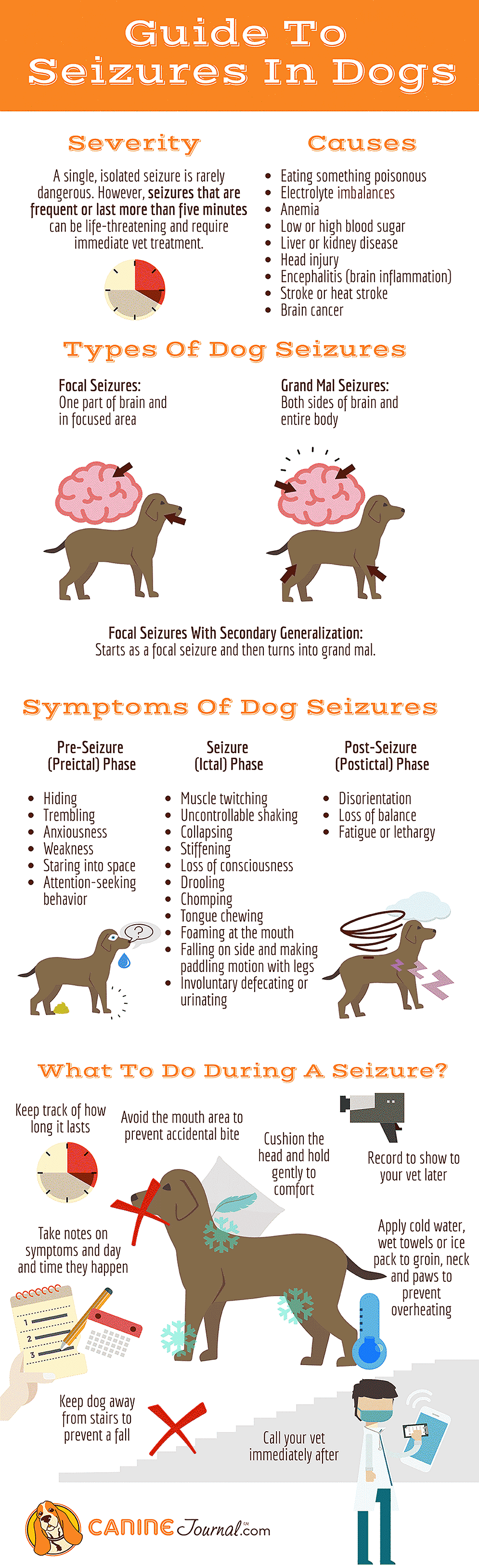
Dog Seizures Infographic
Here’s a summary of types, symptoms, and what to do if your dog is having a seizure.
Treatments For Dog Seizures
Dog seizure treatment varies depending on your veterinarian’s diagnosis. If seizures are caused by an underlying illness such as liver or kidney disease, your vet will first focus on managing that condition.
For dogs diagnosed with epilepsy, vets typically prescribe long-term anti-seizure medication to help control episodes.
Common veterinary seizure medications include:
- Phenobarbital
- Potassium bromide
- Primidone
- Diazepam
While these medications are effective for many dogs, they can cause side effects such as increased thirst, changes in appetite, or sedation.

Quick Takeaway: Never stop your dog’s seizure medication abruptly. Doing so can trigger more frequent or severe seizures — always consult your vet before adjusting dosage.
All-Natural Remedies
Some pet owners explore natural options alongside vet-prescribed medication. Always discuss supplements or holistic treatments with your veterinarian first to ensure they’re safe and compatible with your dog’s care plan.
CBD For Dogs
CBD (cannabidiol) is derived from the hemp plant but contains no THC, the compound that’s associated with the high you get from marijuana. Research in both humans and dogs suggests CBD may help reduce seizure frequency.
Many dog owners report that all-natural CBD oil for dogs or CBD treats helps ease seizure symptoms. We want to emphasize, though, that these reports are anecdotal. More studies need to be done to evaluate how CBD works in dogs to control seizures.
Essential Fatty Acids
Some veterinarians recommend introducing fatty acids into a dog’s diet to help reduce the frequency of seizures. Omega-3 fish oil for dogs has many other health benefits, including supporting heart health, joints, and the immune system.
Change Your Dog’s Diet
Sometimes diet changes can be effective in treating seizures. Several studies have shown a correlation between epilepsy and food allergies.
Consider switching your dog to a hypoallergenic diet. Or you can transition from low-quality commercial dog food to high-quality fresh meals you can have delivered to your home or even home-prepared meals — these diet changes can benefit your dog’s overall health.
Breeds With A Higher Incidence
Epilepsy can occur in any dog breed, including mixed breeds. An estimated 2% to 5% of all dogs experience epilepsy during their lifetime.
Breeds With A Known Or Suspected Genetic Link
Epilepsy often has a hereditary component, and certain breeds show a stronger genetic predisposition:
| Breed | Genetic Risk |
|---|---|
| Alsatians | High |
| Beagles | High |
| Belgian Tervurens | High |
| Dachshunds | Moderate |
| German Shepherds | High |
| Keeshonds | High |
Research Spotlight
A large study published in the Journal of the American Veterinary Medical Association analyzed medical records of more than 27,000 dogs at the UC Davis Veterinary Clinic. Researchers found that purebred dogs were more likely to develop epilepsy than mixed breeds.
The breeds with the highest rates of epilepsy in this study included: Catahoula Leopard Dogs, Beagles, Schipperkes, Papillons, and Standard Poodles.
Breeds With A Higher Incidence Of Other Seizure Disorders
Some breeds are also prone to non-epileptic seizure conditions or other neurological disorders that can trigger seizure-like symptoms.
| Breed | Risk Category |
|---|---|
| Boxers | High |
| Cocker Spaniels | Moderate |
| Collies | Moderate |
| Golden Retrievers | Moderate |
| Irish Setters | Moderate |
| Labrador Retrievers | Moderate |
| Miniature Schnauzers | Moderate |
| Poodles | Moderate |
| Saint Bernards | Moderate |
| Siberian Huskies | Moderate |
| Wire-Haired Terriers | Moderate |
Consider Pet Insurance
Some of the causes of dog seizures are quite serious. Things like brain tumors are expensive to treat.
Pet insurance can help defray the costs of treatment and could provide the financial resources to save your dog’s life. But you will need to sign up as soon as possible since it will not cover pre-existing conditions.
Use our free form below to get multiple quotes instantly.

Frequently Asked Questions
It’s normal to feel anxious when your dog has a seizure, especially if it’s your first time witnessing one. This FAQ answers the most common questions veterinarians receive about canine seizures — from what causes them to when it’s time for emergency care — so you can stay calm and make informed decisions.
Don’t see your question? Respond in the comments and we’ll get back to you!
Can A Dog Die From A Seizure?
Yes. Seizures that last longer than five minutes or happen back-to-back without recovery can be fatal. Seek emergency veterinary treatment immediately if this occurs.
Are Seizures Painful For Dogs?
No. Seizures look distressing, but your dog is unconscious during the episode and doesn’t feel pain.
What Should I Do Right After A Seizure Ends?
Keep your dog in a quiet, dimly lit area and speak in a calm tone. Once they regain awareness, call your veterinarian to report details like timing and symptoms.
Can Stress, Heat, Or Exercise Trigger Seizures?
Yes. Overheating, intense excitement, or extreme stress can sometimes act as seizure triggers, especially in dogs already prone to epilepsy. Maintain a stable environment and routine.
At What Age Do Dogs Usually Develop Epilepsy?
Epilepsy often appears between six months and six years of age, but it can occur earlier or later depending on genetics and health.
Any new seizure activity should be reported to your vet immediately.
Can Diet Or Food Allergies Trigger Seizures In Dogs?
Yes, diet can play a role. Food sensitivities or poor nutrition may trigger inflammation that affects brain function, so switching to a high-quality or hypoallergenic diet can be beneficial.
Can My Dog Live A Normal Life With Epilepsy?
Absolutely. With consistent medication, follow-up visits, and a calm routine, most dogs live long, happy lives even with recurring seizures.
How Are Dog Seizures Diagnosed?
Your veterinarian will typically run blood work, a urinalysis, and imaging tests, such as an MRI or CT scan, to look for underlying causes. Keeping a seizure journal helps them identify patterns more quickly.
When Should I Take My Pet To The Emergency Vet?
If a seizure lasts longer than five minutes, occurs multiple times in 24 hours, or leaves your dog unresponsive afterward, go to an emergency clinic immediately. Bring notes or video footage for the vet.
Can Seizures In Dogs Be Prevented?
Not all seizures can be prevented, but reducing triggers helps. Keep your dog’s diet balanced, avoid toxins, manage stress, and follow your vet’s medication schedule closely.
Improving Your Dog’s Health & Immune System
Whether your dog has epilepsy or not, your dog’s diet and intestinal health affect his whole body’s health. Learn more about some healthy dog food delivery services to have all-natural dog food delivered right to your door.
You may also want to consider adding a daily dog probiotic to your dog’s diet. These all-natural supplements can do wonders to boost your dog’s immune system, as well as to improve his gut health.