When you purchase through links on our site, we may earn a commission. Here’s how it works.
Beagle or Pug? One snores like a grandpa, the other never shuts up. One’s a zoomie-obsessed escape artist, the other wheezes like a broken accordion and farts without warning.
Table of Contents
So, if you want a dog that won’t drive you nuts (or bankrupt you in vet bills), this brutally honest side-by-side guide will help you choose wisely. I’m skipping fluff and spilling the tea, so let the battle of the Beagle vs. Pug commence.
Cuteness Showdown: Snorty Face vs Puppy Eyes
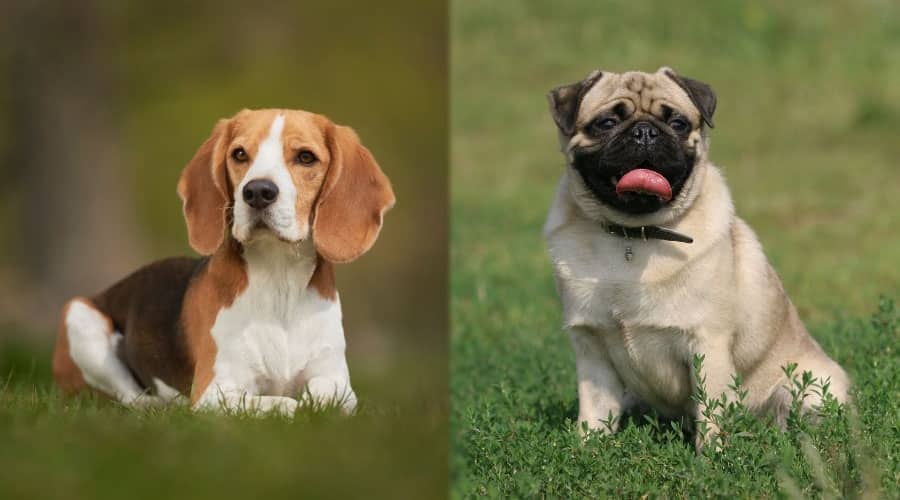
One breed looks like a cartoon character. The other? Like they just smelled your snacks from three blocks away. Welcome to the Beagle vs Pug cuteness battle, where floppy ears face off against smushy faces.
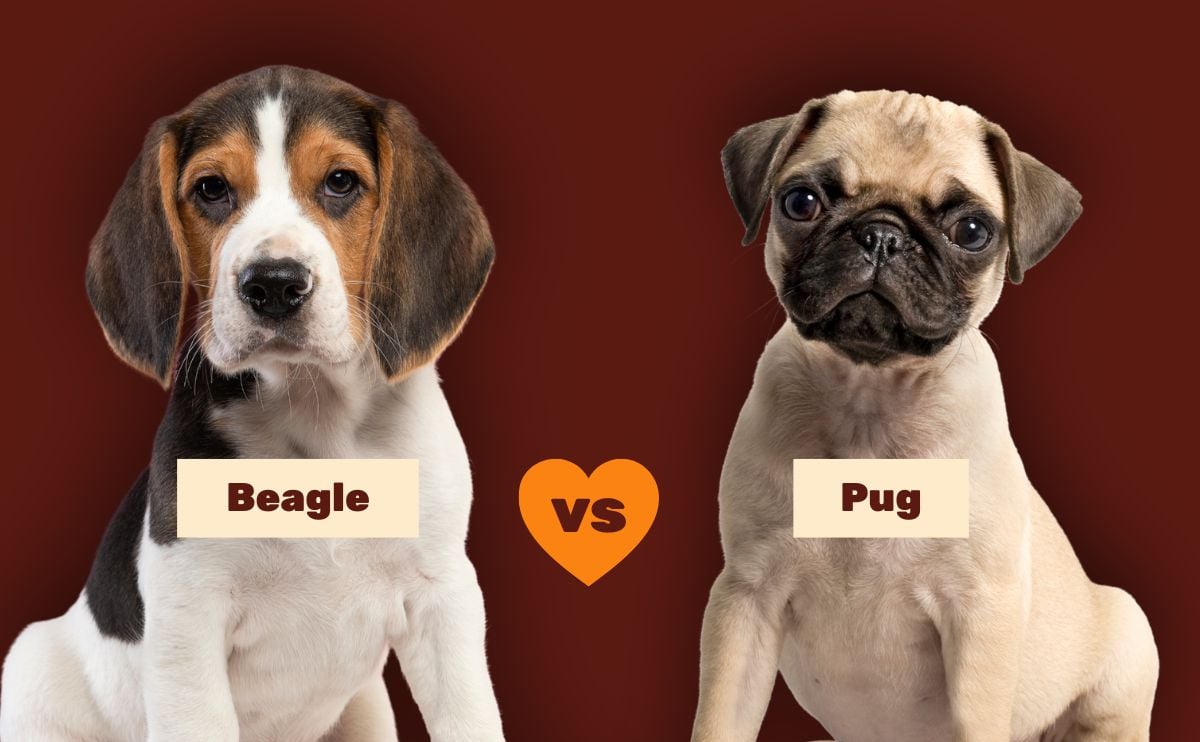
The Beagle Look
Built to Chase, Born to Charm
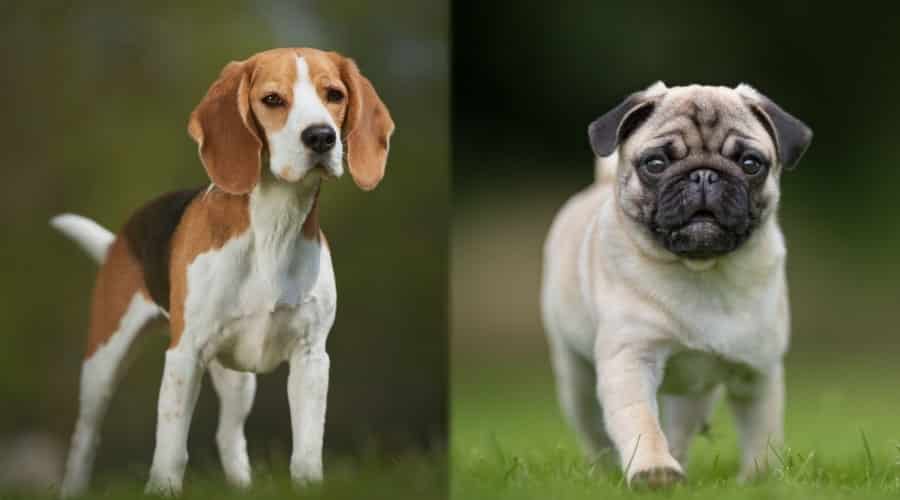
- Floppy ears? Check.
- Big brown eyes? Double check.
- Muscular body with a tail that never stops wagging? That’s your Beagle.
Mini Breed History: Beagles were originally bred to hunt rabbits in packs, meaning they’re lean, alert, and always ready for the next adventure. Think “cute detective in dog form.”
The Pug Look
Royalty in a Loaf-Sized Body
- Wrinkled face, smooshed nose, and huge soulful eyes.
- Barrel-shaped body with a tightly curled tail.
- Usually found snoring under blankets like royalty.
Mini Breed History: Pugs were bred to sit on Chinese emperors’ laps, and they’ve never gotten over it. Today, they still act like you’re the servant.
Size & Weight Stats
For Your Couch Planning
| Trait | Beagle* | Pug |
|---|---|---|
| Height | Up to 15 inches | 10–13 inches |
| Weight | Up to 30 lbs | 14–18 lbs |
| Coat Type | Short, double coat | Short, double coat |
| Common Colors | Tri-color, lemon, red & white | Fawn, black, apricot |
Quick Takeaway
- Beagle: Sleek, sporty, always looks like it has something to do.
- Pug: Round, wrinkly, looks like they just woke up from a nap they didn’t agree to.
Verdict: If you like your dogs active and alert, go Beagle. If you prefer your pets shaped like a cinnamon roll, Pug’s your pick.
Up Next: Which breed will snore through your meetings and which one might scream at the mailman?
Loud Mouth or Snore Machine? Who’s Noisier
Beagles talk. Pugs wheeze. If you’re wondering which breed is more likely to interrupt your Zoom calls or wake the baby at 2 a.m., keep reading, because the noise difference is real.
Beagle
Vocal, Alert, and Always Reporting In
Beagles were bred to hunt in packs, which means they love to communicate loudly. Expect howling, baying, and the occasional full-volume bark for no clear reason.
They’re energetic extroverts. If something moves outside your window (bird, breeze, Amazon truck), your Beagle will file a loud report.
Traits to expect:
- Naturally loud and expressive
- Alert and territorial
- May howl when bored or left alone
- Generally great with kids, but needs stimulation
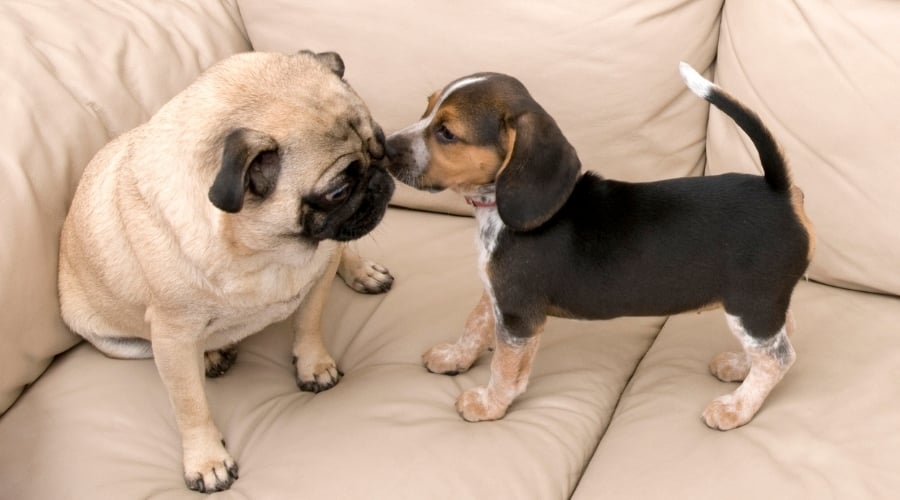
Beagles are pack animals at heart. They want to be with you, near you, or yelling because you’re not home.

Pug
Snorty, Snuggly, and Weirdly Dramatic
Pugs make noise, but it’s less barking, more “what was that sound?” They wheeze, grunt, reverse sneeze, and snore like tiny grandpas.
They’re sensitive, affectionate, and often described as having “big emotions in a small body.” Pugs will follow you from room to room like a shadow… that snores.
Traits to expect:
- Less bark, more grumble, but always snorting
- Prone to separation anxiety
- Adaptable and goofy
- Can get dramatic if ignored
If you want peace and quiet but can live with constant nasal sound effects, a Pug might be your match.
Quick Takeaway
- Beagle: Loud, alert, and needs more mental stimulation.
- Pug: Quiet-ish but full of strange breathing noises and clingy behavior.
Verdict: Don’t get a Beagle if you love silence. Don’t get a Pug if you’re easily startled by snorts in the dark.
Up Next: Shedding, stink, and surprise farts, which dog is the real mess-maker?
Farts, Drool & Funk: The Gross Stuff No One Warns You About
Everyone talks about how cute dogs are. Nobody warns you that one breed sheds like it’s their job, and the other might fart in your lap and then stare at you as if you did it. This is the part of pet ownership that’s less Instagrammable, but super real.
Beagle
Cleaner Than You’d Think (Until They Roll in Something)
Beagles are relatively low-maintenance when it comes to grooming. Their short coat sheds moderately year-round, and they don’t usually have that strong “dog smell” unless they get into something… which they will.
Things to know:
- Weekly brushing keeps their coat under control
- Long floppy ears need regular cleaning to avoid infection
- Minimal drooling, but they’re big fans of mud, grass, and mystery smells
- Not huge shedders, but not hypoallergenic either
Beagles stay relatively clean until they find something disgusting to roll in.

Pug
The Funky Little Flat-Faced Prince
Pugs are deceptively high-maintenance for such a small dog. Their short coat sheds a lot, they can get smelly fast, and their adorable face wrinkles need regular wiping, or things get gnarly.
Things to expect:
- Daily or frequent brushing to control shedding
- Wrinkle cleaning is a must, as bacteria and moisture love to party in there
- Drool and nose goo are part of the deal
- Gas is frequent, loud, and unapologetic
Pugs are adorable, but between the farting and the snoring, your couch may need backup Febreze.
Grooming Quick Comparison
| Trait | Beagle | Pug |
|---|---|---|
| Shedding | Moderate | High |
| Drool Level | Low | Medium |
| Odor Risk | Low unless dirty | High if wrinkles aren’t cleaned |
| Grooming Needs | Low | Moderate |
| Fart Factor | Occasional | Legendary |
Quick Takeaway
- Beagle: Easier to groom, less odor, but will find something to roll in.
- Pug: High shedding, wrinkle maintenance, and a built-in fart soundtrack.
Verdict: If you hate vacuuming but can deal with dirt, go Beagle. If you love cute faces but don’t mind butt sounds and lint rollers, pick the Pug.
Up Next: Who needs more walks and who might fake an injury to avoid stairs?
Who Needs More Exercise?
One of these dogs will make you hit 10,000 steps before noon. The other may need a pep talk just to make it around the block. Let’s talk energy levels, walk needs, and what kind of chaos you’re signing up for.
Beagle
Born to Move (Whether You’re Ready or Not)
Beagles were bred to run, track scents, and chase game, and that instinct hasn’t gone anywhere. If you skip a walk, your Beagle will invent their own exercise plan… usually involving digging, howling, or chewing.
Expect:
- Daily exercise needs: 60–90 minutes
- High stamina and endless curiosity
- Natural sniffers and walks will take forever because everything must be investigated
- Escape artist tendencies if bored or under-stimulated
If you don’t give them enough activity, they’ll find ways to entertain themselves, usually at your expense.
Pug
The Couch Potato with a Short Burst Button
Pugs enjoy a short walk or a quick play session… and then a long nap to recover. They can be playful and even spunky as puppies, but in general, they prefer life at a slower pace.
Expect:
- Daily activity needs: 20–30 minutes, split up
- Prone to overheating and breathing issues, harnesses are great
- Stairs can be a challenge, especially with weight gain
- Will happily skip walks if you let them
A motivated Pug will follow you around the house, slowly, then nap like they just ran a marathon.
Energy & Exercise Comparison
| Trait | Beagle | Pug |
|---|---|---|
| Energy Level | High | Low to moderate |
| Walk Time Needed | 60–90 mins/day | 20–30 mins/day |
| Mental Stimulation | Very important | Helpful, not critical |
| Play Style | Active, chase games | Short bursts, indoor play |
| Escape Risk | High | Very low |
Quick Takeaway
- Beagle: High-energy explorer who needs daily exercise to stay sane.
- Pug: Chill companion who prefers snacks over sprints.
Verdict: If you’re active and want a walking buddy, Beagle’s your match. If your pace is more “slow stroll to the fridge,” the Pug will understand.
Up Next: Which breed listens better and which one pretends you don’t exist?
Training Trouble: Smart, Stubborn, or Sweet Talk Only?
Beagles have brains, but also priorities. Pugs want to please you… until they get tired. So, who’s easier to train? Who needs bribes? And which one acts like you’re not even in the room?
Beagle
Smarter Than You, But Busy Right Now
Beagles are intelligent, curious, and food-motivated, which sounds perfect for training. But here’s the catch: if there’s a smell more interesting than your voice (there always is), you’re getting ignored.
Expect:
- Quick learners with short attention spans
- Will follow their nose over your commands
- Need consistent, reward-based training
- Easily bored, repetition is your enemy
- Can be escape artists if under-trained
Beagles can learn anything… if you can hold their attention. Good luck.
Pug
Will Do Tricks for Snacks (and Applause)
Pugs are eager to please and love making their humans happy. They’re not as independent as Beagles, which means they’ll often follow your lead, especially if it ends in praise or peanut butter. But they can be lazy, so it depends on what mood they’re in.
Expect:
- Very food-motivated
- Sensitive to tone, harsh voices may shut them down
- Do best with short, positive training sessions
- Can be a bit lazy, especially with physical tricks
- May become stubborn if not rewarded
Training a Pug is like coaching a drama student: keep it light, positive, and don’t forget the standing ovation.
Training & Obedience Comparison
| Trait | Beagle | Pug |
|---|---|---|
| Intelligence | High | Moderate |
| Obedience | Low to moderate | Moderate |
| Motivation | Scent + treats | Praise + treats |
| Stubbornness | High | Medium to high |
| Training Style Best | Short, fun, active | Short, gentle, positive |
Quick Takeaway
- Beagle: Smart, distracted, and will only sit if the treat is better than the smell outside.
- Pug: Eager but a bit lazy, so train with love, snacks, and low expectations.
Verdict: If you’re patient and love a challenge, Beagle’s your project. If you prefer cooperative (but clingy) learners, the Pug makes life easier.
Up Next: Which dog costs more, and which one eats your budget while snoring on the couch?
Budget Reality: Which Breed Hits Harder on Your Wallet
Sure, puppies are cute. But they also come with price tags, both upfront and sneaky ones that show up later in the form of vet bills, food, wrinkle wipes, or destroyed shoes.
Let’s break down who costs more: the high-energy escape artist or the snorting couch loaf.
Beagle
Budget-Friendly at First… Until the Great Escape
Beagles tend to be affordable as puppies, especially compared to designer breeds. But the real cost comes in keeping them busy. Think puzzle toys, stronger fences, and replacing whatever they chewed through when bored.
Expected costs:
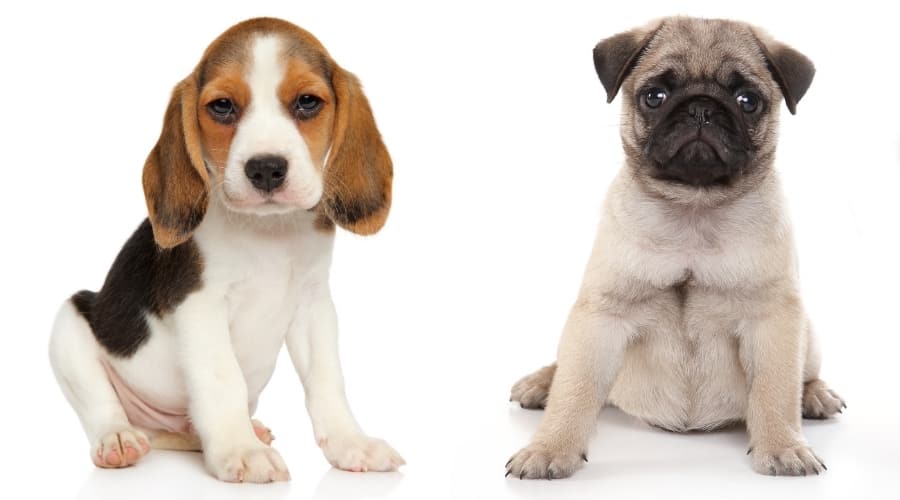
- Puppy price: $1,000–$1,500
- Monthly food: Moderate – active but not huge
- Occasional grooming costs
- Escape-proofing your yard is optional but highly recommended
- Fewer health problems usually mean lower average vet bills
Beagles don’t nickel and dime you, but they do force you to Beagle-proof your life.
Pug
Small Dog, Big Vet Bills
Pugs often cost a bit more upfront, especially from a reputable breeder, but the bigger expense is long-term care. Brachycephalic (flat-faced) breeds come with breathing issues, skin sensitivities, and other common medical needs.
Expected costs:
- Puppy price: $1,000–$2,500
- Monthly food: Lower – smaller appetite, especially with portion control
- Grooming costs include wrinkle wipes, ear cleaning
- Higher likelihood of surgery for nostrils, palate, or eye issues
- Lifetime vet bills can add up fast
Pugs love toys, but they aren’t destroyers like Beagles, and their vet visits can hit your wallet like a wrecking ball.
Cost Breakdown Comparison
| Cost Category | Beagle | Pug |
|---|---|---|
| Puppy Price | $1,000–$1,500 | $1,000–$2,500 |
| Monthly Food | Moderate | Low |
| Grooming Supplies | Basic | Moderate |
| Vet Costs (avg) | Low to moderate | High |
| Hidden Costs | Fence repair, chewed furniture | Emergency breathing treatments |
Quick Takeaway
- Beagle: More affordable long-term, but high energy may lead to indirect costs (repairs, extra toys).
- Pug: Higher upfront and long-term costs, especially with health care.
Verdict: If you’re on a tighter budget, a Beagle might stretch your dollar further, just not your patience.
Up Next: Breathing problems, bad backs, and surprise surgeries, which breed comes with more medical drama?
The Health Breakdown You Can’t Ignore
One of these dogs is more likely to stop mid-walk because they smell something. The other might stop because they can’t breathe. So, let’s talk about health, the real kind that hits your vet bills, your schedule, and your heart.
Beagle
Mostly Hardy, But Watch the Scale
Beagles are generally healthy, long-lived dogs with a good track record, but that doesn’t mean they’re invincible. They can gain weight easily and are prone to a few issues you’ll want to keep an eye on.
Common concerns:
- Obesity (especially if under-exercised)
- Hip dysplasia
- Epilepsy
- Ear infections (floppy ears = moisture trap)
- Hypothyroidism (can affect weight and coat)
A condition unique to Beagles is Musladin-Lueke Syndrome, where the skull is wider than typical, and the eyes are slanted. While Beagles with this syndrome can live normally, they’re also likely to have problems with their hearts and toes and have a much poorer quality of life.
Life expectancy: 10–15 years with regular vet care and a solid exercise routine.
Overall, Beagles tend to live long and stay active, but their love of food can catch up to them if you’re not careful.
Pug
Built for Cuddles… Not for Respiratory Function
Pugs are adorable. But their flat faces and tightly coiled design come with real health challenges. Many Pugs struggle with breathing, overheating, and eye injuries, even as young dogs.
Common concerns:
- Brachycephalic syndrome (trouble breathing, especially in heat)
- Obesity (low energy + love of food)
- Skin fold infections (especially on the face)
- Eye injuries (bulging eyes = higher risk)
- Spinal problems (hemivertebrae in the tail area)
There’s a neurological condition that only appears in Pugs, known as Pug Dog Encephalitis. Like epilepsy, it causes seizures, but it also results in blindness and, ultimately, death. Unfortunately, this disease is only diagnosable post-mortem: there’s no way to test for it in living Pugs.
Life expectancy: 13–15 years, but quality of life depends heavily on weight management and early vet intervention.
Pugs are lovable, funny, and sweet, but they need you to be proactive. The snorting isn’t always harmless.
Quick Takeaway
- Beagle: Fewer structural health risks, but watch for weight, ears, and inherited conditions.
- Pug: Big heart, small airway. Breathing issues, skin care, and heat sensitivity are lifelong concerns.
Verdict: If long-term health simplicity matters, Beagles edge ahead, but both need proactive care and regular vet visits.
Up Next: Which dog eats more, begs harder, and has stronger snack radar than your toddler?
Chow Time: What These Dogs Eat (and Overeat)
One of these dogs will sniff out a cracker from across the house. The other might inhale their dinner and then stare at you like they’ve been starved for days. Welcome to the feeding frenzy.
Beagle
Bottomless Pit with a Nose for Snacks
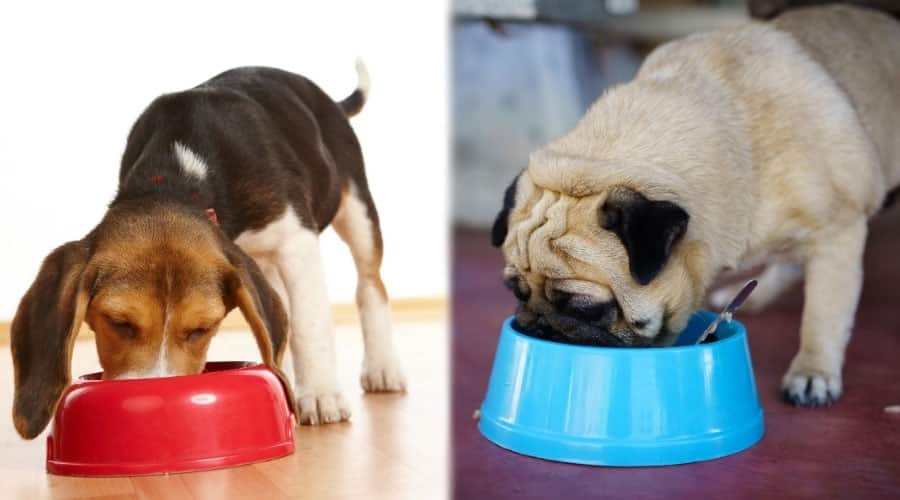
Beagles love food. All food. Your food. The cat’s food. Random crumbs. This breed is known for being obsessive about eating, which makes training easier, but weight gain is way too easy.
Feeding facts:
- Needs portion control and a strict schedule
- Very food-motivated (will work for kibble)
- Tends to overeat if free-fed
- Prone to obesity without enough exercise
- May steal food if unsupervised, including from counters and trash cans
Pro tip: Secure your pantry. Beagles will figure out how to open it.
Pug
Snack King with a Built-In Belly
Pugs love food just as much, but they have a lot less energy to burn it off. Their stocky bodies and short snouts can make eating too fast (or too much) a real health risk.
Feeding facts:
- Small portions, frequent meals work best
- Prone to bloating, gas, and food allergies
- May require slow-feeder bowls to avoid choking
- Weight gain is fast and dangerous (worsens breathing problems)
- Needs careful treat limits, and just one extra biscuit can tip the scale
Pugs beg hard. The eyes are powerful. You have been warned.
Feeding & Nutrition Comparison
| Trait | Beagle | Pug |
|---|---|---|
| Appetite Level | Extreme | Also extreme |
| Weight Gain Risk | High | Very high |
| Ideal Diet | Measured portions, high-protein | Low-fat, portioned, and possible allergy sensitivity |
| Training Treat Use | Very effective | Very effective |
| Food Motivation Score | 10/10 | 10/10 |
Quick Takeaway
- Beagle: Eats fast, eats everything, and needs strong snack boundaries.
- Pug: Same obsession, but worse consequences, especially for breathing and joints.
Verdict: Both breeds need strict feeding routines. Beagles are more active, but Pugs need much more portion control. Either way, don’t let the eyes fool you.
Up Next: The final verdict on which dog fits your chaos, cuddle, and snack tolerance?
So, Which Dog Fits You Best?
You’ve met the zoomie king and the snorty snuggle bug. You’ve read about farts, vet bills, snack theft, and stubbornness. Now it’s time to pick your player.
But here’s the truth: there’s no wrong choice, just the wrong match for your lifestyle.
Choose the Beagle If…
- You want a walking buddy who never gets tired
- You’re ready for high energy and even higher curiosity
- You don’t mind some noise, some chaos, and a little backyard remodeling
- You’re up for training a smart but easily distracted dog
- You live an active lifestyle (or want motivation to start)
Translation: Beagles are fun, smart, and loyal, but they need time, patience, and movement.
Choose the Pug If…
- You prefer cuddles over cardio
- You have a chill home and love routines
- You can handle some vet visits and wrinkle care
- You want a dog that makes you laugh while snoring at full volume
- You’re okay being followed from room to room by a squishy shadow
Translation: Pugs are adorable, affectionate, and hilarious, but they need structure, gentle care, and someone who won’t mind the sounds (or smells).
Still Torn?
Some people can’t decide and end up with a Puggle, a Beagle/Pug mix that brings the best (and occasionally worst) of both worlds. Just saying. Want the full breakdown? Check out our complete guide on the Puggle.
Quick Takeaway
You don’t just pick a dog, you pick a lifestyle. Choose the one that fits your chaos level, cuddle needs, and tolerance for snorts, barks, or both.
Frequently Asked Questions
Got a question I didn’t cover? Drop it in the comments, because we love hearing from readers, and your question might help someone else decide between a Beagle and a Pug.
Which Breed Is Better for First-Time Dog Owners: Beagle or Pug?
Pugs are usually easier for new dog owners as they’re low-maintenance, affectionate, and don’t require as much stimulation. Beagles are lovable but more independent and high-energy, which can be overwhelming for beginners.
Are Pugs or Beagles Better With Kids?
Both breeds are kid-friendly, but Pugs are more laid-back and cuddly. Beagles are playful and energetic, which is great for active families; just be ready to supervise outdoor adventures.
Which Dog Barks More, a Beagle or a Pug?
Beagles are much louder and love to bark, howl, and alert. Pugs are quiet barkers but make all kinds of funny sounds, including snorts, wheezes, and grumbles, which are just part of the package.
Do Pugs or Beagles Shed More?
Pugs shed heavily year-round thanks to their double coat. Beagles shed too, but typically in more manageable, seasonal waves.
Which Breed Is Healthier Long-Term?
Beagles are generally the healthier choice, with fewer structural issues. Pugs often experience breathing problems, skin-fold infections, and eye issues that require regular veterinary care.
However, both breeds require regular health checkups and responsible pet ownership to maintain their health.
Are Beagles or Pugs Easier to Train?
Pugs are eager to please and respond well to gentle, positive training. Beagles are smart but stubborn, and they’re more likely to follow their nose than your voice.
Can Pugs or Beagles Live in Apartments?
Yes, both can adapt to apartment life. Pugs thrive in small spaces, while Beagles need extra exercise and mental enrichment to avoid boredom and bad behavior.
What’s the Average Cost to Own a Beagle vs a Pug?
Beagles are less expensive upfront and tend to have lower long-term health costs. Pugs are pricier to buy and often need more vet visits due to breathing and skin issues.
Can’t Get Enough Cute, Weird, or Wiggly Dog Breeds?
Still not sure if the Beagle or Pug is your perfect match? You might love other Pug mixes, like the Chug or the Jug, both small dogs with big personalities. Curious what happens when you mix Beagle brains with other breeds? Beagle mixes like the Cheagle or Beagador might be exactly the chaos you’re looking for.
Want something even squishier? French Bulldog mixes bring maximum wrinkles and surprise personalities in compact, cuddly packages. Or if you’re into smart, loyal dogs with energy for days, check out Labrador Retriever mixes, from the Labradoodle to the Sheprador.
Tell Us What You Think! Are you Team Beagle or Team Pug? Have you got experience with either breed or a mix? Drop your thoughts, questions, or funniest dog moments in the comments. We read every one and love hearing from fellow dog lovers!