When you purchase through links on our site, we may earn a commission at no extra cost to you. Learn more.
Your dog licks the floor like it’s a five-star buffet, your feet like you’re made of bacon, and your face like you just returned from war. But is it love, boredom, anxiety, or just plain weird dog behavior?
Table of Contents
Not every dog parent takes the time to Google this, but you’re not just any pet person. You’re the kind who notices the weird licks, the random floor tasting, the 3 AM paw slurping, and actually wants to know what it means.
Let me decode every weird lick, so you’ll finally know what your pup’s tongue is trying to tell you.
Why Your Dog Licks You: 5 Reasons
So your dog won’t stop licking your face, your fingers, your sweaty socks. Is it love? Hunger? A weird dominance thing?
Your dog licking you is one of the most emotionally loaded things a dog can do. Here’s what it might mean.
1. Affection
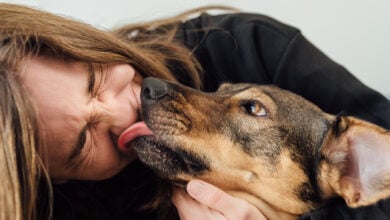
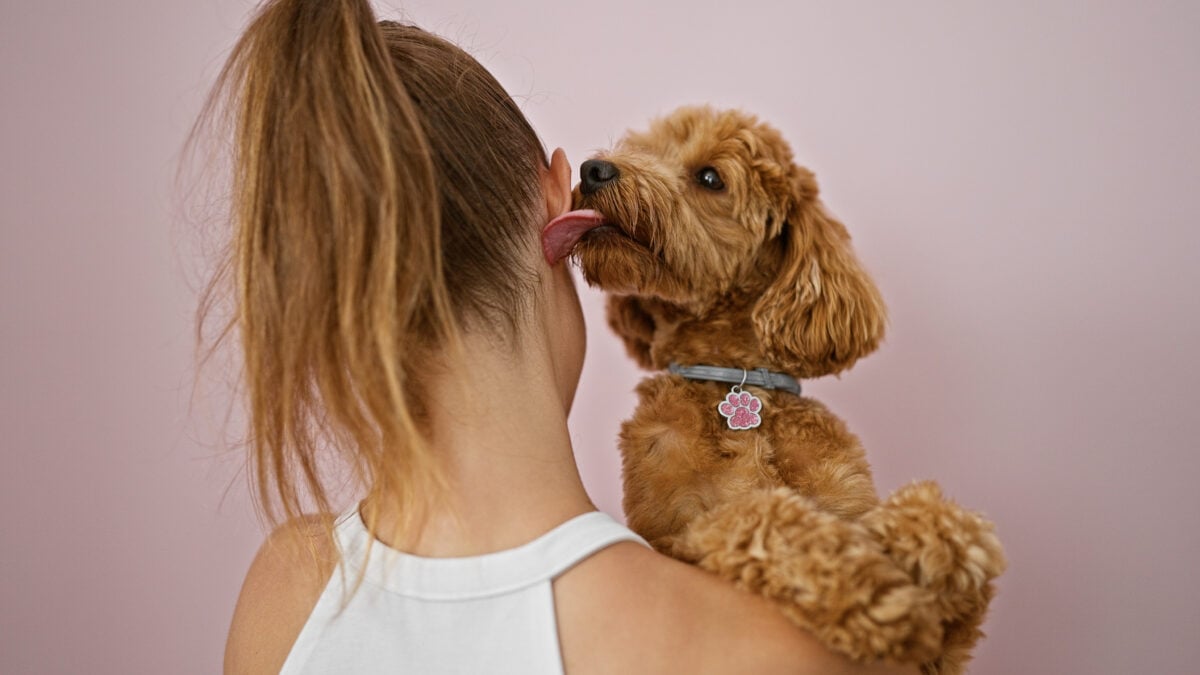
Dogs lick the ones they love. It’s how puppies bond with their mothers, and your pup might just be showing you that you’re part of the pack.
Some dogs even lick your face after you’ve cried. Whether it’s empathy or salt, it’s still sweet.
In this one-minute video from Good Morning America, Daisie the Sheepdog got caught showering the newest member of their family with kisses.
For some dogs, licking isn’t just a habit; it’s a love language. Here’s one sweet example from a Canine Journal dog parent who knows it firsthand:
When I was in high school, I adopted a rescue dog named Joey. He was the sweetest dog and seemed endlessly grateful to have found a home.
The way he showed it most? By licking. You simply couldn’t pet Joey without him licking your hand in return.
Honestly, I’ve never been a huge fan of dog licking, but it clearly brought him comfort. It was his way of bonding and showing affection, so we just let him lick to his heart’s content.
– Tara Maurer, Writer for Canine Journal (And Former Human Salt Lick)
2. You Taste Amazing
Your hands, face, and feet are basically flavor central. Dogs are drawn to the salt in your sweat, leftover food, or the scent of your skin.
Feet, in particular, are loaded with pheromones. That sweaty sock obsession? Totally biological. They even eat poop, so your feet aren’t that gross.
3. Attention-Seeking
If licking gets a reaction, your dog will keep doing it. Even if you say “stop,” you’re still engaging. Dogs quickly learn that licking = attention.
4. It Might Be Stress or OCD
Some dogs lick obsessively as a way to self-soothe. If it seems compulsive or happens alongside other repetitive behaviors, it could be anxiety or, according to the American Kennel Club (AKC), even a form of OCD.
Watch for these signs:
- Licking that doesn’t stop, even after redirection
- Licking out of context, like when nothing’s happening
- Paired with whining, pacing, or body tension
If this sounds familiar, talk to your vet or a certified behaviorist. Plus, learn about Clomipramine to help with anxiety.
5. Grooming Instinct
In multi-dog homes, dogs groom each other as a bonding ritual. Some dogs extend this to humans, licking your skin like they would another pack member.
Why Is My Dog Licking Me?
- They love you
- You taste interesting
- They want attention
- They’re trying to calm themselves
- They’re grooming you like family
Want to know why dogs lick each other? Let’s go there next. It’s not just about affection.
When Dogs Lick Themselves: 5 Reasons
Yes, dogs lick themselves to stay clean, but that’s not the whole story. While grooming is totally normal, excessive self-licking can slide into stress, pain, or compulsion if you’re not paying attention.
1. Grooming and Clean-Up
Dogs naturally lick themselves to stay clean. This is totally normal after a walk, a nap, a meal, or a bathroom break. A few licks and they move on. This type of licking is usually casual and quick. You’ll notice it around the legs, belly, and tail area.
Puppies often lick themselves more while they’re learning boundaries, especially during teething or play.
2. Allergies or Irritation
Constant licking around the paws, legs, or belly often means an allergic reaction. Triggers can include grass, dust, or food ingredients. Watch for red skin, chewing between the toes, or licking right after coming inside.
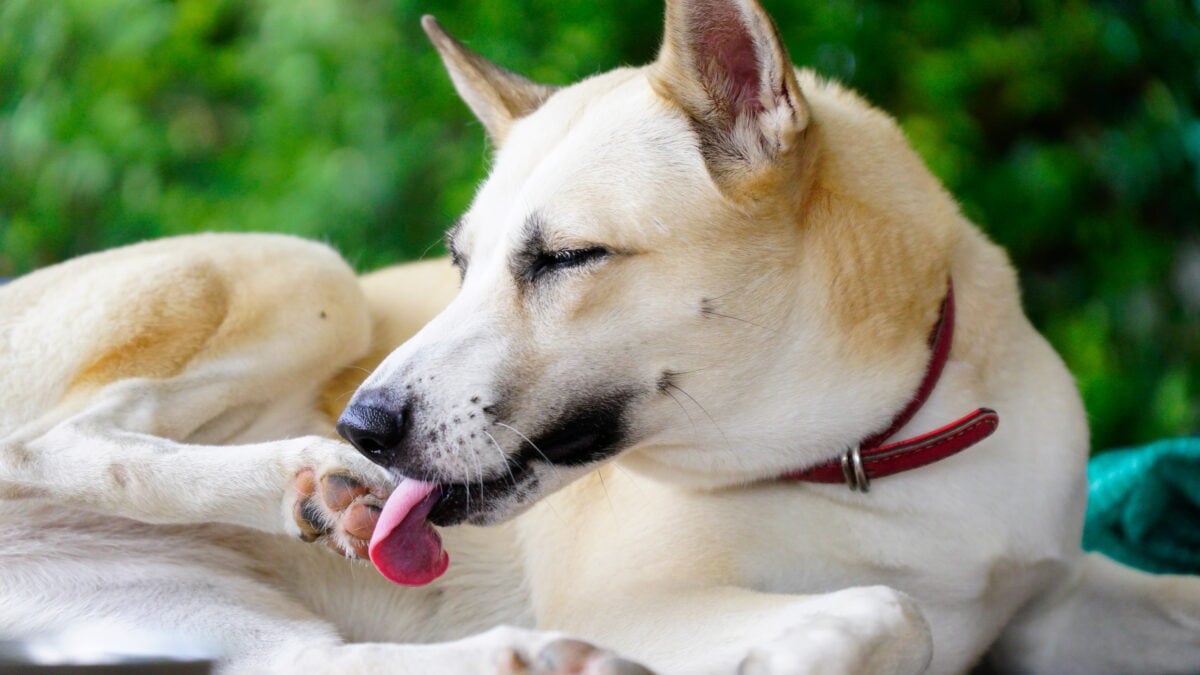
Dirty paws are also a tempting thing for dogs to lick. You can keep them clean by using paw cleaners when you come in from outside. Taking time to clean your dog’s paws will also give you a chance to check them out, too.
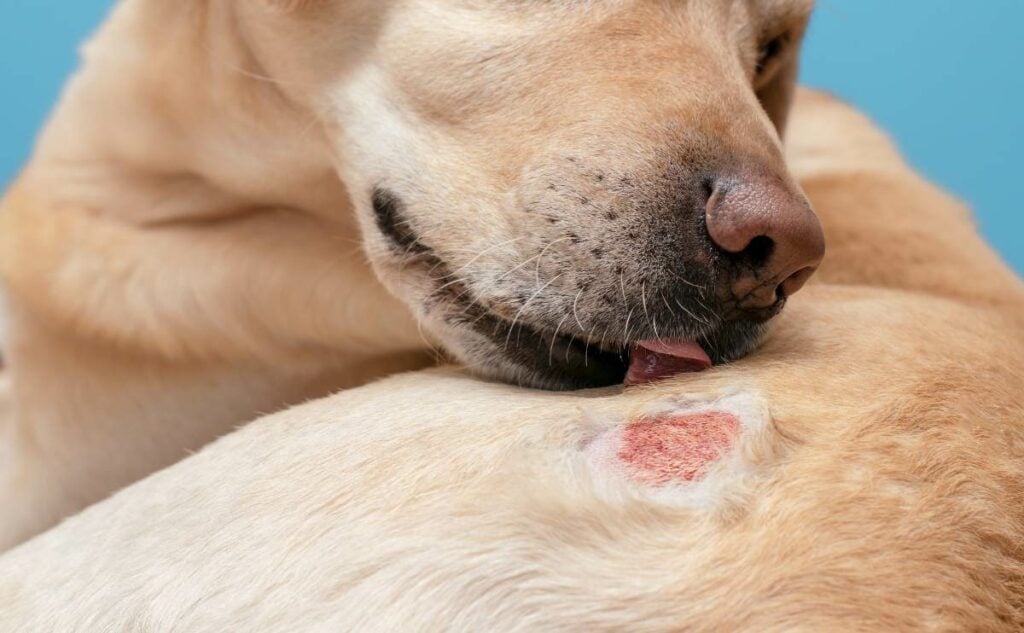
But if you’re noticing red skin, hair loss, or constant licking in the same spot, it’s probably not grooming.
Time to check in with your vet.
3. Anxiety or Boredom
Licking releases feel-good chemicals in the brain. Stressed or under-stimulated dogs often use it to calm down. If your dog licks mostly at night, during storms, or when left alone, anxiety may be a factor.
If your dog licks for long periods without stopping, even when nothing’s wrong, they may need behavior support or a change in routine.
4. Injury or Infection
Licking small cuts or scratches is instinctual. Saliva has mild antibacterial properties, and dogs naturally try to clean minor injuries.
Even a small cut, bug bite, or piece of gravel can lead to nonstop licking. Check for swelling, odor, redness, or tenderness around the paws or legs.
That said, too much licking can delay healing or cause infection, so always monitor wounds.
Not all licking is cute or comforting. For some dog parents, it becomes a long-term challenge that takes serious trial and error, like this story about Daisy:
My dog Daisy has struggled with periods of excessive licking over the years. Every spring, she fixates on one spot on her leg, and the habit ramps up fast, sometimes to the point of rawness.
Our vet explained that there could be several causes: seasonal allergies, stress, or even something more serious, such as an underlying medical condition. We’ve tried nearly everything: medications, topical treatments, bandages, wraps, hoping to break the cycle.
What works best for her is a mix of Benadryl and a long-sleeve surgical recovery suit. Even then, she eventually chews through them or Houdini’s her way out, so we replace them every few months. It’s not perfect, but it’s progress.
Managing chronic issues, such as her non-stop licking in pets, often requires patience, trial, and a lot of love.
– Danielle DeGroot, Rescue Dog Mom & Writer for Canine Journal
5. Pain or Arthritis
Senior dogs or large breeds may lick the same spot again and again if a joint or limb is hurting. This is their way of managing pain they can’t explain.
Is My Dog Just Grooming?
- Normal grooming is short, gentle, and spread out
- Long, repetitive licking in the same spot is not normal
- Red skin, hair loss, or restlessness are red flags
- Licking wounds may help at first, but can cause infection
- If in doubt, have your vet take a look
Want to know why dogs lick each other? Let’s go there next. It’s not just about affection.
When Dogs Lick Each Other: 5 Reasons
If your dog is constantly licking another dog’s face, ears, or even their rear, it’s not just a gross habit. Dog-to-dog licking is full of meaning, and depending on the context, it can signal everything from love to low status.
1. Social Bonding
Just like wolves in a pack, dogs lick each other to strengthen relationships. It’s a calming behavior that says, “We’re cool.”
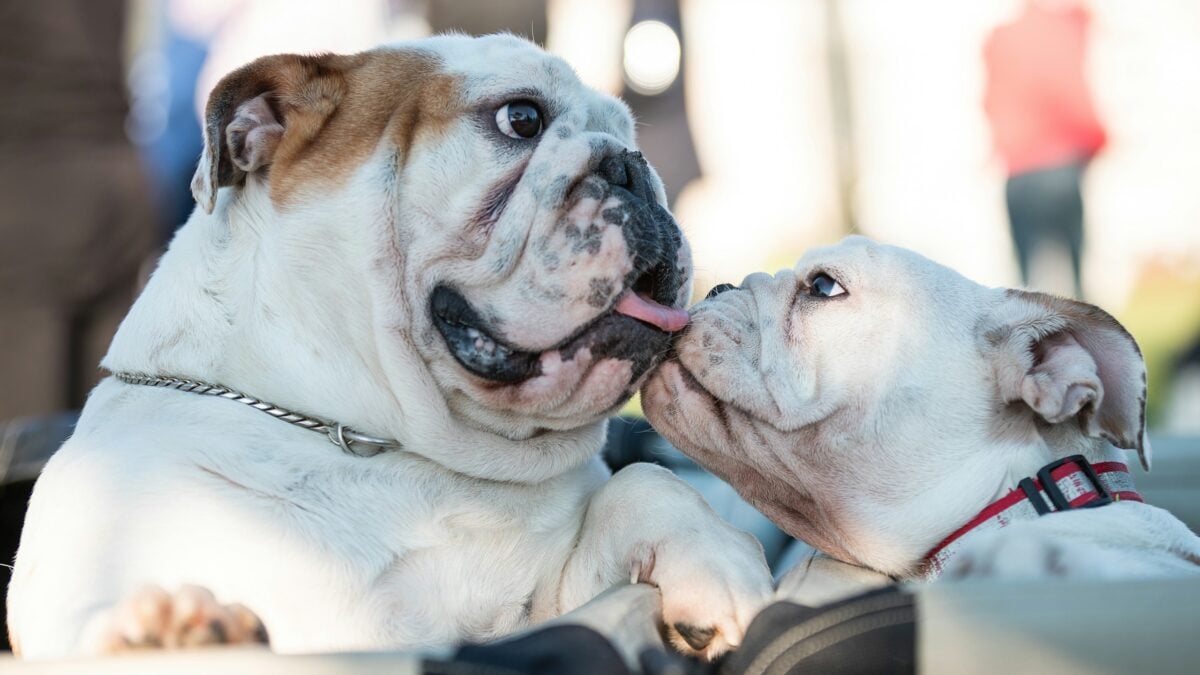
Face licking between dogs often shows respect or affection, especially if one is younger or more submissive.
2. Submission or Respect
A younger or lower-ranking dog might lick an older dog’s mouth or chin as a way of showing they know their place. It’s dog etiquette.
This kind of licking usually comes with a lowered body posture or tail tuck.
3. Stress Relief or Soothing
Some dogs lick others to calm themselves down during high-energy or anxious moments. You might notice this during greetings, after a scuffle, or at the vet.
It’s less about grooming and more about emotional regulation.
4. Grooming and Clean-Up
In close relationships, like between littermates or bonded dogs, licking is used to clean ears, eyes, or wounds. It’s practical, but also affectionate.
If one dog is obsessively licking the other in one spot, check for cuts, hot spots, or irritations.
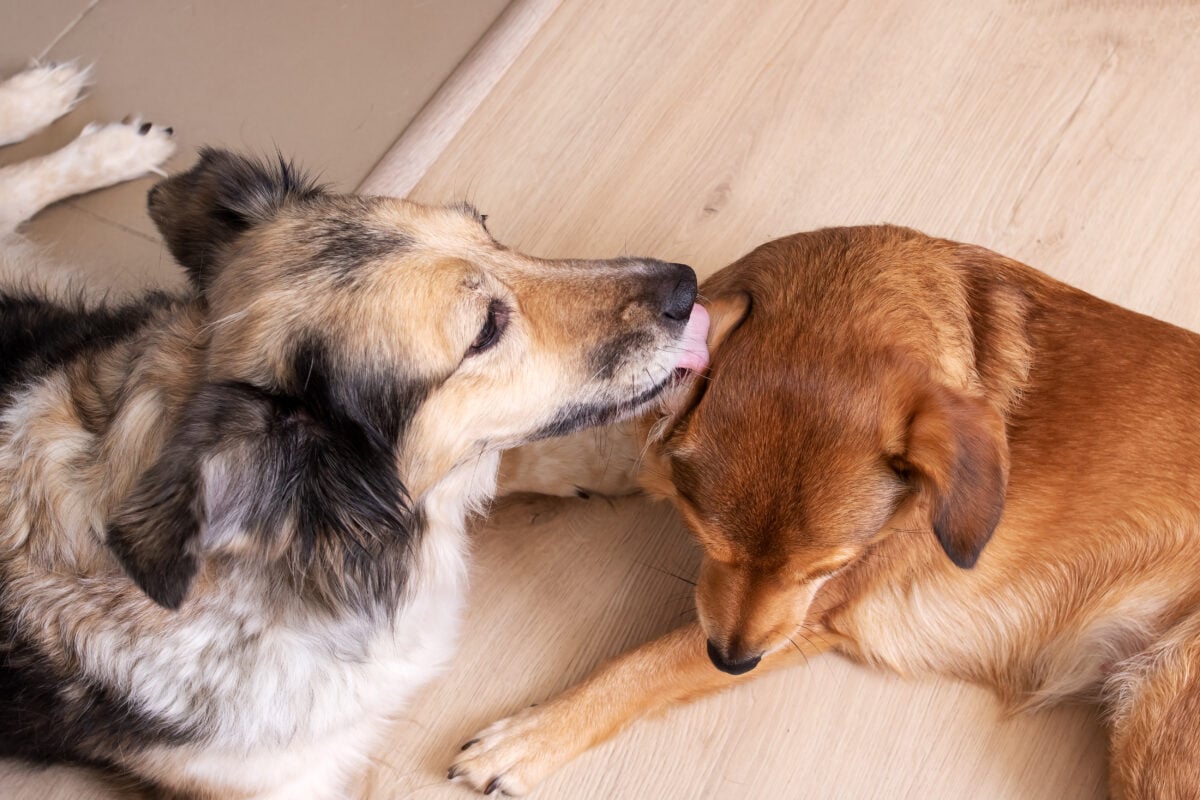
Wound licking is an instinct for dogs. Their saliva is slightly antibacterial and antimicrobial and has some minor healing properties. These properties may be why dogs lick their wounds and also lick human wounds.
But letting them lick your wounds is not the best idea. According to the U.S. Centers for Disease Control and Prevention (CDC), it can interrupt the natural healing process and can increase your risk of infection.
5. Obsessive Behavior
Sometimes dog-to-dog licking crosses the line into habit or compulsion. If one dog constantly licks the other, especially if the licked dog seems annoyed or tries to move away, it may be time to interrupt the behavior.
What Does Dog-to-Dog Licking Mean?
- Strengthening their bond
- Showing respect or submission
- Calming themselves or each other
- Cleaning a buddy
- Sometimes, it’s a bit too much
Coming up next: why dogs suddenly start licking the floor, the furniture, or absolutely nothing at all. That one gets weird.
Licking the Couch, Floor, and… Air? 5 Reasons
This is when things start getting weird. Some dogs lick random objects like furniture, carpet, or the kitchen floor. Others seem to lick the air itself. It looks random, but these behaviors usually have a cause.
1. Searching for Flavor
The floor or couch might have leftover food smells, crumbs, or even sweat residue. Dogs experience the world with their mouths, so if something smells interesting, it’s going to get licked.
2. Nausea or Upset Stomach
One of the most overlooked causes of floor licking is nausea. Dogs may lick floors or carpet when they feel queasy, similar to how some people fidget or chew gum when anxious.
If this happens suddenly or often, it could be a sign of GI trouble or even a dietary issue.
3. Boredom or Stress
Licking can become a self-soothing habit when a dog is under-stimulated. If your dog is licking the couch, the carpet, the bed, and then the floor in a loop, it might be time to look at how much exercise or mental stimulation they’re getting.
4. Air Licking and Phantom Tongue
This one gets attention fast because it looks so strange. A dog repeatedly licking the air could be reacting to something stuck in their mouth or teeth, like fur or a splinter.
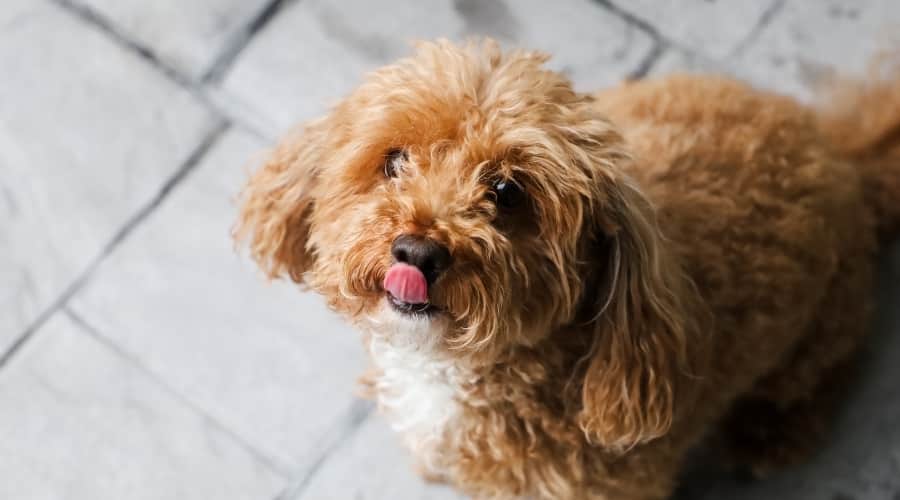
In rare cases, air licking is linked to dental pain, neurological issues, or even seizures. If it happens frequently or with other odd behavior, don’t ignore it.
5. Learned Habit
If a dog licked something once and got a reaction, like you laughing or feeding them, they may keep doing it. Dogs love patterns, and if licking gets them attention or comfort, they’re likely to repeat it.
Why Dogs Lick Weird Stuff:
- The object smells like food or you
- They feel nauseous or unwell
- It’s a boredom or anxiety habit
- There could be dental or medical issues
- Sometimes, it just works for them
Ever notice your dog quietly licking their lips when there’s no food around? It might look harmless, but it could be a hidden signal that something’s up. Let’s decode what lip licking really means.
Why Do Dogs Lick Their Lips: 5 Reasons
You’ve seen it, a quick tongue flick across the lips, usually when there’s no food in sight. It looks minor, but it can mean more than you think.
1. Anxiety or Stress
Lip licking is one of the most common calming signals in dogs. They often do it when they feel unsure, uncomfortable, or overwhelmed. You might notice it at the vet, around loud noises, or when a stranger gets too close.
2. Anticipation
Dogs also lick their lips when they expect food or treats. If your dog hears a bag crinkle or sees you near the pantry, they may lick their lips out of pure excitement.
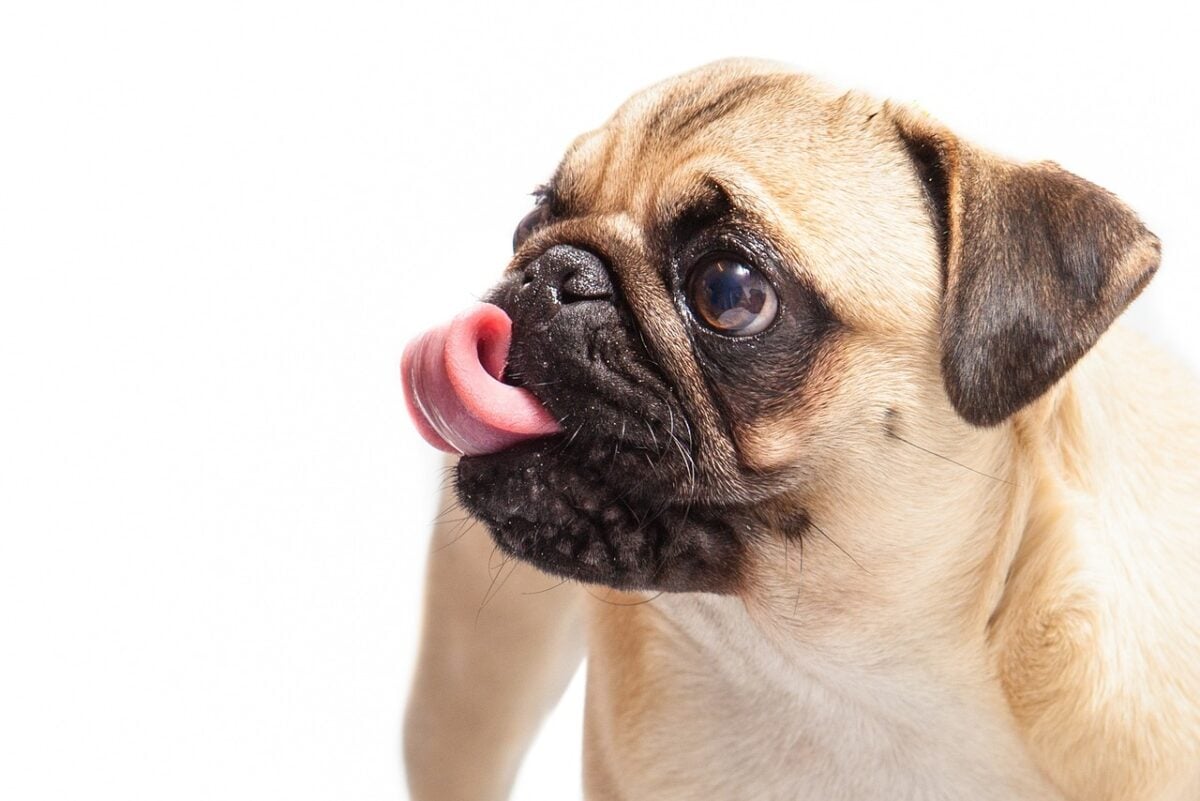
3. Dry Mouth or Dehydration
Sometimes it’s physical. A dry mouth, sticky gums, or even early dental issues can lead to frequent lip licking. If it happens often, check their hydration and oral health.
4. Skin Irritation or Allergies
Dogs with itchy snouts or muzzle allergies may lick their lips in an attempt to soothe the area. This is more common during allergy season or after eating certain foods.
5. Compulsive Behavior
If lip licking happens constantly and without clear triggers, it may be a compulsive habit. This could be rooted in anxiety, boredom, or even an unresolved medical issue.
Why Dogs Lick Their Lips:
- Feeling anxious or unsure
- Expecting food or treats
- Dehydration or dental discomfort
- Allergies around the mouth
- A habit they can’t break
Coming up next: licking humans. It might feel like love, but there’s more to it, especially when they go for your face or your open wounds.
Should You Let Your Dog Lick Your Face or Wounds?
Letting your dog lick your face can feel sweet and affectionate. Letting them lick your cuts might even seem helpful. But here’s the thing: both behaviors come with risks that most dog owners don’t think about.
Why Dogs Lick Faces
Dogs often lick faces to show affection, submission, or excitement. It’s how puppies greet their mother and how adult dogs show trust.
Your dog might also lick your tears, mouth, or nose because they’re drawn to moisture and scent. That’s normal. But is it safe?
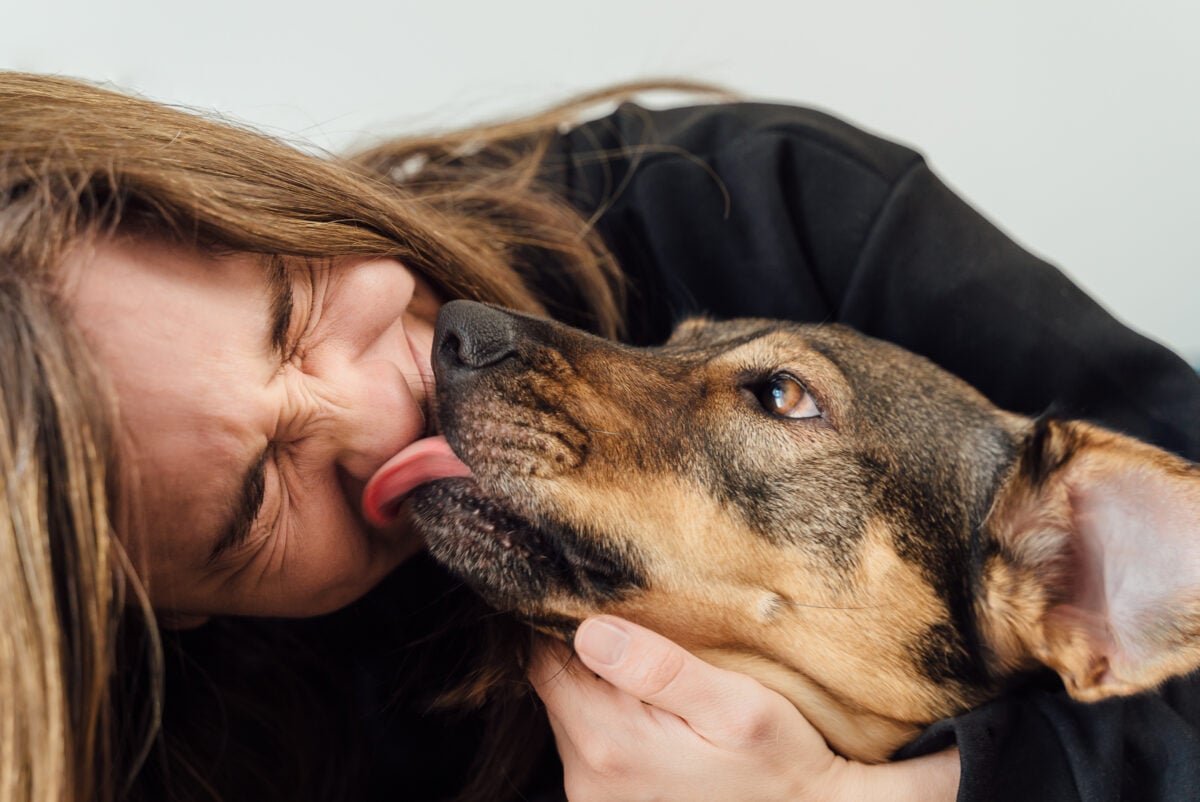
Is Face Licking Safe for Humans?
Not always. Dog saliva contains bacteria that don’t mix well with human cuts, eyes, or mouths. Most people will be fine, but those with weak immune systems or open skin should avoid face licking altogether.
Also, if your dog licks their own rear end and then licks your face, that’s not just gross, it’s a germ highway.
Why Dogs Lick Human Wounds
Dogs instinctively lick wounds, both their own and yours. It’s a behavior inherited from wild ancestors.
Canine saliva has mild antibacterial properties, so for a long time, people believed it helped with healing.
Why You Shouldn’t Let It Happen
Modern research says licking can do more harm than good.
- It introduces bacteria
- It can reopen wounds
- It can cause infections in already damaged skin
- Some bacteria in dog mouths can be dangerous to humans, especially in surgical or deep wounds
For your dog, licking your wound might be their way of showing care. For you, it’s an infection risk.
Set Boundaries Gently
If your dog tries to lick your face or a scab, gently redirect them. Give them a toy or a treat instead.
You’re not rejecting their love, just guiding it in a safer direction.
Face and Wound Licking:
- Licking your face shows affection, but it’s not always hygienic
- Licking human wounds is instinctual, but not safe
- Avoid letting your dog near your eyes, mouth, or healing cuts
- If in doubt, redirect and keep it clean
Coming up next: what to do when licking becomes too much. From the furniture to your skin to the floor and back again.
6 Ways To Stop a Dog from Licking Everything
Sometimes licking is sweet. Other times, it’s nonstop, messy, and driving you up the wall. If your dog is constantly licking floors, furniture, you, or themselves, it might be time for a reset.
1. Rule Out Medical Issues
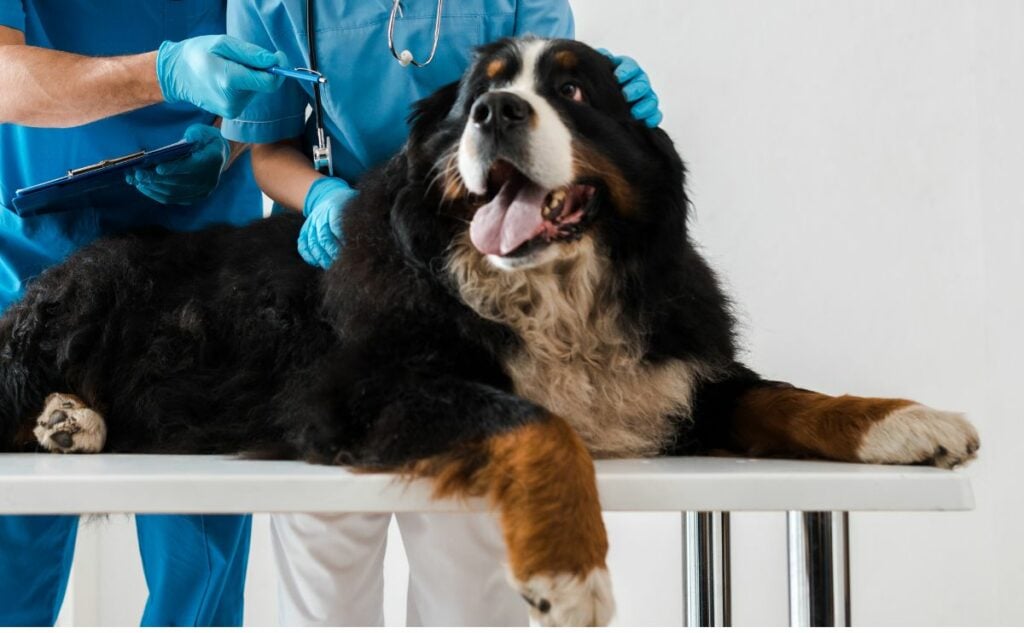
Before treating it as a behavior problem, make sure your dog isn’t licking because of pain, allergies, dental trouble, or infection. If they’re targeting one area, such as their anus, limping, or seem restless, talk to your vet first.
2. Break the Boredom Loop
Under-stimulated dogs often develop weird habits just to pass the time. Add more daily mental and physical activity, like:
- Puzzle feeders
- Short training sessions
- New walking routes
- Interactive toys
Some high-energy breeds are more prone to compulsive licking, especially if they don’t get enough daily stimulation. Basically, if your dog’s brain is busy, their tongue will calm down.
3. Redirect the Behavior
Keep a chew toy, frozen treat, or tug toy nearby. When licking starts, calmly redirect them to something they can safely mouth or chew. Consistency is key. If licking gets ignored and chewing gets rewarded, they’ll shift.
4. Create Calm Environments
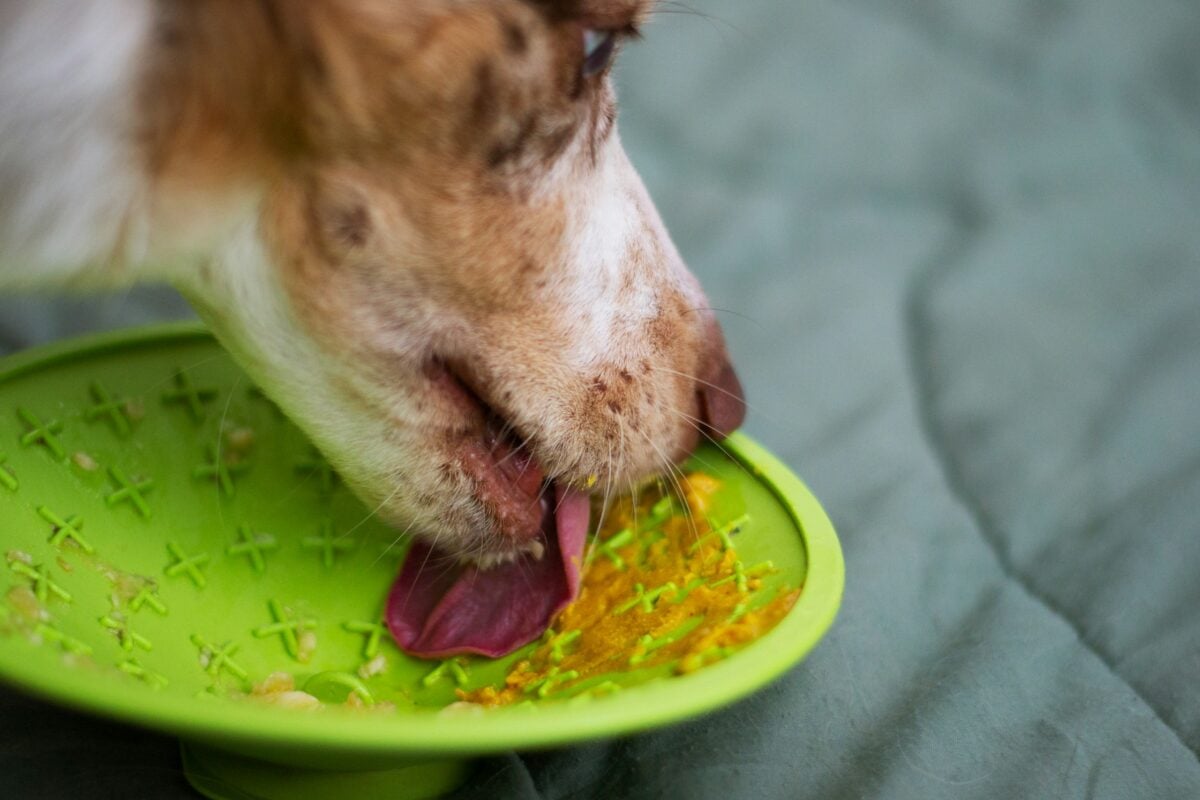
Licking often spikes during stress, loud noises, visitors, and changes in routine. Give your dog a quiet space with a bed, favorite toy, and something soothing like calming music or a lick mat with peanut butter.
5. Interrupt & Track Obsessive Patterns
If your dog starts zoning out while licking the floor or themselves, gently interrupt with a sound, movement, or redirection. Don’t punish, just break the loop.
Track when and where the licking happens most often. Patterns can help you troubleshoot the root cause. If your dog mostly licks late at night or during quiet hours, it could be a sign of anxiety, boredom, or discomfort they’re hiding during the day.
6. Consider Professional Help
If licking is nonstop, intense, or has started to cause skin damage or anxiety, consult a certified trainer or veterinary behaviorist. There may be deeper behavioral or neurological issues that need a more targeted plan.
If you’re interested in starting dog behavioral therapy, you could consider an online training course.
Your pet insurance may also provide coverage for behavioral training, thus helping you cover the expenses. Take a look at our coverage comparison table to see which pet insurance companies cover behavioral therapies.
How to Stop the Lick Spiral:
- Start with a vet check
- Increase daily stimulation
- Redirect with toys or food
- Create calm routines and environments
- Interrupt obsessive licking early
- Seek professional help if needed
Almost there. To wrap it up, I’ve got a quick-reference guide to tell you what licking is normal and what’s worth worrying about.
Bonus: Lick-O-Meter – What’s Normal and What’s Not
Is your dog’s licking just a cute quirk or a red flag in disguise? Use this quick-reference guide to decode the difference.
| Licking Behavior | Normal? | What It Might Mean | What to Do |
|---|---|---|---|
| Licking your face after greetings | Usually normal | Affection, bonding, attention-seeking | Wash up after, set boundaries if needed |
| Licking your feet or hands | Often normal | Salt, scent, comfort, habit | Redirect if it becomes constant |
| Licking their own paws | Sometimes not | Allergies, injury, anxiety | Check skin, see a vet if it persists |
| Licking furniture or the floor | Depends | Boredom, nausea, scent tracking | Clean surfaces, add mental stimulation |
| Licking lips repeatedly | Mild concern | Stress, anticipation, dental issues | Monitor context, check hydration |
| Licking the air with no clear reason | Can be serious | Nausea, dental pain, seizures | Call your vet if it happens often |
| Licking another dog’s face or ears | Usually normal | Bonding, submission, social comfort | Fine unless obsessive or unwanted |
| Licking open wounds (yours or theirs) | Not advised | Instinct to heal or soothe | Block access, clean wound, monitor healing |
| Licking everything nonstop | Red flag | OCD, anxiety, medical issue | Time to involve a vet or behaviorist |
The more you notice the patterns, the faster you can support your dog and stop the lick loop before it becomes a problem.
More Ways to Keep Your Dog Happy, Healthy & Comfortable
If licking is your dog’s love language, you’ll want to make sure they’re thriving in every part of their life. Start with what goes in their bowl. Check out our guide to the best food for dogs based on breed, age, and health needs.
If your pup deals with joint pain or just loves a cozy nap spot, you’ll want to see our picks for the best orthopedic dog beds that support their body while they rest. For daily walks and outdoor time, we’ve rounded up the best collars and leashes for dogs, including no-pull options and harness combos.
And if your dog loves hanging out outside, don’t miss our guide to the best dog houses, built for comfort, durability, and style.
Let’s Get Licky! What’s the weirdest thing your dog licks on a regular basis? The shower drain? Your earbuds? A mysterious patch of sidewalk for ten solid minutes? Drop it in the comments. We’re not judging, we’re laughing, relating, and maybe taking notes for a future list.